Incoterms for Rack Buyers: EXW, FOB, CIF and DDP Compared

Incoterms are the ICC's rules that split cost and risk between seller and buyer. For steel racks, the four you'll usually see are EXW (you arrange everything from the factory door), FOB (seller loads the vessel, you take over at the port), CIF (seller pays freight and insurance to your port, risk still passes at origin), and DDP (seller delivers duty-paid). The term decides who pays freight, insurance and import duty, including any Section 232 or 301 tariff.
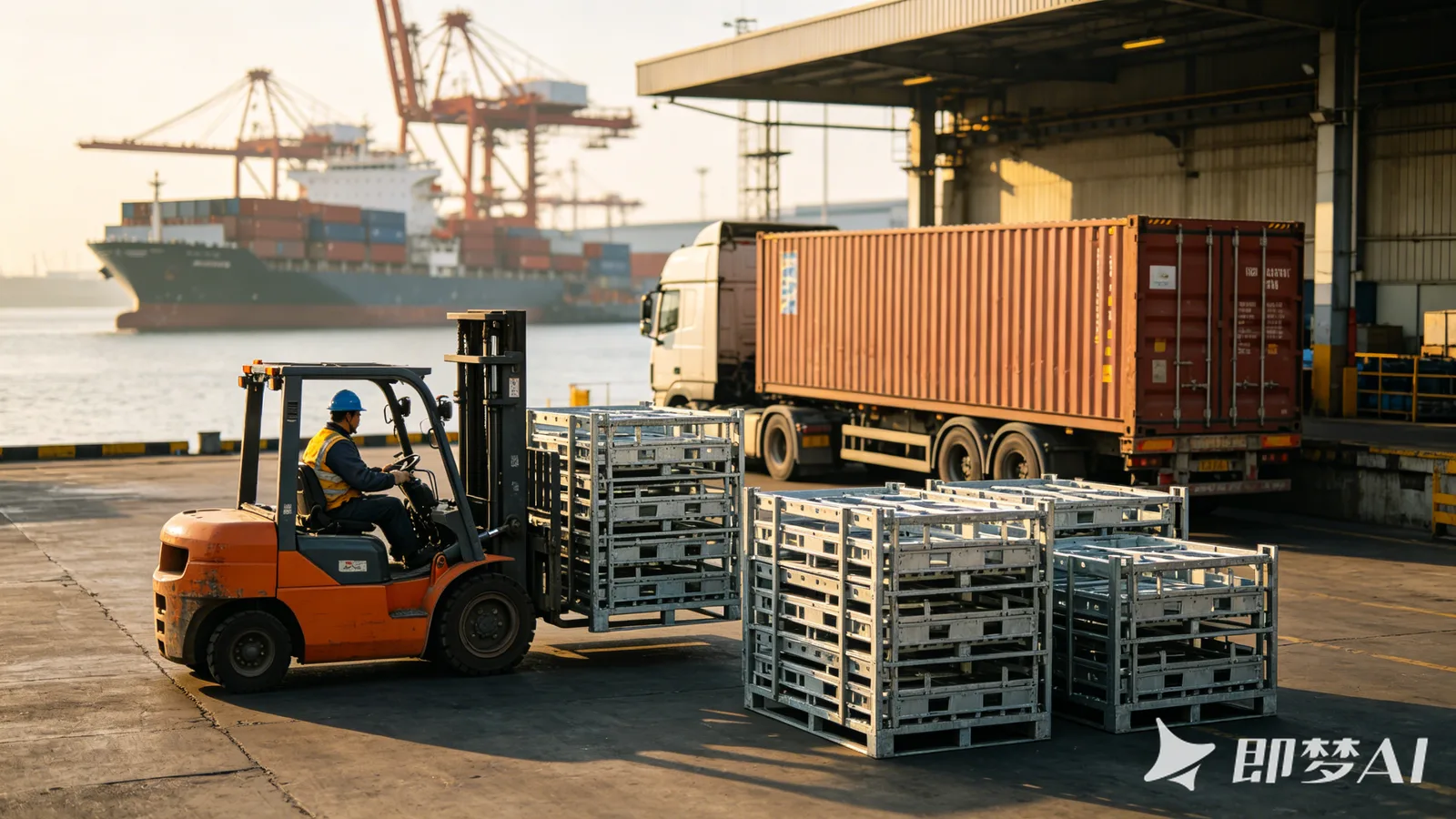
When you ask for a rack quote, the price only means something once you know its Incoterm — the standard three-letter shipping term that says how far the seller's cost and risk reach, and where yours begin. Two quotes at the same number can land at very different costs if one is EXW at a Chinese factory door and the other is CIF to your port. This guide explains the terms a rack buyer actually meets — EXW, FOB, CIF and DDP — so you can read a quote, compare suppliers like for like, and know exactly who pays the freight, the insurance and the import duty.
Quick answer
Incoterms are the International Chamber of Commerce's standard trade terms (current version: Incoterms 2020) that divide cost and risk between seller and buyer. For steel racks the four you are usually quoted are EXW (you arrange everything from the seller's door), FOB (seller loads the vessel; you take over at the port of loading), CIF (seller pays freight and insurance to your port, but risk still passes at origin) and DDP (seller delivers cleared, with import duties paid). The term you choose decides who pays freight, insurance and import duty — including any Section 232 or 301 tariff.
What Incoterms actually cover
Incoterms are published by the International Chamber of Commerce and revised roughly every decade; Incoterms 2020 is the current set of eleven rules. Each rule answers three questions: how far does the seller arrange and pay for transport, where does the risk of loss or damage pass from seller to buyer, and who handles export and import clearance. What Incoterms do not do is set the price, transfer ownership, or replace your contract — they are a shorthand for delivery responsibilities that both sides agree to.
They range on a spectrum from minimum seller responsibility (EXW) to maximum (DDP):
| Term | Seller pays / arranges to | Risk passes to buyer | Who clears import & pays duty | Transport mode |
|---|---|---|---|---|
| EXW — Ex Works | Goods ready at the seller's premises | At the seller's door | Buyer | Any |
| FCA — Free Carrier | Delivered to the carrier / named place, export cleared | On hand-over to carrier | Buyer | Any |
| FOB — Free On Board | Loaded on board the vessel at the port of loading | When goods are on board | Buyer | Sea / inland waterway |
| CIF — Cost, Insurance & Freight | Freight + insurance to the destination port | At origin, when on board | Buyer | Sea / inland waterway |
| CIP — Carriage & Insurance Paid | Carriage + insurance to the named place (any mode) | On hand-over to first carrier | Buyer | Any |
| DAP — Delivered At Place | Delivered at the destination, ready to unload | At the destination | Buyer | Any |
| DDP — Delivered Duty Paid | Delivered at the destination, import cleared, duties paid | At the destination | Seller | Any |
FOB vs CIF vs DDP — the three you will weigh up
Most rack buyers importing from China are quoted EXW or FOB by default, with CIF available on request; DDP is possible but less common. Here is how the three end-to-end options really differ:
- FOB is the common baseline. The seller handles export clearance and loads your goods onto the vessel at the Chinese port; from that point the ocean freight, insurance and import side are yours (usually through your own freight forwarder). It gives you control of the main freight and a clean, comparable price.
- CIF adds the ocean freight and a minimum marine insurance to the seller's scope, delivered to your destination port. It is convenient, but note the trap: even though the seller pays the freight, risk still transfers at the origin port, so cargo damage in transit is your claim, on the seller-arranged insurance. CIF suits buyers who want one less thing to arrange and are shipping to a straightforward port.
- DDP puts everything on the seller — freight, import clearance and all duties — and delivers to your door. It looks effortless, but for imports into a high-tariff market it means the seller is pricing in your import duty (including any Section 232 and Section 301), so the number is higher and less transparent. Many sellers, including us, are cautious with DDP into markets where the buyer's own broker clears import duty more efficiently.
How the Incoterm decides who pays the tariff
This is where the term meets your landed cost. Under EXW, FOB and CIF, the buyer is the importer of record and pays the import duty — so if you bring steel racks into the US, you (through your broker) pay any Section 232 and Section 301 tariff, and you can classify the HTS code and declare the steel content yourself. Under DDP the seller carries that duty, which means they price your tariff into the quote — often conservatively. For a tariff-exposed lane, buying FOB or CIF and clearing import through your own broker usually gives you more control and a clearer number than DDP. Whichever term you pick, model the freight and duty together — see the Section 232 landed-cost guide for the full build-up.
How to choose the right term
- Judge your import experience. If you have a freight forwarder and customs broker, FOB (or CIF) gives you control and transparency. If you have neither, DAP/DDP shifts the logistics to the seller.
- Decide who should control the main freight. Regular importers often get better ocean rates than a factory's forwarder — a reason to choose FOB and arrange freight yourself.
- Check the tariff exposure. On a high-duty lane, keeping import clearance in your hands (FOB/CIF) lets you classify and declare steel content correctly rather than accept a padded DDP price.
- Match the term to the mode. FOB and CIF are for sea freight; for containerised door-to-port moves or air, the correct equivalents are FCA and CIP.
- Confirm insurance. CIF includes only minimum-cover marine insurance — arrange your own if your racks warrant more.
Common mistakes
- Comparing quotes on different terms. An EXW price and a CIF price are not comparable until you add the missing freight and duty.
- Using FOB for a full-container door move. FOB is a vessel term; for door-to-port container or multimodal shipments, FCA is the correct rule.
- Assuming CIF means the seller carries the risk. Under CIF risk passes at the origin port, even though the seller pays the freight.
- Reading DDP as "no duty". DDP does not remove the tariff — the seller has simply priced it into the total.
- Skipping insurance. Relying on CIF's minimum cover for high-value racks.
Key takeaways
- Incoterms 2020 split cost and risk; they do not set price or transfer ownership.
- EXW, FOB, CIF and DDP are the terms a rack buyer meets most often, from least to most seller responsibility.
- Under CIF the seller pays freight but risk still passes at the origin port.
- EXW/FOB/CIF make you the importer, so you pay Section 232/301 duty and can control the declaration; DDP prices it in for you.
- Compare quotes on the same term, and match the term to your transport mode and import experience.
Get a clear quote on your preferred term
We quote EXW and FOB by default and can provide CIF to your nearest port, with a clear itemisation so you can compare on a like-for-like basis. Tell us your destination and preferred Incoterm and we will price it accordingly, with a steel-content breakdown for your customs entry. Start on our customization page, plan the duty in the Section 232 landed-cost guide, and see how folding racks cut the freight you pay in racks per 40ft container.
Frequently Asked Questions
- What are Incoterms?
- Incoterms are standard three-letter trade terms published by the International Chamber of Commerce (the current set is Incoterms 2020) that divide transport cost and risk between seller and buyer. Each rule defines how far the seller arranges and pays for delivery, where risk passes, and who handles export and import clearance. They do not set the price or transfer ownership.
- What is the difference between FOB and CIF?
- Under FOB the seller export-clears your goods and loads them onto the vessel; from the port of loading, the ocean freight, insurance and import are yours. Under CIF the seller also pays the freight and a minimum marine insurance to your destination port — but risk still passes at the origin port, so in-transit damage is your claim on that insurance. FOB gives you control of the freight; CIF is more hands-off.
- Does DDP mean I pay no import duty?
- No. DDP (Delivered Duty Paid) means the seller arranges import clearance and pays the duty — but they price that duty, including any Section 232 or Section 301 tariff, into your quote. The duty is still paid; it is simply bundled into the seller's price rather than billed to you by your broker.
- Which Incoterm is best for importing steel racks from China?
- Most buyers use FOB or CIF. FOB suits importers who have their own freight forwarder and customs broker and want to control the ocean freight and the customs declaration; CIF suits buyers who prefer the seller to arrange freight to their port. EXW gives maximum control but maximum work, and DDP shifts everything to the seller at a higher, less transparent price.
- Are FOB and CIF correct for container shipments?
- FOB and CIF are strictly vessel terms for sea and inland-waterway freight, where risk passes when the goods are on board. For containerised door-to-port moves or multimodal shipments, the correct Incoterms 2020 equivalents are FCA (in place of FOB) and CIP (in place of CIF), which pass risk when the goods are handed to the first carrier.