Application
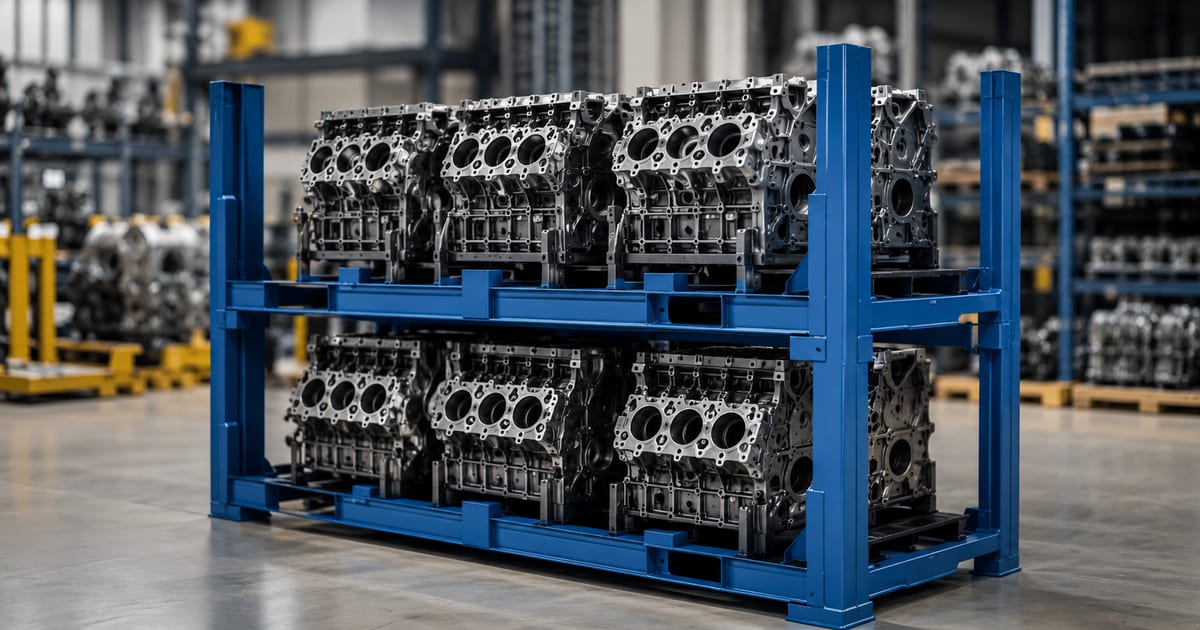
Automotive Engine Racks
Plan custom automotive engine racks around engine geometry, support points, loading access, handling equipment, stacking and the return route.
Review the inputs →Compare carriers for engine assemblies, battery components and line-side material handling.
Application
Plan custom automotive engine racks around engine geometry, support points, loading access, handling equipment, stacking and the return route.
Review the inputs →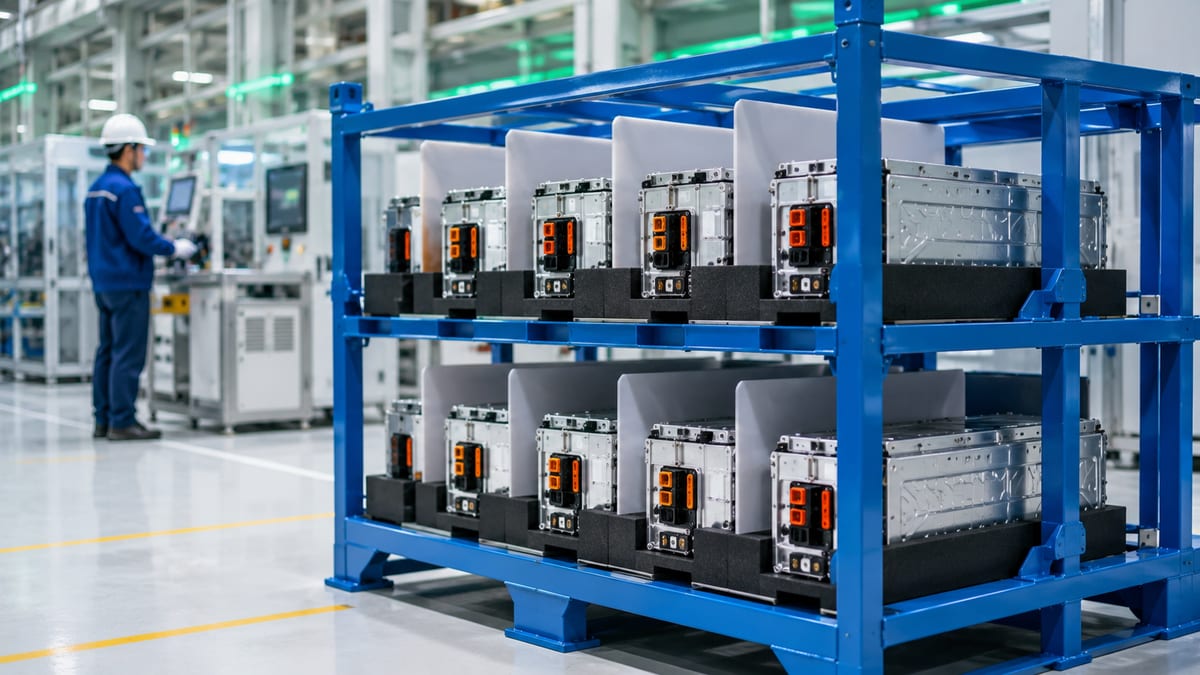
Application
Specify custom EV battery racks around the approved battery component, contact zones, handling interfaces, stacking and returnable logistics route.
Review the inputs →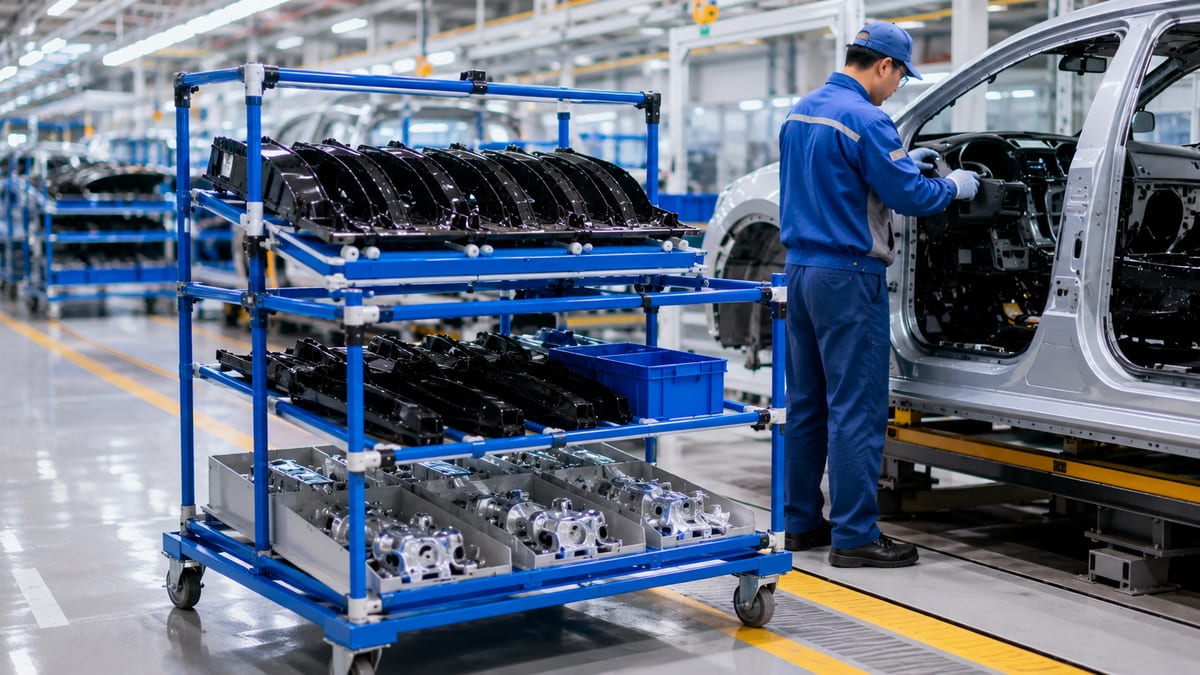
Application
Choose line-side racks and trolleys from part presentation, replenishment sequence, operator access, tugger or AGV interfaces and return flow.
Review the inputs →Configuration comparison
Compare applications, manufacturing steps and quotation checklists for the equipment you need.
| Configuration | Use it when | Main trade-off | Send with the RFQ |
|---|---|---|---|
| Automotive Engine Racks | Plan custom automotive engine racks around engine geometry, support points, loading access, handling equipment, stacking and the return route. | Keep required access clear and define the loading sequence. | CAD/drawing, mass, centre of gravity, contact restrictions |
| EV Battery Racks | Specify custom EV battery racks around the approved battery component, contact zones, handling interfaces, stacking and returnable logistics route. | Define allowed supports and surfaces that must remain clear. | Drawing/CAD, mass, centre of gravity |
| Line-Side Material Handling | Choose line-side racks and trolleys from part presentation, replenishment sequence, operator access, tugger or AGV interfaces and return flow. | Review caster, handle, braking, floor and operator requirements. | Station footprint, access and anchoring/site rules |
From requirement to quotation
A short, drawing-led sequence keeps research connected to a commercial next step.
Open the route that matches the actual product, application or approval decision.
Output: Relevant detail page
Collect the part, load, route, equipment and acceptance information requested on that page.
Output: Comparable requirement
Compare the product configurations, then request a design and quotation for your part.
Output: Selected equipment
Attach drawings or photos, quantity, destination and unresolved questions.
Output: Engineering review request
| Route | Application | First buyer input |
|---|---|---|
| Automotive Engine Racks | automotive engine racks | CAD/drawing, mass, centre of gravity, contact restrictions |
| EV Battery Racks | EV battery racks | Drawing/CAD, mass, centre of gravity |
| Line-Side Material Handling | line-side material handling racks | Station footprint, access and anchoring/site rules |
Send a part photo or drawing and tell us how the load is moved. Add the quantity and destination if available; engineering details can follow during the discussion.
Go to customization →Choose the page closest to the decision you need to make, then gather its part, route and interface inputs before requesting a proposal. The current section covers Automotive Engine Racks, EV Battery Racks, Line-Side Material Handling.
Start with Automotive Engine Racks when it matches the project. If the decision is different, use the comparison table on this page to select the closest route.
Yes. Send a photo or drawing, describe the loading and movement task, and add quantity and destination when available. Detailed engineering information can follow during the discussion.
Send the confirmed information and mark the missing item for engineering review. Do not replace an unknown part property, interface or acceptance criterion with a generic website value.
Confirm the proposed drawing, part supports, handling interfaces, included options and sample checks with the supplier. Use the same configuration and quantity when comparing quotations.