
Blog
Guides and insights on metal racks, material handling and automotive logistics.
116 articles

Returnable Packaging Staging: Choose Bays, FIFO Lanes and Empty-Return Zones
Choose individually accessible bays or two-ended FIFO lanes, separate empty returns, and check the real pickup motion before fixing a returnable carrier layout.
Read More →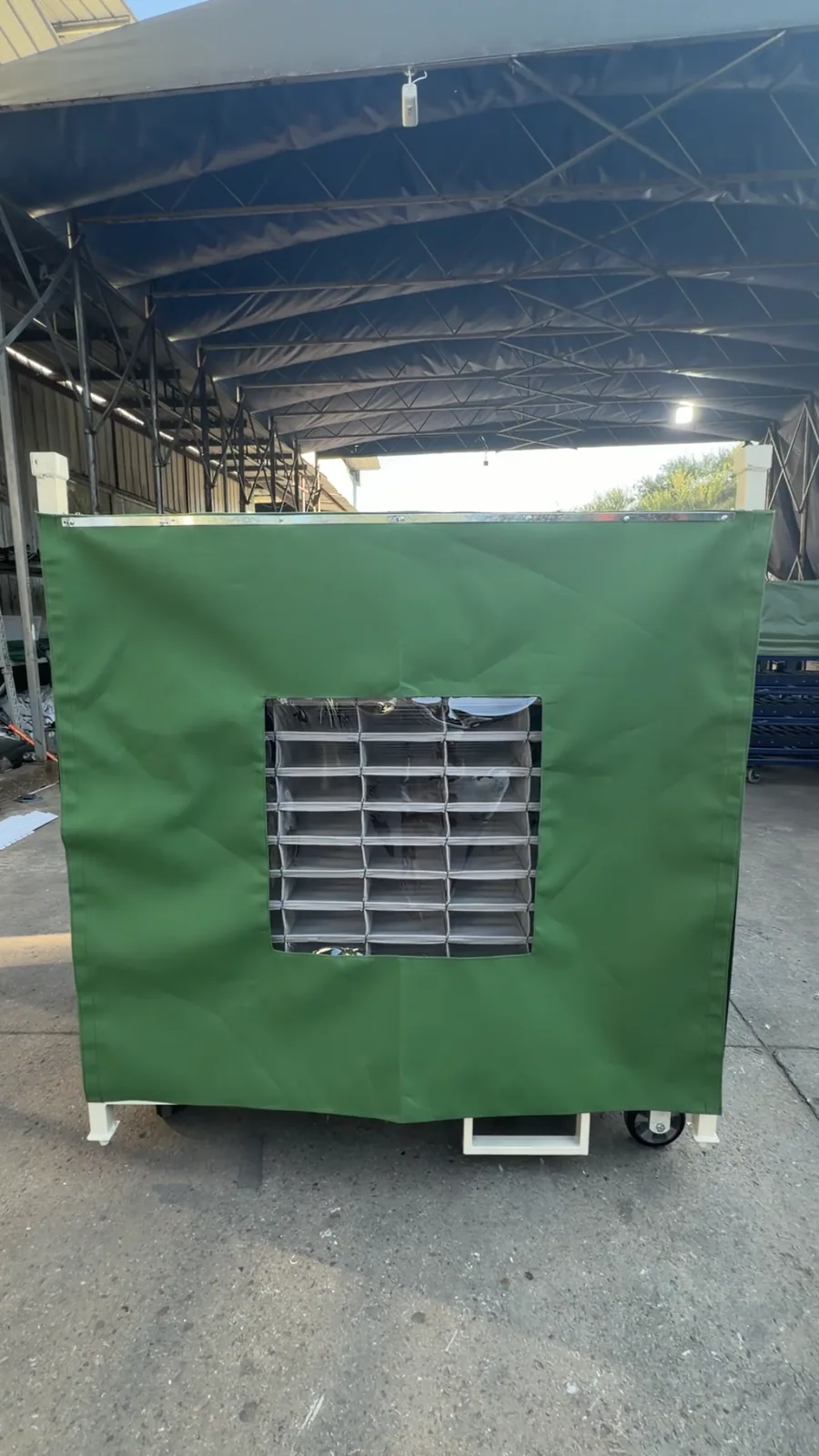
Automotive Rack Covers: Choose the Opening and Where It Stays
Choose roll-up, side-stowed, flip-open or removable covers from the loading task, then give the open panel a position clear of parts, tools and handling interfaces.
Read More →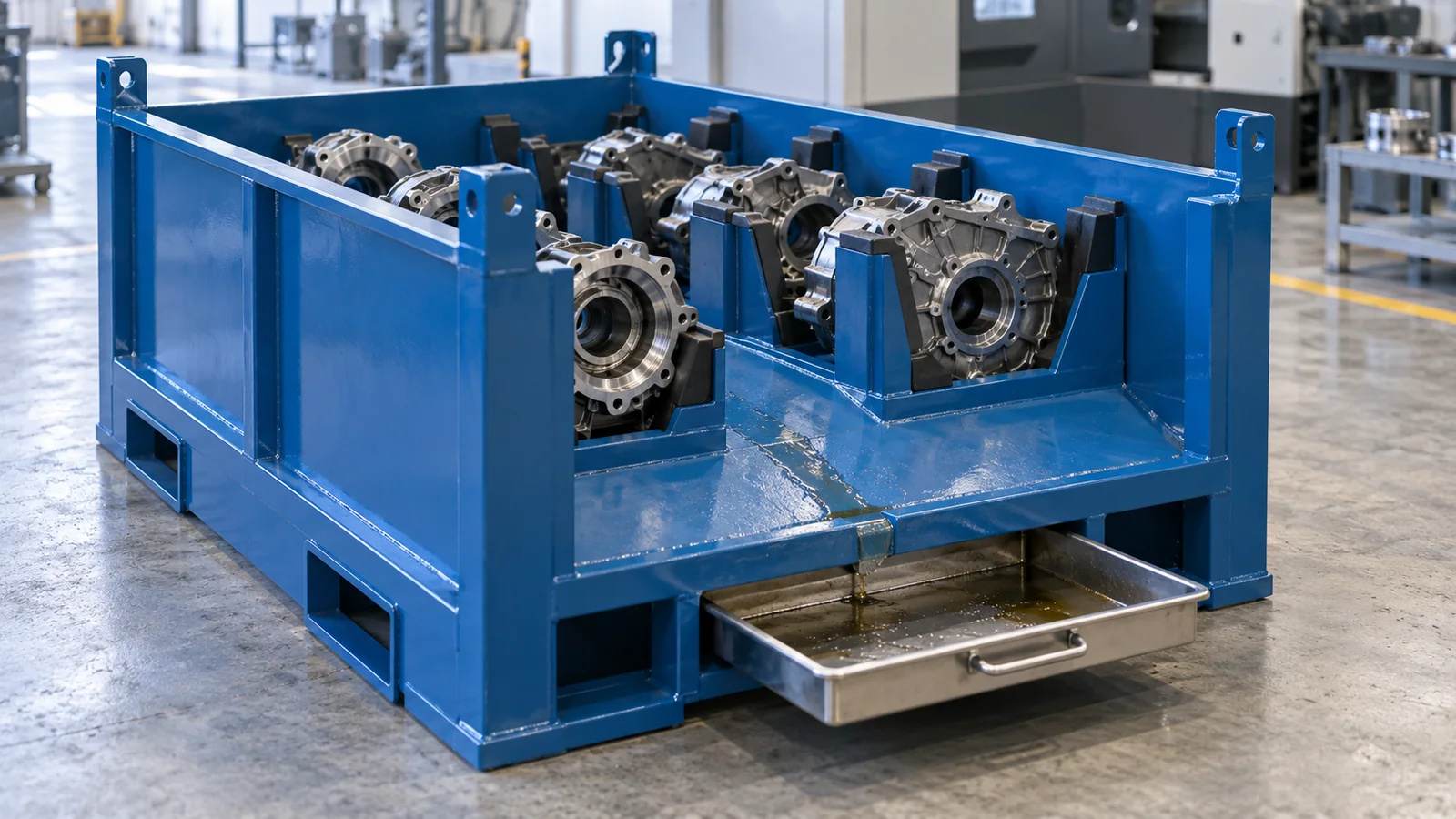
Custom Metal Container Drainage: Choose a Drain Path, Sump or Removable Tray
Choose a controlled drain point, fixed sump or removable tray from the residue, container orientation and maintenance task—not from a generic drain-hole detail.
Read More →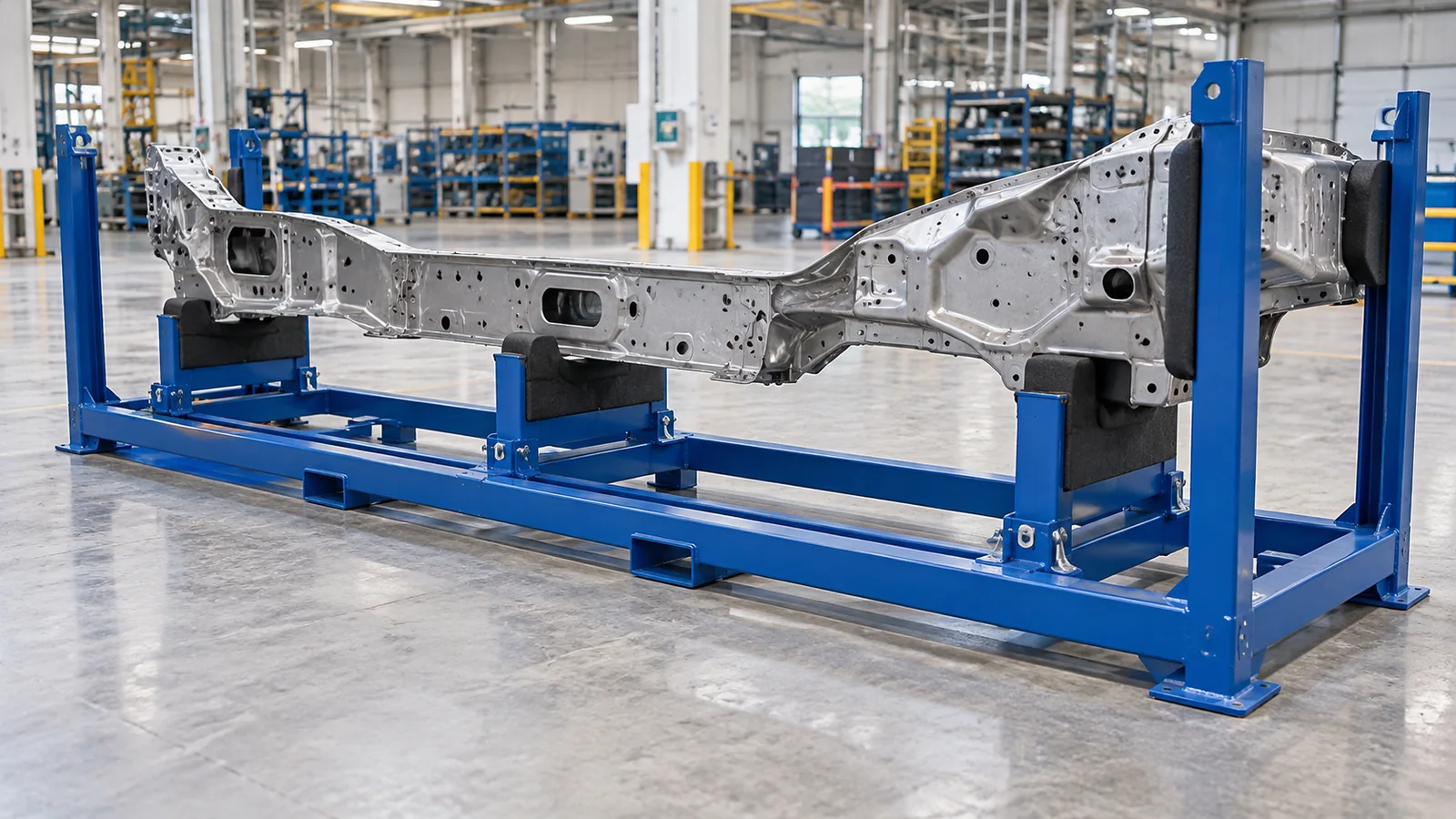
How to Position Stillage Supports for Long and Irregular Parts
Position stillage supports from approved contact zones, end overhang, centre of gravity and the real loading path—not from equal spacing alone.
Read More →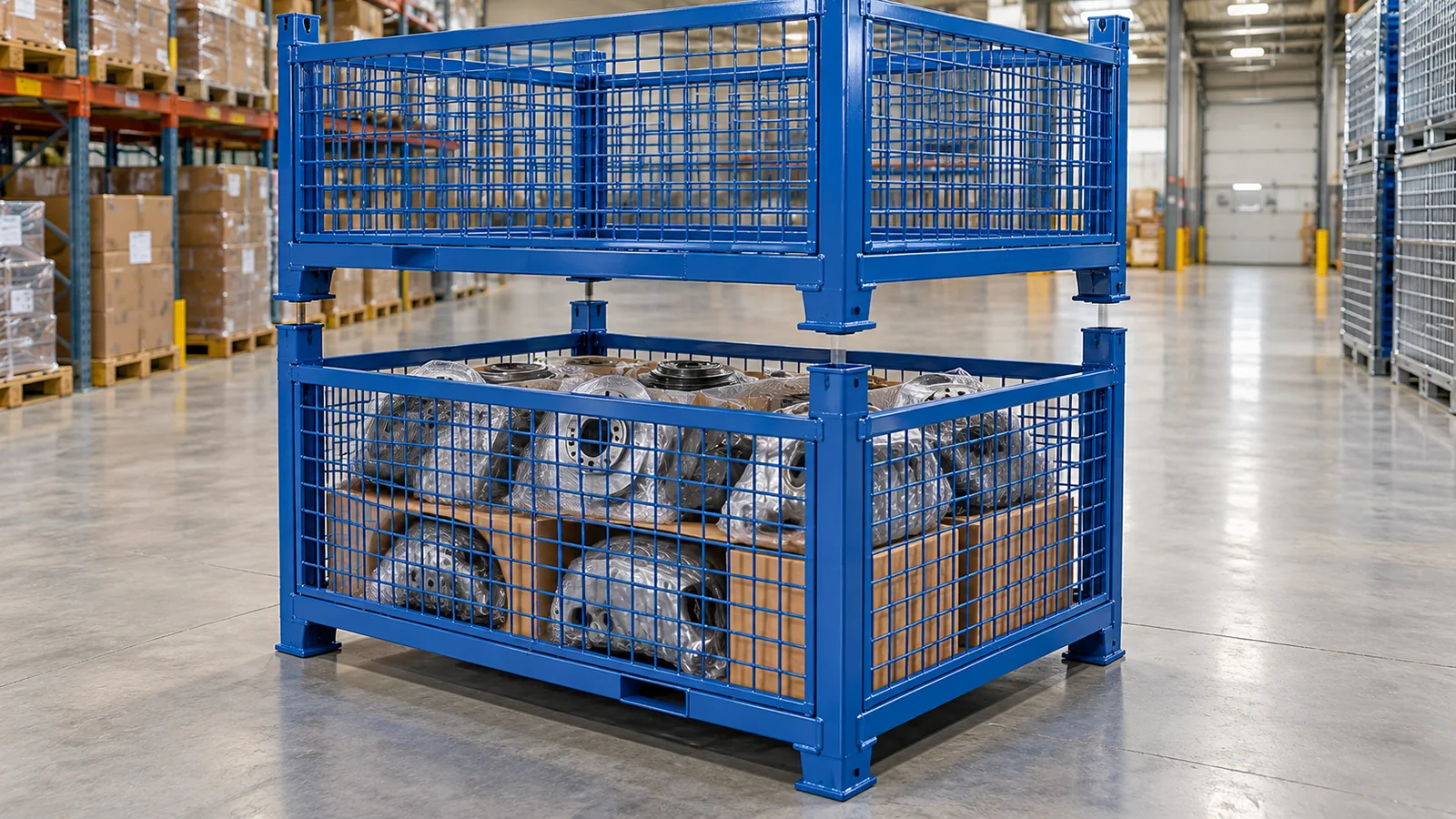
How Much Top Clearance Does a Loaded Wire Mesh Container Need for Stacking?
Define a protected upper landing envelope, then keep the payload, packaging, lid and restraints below or outside it.
Read More →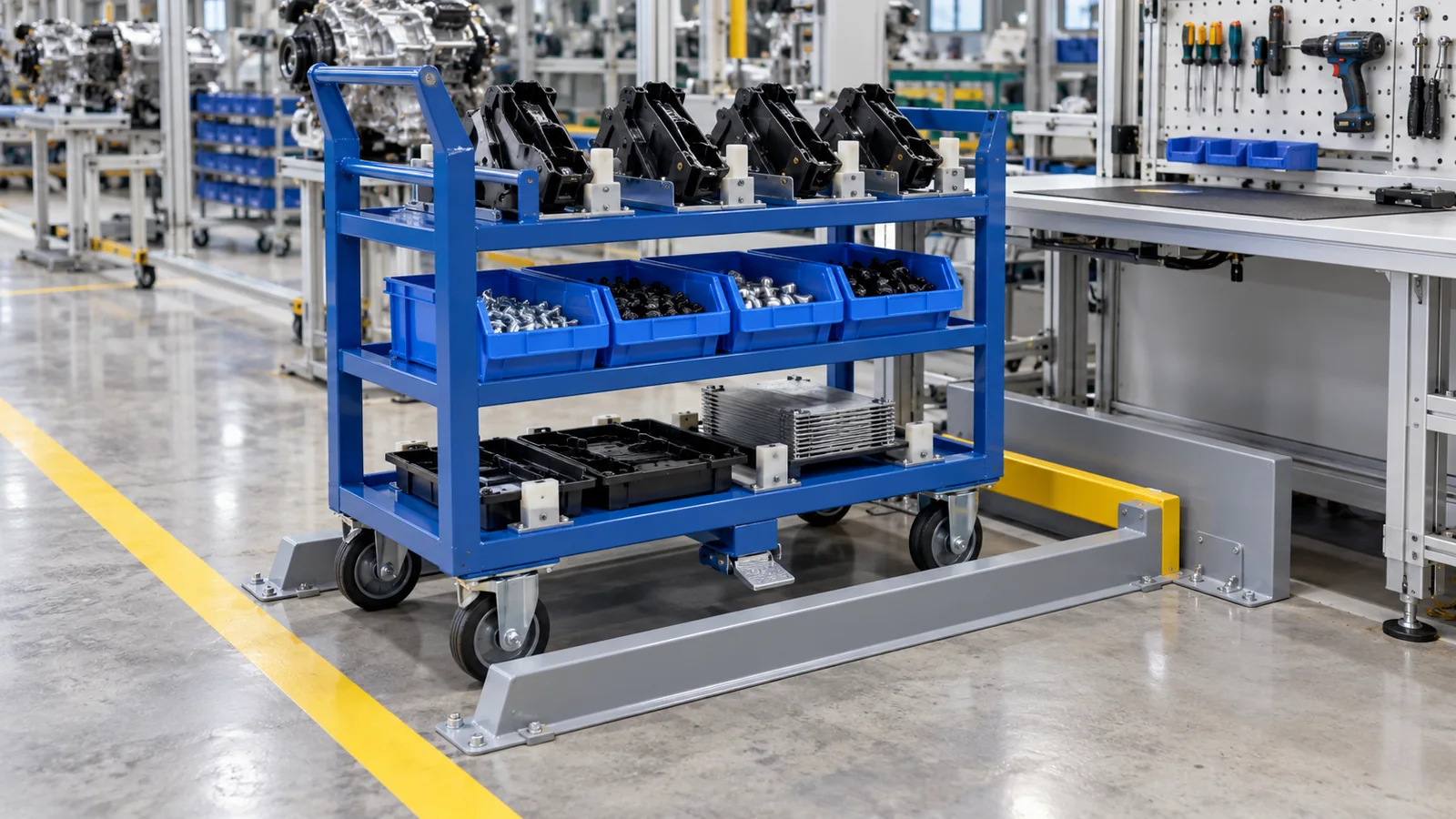
Design a Line-Side Trolley Dock That Stops, Holds and Presents Parts Repeatably
Treat a line-side dock as a matched approach, guide, datum, stop, hold and release interface for the trolley and workstation.
Read More →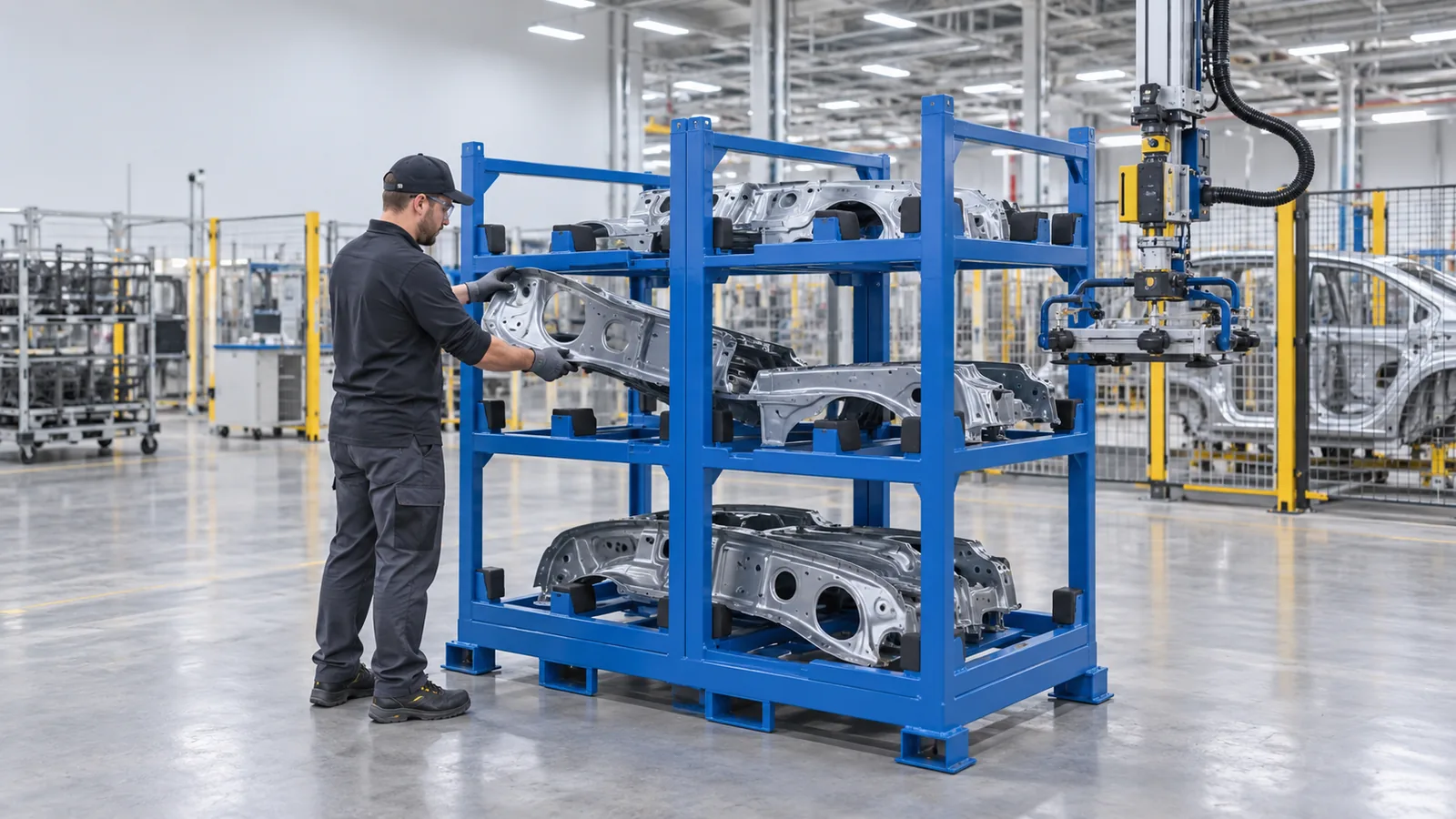
Automotive Rack Loading Access: Define the Hand, Tool and Lift-Assist Envelope
Design the automotive rack opening around the complete hand, tool or lift-assist motion—not the static part envelope alone.
Read More →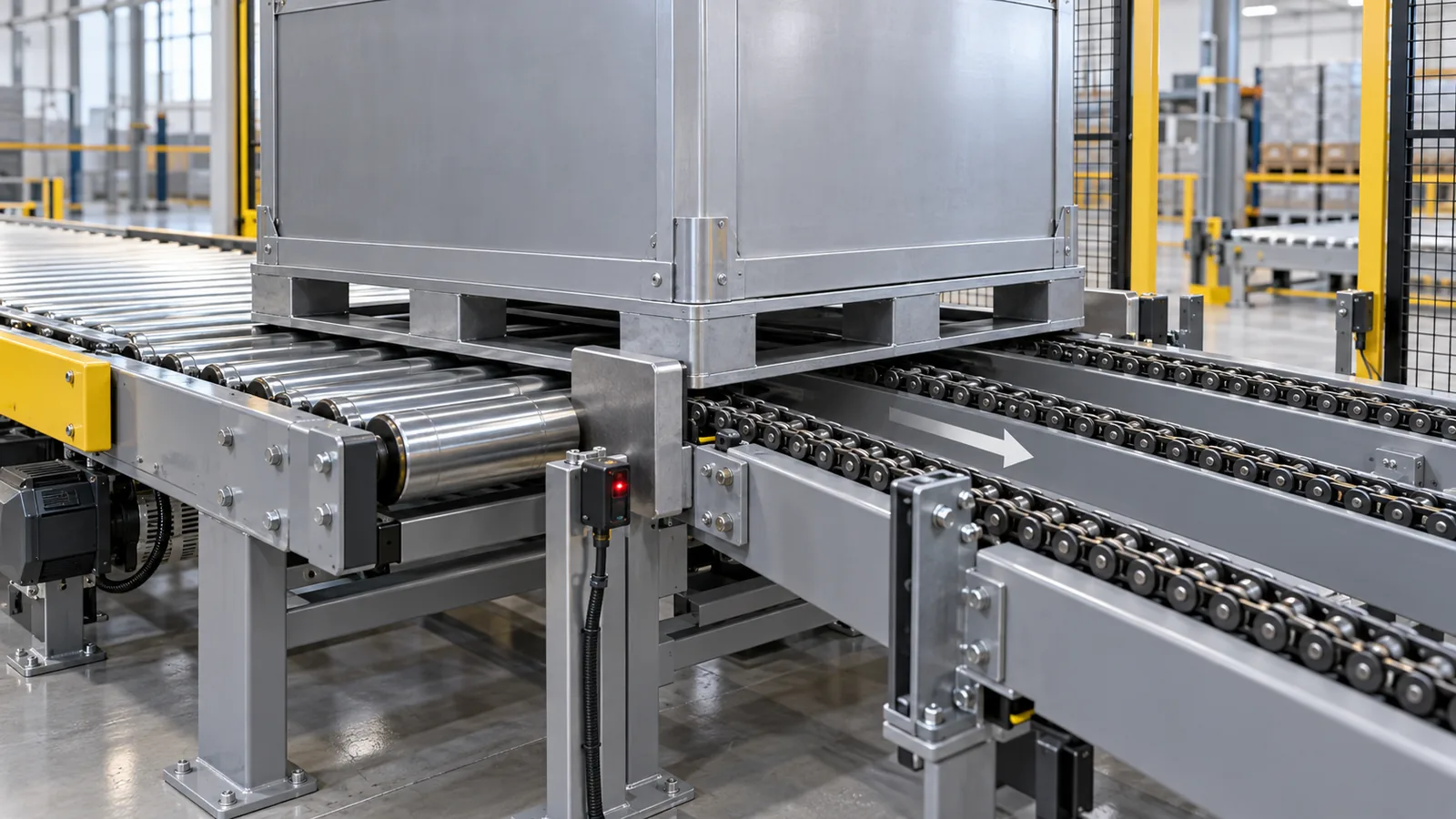
Steel Pallet Conveyor Interface: Runners, Stops and Sensor Targets
Match steel-pallet runners, clear zones, stop faces and sensor targets to the actual roller and chain conveyor transfer.
Read More →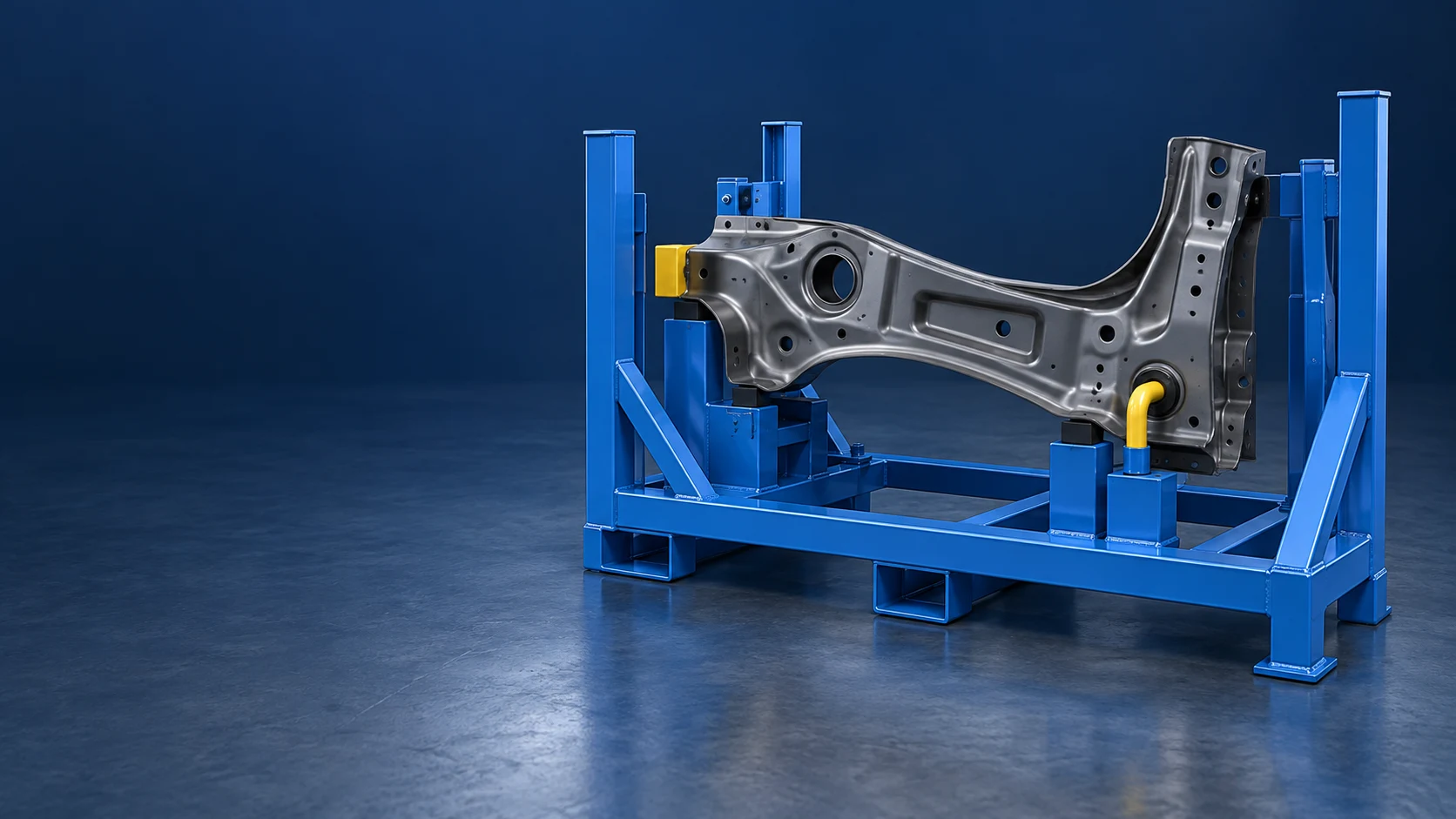
Automotive Rack Error Proofing: Design the Load Direction Into the Locator
Use the part datum, loading motion and an asymmetric key to make a wrong automotive-rack orientation stop before it reaches sensitive contact areas.
Read More →