Purchasing managers
Use a consistent RFQ brief to compare custom rack proposals, sample scope, quantities and export packing on like-for-like inputs.
Use the rack RFQ checklist·Open the buyer template·Review a packaging change noticeOEM & ODM custom metal logistics racks and containers — engineered around your parts, your load and your factory process.
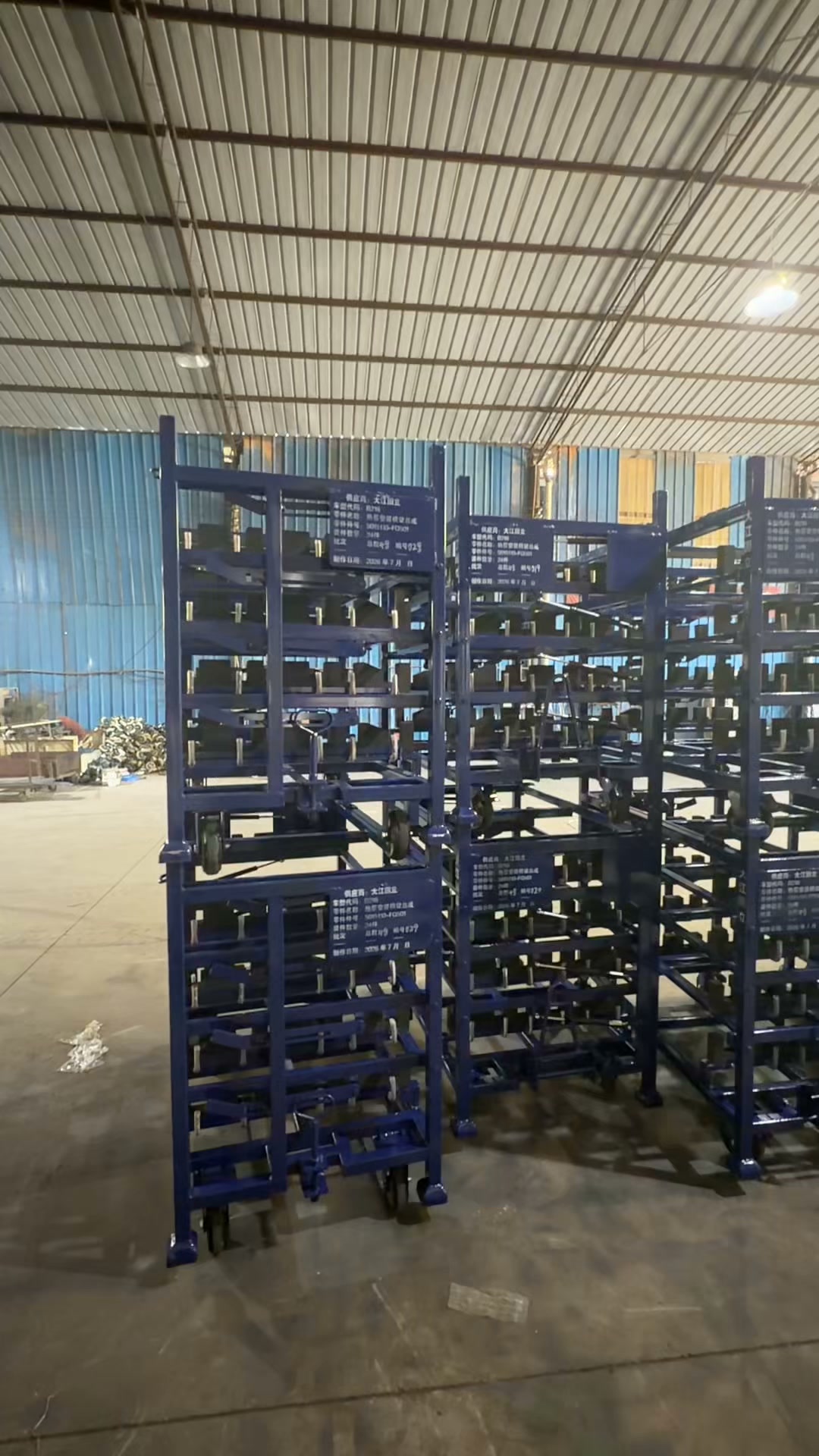
Automotive parts come in countless shapes, sizes and weights, and a standard rack rarely fits the process. Since 2014, HAOFU has designed customized metal logistics racks, stillage racks, steel pallets, wire mesh containers and material handling trolleys based on customer drawings, samples and load requirements. Every project is developed to reduce part damage, save space and support a smoother material flow.
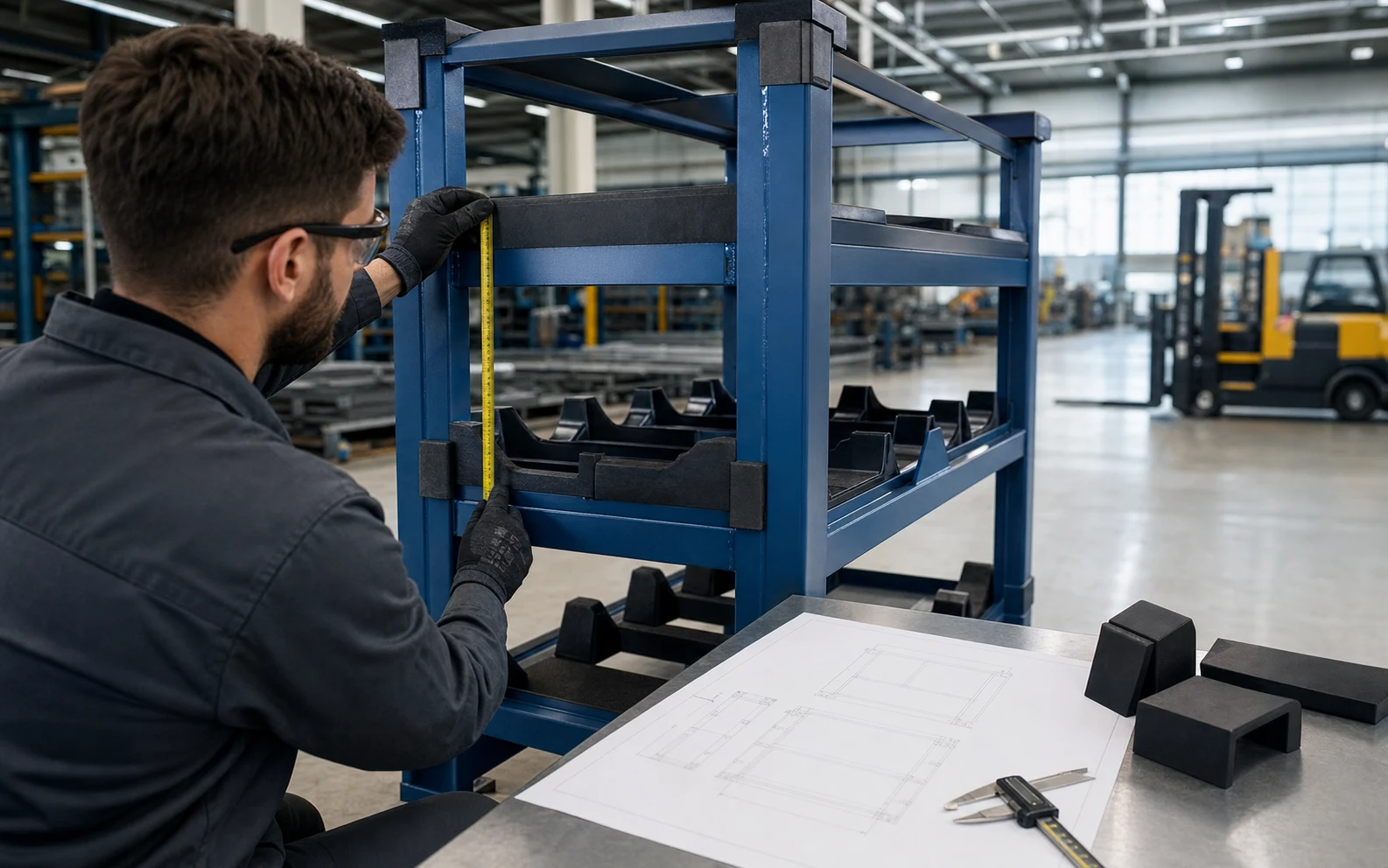
Length, width, height, layer count and internal layout are designed around your exact part size, contact points and stacking plan — no wasted space, no part contact damage.
Frame gauge, beam profile and welding are engineered for your single-rack load, stacking load and forklift handling, then verified with a load test before mass production.
Manual push, tugger-train tow, forklift pockets or production-line delivery — wheels, brakes, tow bars and fork entries are matched to your factory flow.
Plastic blocks, rubber pads, foam, fabric covers, dividers and straps can reduce movement and hard contact for glass, panels and precision parts during transport; final protection depends on representative-part and route validation.
Stacking feet save warehouse floor space; foldable joints cut return-transport volume when racks travel back empty. Both are developed to your space limits.
Powder coating, paint or galvanizing is selected for your environment — indoor, outdoor or humid — to resist rust and wear over repeated logistics cycles.
A clear, engineer-led workflow that turns your part requirements into a tested, production-ready logistics solution.
Send us your part drawings, dimensions, weight, quantity per rack, handling method and factory conditions. Photos or samples help our engineers understand the part.
Our engineering team reviews the data and develops a rack design proposal — structure, load capacity, protection and handling — usually within 1–2 working days.
After you confirm the design, we build a sample rack so the structure, loading process and fit can be tested with your real parts, forklifts and warehouse system.
We run load and handling tests and adjust dimensions, wheels, dividers or stacking before production, so the final product matches your process exactly.
Approved designs move to mass production under stable quality control across our production bases, with consistent welding, finishing and inspection.
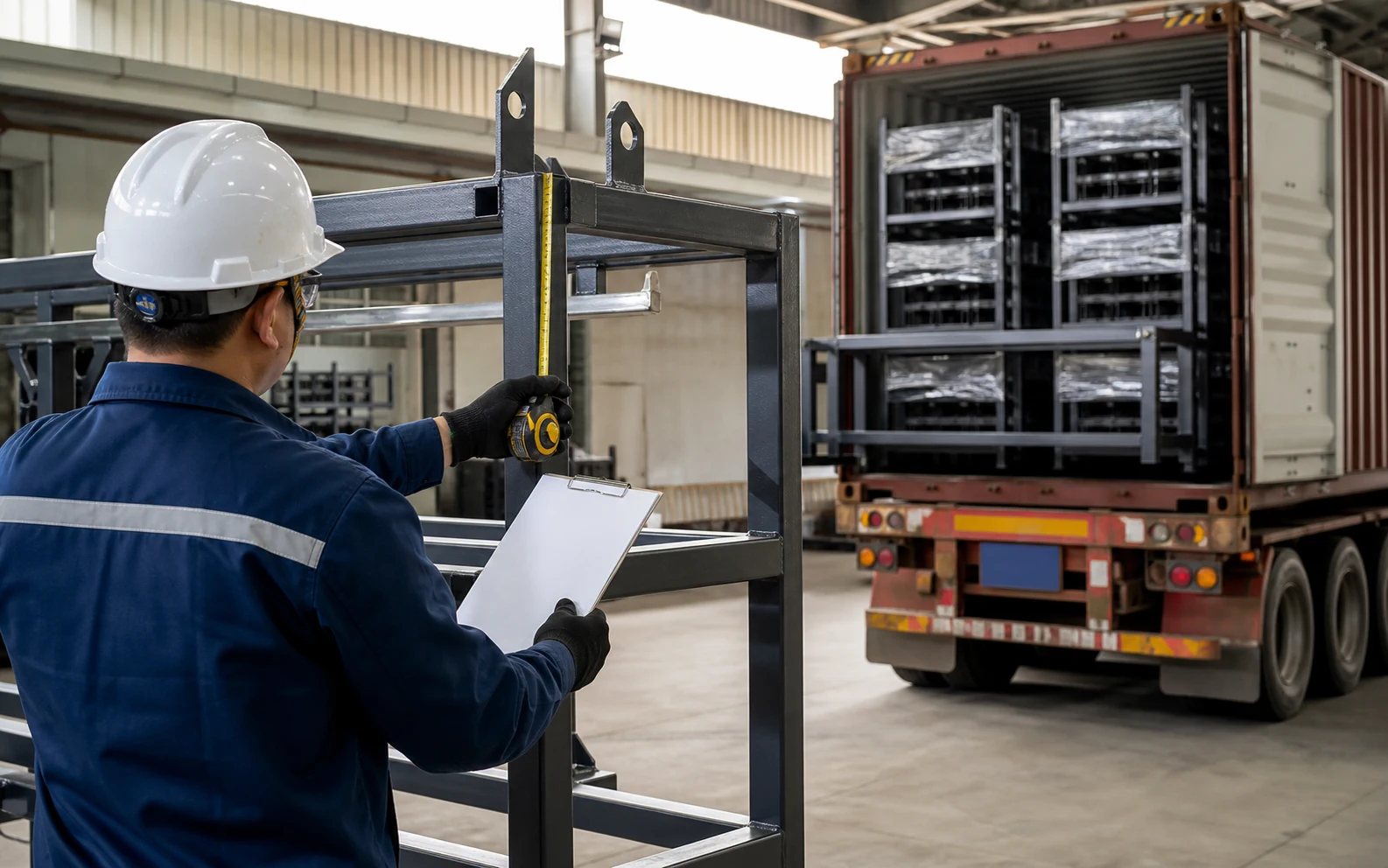
Each batch is inspected, packed for safe transport and shipped with global delivery support, ready to enter your storage and production flow.
The more detail you share, the faster and more precise our design proposal will be. Send us the information below and our engineering team will develop a rack structure built for your parts and logistics process.
Start Your Custom ProjectTell us your requirements and our engineers will contact you within 24 hours.
Contact Us NowFor procurement, logistics and engineering teams
A custom returnable steel shipping rack is specified from the part, protection needs, handling route and return loop—not from a universal catalogue size. For a usable RFQ, provide the part data, quantity, loading orientation, forklift or line-side handling, stacking and empty-return requirements. HAOFU then uses those inputs to develop a rack, stackable metal rack or metal container configuration for review.
Use a consistent RFQ brief to compare custom rack proposals, sample scope, quantities and export packing on like-for-like inputs.
Use the rack RFQ checklist·Open the buyer template·Review a packaging change noticeMatch stacking, sheet-platform, removable-post or foldable features to storage density, forklift access and empty-return space.
Explore stackable metal racksDefine contact points, dunnage, access and inspection evidence before approving a sample or production release.
Review the inspection checklist·See the quality-control workflowSend a part drawing, 3D file, photos or sample; part dimensions and weight; quantity per rack; required rack quantity; handling method; stacking or empty-return needs; and the destination or shipping conditions. These inputs let an engineer define the rack structure, dunnage, access and handling interfaces for your programme.
A custom returnable steel shipping rack is a reusable carrier designed around a specific part, its contact points, loading orientation, handling method and return loop. Unlike a catalogue rack, its final structure, dunnage, stack arrangement and finish are confirmed from the project inputs and sample review.
Yes. HAOFU can develop a custom automotive parts rack from a drawing, 3D data, photo or representative sample. The review starts with part geometry, weight, quantity per rack, protection needs and the way the rack moves through your plant or shipping route.
Use a stackable rack when the part needs an open, part-specific support structure and vertical storage density. Use a custom metal container when enclosed or panelled sides, easier bulk containment or controlled access are more important. The right choice depends on the part, handling method, storage condition and return loop.
The specification is confirmed from the approved drawing or design, agreed materials and finish, part protection details, handling interfaces, packing requirements and the sample-review outcome. Any load, stack height or inspection requirement should be stated for the actual programme rather than assumed from a generic product page.
Need a container rather than an open rack? See custom metal containers and the guide to metal turnover boxes. For returnable-asset control, read the RFID-ready rack specification guide and the returnable packaging loss troubleshooting guide. For EU data preparation, use the steel-rack DPP readiness checklist, and for automation interfaces see the AS/RS steel-pallet validation guide.
For a controlled project path, review the custom rack design process, then use the rack RFQ template before submitting drawings and requirements.