
Custom Automotive Connecting Rod Rack with Pneumatic Trays
A custom connecting-rod rack with pneumatic-assisted trays, dedicated positioning, steel construction and casters for production-line and warehouse handling.
By HAOFU Engineering Team · Updated 2026-08-10
This custom automotive connecting rod rack uses pneumatic-assisted trays and dedicated positioning to support repeatable loading, part separation and mobile handling in production and warehouse logistics.
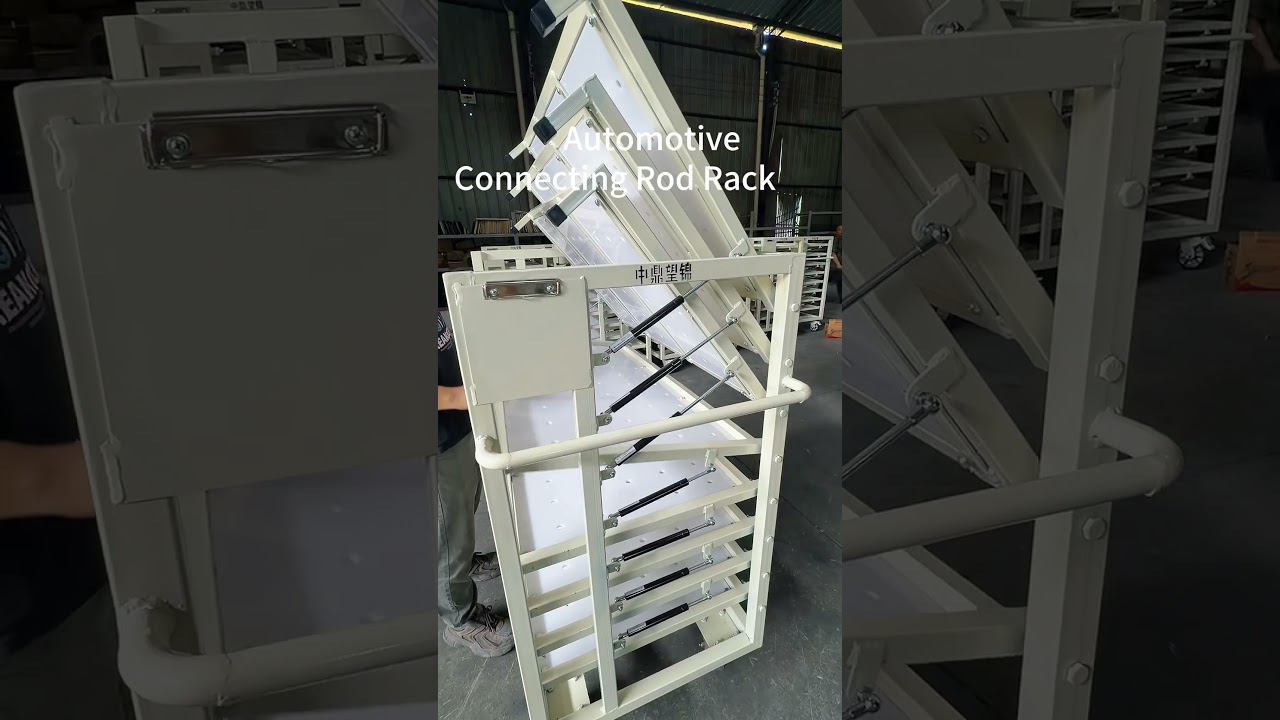
Direct answer: the custom automotive connecting rod rack shown in this video is a steel rack with pneumatic-assisted trays, dedicated positioning and casters. It is designed around the connecting rod so the parts can be loaded, separated and moved through production-line and warehouse logistics.
What the connecting rod rack is designed to solve
Connecting rods need repeatable positioning during storage and movement. The video post highlights pneumatic-assisted trays, dedicated positioning, a steel structure, smooth-rolling casters and customization to the automotive part. Those features describe the design direction; the final interface must follow the actual component and route.
| Rack feature | Handling intent | Project input |
|---|---|---|
| Pneumatic-assisted trays | Support ergonomic loading and access | Tray travel, assist conditions and service access |
| Dedicated positions | Separate and locate the rods | Part geometry, contact surfaces and quantity |
| Steel structure | Provide the reusable rack frame | Route, handling equipment and finish |
| Casters | Move the rack through the facility | Floor, turning, braking and towing conditions |
Design the rack around the part and the route
Good part protection is a combined rack-and-dunnage problem. The custom dunnage reference from Southern Perfection explains how separators and locators are designed for specific parts. MHI's packaging overview is useful when checking the relation between the component, packaging, handling and distribution environment.
Common mistakes in connecting rod rack specifications
- Defining tray count without defining the rod orientation and contact points.
- Selecting casters without describing floors, thresholds and turning space.
- Adding pneumatic hardware without an access or maintenance review.
- Calling a rack “universal” before testing the actual component fit.
Explore custom automotive parts racks, pair the project with material handling trolleys where the route requires it, and read the rack design guide before sending your drawings through customization. Watch the original connecting rod rack Short.
Perguntas Frequentes
- What is an automotive connecting rod rack?
- It is a custom steel logistics rack designed to position, store and move connecting rods through production or warehouse handling. The video shows pneumatic-assisted trays and dedicated locations.
- Why use pneumatic-assisted trays?
- Pneumatic assistance can help operators open or position trays with less manual effort. The required mechanism depends on tray movement, part weight, access and the operating environment.
- How does the rack help prevent movement or scratches?
- The video post describes dedicated positioning for the connecting rods. The exact contact materials, clearances and retention method must be engineered from the part surface and handling route.
- Can the connecting rod rack be moved around a factory?
- The shown design includes smooth-rolling casters. Caster selection and any braking or towing interface still need to be matched to the floor, route and handling method.
- What should I send for a connecting rod rack design?
- Share the rod drawings or samples, quantity per rack, contact and orientation requirements, tray motion, operator access, route, caster conditions and any returnable-packaging needs.