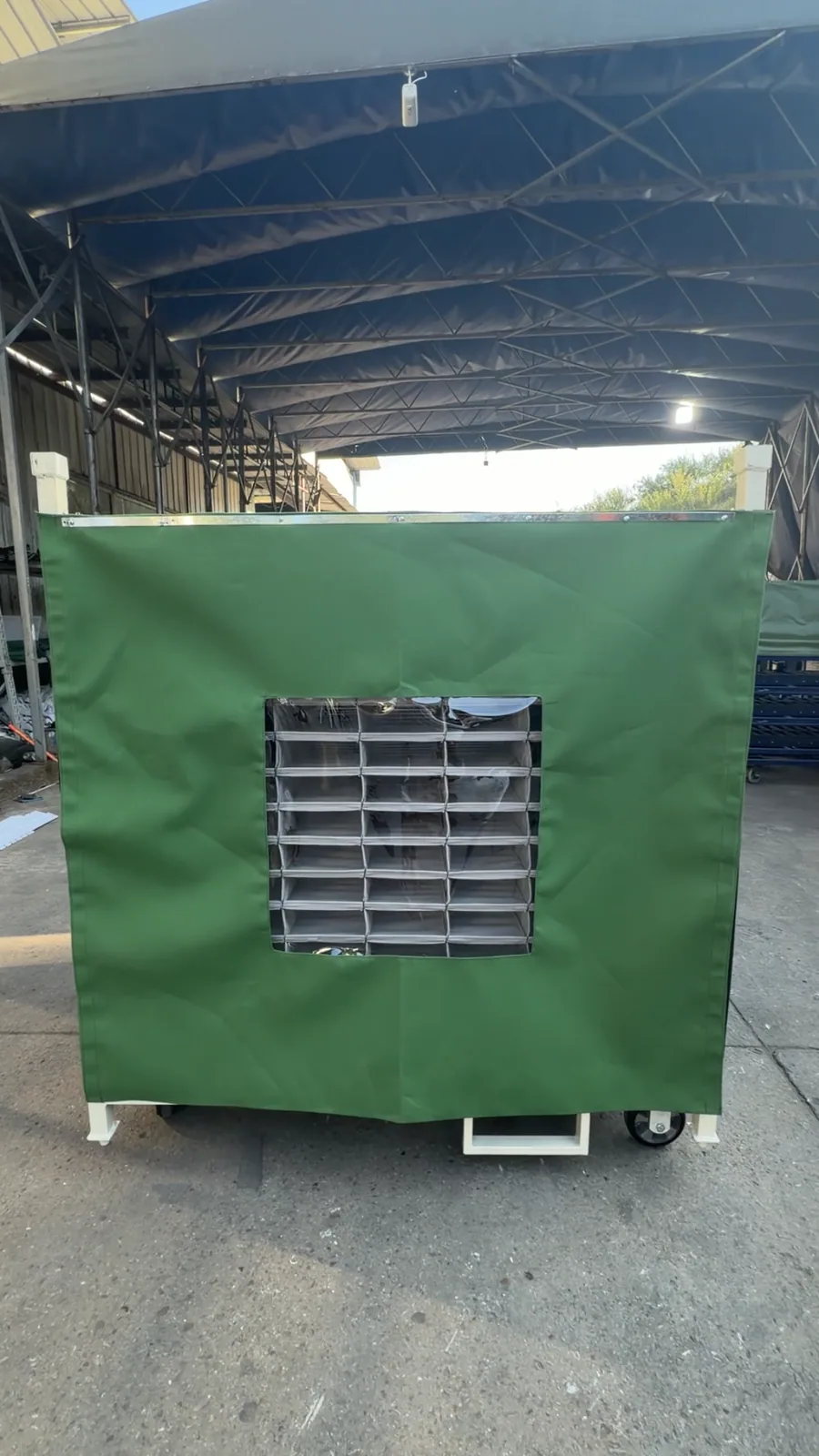
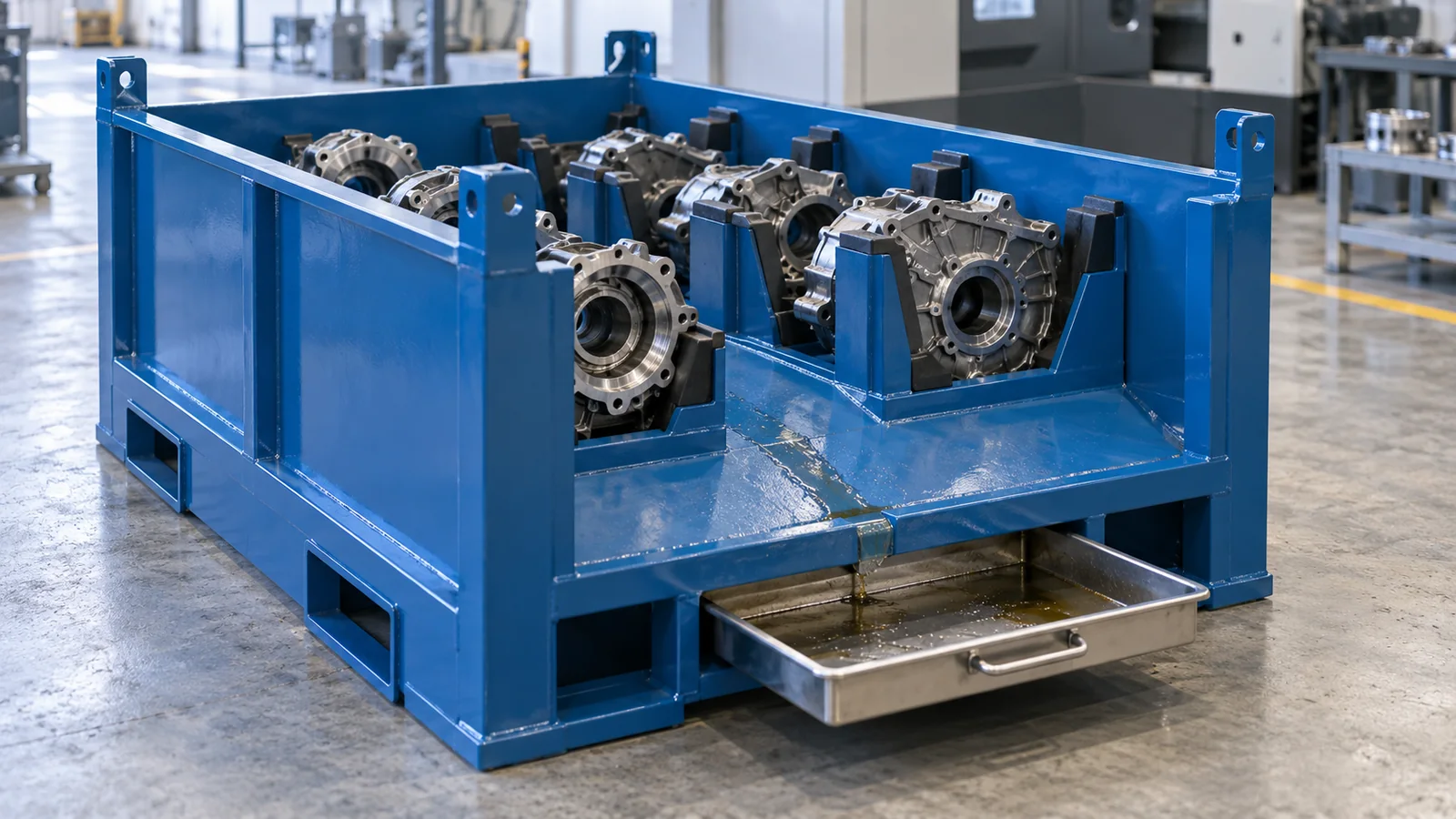
The Complete Automotive Parts Rack Design Guide (Engineering Principles, Load & Protection)

A well-designed automotive parts rack is engineered around one specific part — its geometry, weight, centre of gravity, contact points and handling flow. Getting the load, protection and stacking right cuts part damage, saves floor space and speeds up handling, using replaceable EVA foam, rubber pads or dividers where the part meets steel and a physical load test on the sample to validate the structure.
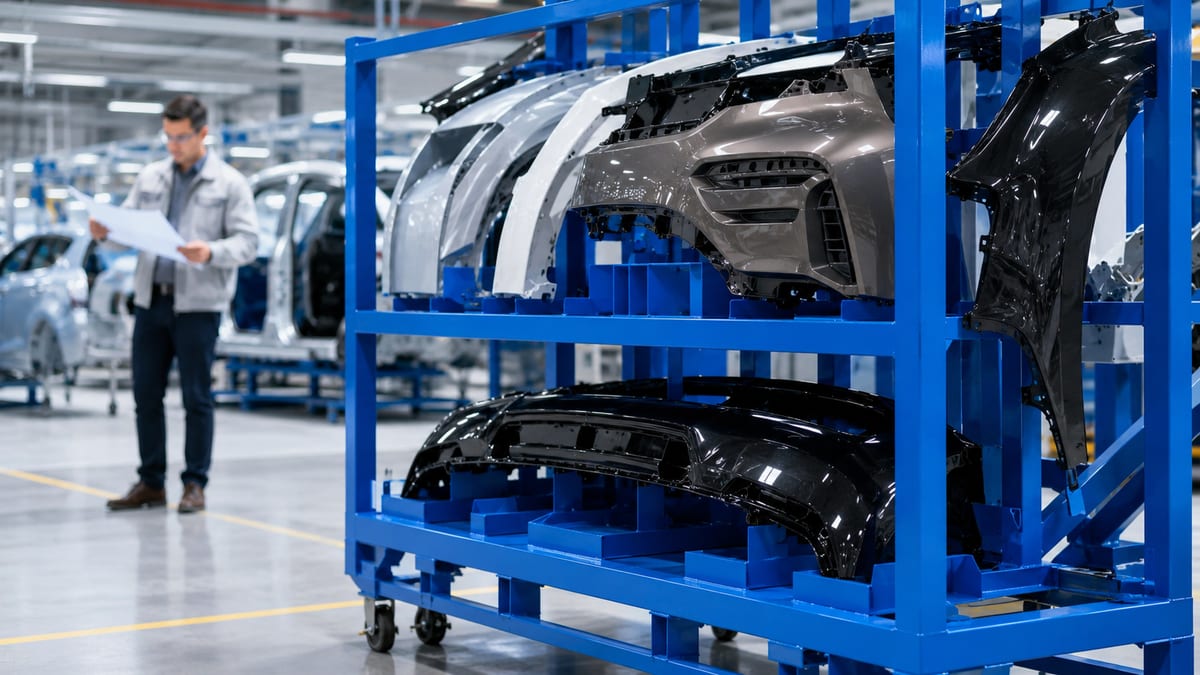
A well-designed automotive parts rack is not a generic cage — it is engineered around one specific part: its geometry, weight, contact points, orientation and how it moves through your plant. Get the design right and you cut part damage, save floor space and speed up handling; get it wrong and you pay in scrap and rework. This guide sets out the engineering principles our team uses on every project.
Quick answer: designing a parts rack
Design the rack around the exact part, not a generic cage: start from its dimensions, weight, centre of gravity, contact points and how it moves through the plant. Size the steel to the single and stacked load, add replaceable EVA foam or rubber where the part touches metal, then build and load-test a sample.
Start with the part, not the rack
Every rack begins with part data. Before any steel is drawn, collect the component's dimensions, weight, centre of gravity, fragile surfaces, contact points and the number of parts required per rack. The rack is then designed to hold that part securely in its natural orientation.
The core engineering inputs
| Input | Why it matters |
|---|---|
| Part weight & CoG | Sets steel gauge, member sizing and stacking limits |
| Contact points | Decides where padding, cradles and supports go |
| Parts per rack | Balances density against handling weight and line takt |
| Handling method | Forklift pockets, casters or tugger tow — drives the base design |
| Stack / fold | Saves floor space when full and return freight when empty |
| Environment | Indoor powder coat vs galvanizing for outdoor/wash-down |
Load and structure
The frame must carry the full loaded weight plus any stacking load above it, with a safety margin. We calculate the single-rack load and the stacked load, then size the tube, plate and welds accordingly and validate with a physical load test on the sample. Sound structural design and consistent welding are also the backbone of a certified quality system such as ISO 9001, which HAOFU operates to.
Handling and ergonomics
Match the base to how the rack moves: forklift pockets for lift trucks, heavy-duty casters with brakes for manual movement, or a tow bar for tugger trains. Safe manual handling weights and push/pull forces should follow recognised guidance such as OSHA materials handling principles.
Protecting the part
Automotive parts are high-value and easily marked. Design in replaceable protection — EVA foam, plastic blocks, rubber pads or dividers — exactly where the part contacts steel, so nothing rubs, dents or scratches in transit. We cover materials in depth in our guide to protecting painted and plastic parts.
Stack, fold and return
For returnable programs, stackability saves floor and trailer space when loaded, while a foldable frame collapses when empty to cut return freight. Design the stacking feet and locks so loaded units interlock safely.
From drawing to production
The safest path is: review drawings → engineer the structure → build and load-test a sample → adjust → mass produce. See the range on our automotive parts racks page, or start a project on our customization page.
Want to see one in action? Watch our 5-tier automotive parts rack video.
Have a part that needs a rack designed around it? Send us your drawings and our engineers will respond within 24 hours.
Frequently Asked Questions
- What makes an automotive parts rack 'custom'?
- A custom rack is engineered around one specific part — its dimensions, weight, contact points and orientation — rather than a generic cage. The structure, dividers and protection are all designed so that exact part is held securely, handled easily and returned for reuse without damage.
- How is the load capacity of a parts rack determined?
- We calculate the total weight of all parts in one rack, add any stacking load from racks above, and apply a safety margin. The steel gauge, member sizing and welds are sized to that load, then validated with a physical load test on the sample before mass production.
- Should an automotive parts rack be stackable or foldable?
- Both save space in different ways. Stackable racks interlock when loaded to save warehouse floor and trailer space; foldable racks collapse when empty to cut return freight in a returnable loop. Many automotive racks are both. The right choice depends on your storage and return-transport costs.
- How long does custom rack design and sampling take?
- A tested sample typically takes about 7–15 days once part data and drawings are confirmed, followed by mass production. Building and approving a sample first is the cheapest insurance against a costly production error.
- What part information do you need before designing a rack?
- Before any steel is drawn, we collect the component's dimensions, weight, centre of gravity, fragile surfaces, contact points and the number of parts required per rack. The rack is then engineered to hold that part securely in its natural orientation. Starting from complete part data — rather than a generic cage size — is what makes the finished rack fit and protect the part correctly.