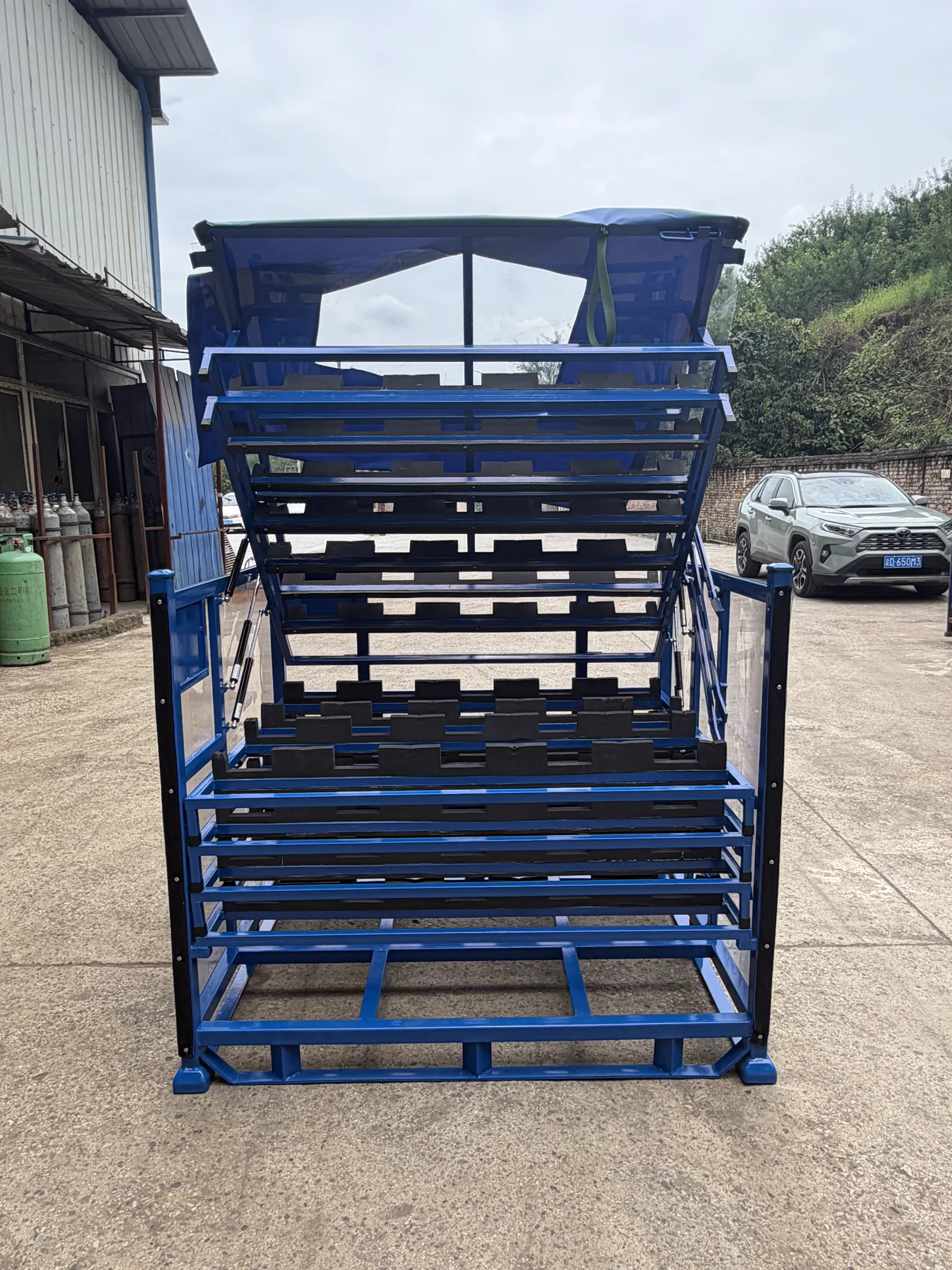
Covered Multi-Layer Automotive Parts Rack
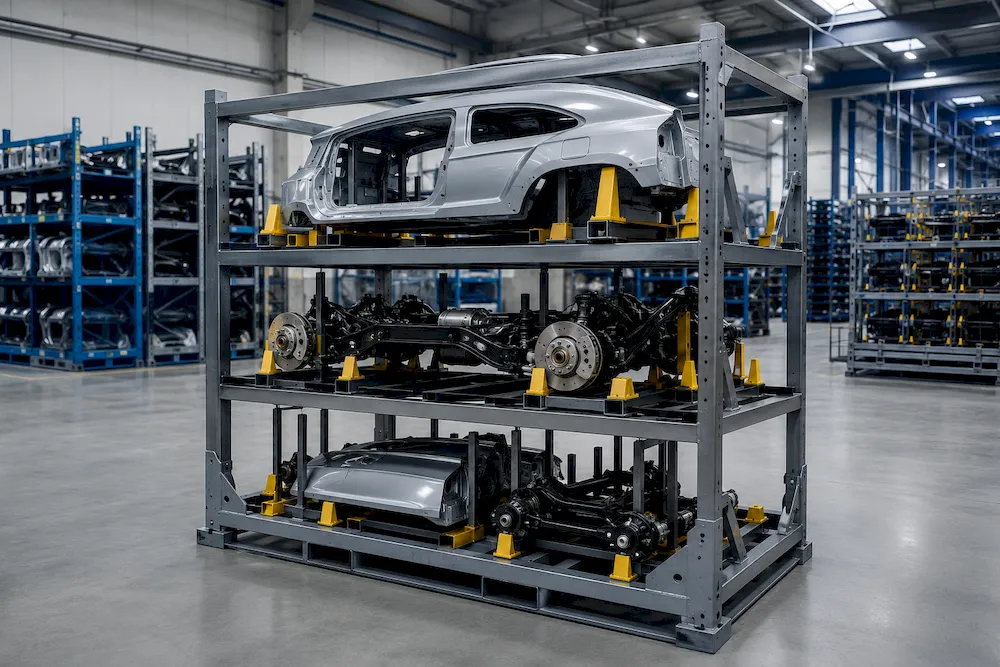
A covered multi-layer automotive parts rack for returnable transport and protected storage of surface-sensitive or shape-specific components. Individual shelf positions, side access, protective cover panels and optional folding mechanisms are engineered to the part, loading method and return route.

HAOFU Engineering Team
Reviewed 2026-08-11
At a Glance
- Structure
- Custom welded steel multi-layer returnable stillage
- Part positions
- Layer count, pitch and dunnage configured to the component
- Protection
- Fabric cover, clear panels, mesh or solid side protection
- Handling
- Forklift pockets, pallet-jack entry, casters or tow interface
- Return efficiency
- Stacking, folding, removable or nesting elements as specified
- MOQ
- Typically 20–50 units; trial orders available
- Lead time
- Historical planning reference: sample about 7–15 days; production about 25–45 days. Reconfirm for each quotation.
Built example
Product Gallery
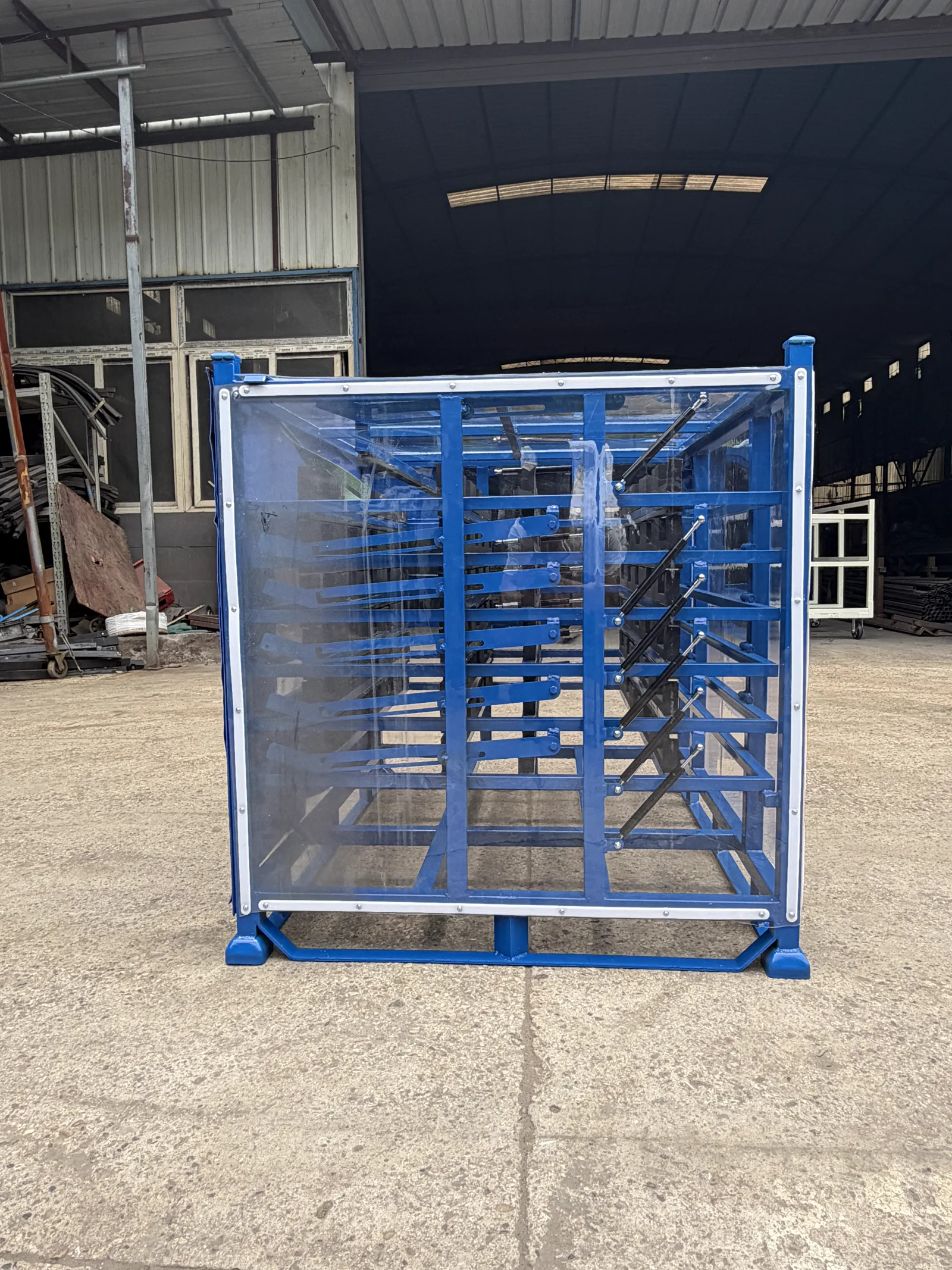
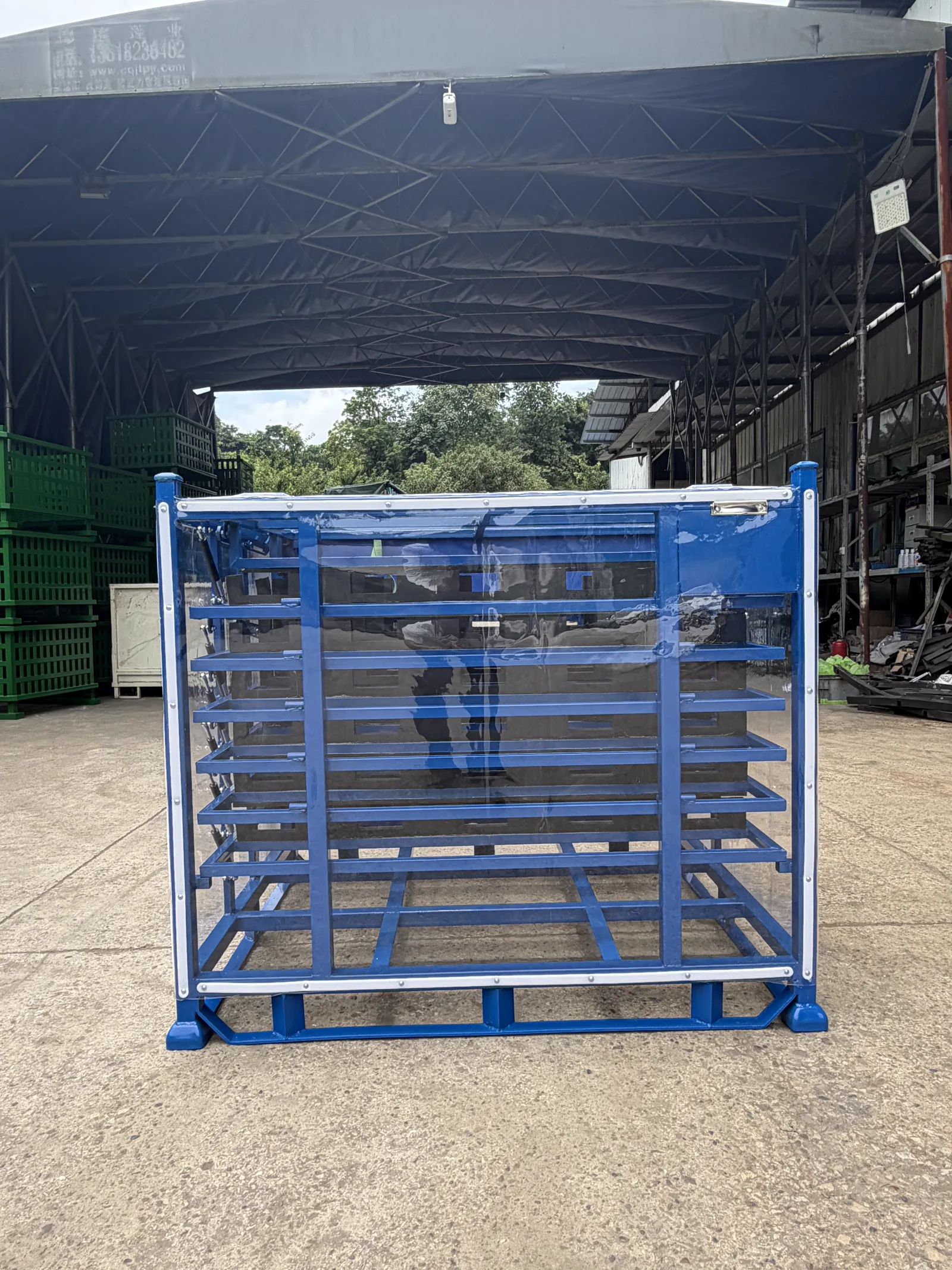
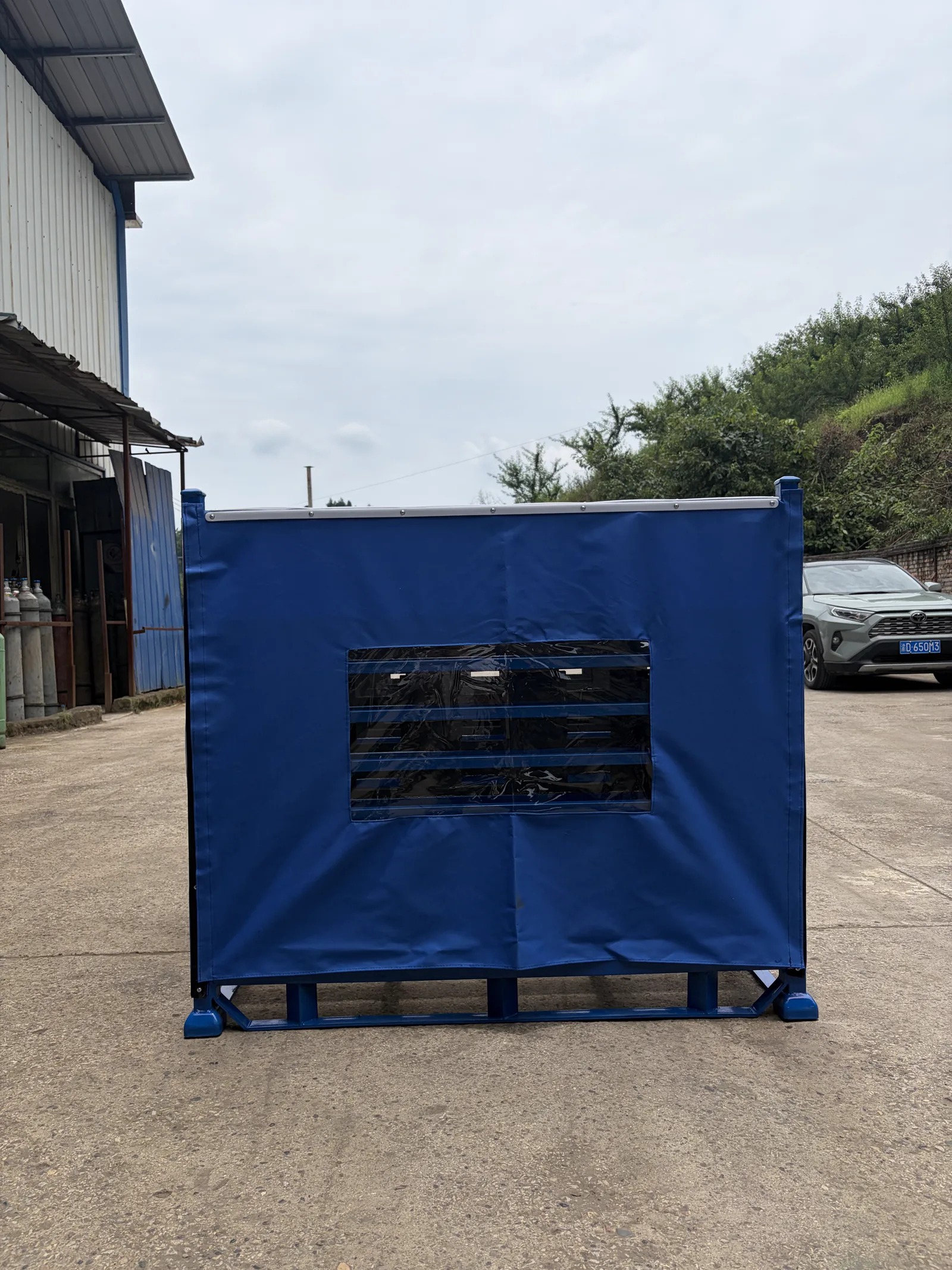
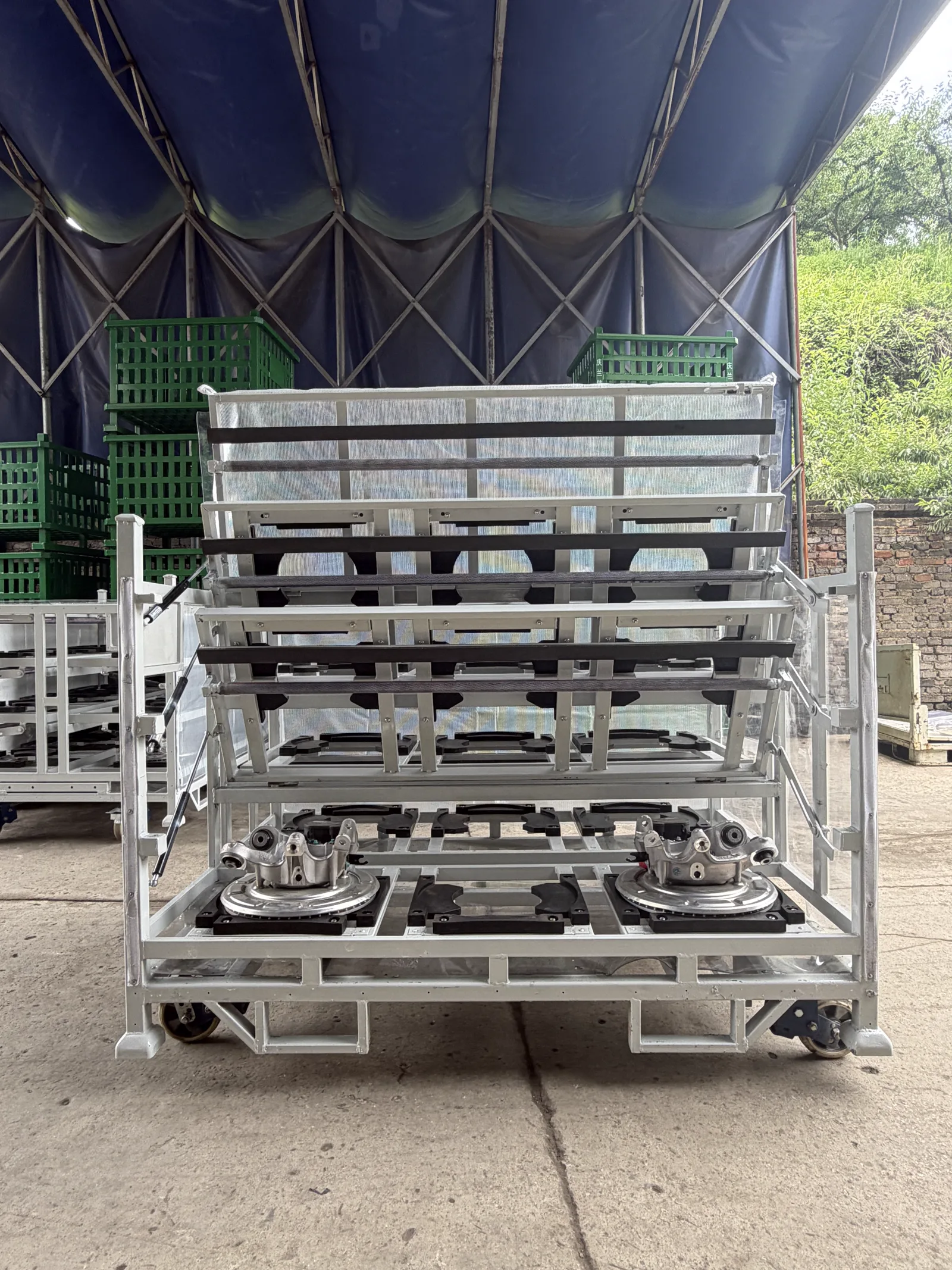
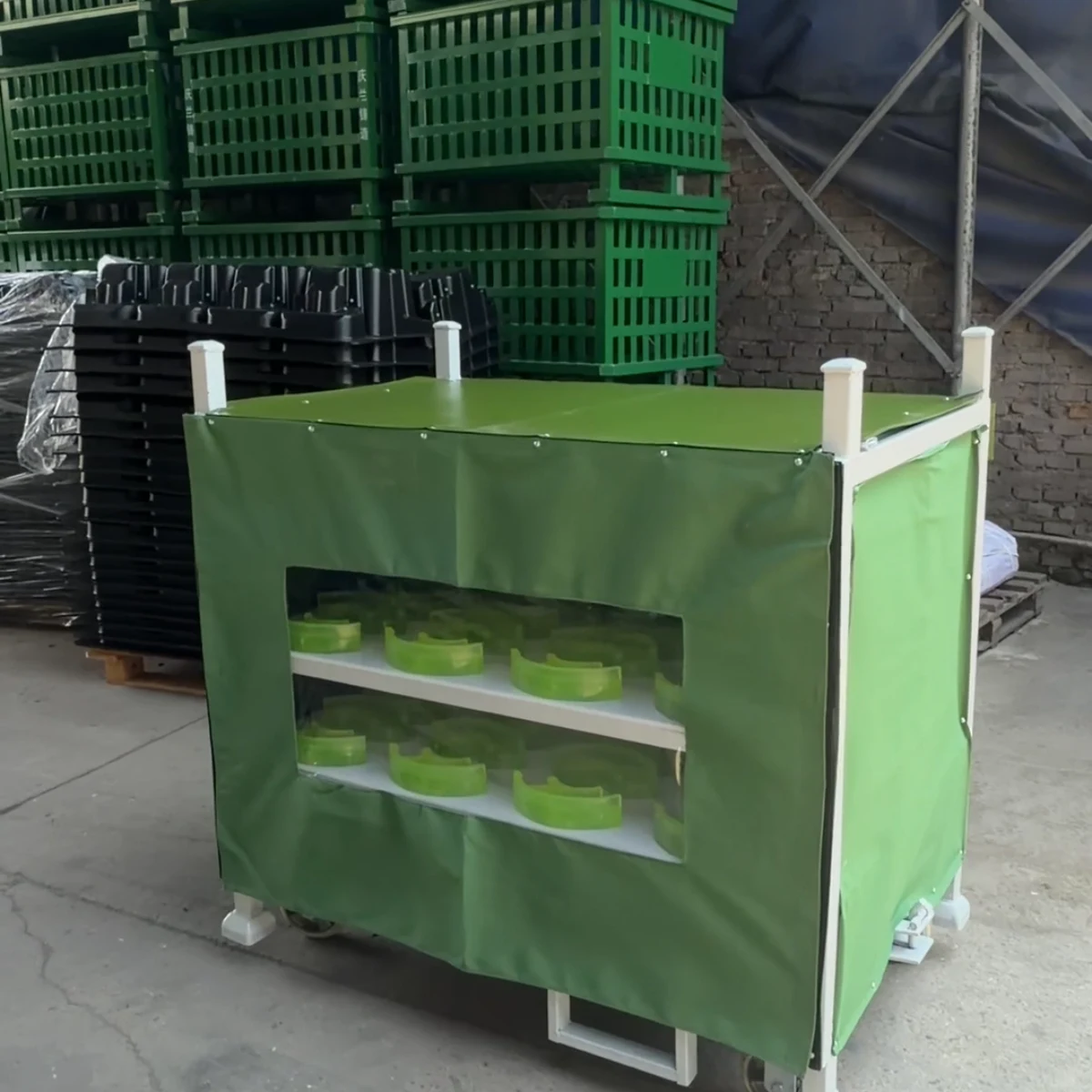
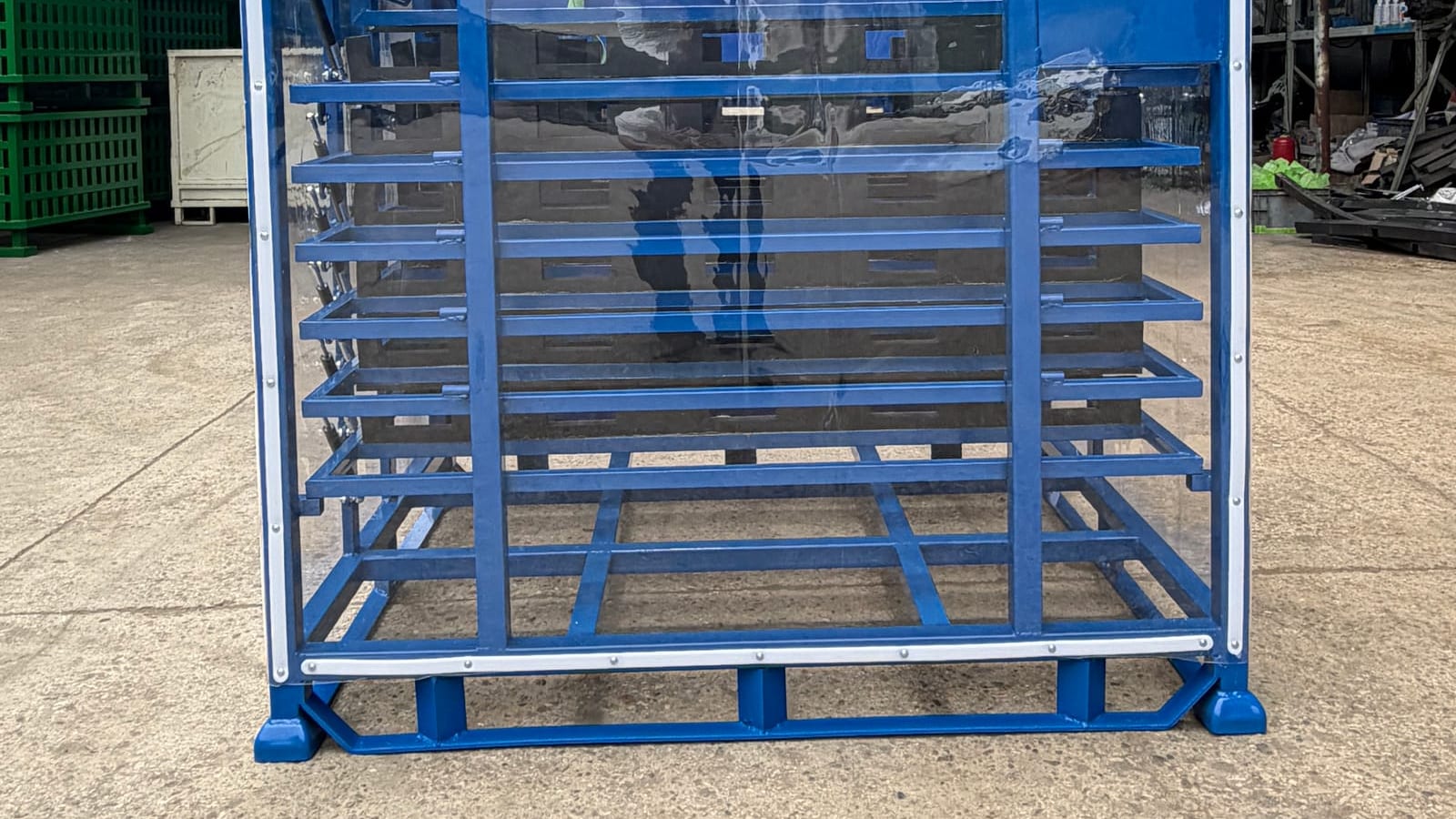
Real photos of a custom-built configuration. Dimensions, part count and handling details are specified for each buyer's programme.
Description
A covered multi-layer automotive parts rack combines individual part positions with a returnable steel frame and removable or fixed protective panels. It is used where several layers of components must stay separated, accessible and protected from dust, incidental contact or line-side handling damage during repeat transport and storage.
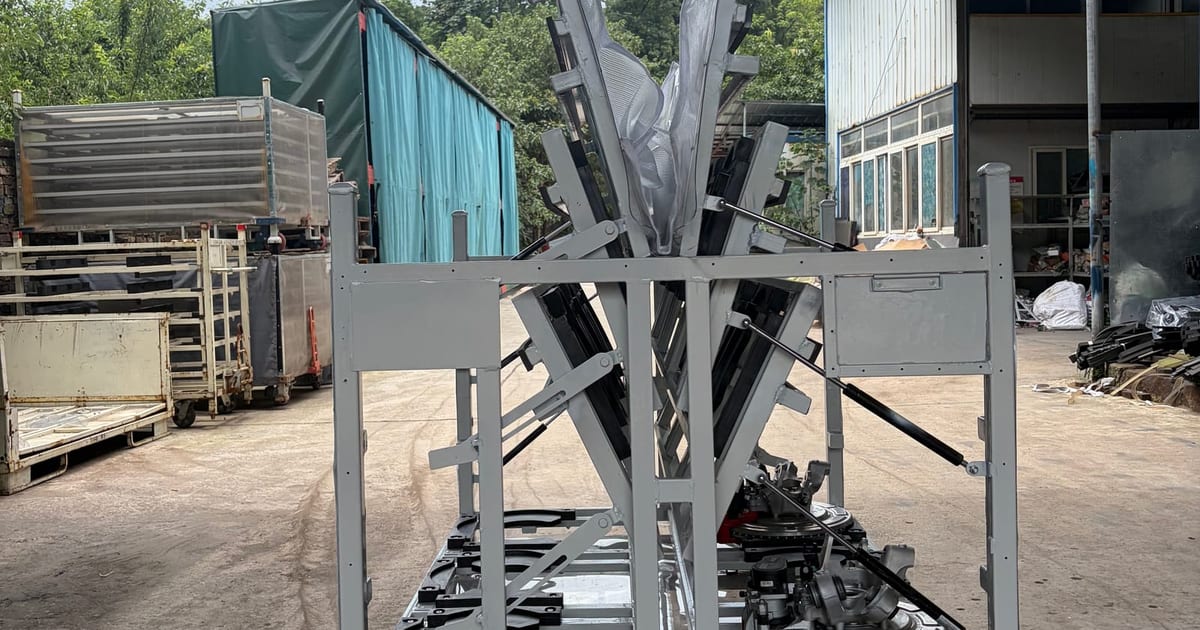
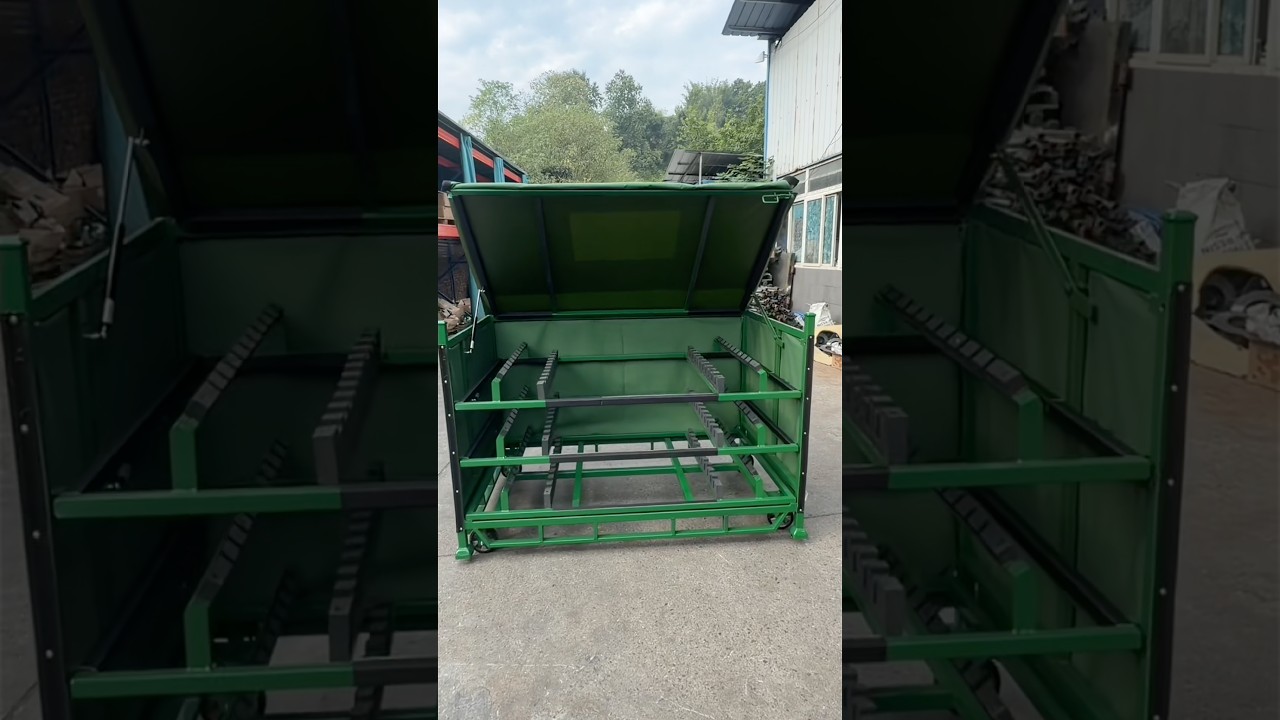
The photographed example shows a multi-level structure with side loading access and a protective cover. The number of layers, tray pitch, internal dunnage, cover material, stacking arrangement and empty-return design are all custom variables; they are set from the component geometry and the real logistics route, not from a catalogue size.
When a covered multi-layer rack is the right choice
- Parts need defined separation between layers to avoid contact or scuffing
- The route includes factory storage, cross-dock transfer or line-side presentation
- Dust protection or visual shielding is required between operations
- Operators need repeatable loading positions and clear access from the selected side
- The programme benefits from returnable packaging instead of one-way expendable materials
Customisation matrix
| Requirement | Configurable solution |
|---|---|
| Part geometry and surface sensitivity | Tray shape, locators, dividers, EVA, rubber, plastic or fabric protection |
| Required density and access | Layer count, shelf pitch, loading side and operator reach |
| Dust and transit protection | Fabric cover, clear panels, mesh or solid side protection |
| Loaded and empty return condition | Stacking feet, fold-down sections, removable posts or nesting concept |
| Handling equipment | Forklift pockets, pallet-jack entry, casters, tow point or lifting interface |
Specify the rack around your actual flow
To quote accurately, send the part drawing or samples, quantity per rack, target route, storage condition, handling equipment and destination. We will develop a custom concept through our OEM/ODM customization process. Related resources: line-side and sequencing rack design, foldable stillage design, and container load planning for racks.
Guides & Resources
Learn more about choosing and using covered multi-layer automotive parts rack.
Related Project Videos
See related rack projects, production details and handling features in motion.
Applications, Engineering & Buyer Tools
Move from product discovery to a project specification, application check and inspection plan.
Covered Multi-Layer Automotive Parts Rack — Frequently Asked Questions
What is the purpose of the cover on a multi-layer parts rack?+
A cover can reduce dust exposure, limit incidental contact and provide controlled visual shielding during storage and transport. The material and access openings are selected around the part, the route and operator needs.
Can each layer use different dunnage or part positions?+
Yes. Each layer can use the same repeated position or a different tray and locator design for mixed-part programmes. We confirm the loading sequence, spacing and part protection from your drawings and process.
Are the layers fixed or foldable?+
Both arrangements are possible. Fixed layers prioritize consistent part presentation; fold-down, removable or nesting elements can improve empty-return efficiency. The right approach depends on the return route and required rigidity.
How is the rack handled in a plant?+
The base can be built with forklift pockets, pallet-jack entry, industrial casters, a tugger interface or another agreed handling feature. Please provide the equipment type, aisle limits and transfer points during the design review.
What do you need to quote a covered rack?+
Please send component drawings or samples, part weight, quantity per rack, layer preference, surface-protection requirement, handling method, route and destination. These inputs let us specify the cover, dunnage and frame accurately.
Ready to Improve Your Material Handling?
Tell us your requirements and our engineers will contact you within 24 hours.
Contact Us Now