Automotive Compressor Parts Rack — Dust-Proof Curtain, EVA & Stackable
A custom automotive compressor parts rack with a dust-proof curtain, three EVA-protected layers, a tow hitch and swivel casters — built for safe storage, clean transport and stackable warehouse handling.
This automotive compressor parts rack stores and transports compressor assemblies on three EVA-lined layers behind a dust-proof curtain, with a tow hitch and swivel casters for line-side movement and a stackable frame that saves warehouse floor space.
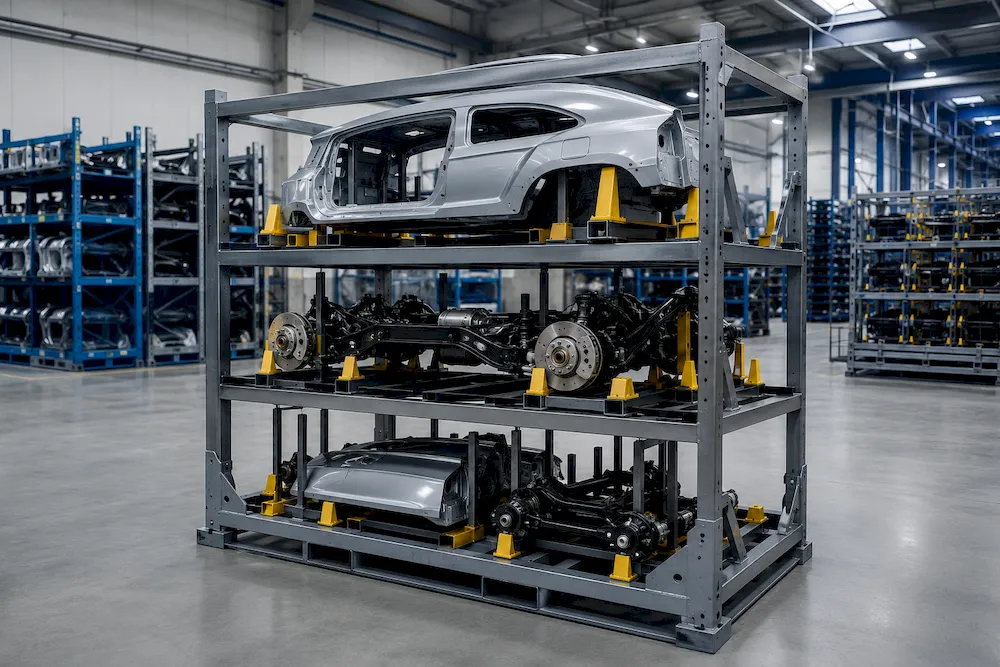
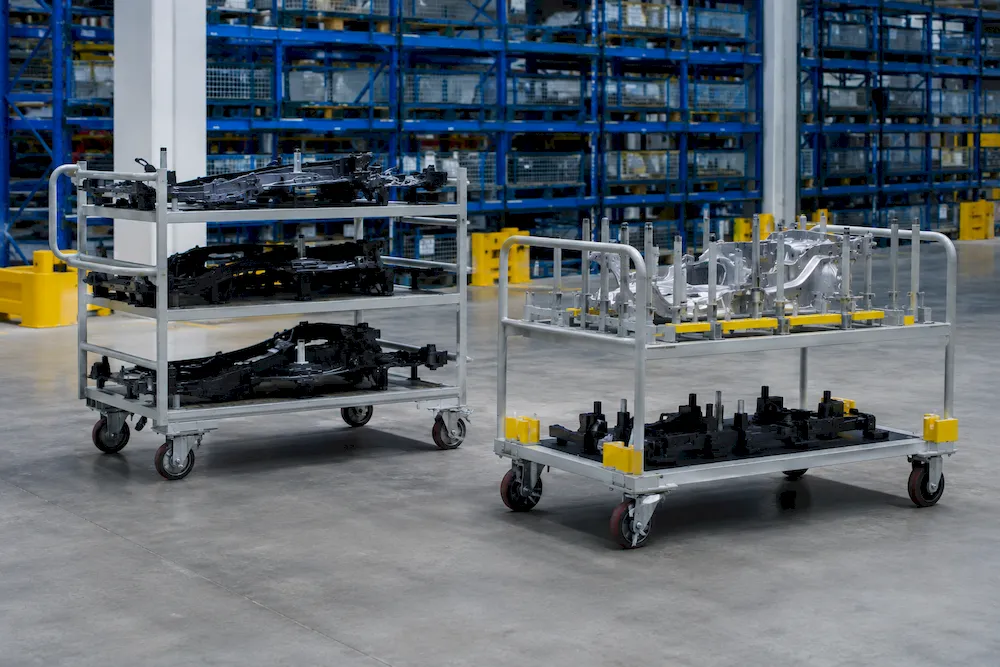
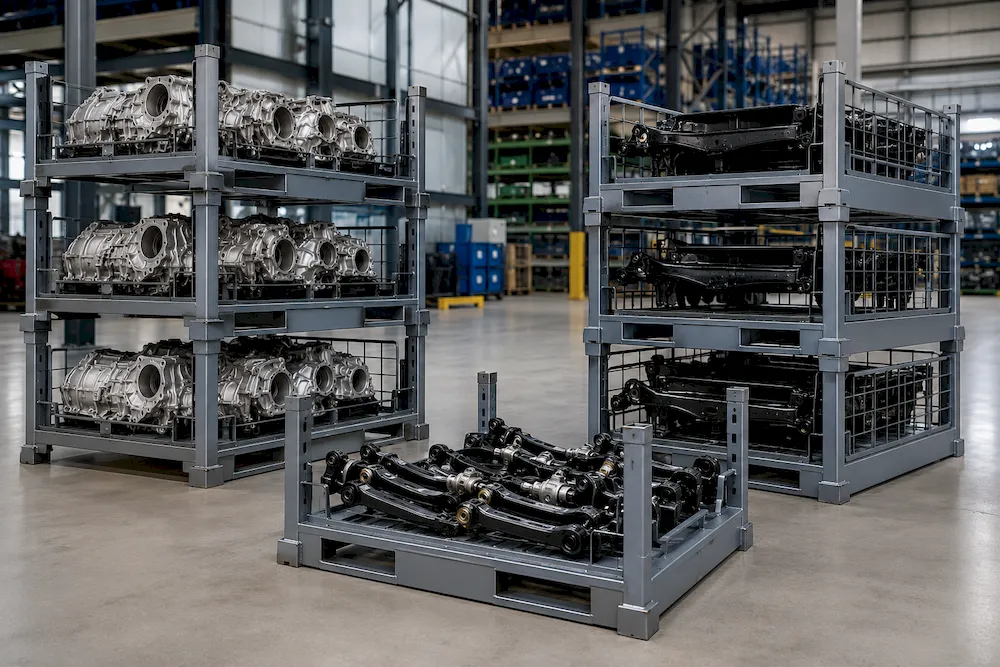
This automotive compressor parts rack is designed for the safe storage and transport of compressor assemblies. It combines a dust-proof curtain that keeps components clean, a three-layer structure with EVA foam protection that prevents scratches and impact damage, and a tow hitch with swivel caster wheels so the rack moves easily through the plant. The stackable frame saves warehouse space and improves handling efficiency in automotive production environments.
Why compressor assemblies need a dedicated rack
A compressor assembly is heavy, has machined sealing faces and protruding ports, and is easily marked. Loose stacking damages the housing and contaminates the ports. A purpose-built rack fixtures each unit in one orientation, cushions every contact point and keeps dust off during storage and transit.
Features shown in the video
| Feature | What it solves |
|---|---|
| Dust-proof curtain | Keeps dust and swarf off machined faces and ports in storage and transit |
| Three-layer structure | Triples the units per footprint without stacking parts on each other |
| EVA foam protection | Cushions every contact point so housings are not scratched or dented |
| Tow hitch | Lets the rack join a tugger train for line-side delivery |
| Swivel casters | 360° manual movement in tight aisles and at the station |
| Stackable frame | Turns vertical space into storage and cuts return freight |
Dust protection and part cleanliness
Contamination is a real cost in compressor assembly: particles on a sealing face cause leaks and rework. The curtain encloses the load while still allowing quick access, which matters most when racks are staged outdoors or moved between buildings. Safe manual movement of loaded racks should follow recognised OSHA materials-handling practice.
Tugger-ready, line-side handling
The tow hitch lets this rack run in a tugger train instead of being moved one at a time by forklift — the standard lean approach to line feed. We cover the method in our guide to tugger trains and mother-daughter carts, and the rack pairs naturally with our material handling trolleys.
Get a compressor rack designed for your part
Every rack is engineered around the specific assembly — see how in our automotive parts rack design guide, or browse automotive parts racks. Send your compressor drawings and our engineers will reply within 24 hours.
Frequently Asked Questions
- What is an automotive compressor parts rack?
- It is a custom steel rack built to store and transport automotive compressor assemblies. It holds each unit in a fixed orientation on EVA-lined layers, encloses the load behind a dust-proof curtain, and moves on swivel casters or a tow hitch — protecting machined faces and ports that a plain pallet would leave exposed.
- Why does the rack need a dust-proof curtain?
- Compressor assemblies have machined sealing faces and open ports where dust or swarf causes leaks and rework. The curtain encloses the load during storage and transport while still allowing quick access, which matters most when racks are staged outdoors or moved between buildings.
- How many compressors does one rack hold?
- This rack uses a three-layer structure, and the number of units per layer is set by the assembly's size and the handling weight you want per rack. We size layers and dividers to your specific part and your line's takt so operators are not lifting more than intended.
- How does EVA foam protect the parts?
- EVA foam is fitted exactly where the compressor housing touches steel, so the load is carried on cushioned contact points rather than bare frame. It absorbs vibration in transit and prevents the scratches, dents and surface marks that lead to scrap or rework.
- Can the rack be stacked and towed?
- Yes. The frame has stacking feet so loaded racks interlock vertically to save floor space, and a tow hitch so it can join a tugger train for line-side delivery. Swivel casters handle the last few metres manually at the station.