Protecting Painted, Plated & Plastic Parts: EVA, Foam & Divider Systems

Protect painted, plated and plastic parts with cushioning at every contact point — EVA foam for finished surfaces, rubber for high-wear points and dividers to separate parts. Keep the protection replaceable, because in a returnable loop the dunnage wears out before the steel.
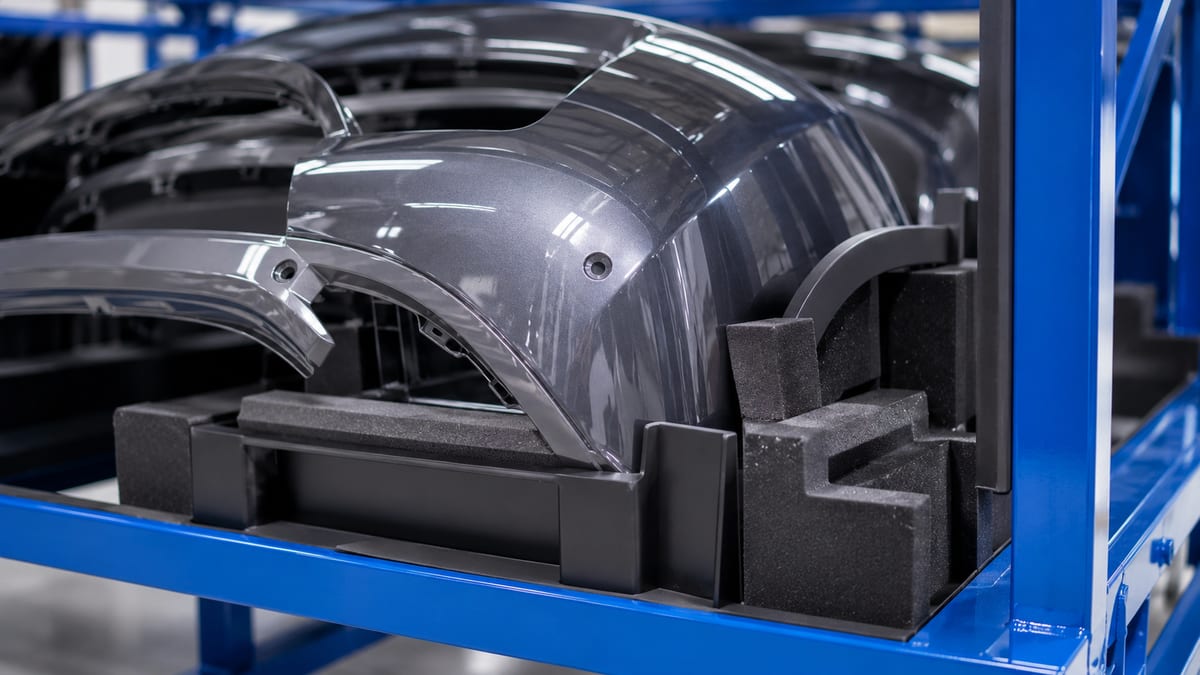
Painted, plated and plastic automotive parts are easy to scratch, scuff and dent — and a single mark can mean rework or scrap. The fix is engineered part protection: the right cushioning material, placed at every point where the part meets steel or meets another part. This guide compares the common materials and where to use them.
Quick answer: protecting finished parts
Add cushioning at every point where the part meets steel or another part: EVA foam for painted and plated surfaces, rubber pads at high-wear points, and plastic blocks or dividers to keep parts separated and located. Keep the dunnage replaceable, since in a returnable loop it wears out well before the steel does.
How parts get damaged
Damage comes from three things: metal-to-part contact, part-to-part contact, and movement in transit. Good protection eliminates all three by cradling the part, separating parts, and stopping them from shifting.
Protection materials compared
| Material | Best for | Notes |
|---|---|---|
| EVA foam | Painted & plated surfaces | Soft, resilient, non-marking; durable for returnable use |
| PE / PU foam | General cushioning | Economical; grades vary by density |
| Rubber pads | High-wear contact points | Tough, replaceable, good grip |
| Plastic blocks / dividers | Separating parts | Keep parts apart and located |
| Flocked / fabric liners | Class-A show surfaces | Softest touch for visible finishes |
Where to place protection
Map every contact point on the part, then add cushioning exactly there — cradles under the part, pads where it rests, dividers between parts, and stops that prevent sliding. Keep protection replaceable, because in a returnable loop the dunnage wears before the steel does.
Prove it with testing
Cushioning should be validated, not assumed. Material and package performance can be evaluated with standardised methods from ASTM, and transport simulation using ISTA test procedures confirms the parts survive real distribution. We build and test a sample before mass production.
Design protection into the rack
Protection works best when it is engineered into the rack from the start, not added later. HAOFU designs the frame, dividers and cushioning together — see our automotive parts racks and custom metal containers, or send your part details for a protected, returnable design.
See a protective, double-sided design in our automotive component transport rack video.
Frequently Asked Questions
- What material best protects painted automotive parts?
- EVA foam is the usual choice for painted and plated surfaces — it is soft, resilient and non-marking, and durable enough for repeated returnable use. For Class-A show surfaces, flocked or fabric liners give the softest touch.
- EVA foam vs PE foam — which is better for part protection?
- EVA is more resilient and non-marking, making it ideal for finished and painted surfaces in returnable racks. PE/PU foam is more economical for general cushioning. The best choice depends on the surface finish, cycle life and budget.
- How is part protection tested?
- Cushioning is validated with standardised material tests (e.g. ASTM methods) and transport-simulation testing (e.g. ISTA procedures) to confirm parts survive real distribution. We build and test a sample before mass production rather than assuming.
- Is the cushioning replaceable in returnable racks?
- Yes — protection should be replaceable, because in a returnable loop the dunnage wears out before the steel frame does. Designing pads, cradles and dividers as replaceable parts keeps the rack protecting parts for its full service life.
- Where should cushioning be placed in a parts rack?
- Map every point where the part contacts steel or another part, then add cushioning exactly there — cradles under the part, pads where it rests, dividers between parts, and stops that prevent sliding. This addresses the three causes of damage: metal-to-part contact, part-to-part contact and movement in transit. Keep the protection replaceable, since dunnage wears out before the steel does.