
Rack Loss and Shrinkage: Why Returnable Fleets Disappear
1) Treat shrinkage as a reconciliation problem before treating it as a purchasing problem. 2) Separate missing, delayed, repair-held, retired and duplicate records. 3) Give each asset a stable ID and record every hand-off. 4) Review exceptions by route, location and status; do not publish a universal loss rate or guaranteed reduction.
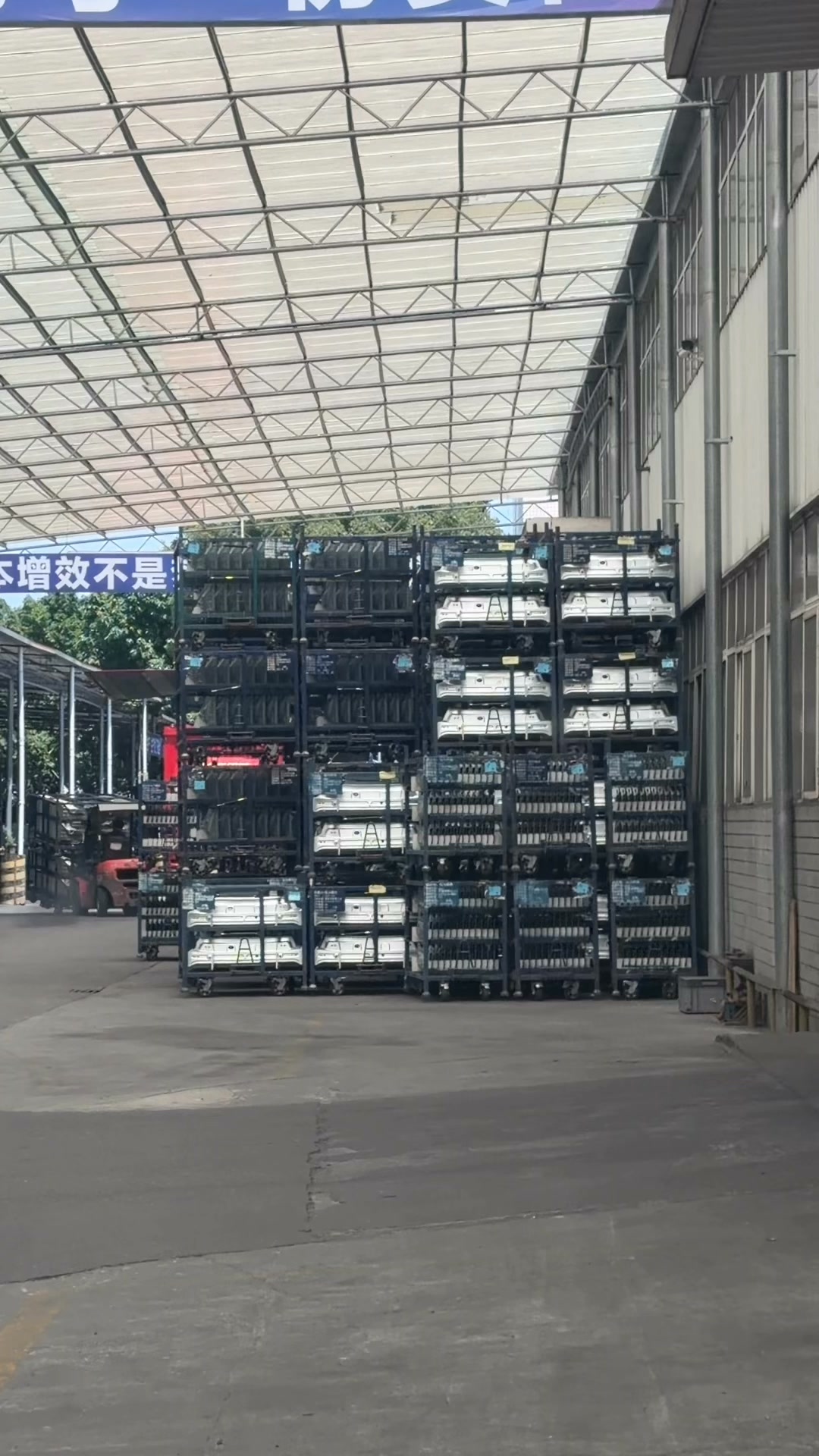
Direct answer: Returnable packaging loss is often a visibility and reconciliation failure before it is a simple shortage. A rack can appear missing because it is delayed at a partner, held for repair, retired without a record, misrouted, counted under a duplicate ID or never recorded at a hand-off. The first control is to classify the exception with a stable asset ID, last confirmed event, current custodian and next action; only then should a buyer decide whether the fleet needs replacement units or a process change.
This guide is for supply-chain leaders, logistics managers and returnable-asset owners. It focuses on operational evidence—not legal responsibility, universal loss rates or a promise that one tracking technology will eliminate shrinkage. GS1 describes GRAI as an identifier for reusable transport assets, while SAP's returnable-packaging documentation separates ownership, serial-level material and inventory counting. Those concepts help structure a control loop, but each programme still needs its own route, parties and reconciliation rules.
What rack shrinkage actually includes
Use “shrinkage” as a pool-level symptom, then split it into states that can be investigated. A count difference is not automatically a permanently lost rack. The operational response changes depending on whether the unit is moving, waiting, under repair, beyond repair, misidentified or genuinely unaccounted for.
| Observed status | Evidence to check | Immediate control action |
|---|---|---|
| Delayed return | Last dispatch, expected cycle, carrier or partner receipt | Open a dated recovery task and update the expected next event. |
| Repair hold | Inspection or repair ticket, location, removed accessories | Move the asset to a repair status and reconcile its parts before redeployment. |
| Retired or beyond repair | Disposition approval, photographs, scrap or replacement record | Close the asset ID with a controlled retirement event. |
| Misrouted or wrong location | Handoff scan, shipment record, depot and receiving exception | Correct the location and notify the responsible process owner. |
| Data or ID error | Duplicate number, unreadable label, manual entry or type/serial mismatch | Correct the master record and preserve the audit trail. |
| Unaccounted for | No credible event after the last confirmed custody | Escalate according to the agreed programme procedure; do not silently remove it from the pool. |
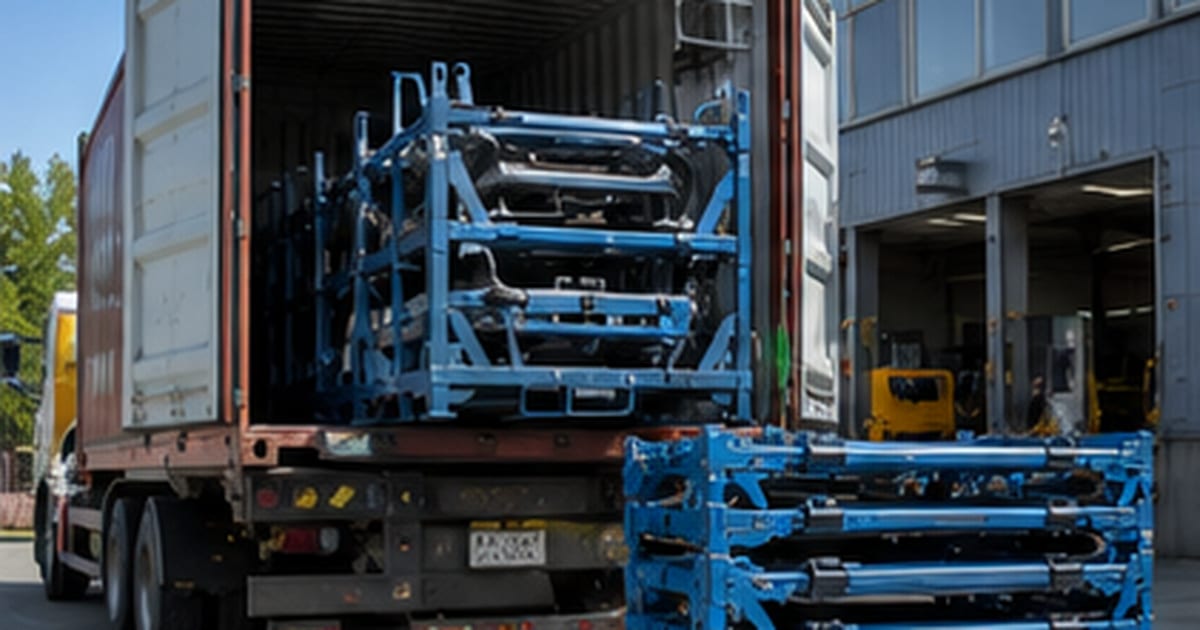
Why returnable packaging fleets disappear
1. The rack has no stable individual identity
A type name or shipment number may identify a group, but it cannot reliably answer which physical rack was handed over, repaired or retired. GS1's GRAI is one reference for identifying returnable assets by type and, when needed, individually. The programme may use another controlled identifier, but the physical marking and master record must agree.
2. Handoffs are recorded at the wrong level
Teams often record a shipment, pallet or batch while the business needs a rack-level event. A dispatch list without receipt confirmation, or a receipt without condition and quantity evidence, leaves a gap in custody. Define which location, partner or depot owns the next event and what evidence closes it.
3. Repair and retirement are invisible states
A rack removed from circulation may still appear as available inventory if the repair or retirement status is not posted. Missing accessories, damaged panels and units waiting for inspection need a controlled status so they are not counted as ready assets or mistaken for loss.
4. Return timing is not compared with the actual loop
Cycle counts become noisy when the expected cycle is not defined. Record the outbound event, partner dwell, receiving event, empty return and redeployment. A late rack should be investigated against that route and time window, not against an unqualified assumption that every unit returns immediately.
5. IDs are hidden, duplicated or changed without a revision
Labels that disappear behind parts, get replaced during repair or are reused on another rack create false shortages and false duplicates. Keep the human-readable ID visible where the route requires it, define replacement rules and preserve the old-to-new relationship in the asset record.

Returnable packaging loss control workflow
- Freeze the asset list. Reconcile the active type, individual IDs, owner, current status and expected location before reviewing the discrepancy.
- Rebuild the last confirmed event. Check dispatch, receipt, transfer, repair, return and retirement records against the rack ID and timestamp.
- Classify the exception. Mark it as delayed, repair-held, retired, misrouted, duplicate/error or unaccounted for, and assign one next action.
- Run a targeted count. Count the relevant depot, partner, route or status bucket rather than recounting the whole pool without a hypothesis.
- Close the evidence loop. Record the disposition, correct the master data, update the expected cycle and review whether the route or rack interface needs a change.
Reactive counting versus controlled reconciliation
| Control question | Reactive approach | Controlled approach |
|---|---|---|
| What is missing? | “Several racks” or a shipment total | Individual asset IDs and the affected type/revision |
| Where was it last seen? | Memory or a general dispatch date | Last confirmed event, location, custodian and timestamp |
| What state is it in? | Available or missing | In transit, received, repair, retired, misrouted or unaccounted |
| What is the next action? | Buy replacements immediately | Recover, correct, repair, retire or replenish after evidence review |
Common mistakes in rack-loss investigations
- Ordering replacement units before checking repair, retirement and duplicate-ID records.
- Using a type label or shipment number when the dispute needs an individual asset ID.
- Counting only full racks and ignoring empty racks, loose posts, doors, dividers or panels held separately.
- Changing an asset number during repair without retaining the original identity and reason.
- Measuring a pool at one point in time without defining the normal route and expected cycle.
- Publishing a loss percentage from one count without stating the population, period, status rules and evidence quality.
What to specify when the rack fleet needs better control
Tell the supplier and programme owner how each rack will be identified, where the ID will be visible, which labels or tags are permitted, how repairs and retirement are recorded, how empty returns are confirmed, which locations need cycle counts and what evidence is required for a discrepancy. If RFID is under consideration, read what to specify for RFID-ready returnable racks before choosing a tag location or reader zone.
For ownership, deposits and dispute evidence, see ownership and contract controls for returnable racks. For the quantity side of the loop, use the returnable-rack pool-sizing guide. HAOFU can review the physical rack, identification plate, handling interface and return requirements through the customization page; the asset-management process remains a shared buyer-and-partner operating decision.
Technical references
- GS1 Global Returnable Asset Identifier (GRAI)
- GS1 Global Traceability Standard
- SAP Returnable Packaging Management: Ownership
- Odette Track & Trace and RTI identification resources
Next step: send the rack type, current asset-ID method, route, discrepancy pattern and required evidence through HAOFU customization for a project-level rack and interface review.