
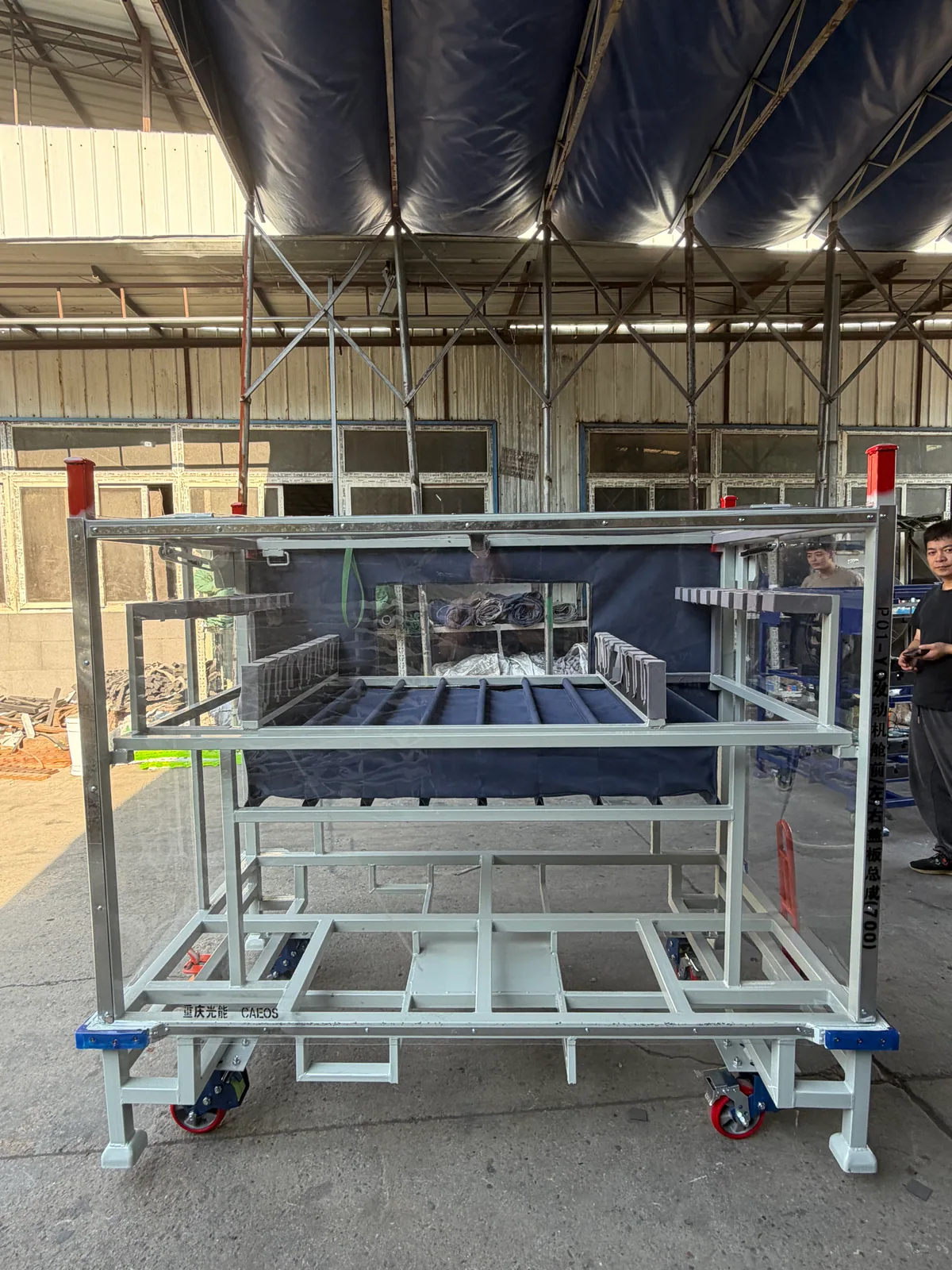
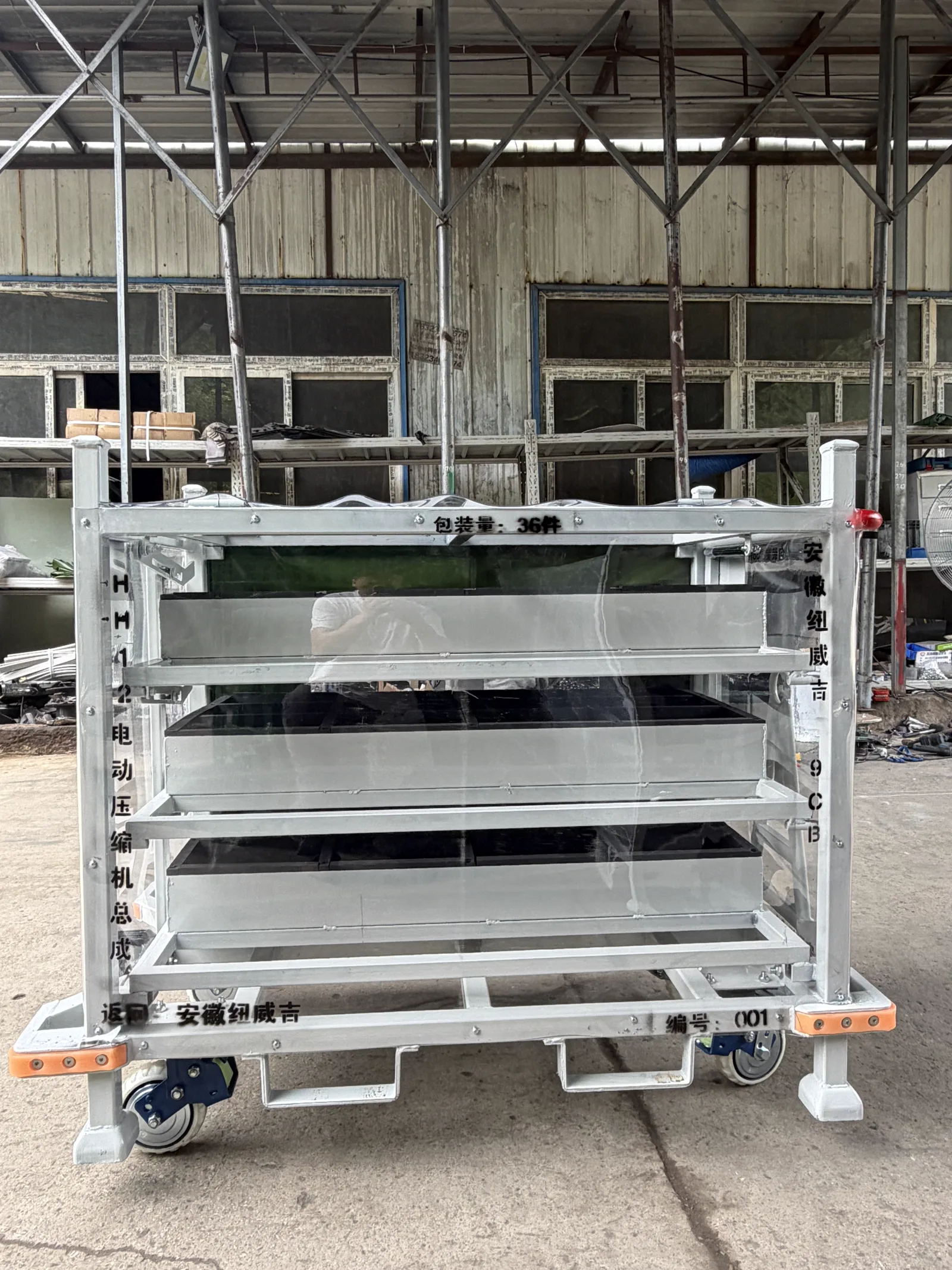
Real HAOFU build: see-through enclosure, separated soft contact positions and a wheeled handling base.
Clear-Panel Divider Parts Trolley
A wheeled steel parts trolley with clear side panels, a soft divided interior and fork-entry points. It keeps the part positions visible while the enclosure and base are designed around your component, loading face and plant handoff.
Choose a clear-panel parts trolley when the operator needs to see separated positions inside a protected carrier. For a custom quote, send the part envelope, approved contact points, position count, access side, floor route and forklift/caster handoff details.
At a Glance
- Built example
- Cream steel trolley with clear enclosure panels, soft dividers, casters and fork entry
- Part positions
- Divider layout set by part envelope and approved contact faces
- Access
- Panel/cover opening chosen for loading and inspection
- Quote basis
- Part data, protected faces, access side and movement route
Actual built configuration
Product Gallery
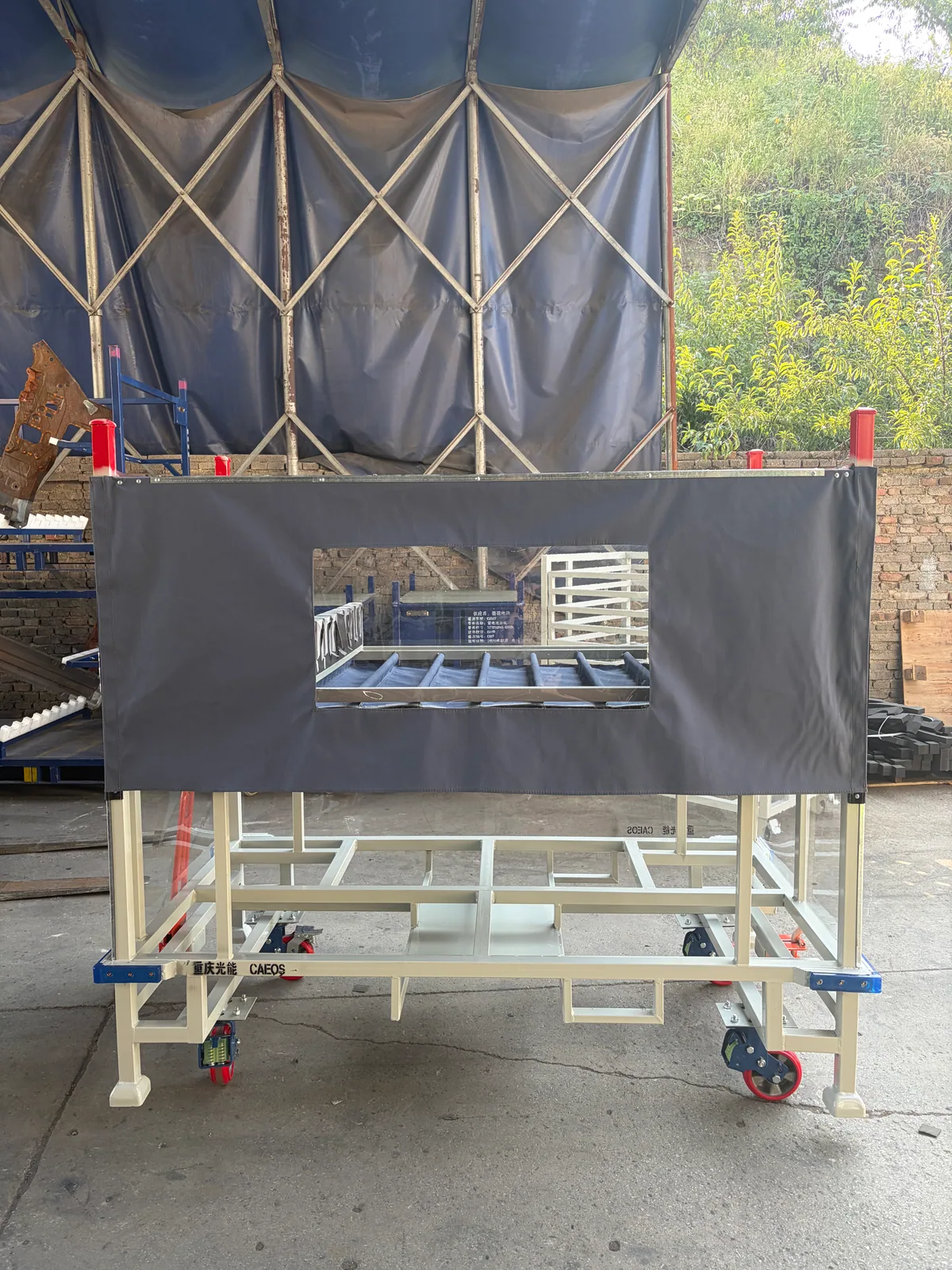
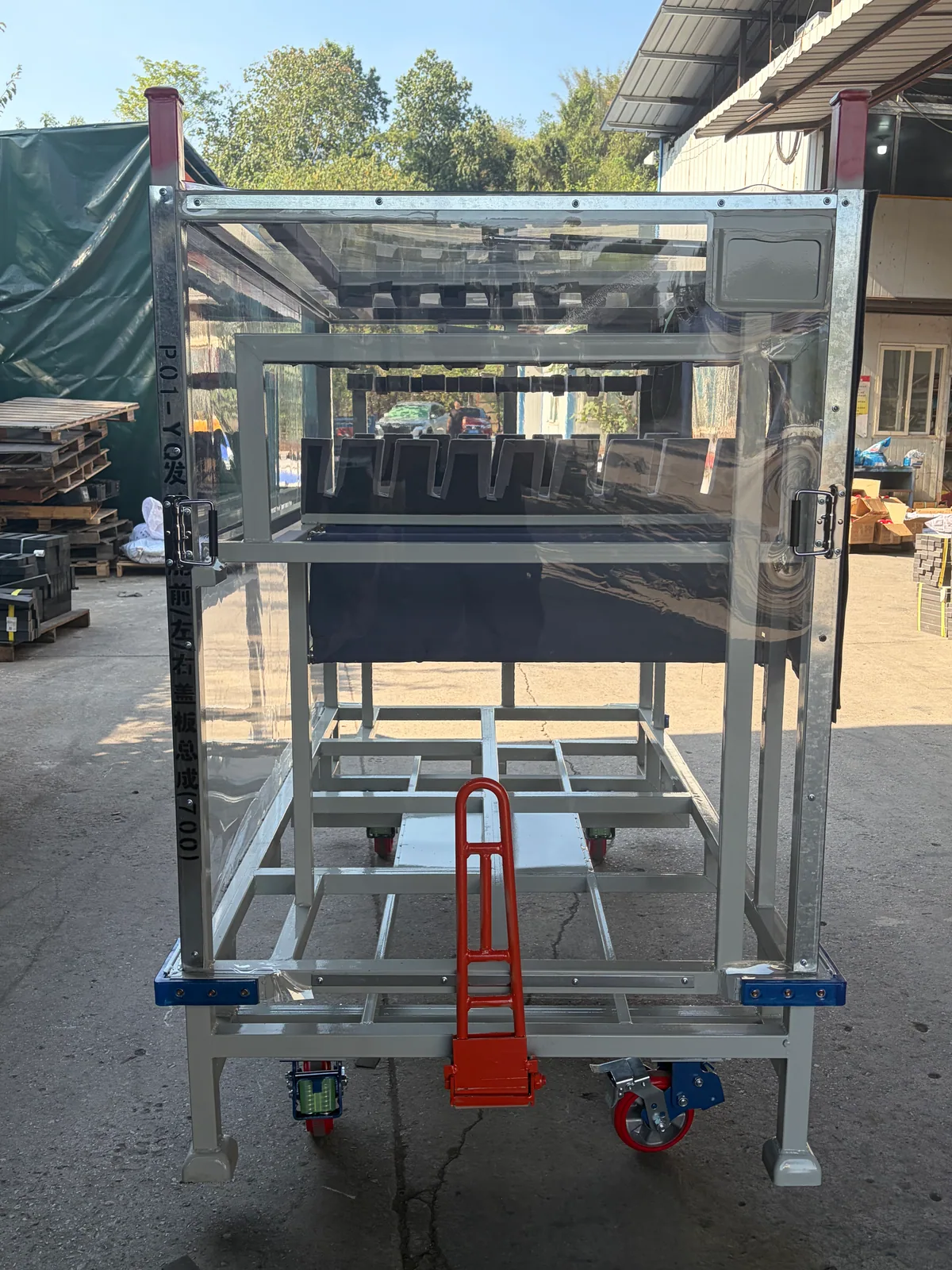
Front, covered-face and end views show where visibility, part separation and handling interfaces meet.
Description
A clear-panel automotive parts trolley pairs a visible enclosure with separated soft contact positions. The photographed HAOFU build has clear side panels, dark dividers, casters and fork-entry points. A buyer can see the carrier layout without removing a full cover, while the access face can be planned around the real loading task. Send your part dimensions, sensitive surfaces, position count and movement route to request a custom manufacturer quote.
Visibility is useful only if access works
Decide which side the operator opens, how the first and last parts are reached, and whether inspection needs a full view or just a window. In this build, the clear panels and covered face are different elements: the photograph can guide the conversation, but your access and cleaning method should determine the final panel and cover arrangement. The part should rest on agreed contact zones within the soft divider system.
Plan the trolley-to-forklift handoff
| What to tell HAOFU | Design choice it affects |
|---|---|
| Part envelope and allowed contacts | Divider spacing, support profile and clearance |
| Loading and inspection side | Door, cover, window and operator reach |
| Floor route and turning space | Caster layout, push access and trolley footprint |
| Fork equipment and transfer point | Fork-entry geometry and base clearance |
| Cleaning or replacement needs | Panel attachment and serviceable interior pieces |
Send the brief that makes a quote useful
- Send the part drawing, photo or sample and identify the protected faces.
- Give the parts-per-carrier target and the required loading order.
- Mark the operator side, route, forklift type and transfer location.
- State any panel, cover, textile or cleaning specification you must meet.
- Provide destination, target quantity and approval schedule.
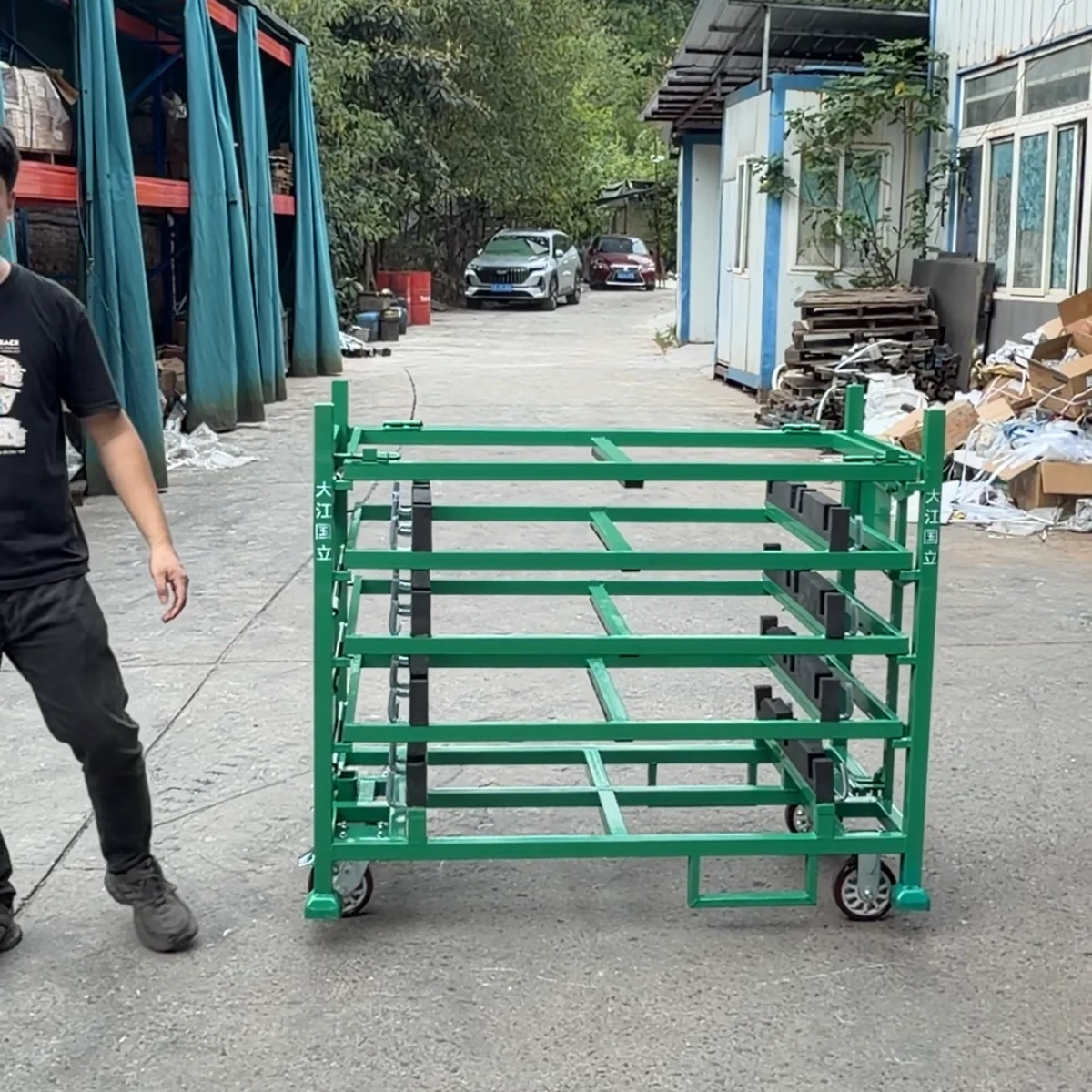
For a soft-cell carrier without a clear enclosure, compare the covered textile pocket rack. For other wheeled layouts, browse custom material-handling trolleys. Send your requirements for a clear-panel trolley quote.
Configuration comparison
Compare clear-panel divider parts trolley configurations by loading task
Choose the access and support arrangement from the part path and plant route, then set carrier density inside those constraints.
| Configuration | Use it when | Main trade-off | Send with the RFQ |
|---|---|---|---|
| Fixed positions | The part enters every position directly and repeatable supports suit one controlled geometry. | Simple operating sequence; sufficient hand, fixture and part clearance may require more pitch. | Part CAD, support map, entry direction, clearance and positions per carrier. |
| Opening or tilting levels | A level must move to expose positions below or improve the loading angle. | Better access at selected levels; pivots, open-state control and closing clearance must be resolved. | Moving mass, opening arc, loading sequence, operator side and hold-open requirement. |
| Covered mobile configuration | Parts need enclosure while the carrier moves between defined stations. | Adds route capability; cover, base, access and return operation must remain compatible. | Exposure, viewing, floor route, caster/brake state and transfer details. |
From requirement to quotation
Prepare a clear-panel divider parts trolley RFQ
Move from the controlled part to the load motion and complete logistics route before fixing the rack or trolley envelope.
- 1
Control the part
Send the current CAD or drawing, mass, centre of gravity, variants and revision.
Output: Approved part baseline
- 2
Map supports and access
Mark permitted contact, keep-out features, loading direction and operator or fixture clearance.
Output: Contact and motion map
- 3
Define the route
List manual, tow and parking states, floor conditions and turns.
Output: Handling-interface brief
- 4
Request the quote
Add pieces per carrier, carrier quantity, destination, identification and sample-review requirements.
Output: Comparable custom proposal
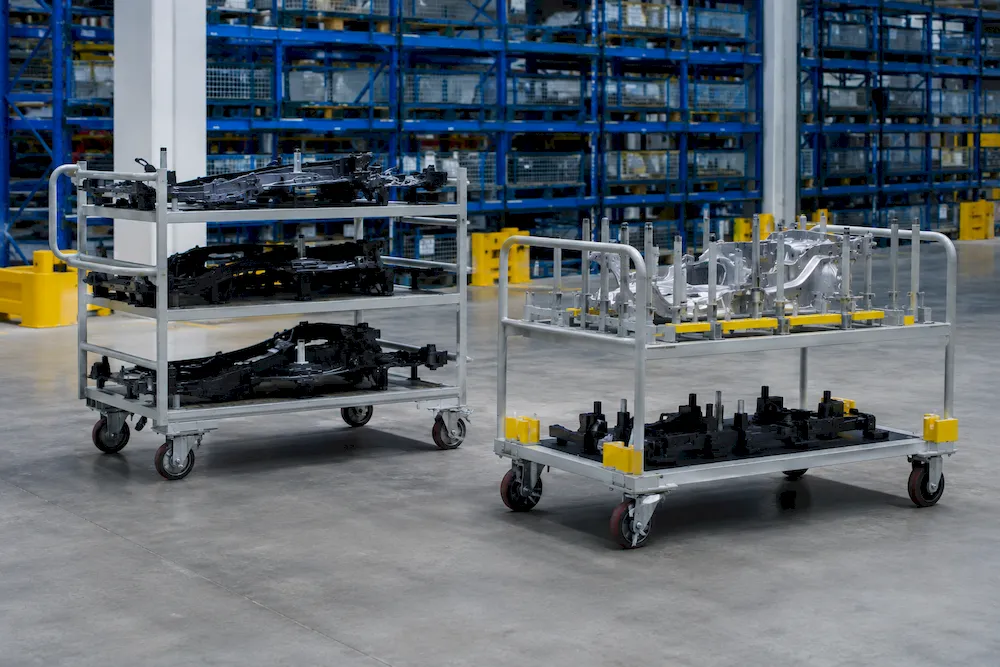
Guides & Resources
Learn more about choosing and using clear-panel divider parts trolley.
Applications, Engineering & Buyer Tools
Move from product discovery to a project specification, application check and inspection plan.
Clear-Panel Divider Parts Trolley — Frequently Asked Questions
Why use clear panels on a parts trolley?+
They let the operator see the position layout through the enclosure. The required visibility and opening method should match your inspection and loading task.
Can the soft dividers be changed?+
Yes. Send the part drawing and permitted contact faces so HAOFU can propose divider spacing, profile and service method.
Can the trolley be moved on wheels and by forklift?+
The photographed base has wheels and fork-entry features. Your quotation should specify which equipment uses them, where transfers occur and the loaded handling condition.
What should be in the RFQ?+
Part envelope and mass, quantity per trolley, protected faces, operator side, forklift and floor route, panel requirements, destination and order quantity.
Discuss your part or handling task
Send a photo, drawing or short description to start your enquiry.
Contact Us Now