
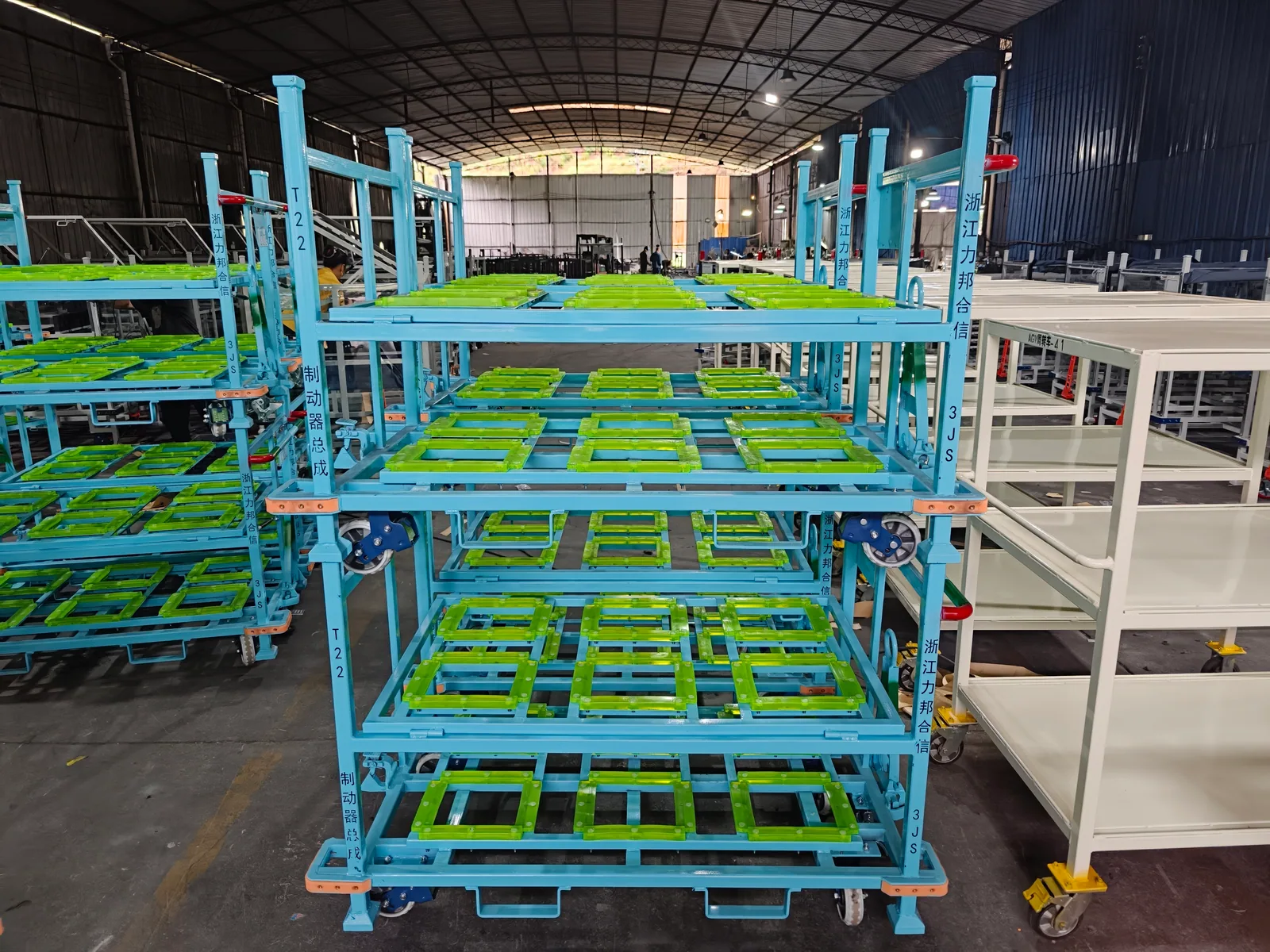
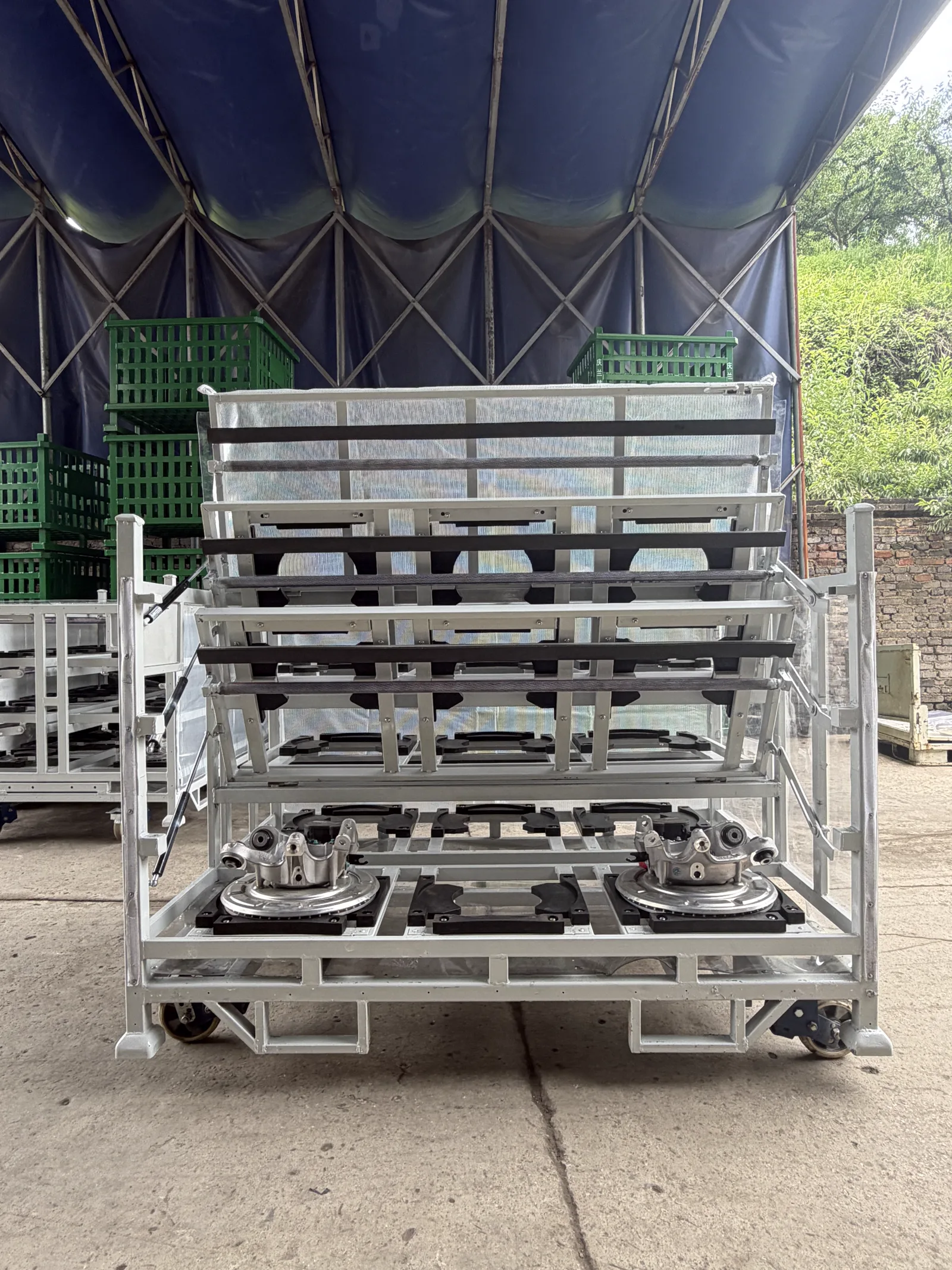
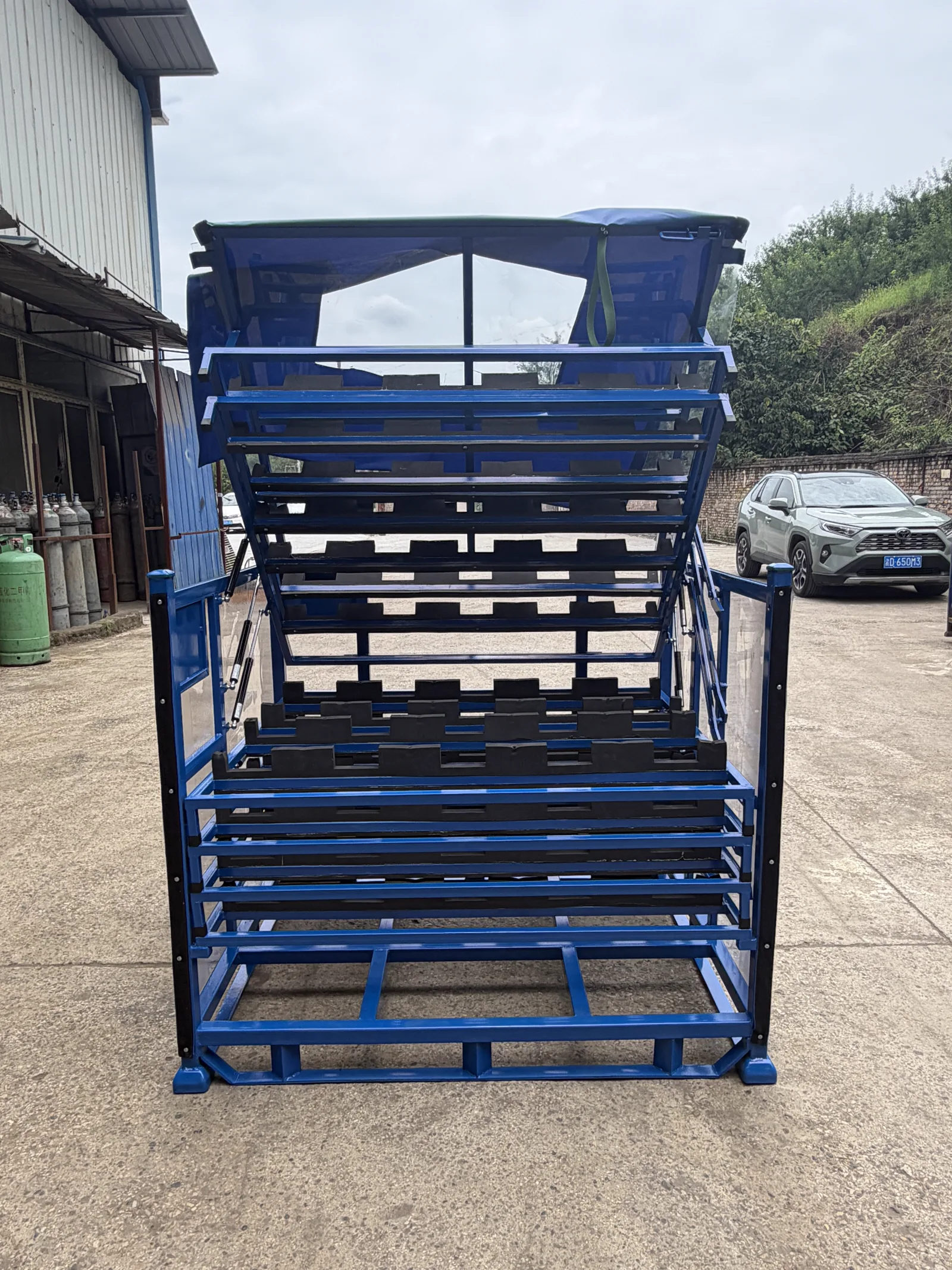
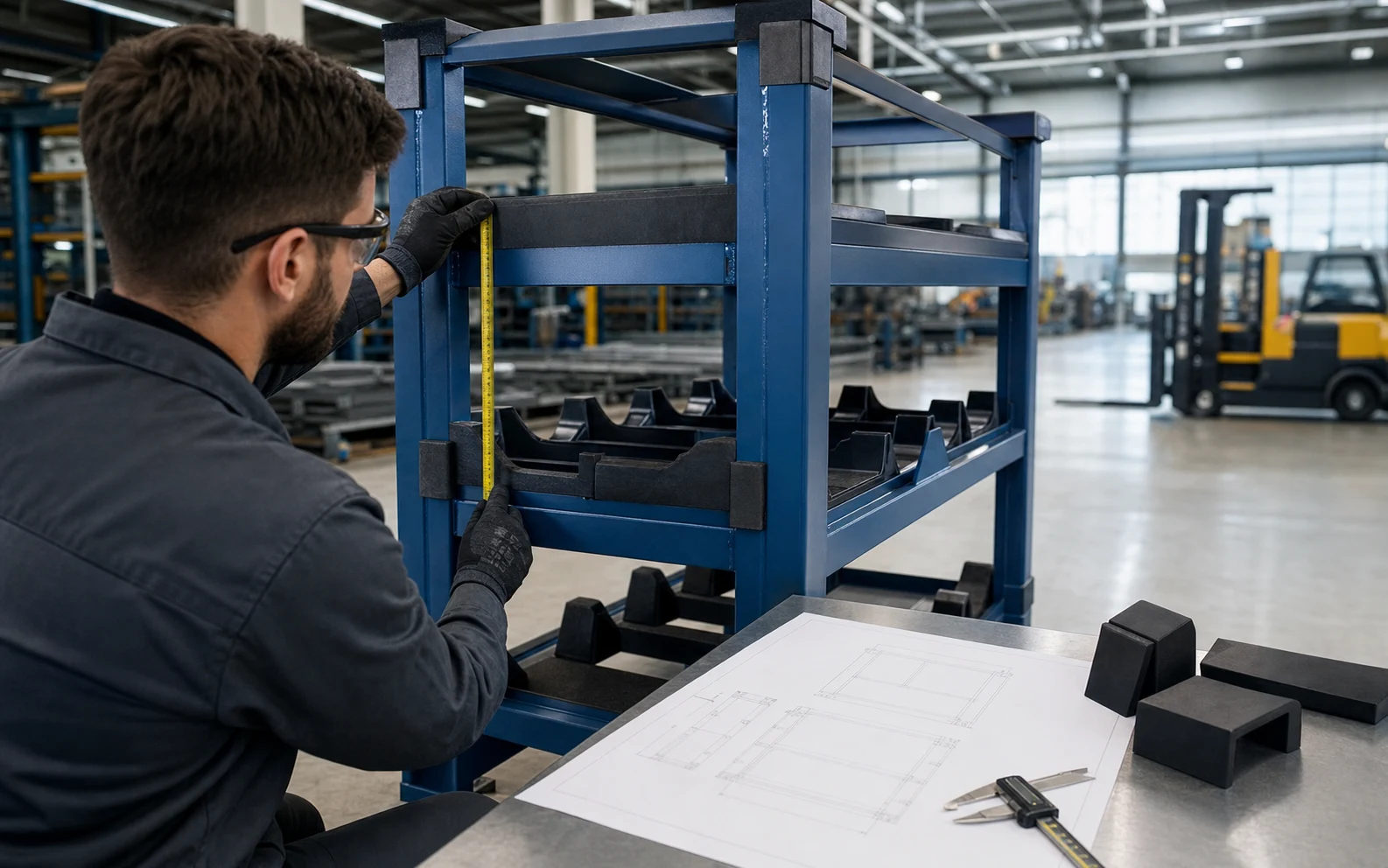
Real HAOFU build: multi-level blue steel frame and separated green locator frames for a brake-assembly programme.
Brake Assembly Locator Transport Rack
A custom steel transport rack for automotive brake assemblies with repeated, separated locator positions across several levels. The photographed blue configuration has green shaped support frames and a handling base; HAOFU sets the final position map from your approved assembly and route.
Quote a brake assembly rack from the assembly envelope, weight, supported faces, variants, quantity per carrier and forklift or wheeled route. The green locator pattern in these real photos is one built configuration, not a universal fit for every brake assembly.
At a Glance
- Built example
- Blue multi-level steel carrier with repeated green brake-assembly locators
- Support layout
- Mapped to the approved assembly and variants
- Base
- Photographed with fork entry and wheels; final handling follows route
- Quote basis
- Assembly drawing, mass, support map, positions and handling
Actual built configuration
Product Gallery
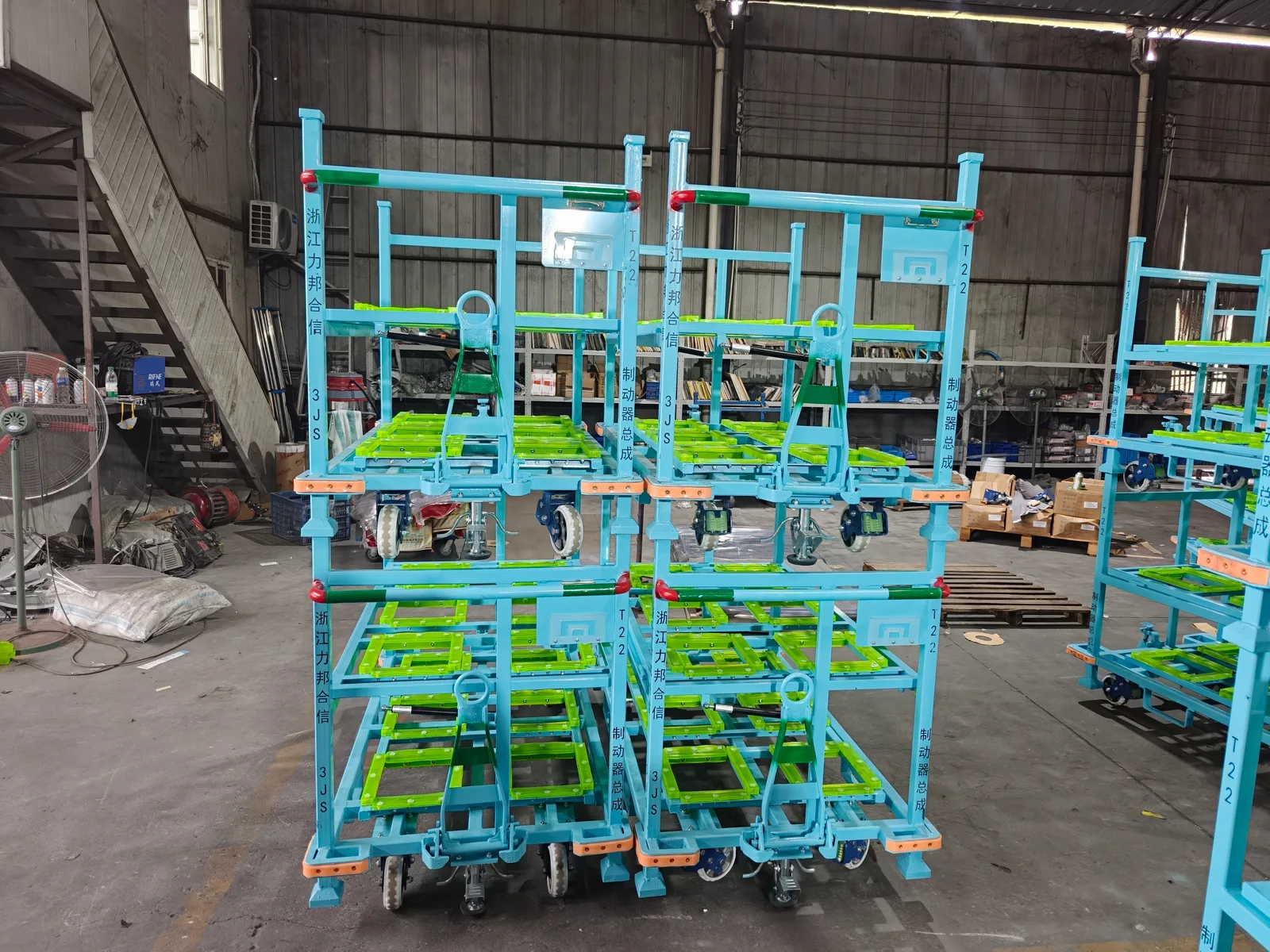
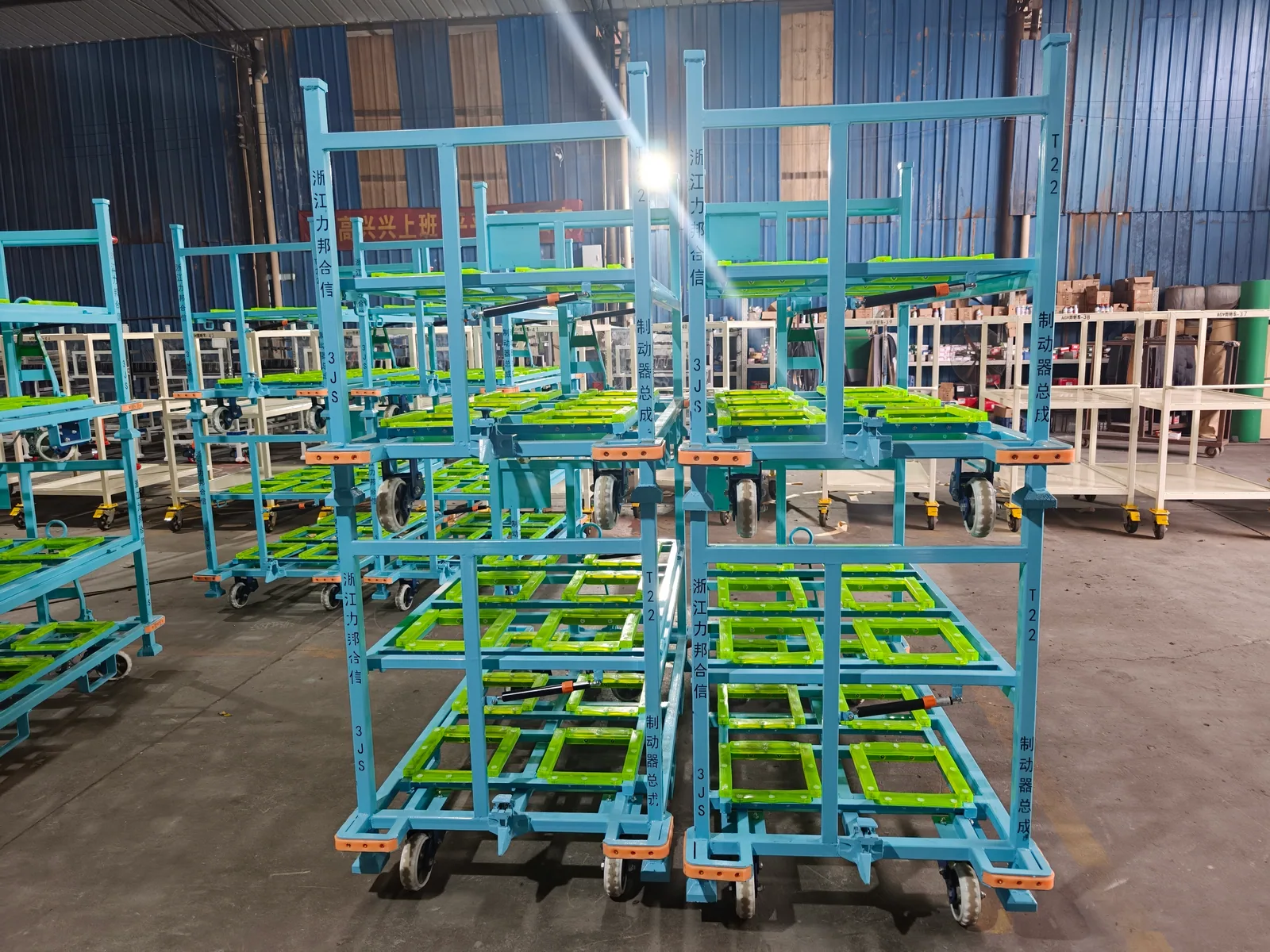
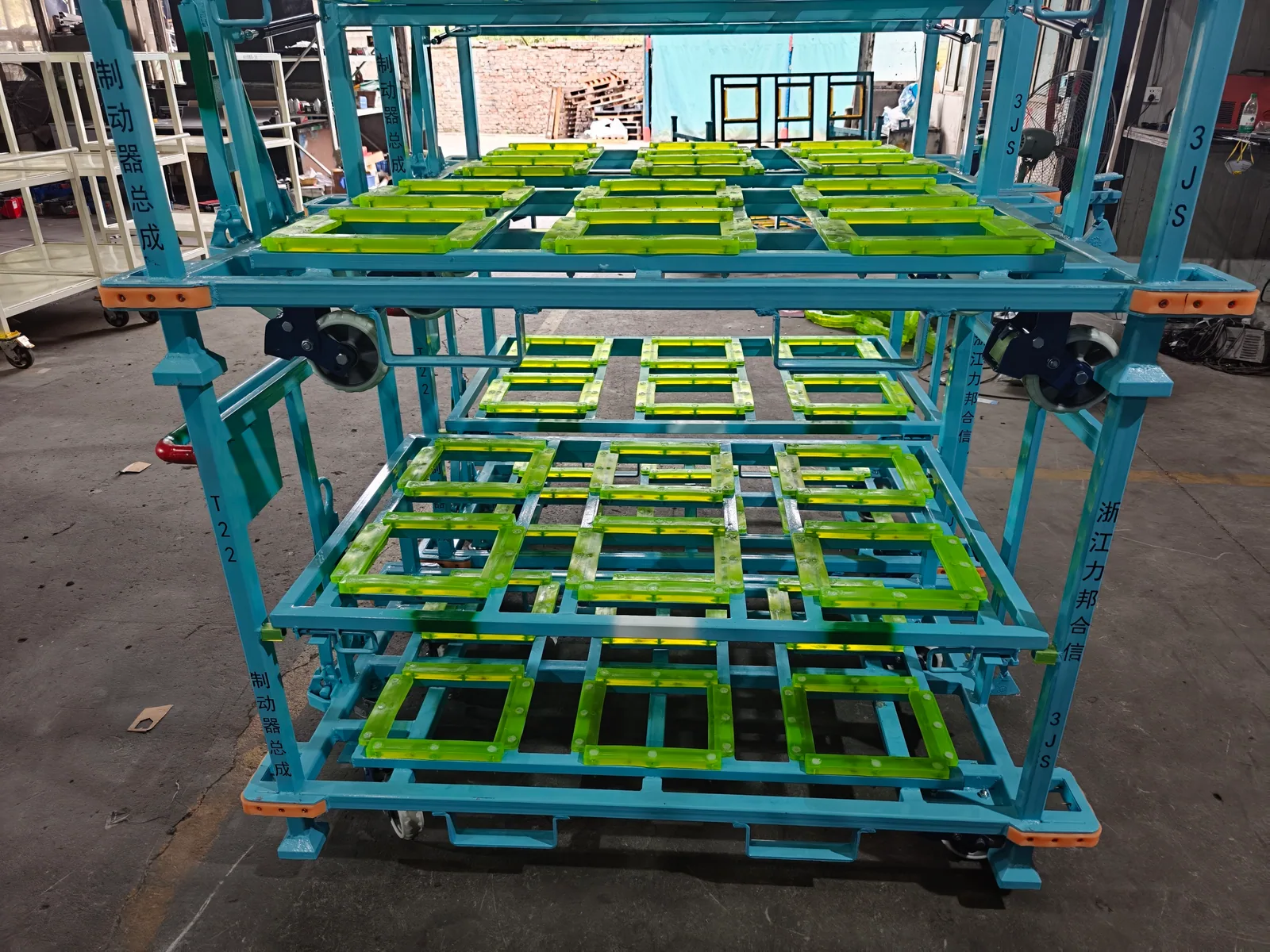
Multiple angles show the support pattern, rack levels and base that a buyer should compare with the intended load and handling method.
Description
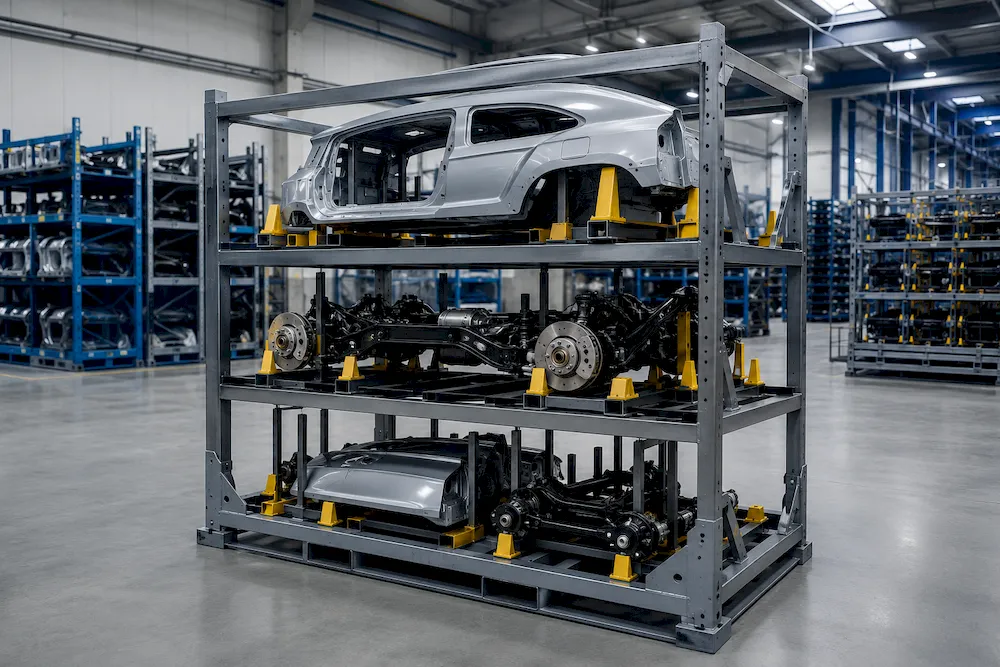
A brake assembly transport rack gives each assembly a defined position instead of letting finished components share an open shelf. This HAOFU example uses a blue multi-level steel frame and repeated green locator frames. For a useful factory-direct quote, send the controlled brake assembly drawing, part mass, permitted support faces, variants and required pack quantity. HAOFU can then propose the rack footprint, contact layout and handling base for your actual loop.
Start with the brake assembly, not the rack size
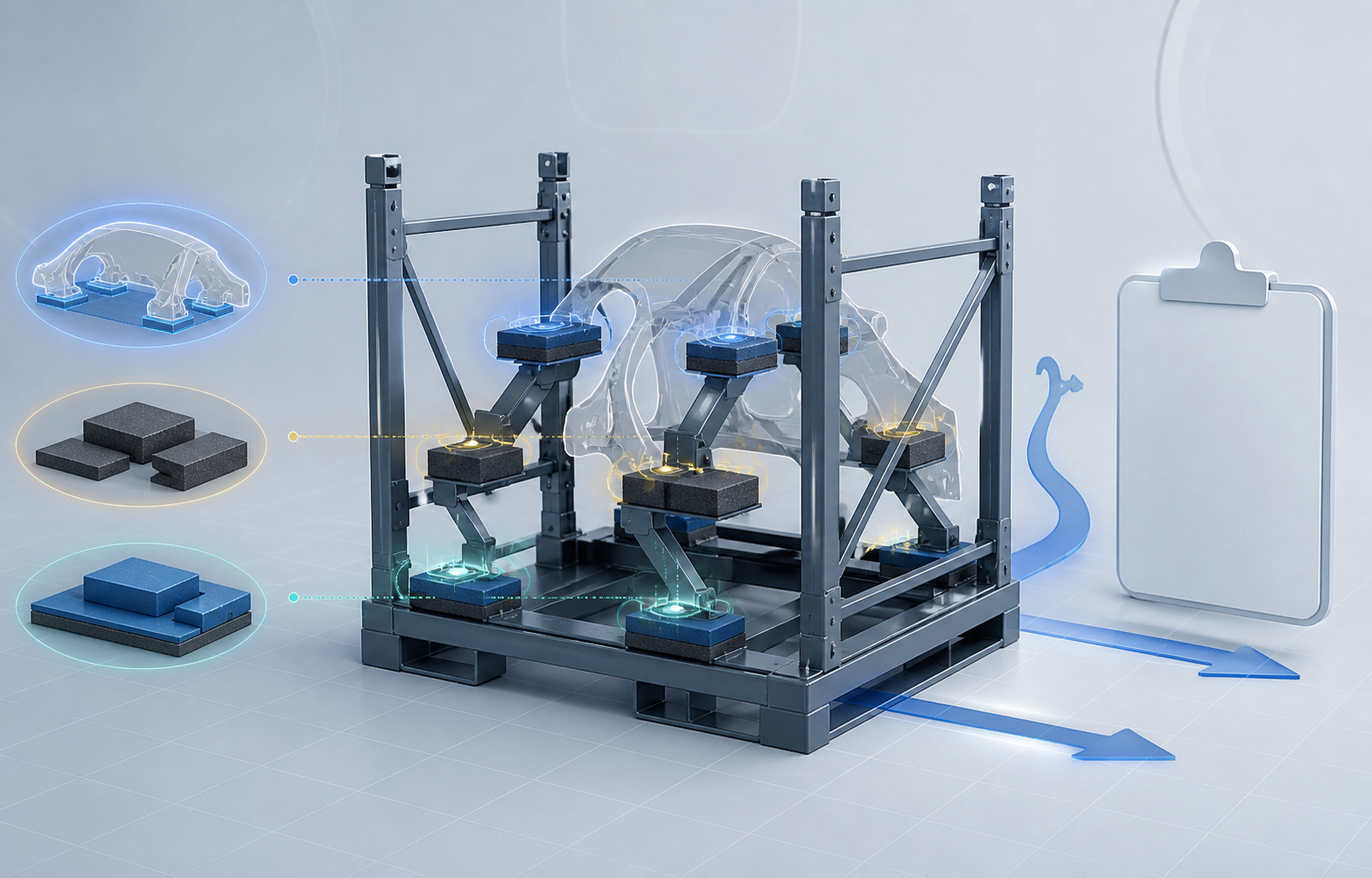
Different brake-assembly variants may have different protrusions, hose or bracket clearances and contact restrictions. Mark the assembly surfaces that can carry weight and the features that must not touch the rack. If several variants share a carrier, provide the largest envelope and the position of every variant at the locator—not just an overall bounding box.
Specify the handling path
| RFQ input | Why it changes the rack |
|---|---|
| Assembly drawing, mass and support faces | Locator geometry and contact spacing |
| Positions per level and pick sequence | Level pitch, access side and unloading order |
| Forklift, caster or mixed handling | Base entry, wheel arrangement and clearance |
| Loaded storage and empty return | Frame envelope and any required stacking arrangement |
| Identification and receiving process | Label location and part/variant traceability |
The photographed base shows both wheels and fork-entry features. Tell us which equipment actually moves the rack, where it turns and whether the loaded carrier is lifted, rolled or both. That keeps the quote tied to your receiving and line-side process.
Get a quote for your assembly
Send a part drawing or sample, all variants, quantity per rack, route, destination and target rack quantity. HAOFU will review the locator and base concept with your team before the production configuration is fixed. This page is for a brake assembly carrier; if you are shipping a brake booster, see the separate brake-booster returnable rack. Explore broader custom automotive parts racks or request a brake assembly rack quotation.
Configuration comparison
Choose the brake assembly locator transport rack interface before material or size
The useful choice is driven by how the component meets the part, rack and operating route. Compare the interface and service task before fixing a material callout.
| Configuration | Use it when | Main trade-off | Send with the RFQ |
|---|---|---|---|
| Dedicated fixed interface | One controlled part or rack revision uses the same contact and mounting position. | Direct positioning with a part-specific geometry; revisions may require a changed component. | Part CAD, rack interface, permitted contact zones, tolerances and attachment details. |
| Replaceable modular interface | Contact pieces need planned inspection or replacement without rebuilding the carrier. | Serviceable wear component; fastener access, indexing and spare identification need space. | Replacement direction, tool clearance, fastener standard, identification and spare quantity. |
| Shared interface for variants | A defined part family can use common datums without unstable contact or interference. | Fewer unique components; the full variant envelope and changeover method must be checked. | Variant matrix, common datums, worst-case envelope and changeover sequence. |
From requirement to quotation
Prepare a brake assembly locator transport rack RFQ
Connect the component to the controlled part, carrier and maintenance task so suppliers price the same requirement.
- 1
Control the mating geometry
Send the current part and rack data with revisions and the exact interface location.
Output: Approved geometry baseline
- 2
Mark contact and motion
Show allowed contact, keep-out areas, load or movement direction and required clearances.
Output: Interface and motion map
- 3
Define material and environment
State buyer material specifications, temperature, cleaning, exposure and identification needs that actually apply.
Output: Material requirement
- 4
Plan installation and service
Add mounting access, replacement method, quantity, destination and sample-review expectations.
Output: Quotation-ready component brief
Guides & Resources
Learn more about choosing and using brake assembly locator transport rack.
Applications, Engineering & Buyer Tools
Move from product discovery to a project specification, application check and inspection plan.
Brake Assembly Locator Transport Rack — Frequently Asked Questions
Is this the same as a brake-booster rack?+
No. This photographed configuration is labeled for a brake assembly. The separate brake-booster page shows a different part and rack layout.
Can one rack carry several brake-assembly variants?+
It may be possible when the variants share approved support and clearance points. Send each variant drawing so the locator concept can be checked.
Can the base be configured for our forklift route?+
Yes. Provide fork dimensions, entry direction, lift points and any wheeled transfer so the base can be designed for the actual handling path.
What does HAOFU need to quote the rack?+
The assembly drawing or sample, mass, support restrictions, parts per rack, variants, route, destination and target order quantity.
Discuss your part or handling task
Send a photo, drawing or short description to start your enquiry.
Contact Us Now