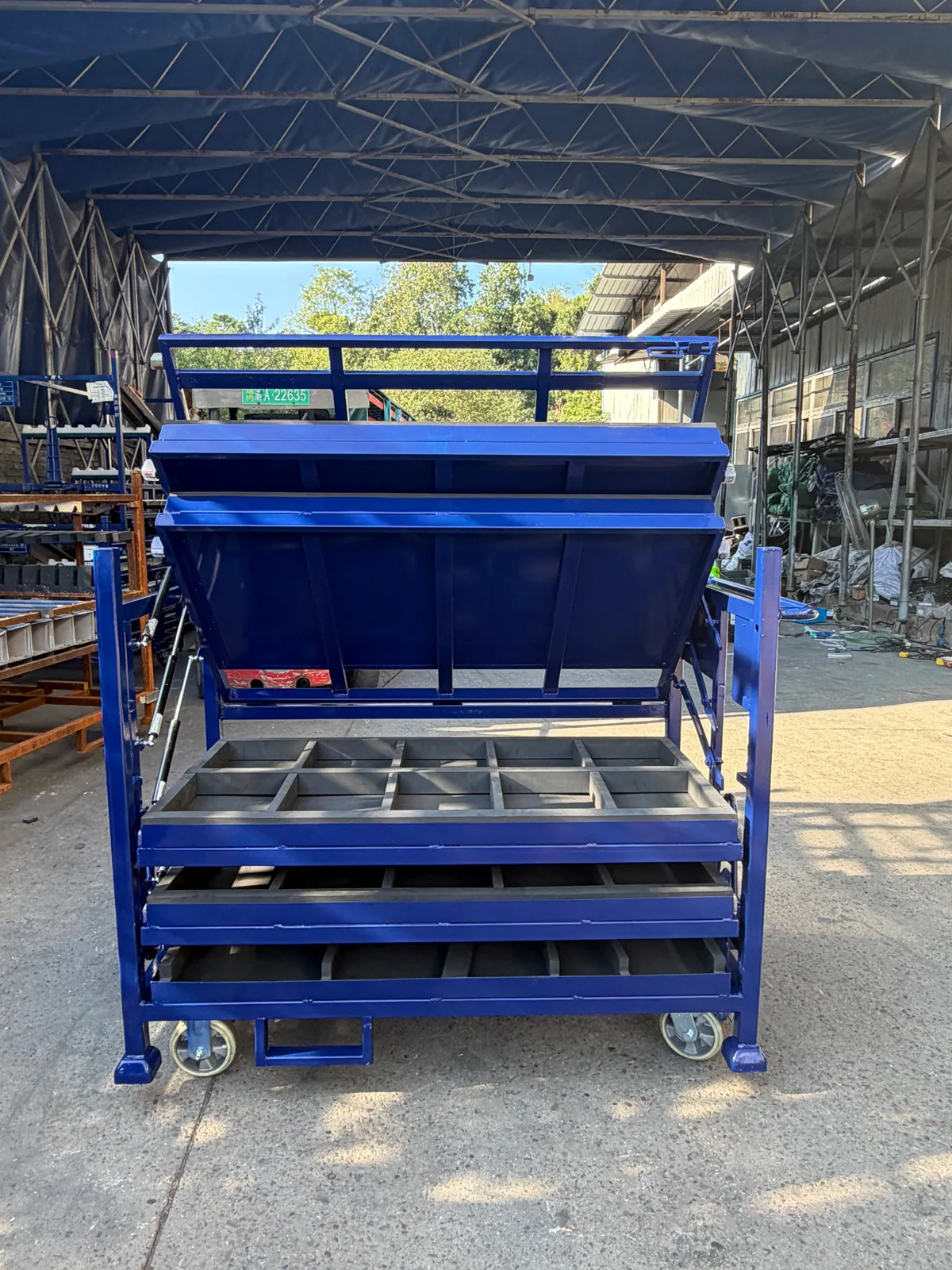
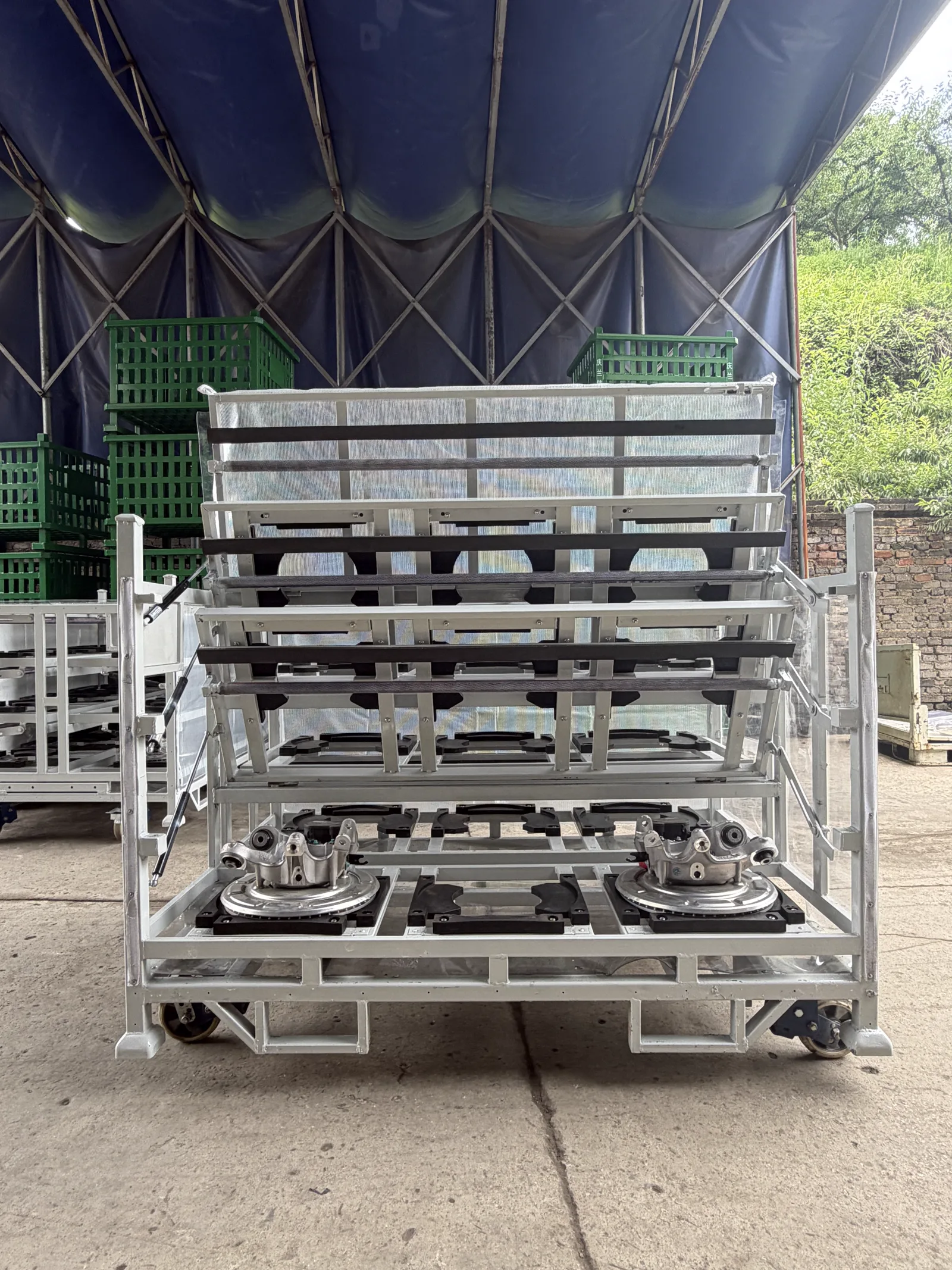
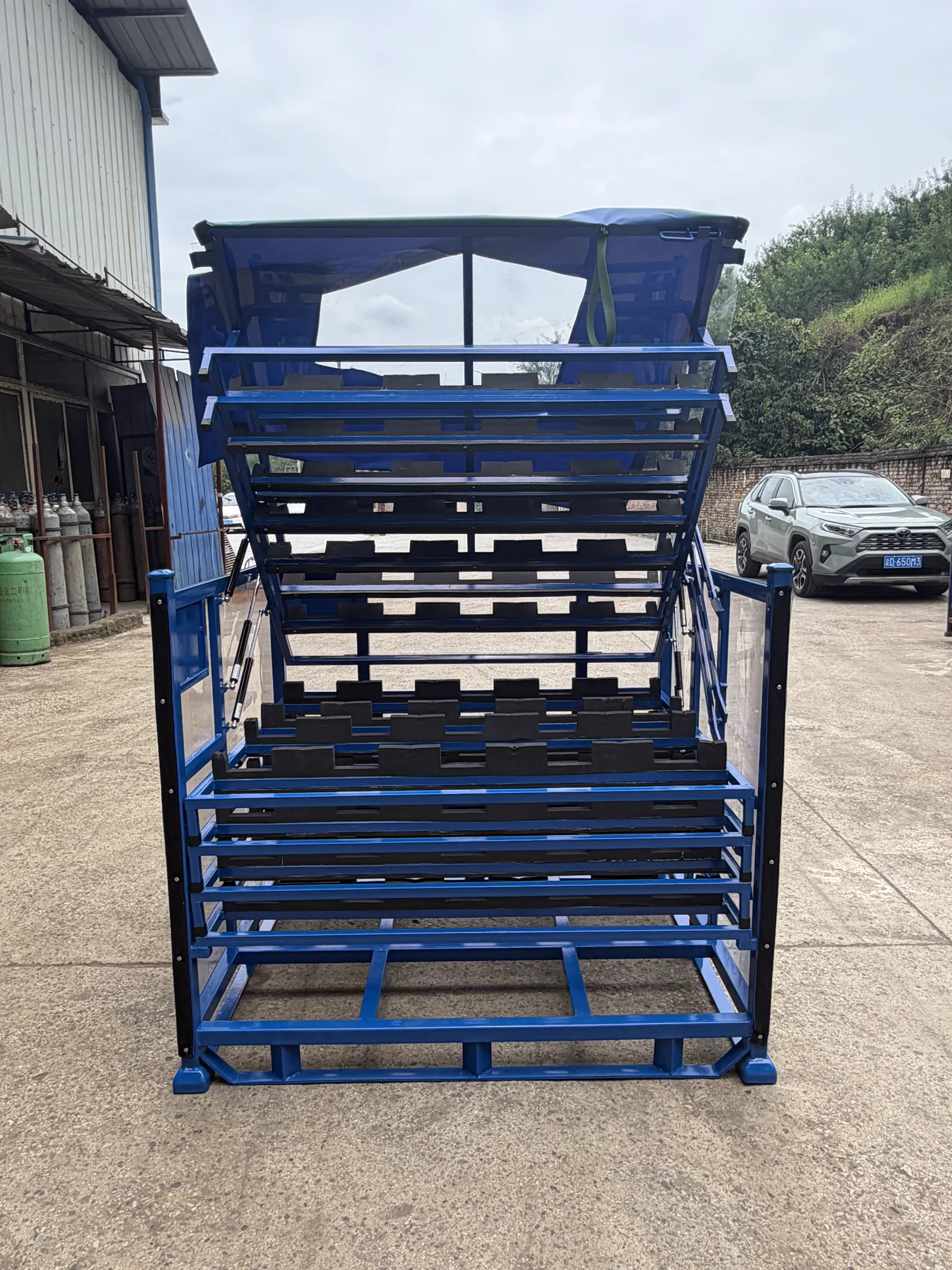
Real HAOFU build: one tilted level exposes the divided contact positions below it.
Gas-Strut Tilting Tray Rack
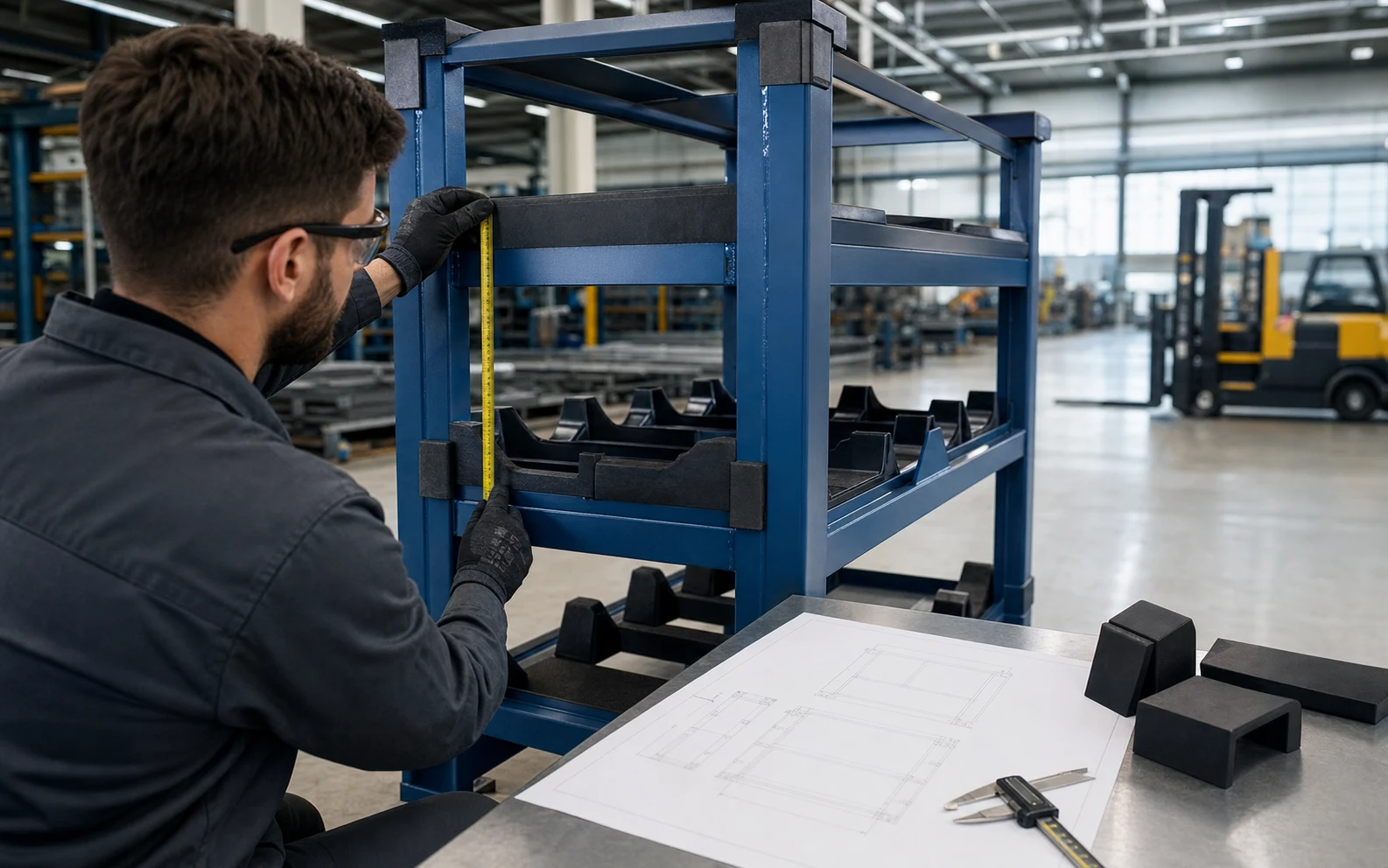
This blue returnable rack uses gas-strut-assisted tilting trays and divided contact channels to present parts across several levels. HAOFU builds the rack around your part envelope, tray access sequence and loading route; the photographs show a real configuration, not a one-size-fits-all SKU.

HAOFU Engineering Team
Reviewed 2026-09-18
To source a gas-strut tilting tray rack, provide the part drawing, allowed supports, weight per position, tray-opening order, operator side and handling route. The tray motion and contact channels must be reviewed with the actual loaded part before the design is approved.
At a Glance
- Built example
- Blue multi-tier steel rack with gas-strut-assisted trays and divided contact channels
- Part positions
- Set from approved part size, support zones and loading order
- Handling
- Base and movement method configured for the buyer's route
- Quote basis
- Part drawing, tray operation, route, destination and quantity
Actual built configuration
Product Gallery
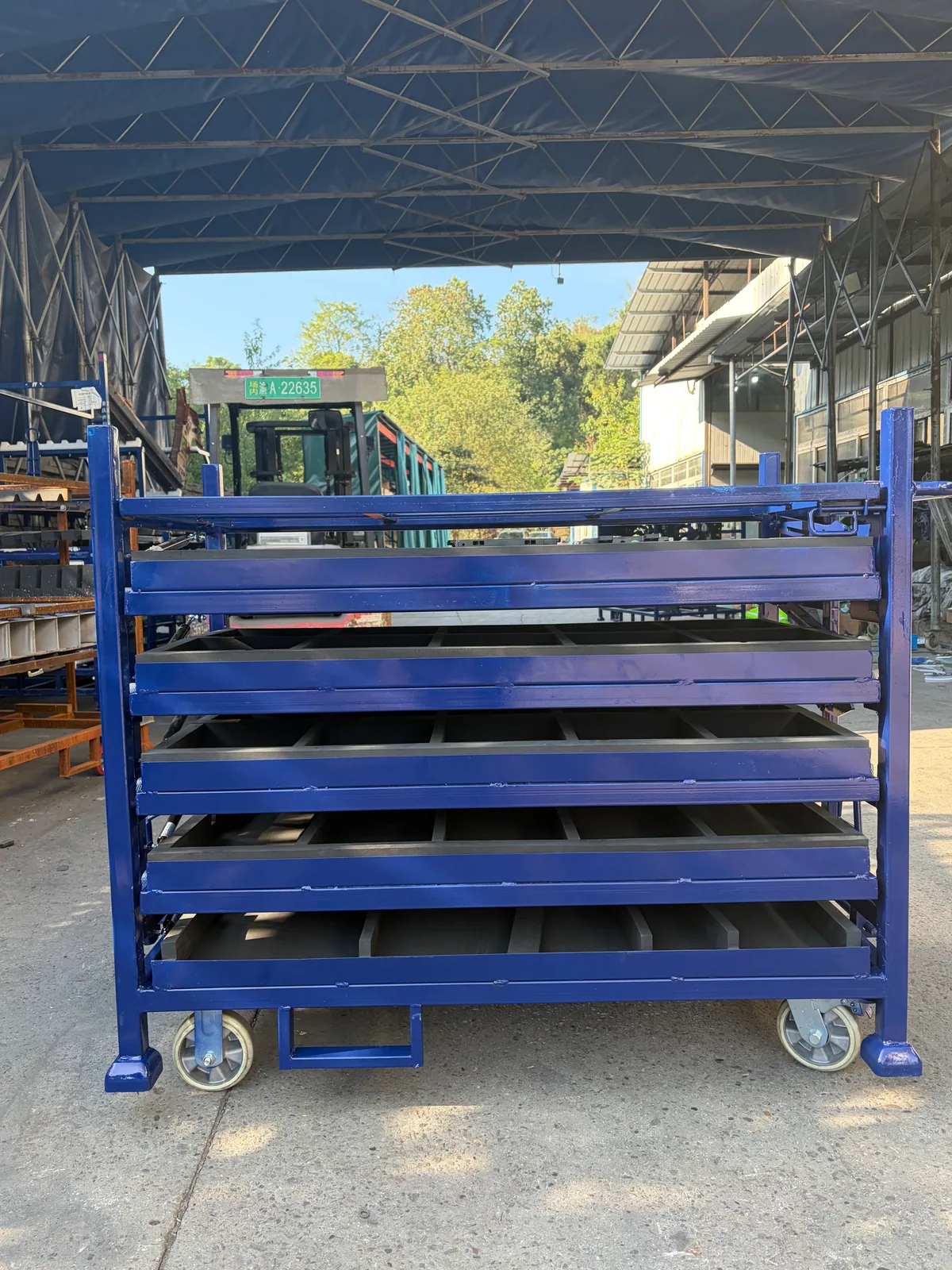
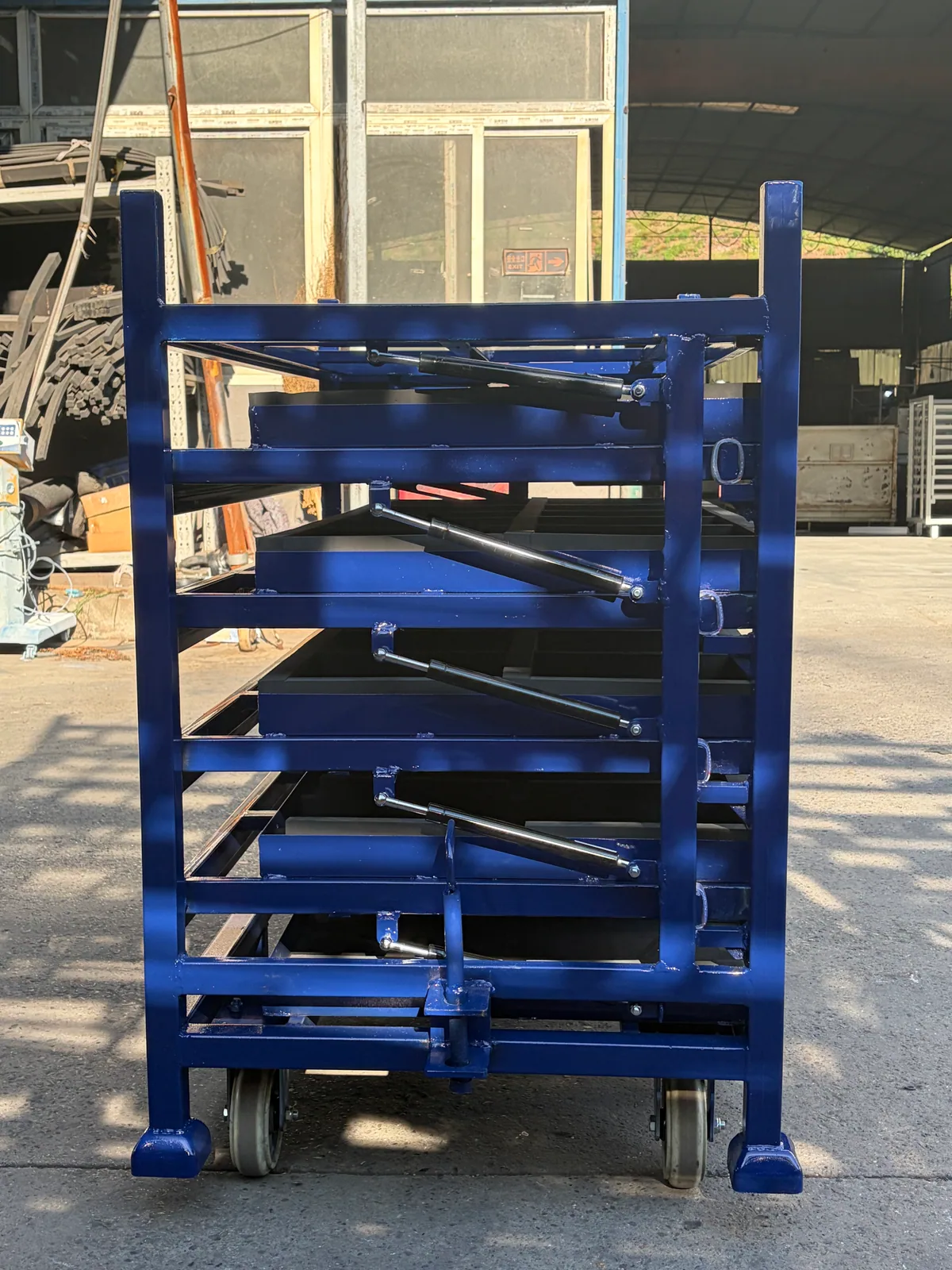
Open, closed and end views show how the trays, gas struts and separated positions work together.
Description
A gas-strut tilting tray rack brings a loaded tier into reach while the remaining parts stay in separated positions. This photographed HAOFU rack has a blue steel frame, multiple tilting trays, gas struts and grey channel dunnage. It suits buyers who need repeated loading and unloading across several levels and want a custom returnable carrier rather than a fixed shelf. HAOFU quotes the tray arrangement from your part drawing, support zones, loading order and movement route.
Match tray motion to the loading task
The buyer should define which tray opens first, where the operator stands and whether an opened tray leaves enough hand and part clearance. Gas-strut selection depends on the tray and actual load, so the open position, closing motion and retention should be reviewed with a sample. The dunnage channel must support the specified part on permitted faces without blocking removal.
Information that changes the quote
| Send HAOFU | Design impact |
|---|---|
| Part envelope, mass and contact map | Channel profile, level pitch and tray construction |
| Parts per level and loading order | Tray count, hinge arrangement and access side |
| Operator reach and opening space | Open angle, assisted motion and aisle clearance |
| Forklift, caster or tow route | Base and handling interfaces |
| Empty-return and storage requirement | Overall frame and any return feature |
Source the right configuration
Send your part CAD or sample, the expected part count, contact restrictions, route, destination and target order quantity for a project quotation. If you need a fitted cover and bright part-shaped locators rather than channel dunnage, compare the covered tilting locator trolley. See all custom automotive parts racks or request a gas-strut rack quote.
Original project video
See the photographed configuration in motion
This embedded video is supplied with this product's real photo set. It documents the configuration only; final specifications remain project-specific.
Guides & Resources
Learn more about choosing and using gas-strut tilting tray rack.
Applications, Engineering & Buyer Tools
Move from product discovery to a project specification, application check and inspection plan.
Gas-Strut Tilting Tray Rack — Frequently Asked Questions
Can I buy the exact rack shown in the photos?+
The photos show a real custom build. Send your part drawing and required quantity so HAOFU can quote a tray and dunnage layout that fits your component.
What determines the gas struts for each tray?+
Tray geometry, actual part load, hinge position and the required opening and closing motion. These are reviewed on the project drawing and sample.
Can the grey channels be made for another part?+
Yes. Provide the part geometry and permitted support faces; HAOFU can propose a revised channel profile and position spacing for the new component.
What do I send for pricing?+
Send part CAD or photos, mass, parts per level, contact restrictions, operator side, handling route, destination and target rack quantity.
Ready to Improve Your Material Handling?
Tell us your requirements and our engineers will contact you within 24 hours.
Contact Us Now