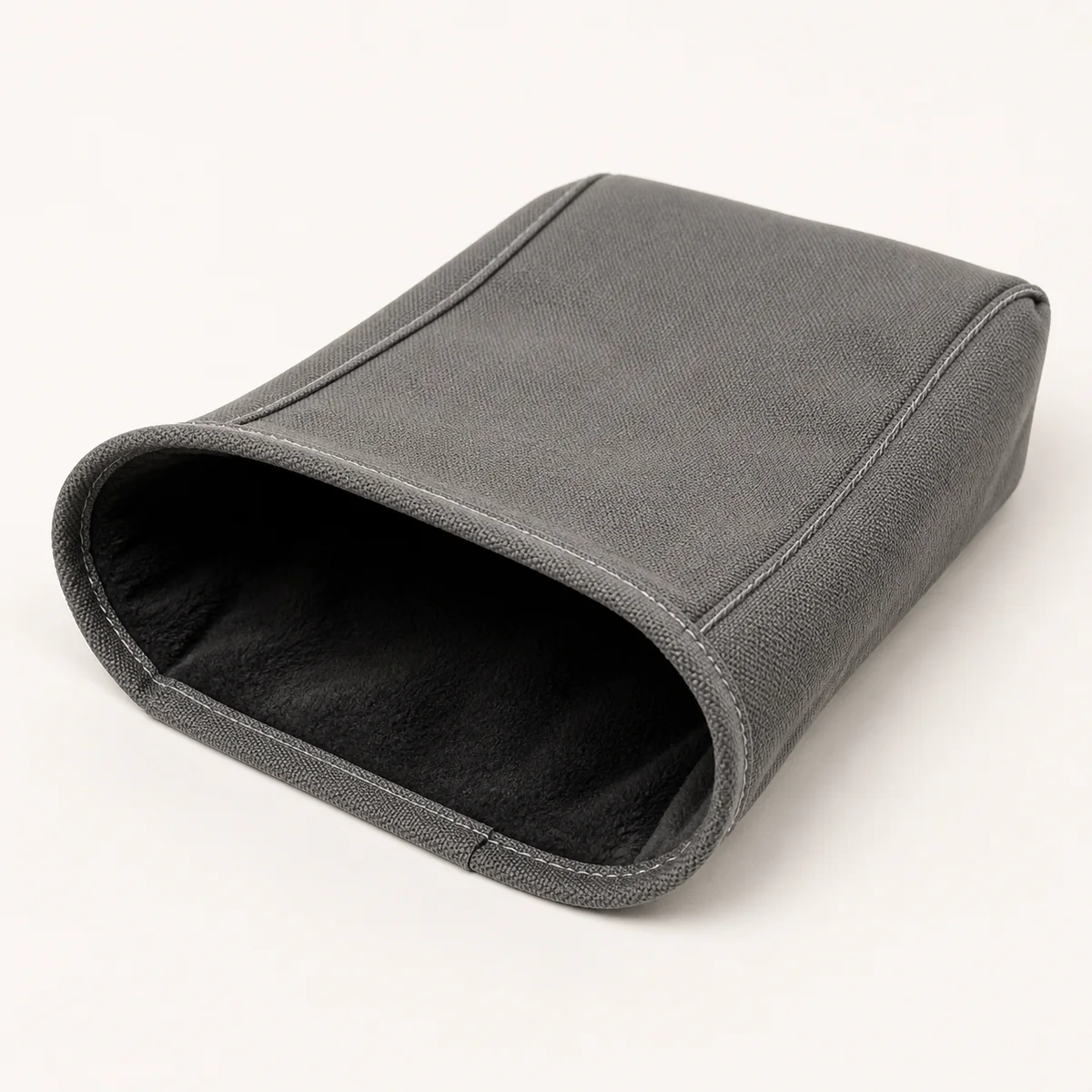
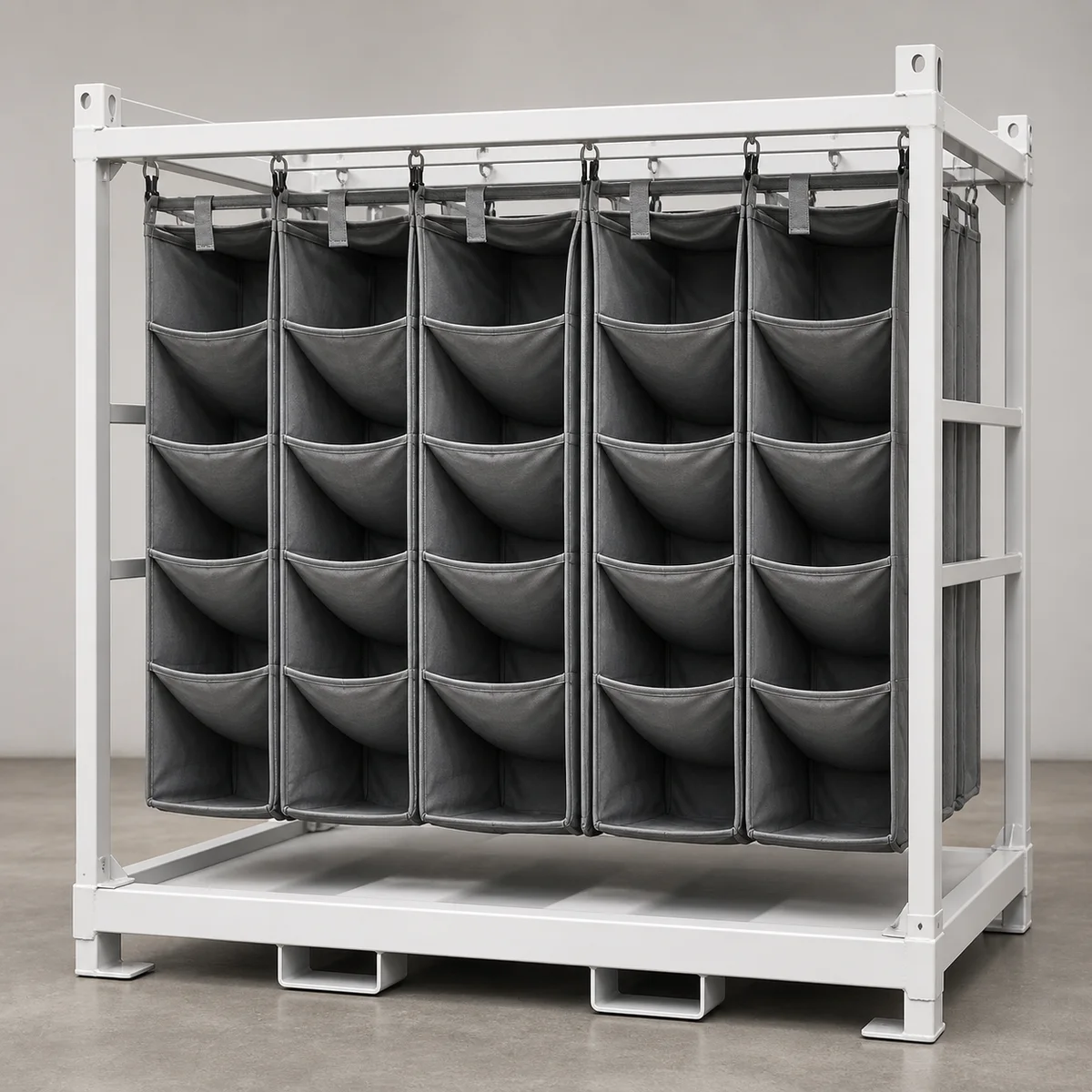
AI-generated concept based on the requested textile-dunnage category; not a fabric certification, tested sample or customer-project photograph.
Custom Textile Dunnage Bags
Custom sewn pockets, sleeves and hanging bag arrays for part-specific protection inside steel racks, totes or returnable containers. Fabric, lining, cell shape, stiffeners and attachment are defined from the component surface and logistics process.

HAOFU Engineering Team
Reviewed 2026-08-31
Textile dunnage is a custom part-contact system, not a generic cloth bag. The design should start with the component, sensitive surfaces, cell count, loading direction, fabric/lining requirement, cleaning method, static or flammability requirements and rack attachment.
At a Glance
- Configuration
- Custom to the approved part, rack and route
- Primary role
- Soft sewn separation and part-contact protection
- Required inputs
- part data, sensitive surfaces, cell count, fabric/lining requirement, loading, cleaning and rack interface
- Material / interface
- Confirmed in the approved project drawing and specification
- Validation
- Fit, access, handling and controlled requirements agreed before production release
- Supply scope
- Component-only or integrated rack/trolley scope, as quoted
Dunnage concepts
Product Gallery
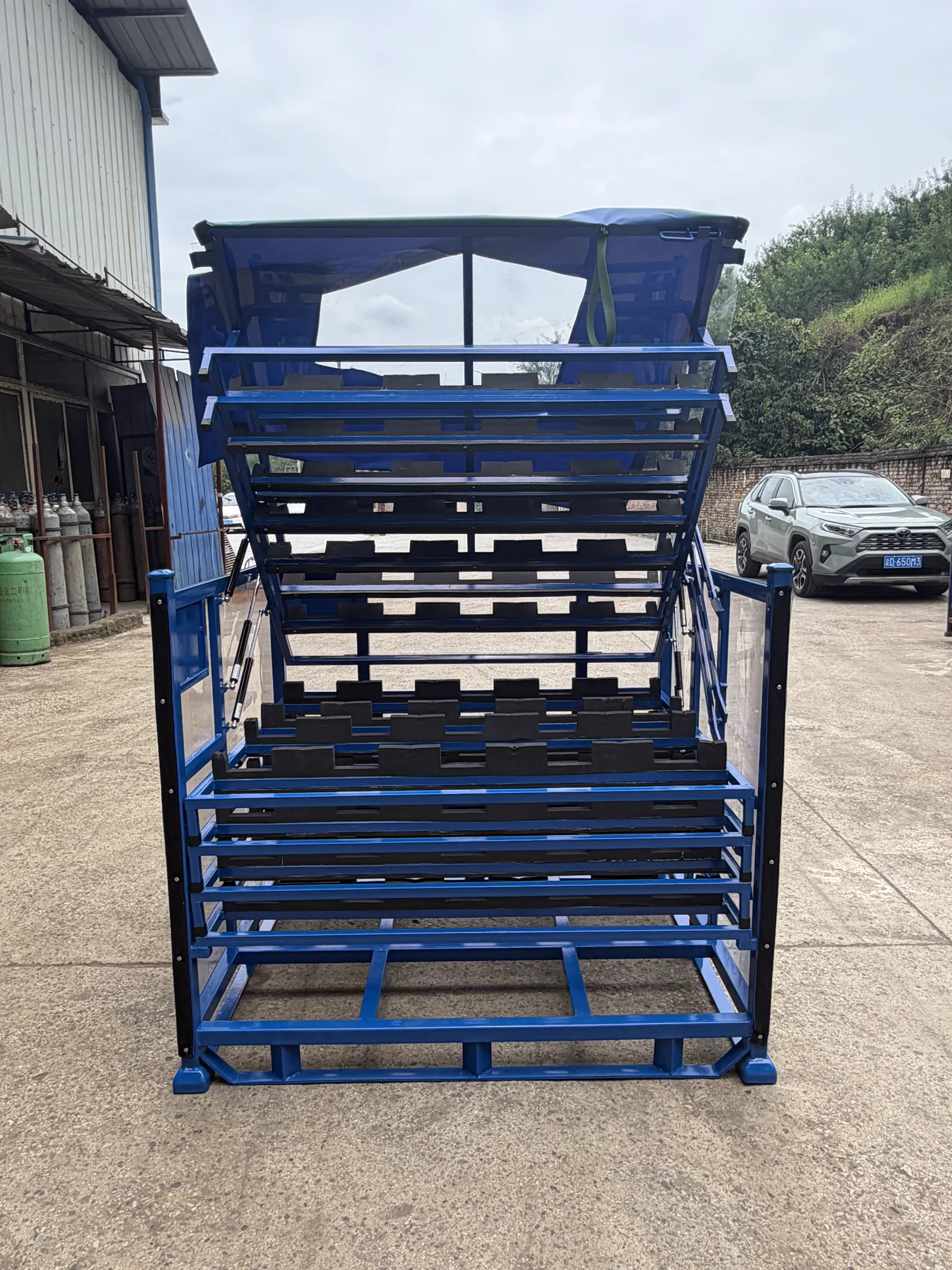
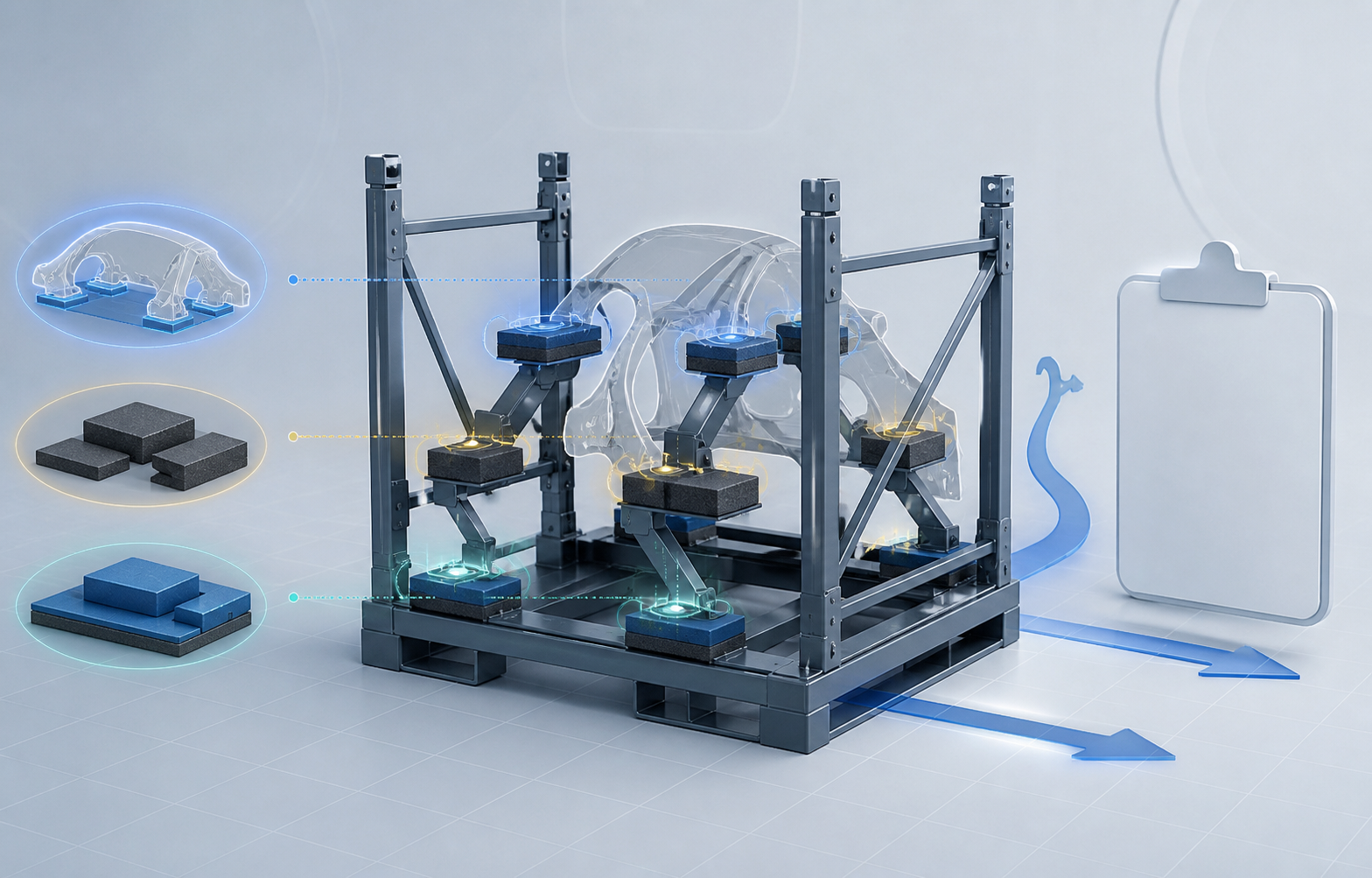
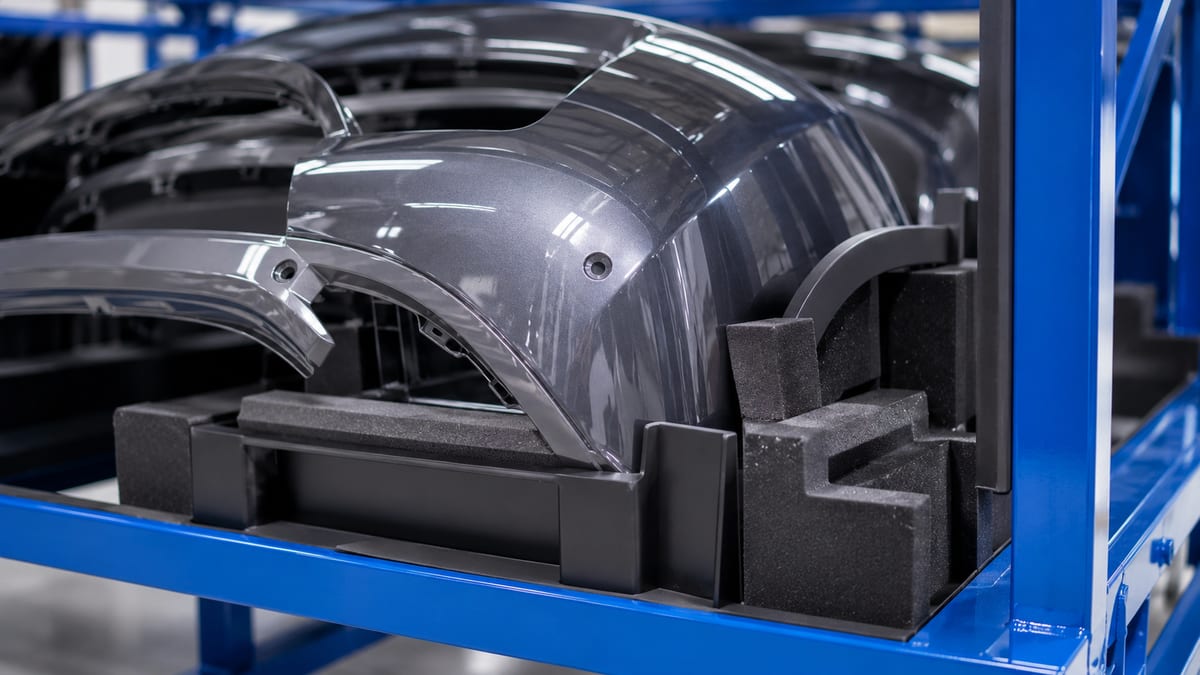
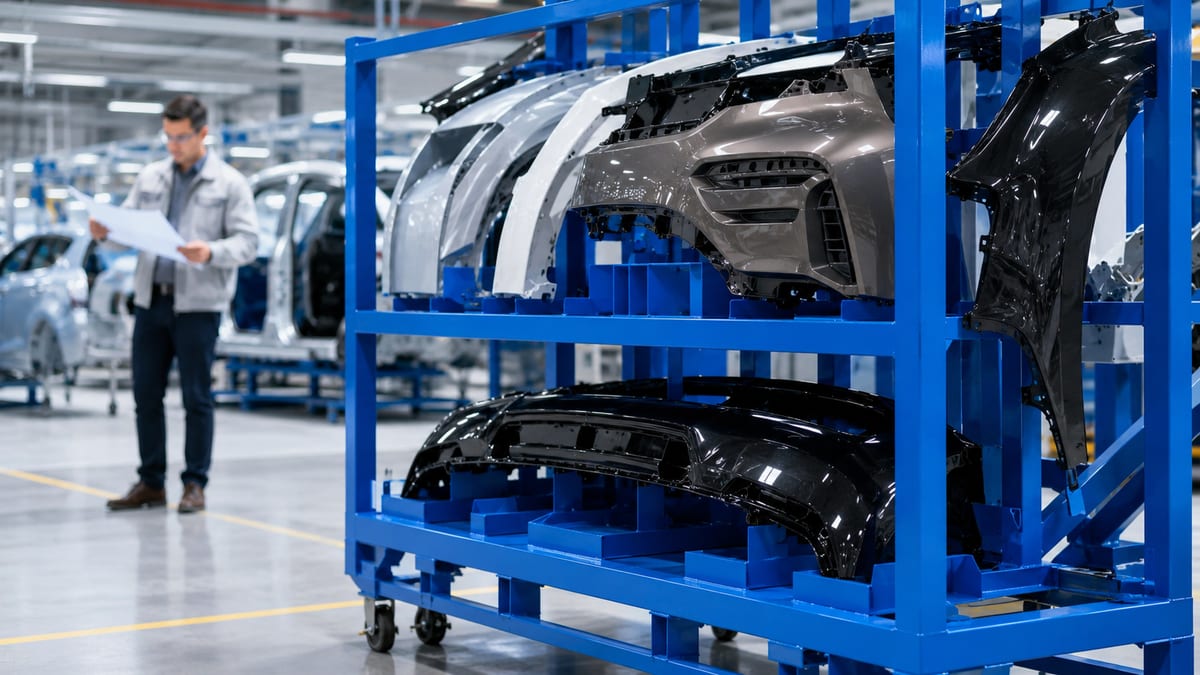
Concept views show an individual soft pouch and a rack-integrated hanging array. Final materials, seams, cells, attachment and cleaning rules require project approval.
Description
Custom Textile Dunnage Bags is a project-specific product or rack component used within returnable automotive packaging and in-plant material handling. HAOFU develops it around the approved part, contact restrictions, access, handling route and buyer specification. It is not presented as a universal off-the-shelf performance specification.
This page owns the commercial intent for custom textile dunnage bags. Buyers comparing complete carriers should also review Automotive Parts Racks; the main product page remains the owner for the broader rack or trolley category.
What must be decided before design release
| Input area | Design decision |
|---|---|
| Surface requirement | Identify cosmetic, painted, trim or other restricted contact areas. |
| Cell design | Set pocket shape, depth, pitch, insertion direction and retention. |
| Textile system | Specify outer fabric, contact lining, stiffeners and any controlled property. |
| Integration | Define rails, hooks, straps, removable panels, cover and replacement access. |
Suitable application scope
- Headlamp, interior trim, door panel or appearance-part programmes after surface review
- Hanging bag arrays inside steel racks
- Replaceable soft partitions in returnable containers and totes
Claim boundary: Scratch, lint, ESD, flammability, contamination and cleanability performance cannot be inferred from fabric appearance. Each controlled requirement needs traceable material data and acceptance criteria.
RFQ information to send
- Part drawing/sample and sensitive surfaces
- Parts per carrier and loading sequence
- Specified textile/lining and cleanliness needs
- ESD, flame or other controlled requirement if applicable
- Rack/tote interface, cleaning and replacement method
HAOFU manufactures in China and ships globally. Start with the custom rack and trolley design process, then send the controlled requirements for review. Final dimensions, material callouts, capacity, interfaces, validation and commercial terms belong in the approved quotation and drawing.
How the requirement moves to approval
- Define: collect controlled part, rack, route and buyer-standard inputs.
- Design: agree contact geometry, interfaces, access and maintainable components.
- Review: check the concept against loading, handling, return and service conditions.
- Validate: approve the sample and recorded acceptance criteria before production release.
Industry terminology references
The following industry pages were used to confirm buyer terminology and specification inputs. Their company-specific claims are not adopted as HAOFU claims.
Guides & Resources
Learn more about choosing and using custom textile dunnage bags.
Applications, Engineering & Buyer Tools
Move from product discovery to a controlled requirement, application review and inspection plan.
Custom Textile Dunnage Bags — Frequently Asked Questions
Is the custom textile dunnage bags a standard catalog item?+
No. It is configured from the controlled component, rack interface, duty and buyer requirements. Reference images show the product family; they do not define the final dimensions, material or performance.
What information is needed to quote custom textile dunnage bags?+
Please provide part data, sensitive surfaces, cell count, fabric/lining requirement, loading, cleaning and rack interface, plus target quantity, destination and any controlled buyer standard. HAOFU can then define what is included in the design, sample and quotation scope.
Can it be supplied for an existing rack or trolley?+
Potentially. Send the existing rack drawing, mounting details, photographs and the approved part data. The team will review fit, access, replacement and any effect on the complete carrier before proposing an interface.
What does the reference image prove?+
It shows a configuration or component type only. It does not establish scratch, lint, ESD, flame, cleanliness or durability performance. Final claims belong to traceable material data, an approved drawing and agreed validation records.
How is the design approved before volume production?+
The controlled inputs are converted into a design and sample scope. The buyer reviews fit, contact, access, handling and any specified test or inspection criteria before production release.
Ready to Improve Your Material Handling?
Tell us your requirements and our engineers will contact you within 24 hours.
Contact Us Now