
Updating Automotive Parts Shelving for a Part Revision
When an automotive part or package revision changes dimensions, weight, quantity, orientation or contact restrictions, recheck the complete shelving task: receiving, put-away, storage, picking and replenishment. Compare the current and new unit against shelf clearances, locators, labels, operator access and handling equipment, then trial affected locations before updating the warehouse layout.
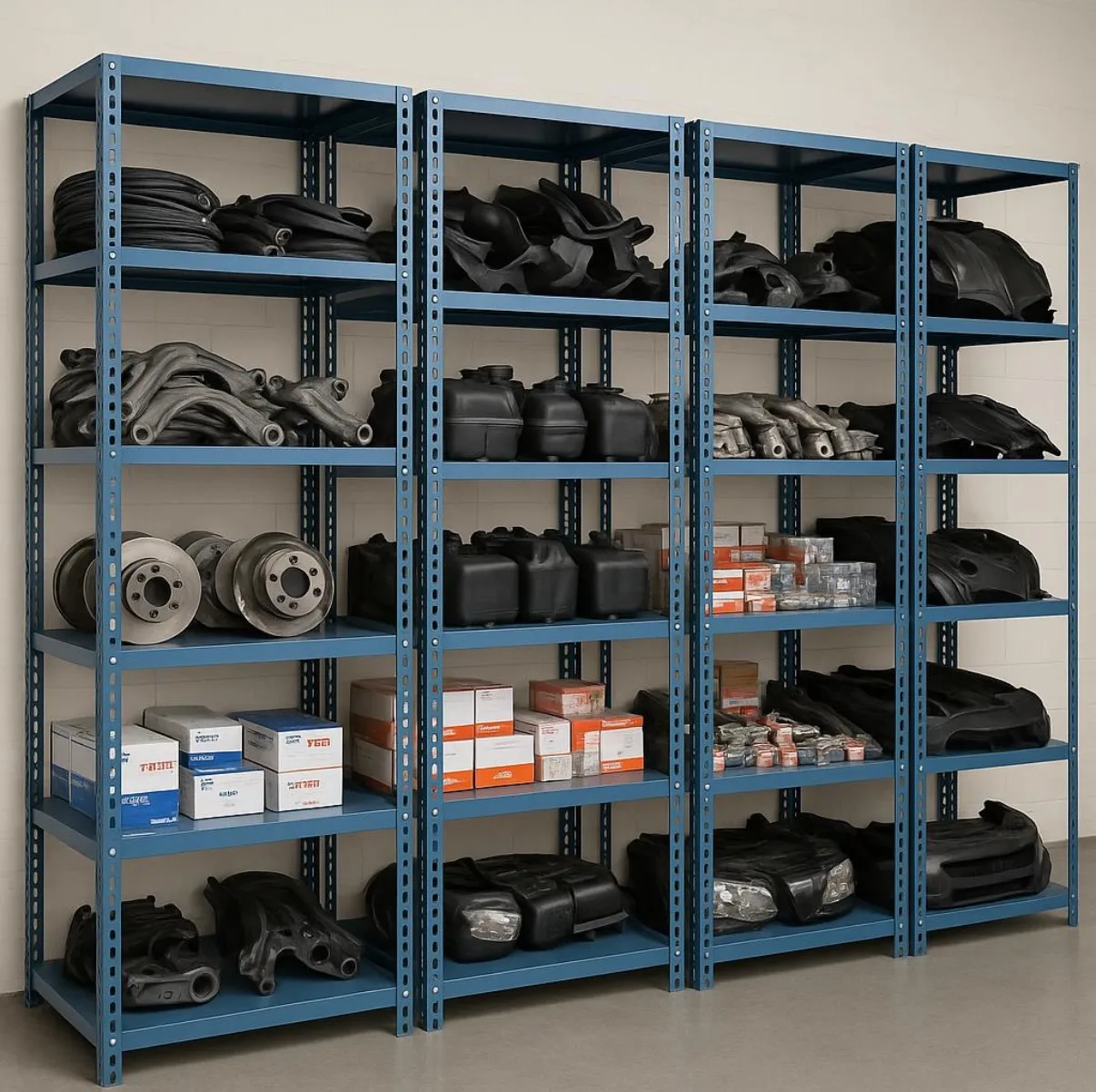
Automotive parts shelving should be rechecked when a part or its packaging changes size, weight, quantity, orientation or contact restrictions. Compare the current and revised stored unit against the shelf opening, vertical pitch, locator positions, dividers, labels and picking clearance. Then run the affected receiving, put-away, picking and replenishment tasks before updating the warehouse layout.
A small part change can have a wider storage effect. A new connector, protective cap or package may add only a few millimeters but alter insertion clearance. A higher quantity per tote changes weight. A different orientation can move the center of gravity or hide the label. Review the whole stored unit and task rather than checking the nominal part envelope alone.
What should be checked when a part revision affects shelving?
| Area | Compare | Practical check |
|---|---|---|
| Stored unit | Outer dimensions, weight, quantity, orientation and packaging. | Does it fit the intended shelf position? |
| Contact and location | Locators, dividers, trays, contact restrictions and movement. | Is the unit supported without unwanted contact? |
| Access | Pick direction, hand clearance, visibility and presentation height. | Can operators identify and remove it as planned? |
| Handling | Receiving, put-away, replenishment and transfer equipment. | Can the revised unit move through every step? |
| Identification | Part label, shelf location and variant separation. | Are the unit and position easy to distinguish? |
Check the task, not only the shelf opening
The revised unit may pass through the front opening but still interfere with a locator, neighboring package, picking hand or replenishment equipment. Recreate the actual approach angle and working height. Include gloves, lift assists, carts, totes or scanners that operators use in the process.

Five steps to update parts shelving
- Compare current and revised units. Record dimensions, weight, quantity, package and orientation changes.
- Mark affected locations. Identify shelf bays, levels, locators, dividers and labels that use the part.
- Check every material-flow step. Review receiving, put-away, storage, picking, replenishment and transfer.
- Trial the revised unit. Use a representative part or package with the intended operators and handling equipment.
- Update the layout. Revise shelf drawings, location data, labels and work instructions where required.
Related shelving and identification guides
See automotive rack identification and labeling, boltless storage shelving for auto-parts warehouses and automotive parts storage shelving.
Request an automotive shelving quote
Send the current and revised part or package dimensions, weight, quantity per unit, shelf or location drawing, picking direction, handling method and required quantity through the automotive shelving RFQ form.