Boltless Storage Shelving for Auto Parts Warehouses

Boltless (rivet) shelving assembles without nuts and bolts — beams lock into slotted uprights — so it goes up fast, adjusts easily and gives open access from all sides, making it ideal for hand-loaded small and medium auto parts.
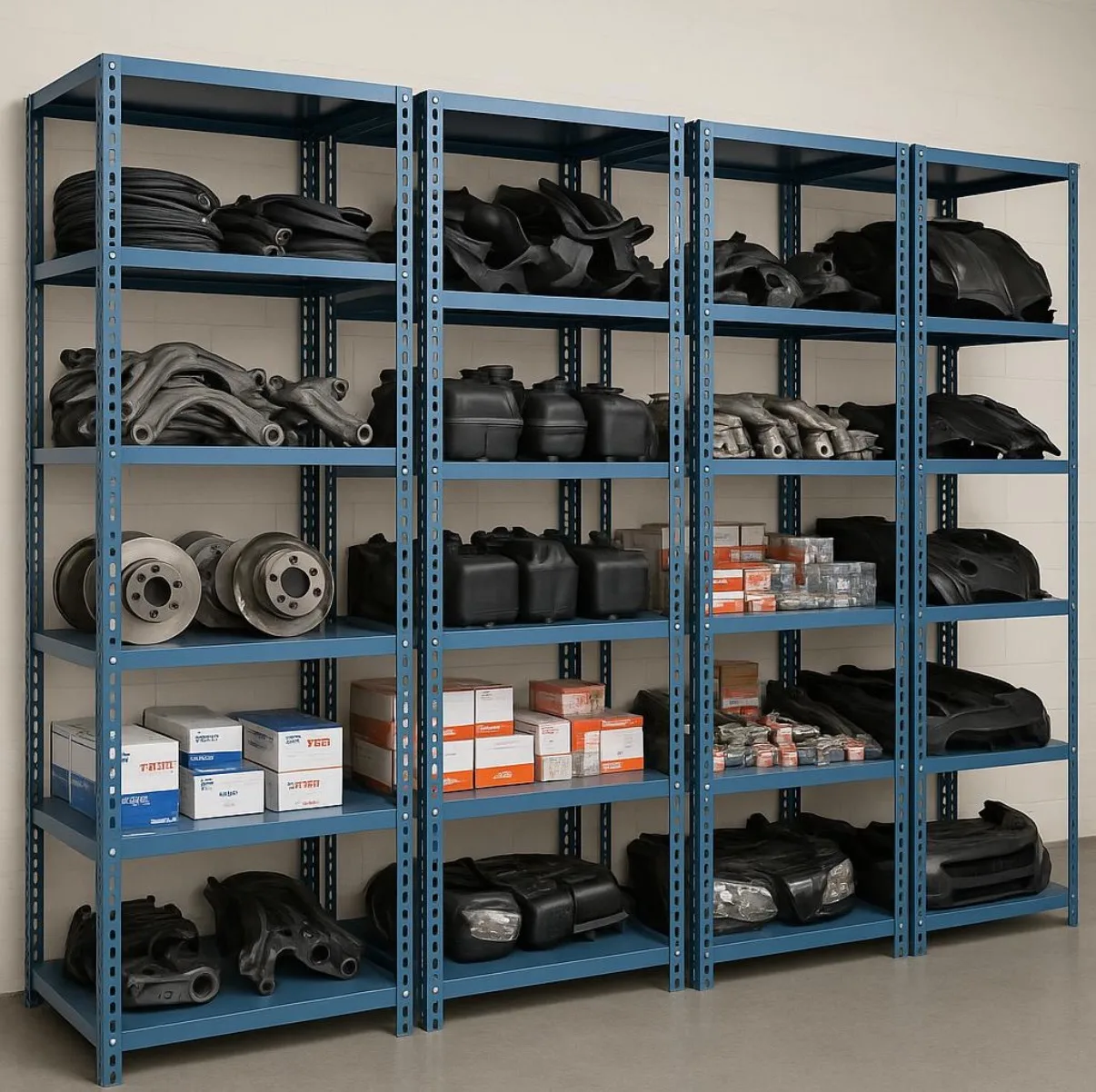
Boltless storage shelving — also called rivet shelving — is the fast, flexible answer to organized parts storage. It assembles without tools, adjusts to any shelf height and keeps components visible for quick picking, making it a natural fit for automotive parts warehouses and after-sales operations.
Why boltless shelving?
- Tool-free assembly — rivet connections clip together fast
- Adjustable levels — reconfigure shelf heights as inventory changes
- Open design — clear visibility and easy hand-picking
- Strong & stable — welded steel frames carry mixed loads
- Low cost per slot — efficient storage for loose and boxed parts
Where warehouse storage shelving fits
Shelving suits hand-loaded, mixed-SKU storage — distinct from pallet racking, which handles forklift-loaded pallets. Typical uses for automotive parts storage shelving include:
- Brake discs, manifolds, bumpers and trim
- Boxed spare parts and cartons
- After-sales and 4S parts warehouses
- Line-side small-parts supply and order picking
Shelving vs pallet racking
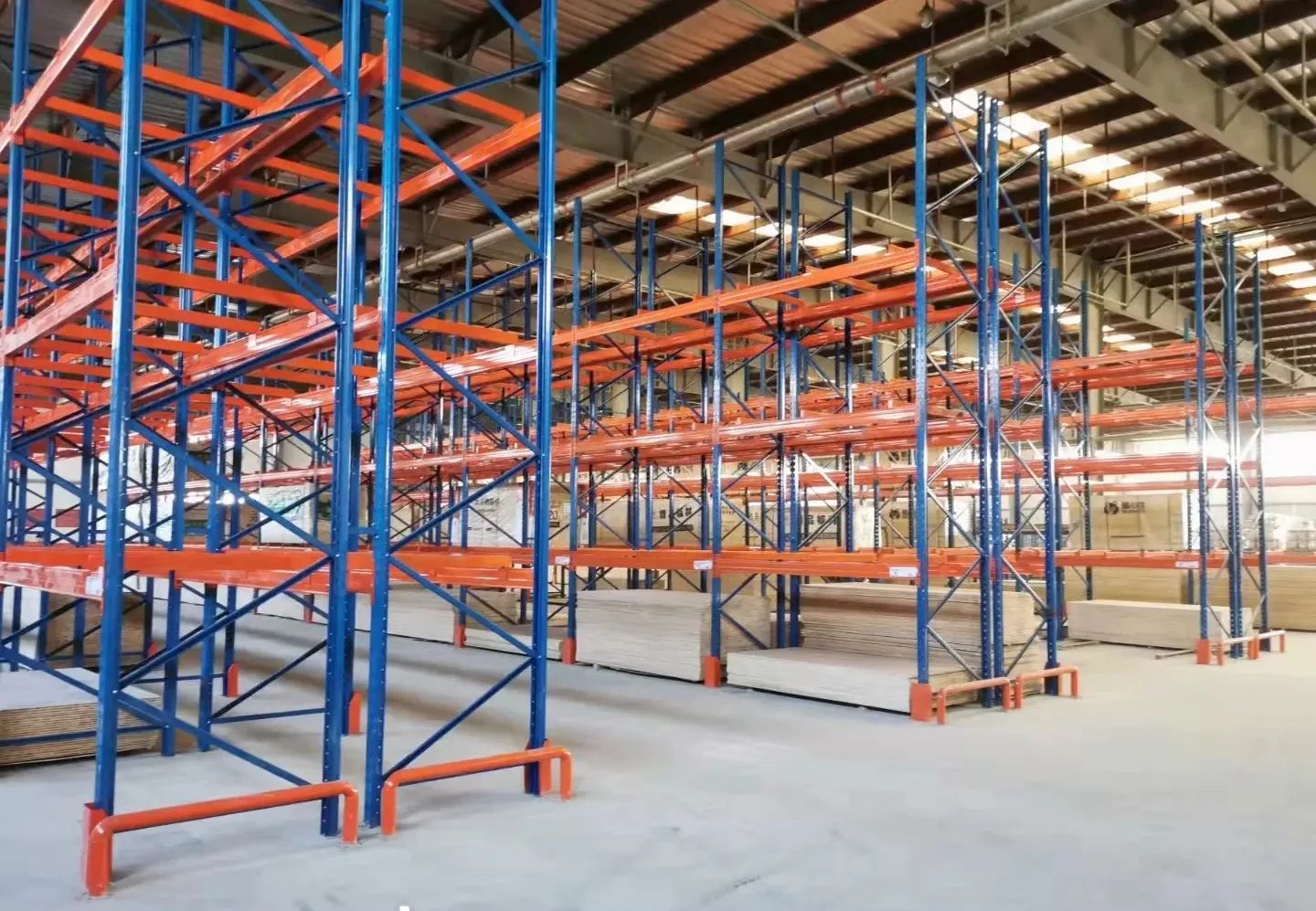
Use boltless shelving for hand-picked, lighter and mixed items; use heavy duty pallet racking for forklift-loaded pallets and bulk storage. Many warehouses combine both for an efficient layout.
Custom shelving layouts
Shelf count, depth, load per level and bay width should match your parts and space. HAOFU designs storage shelving for maximum density with easy access. Send your part list and floor area and we will propose a layout.
Frequently Asked Questions
- What is boltless shelving?
- Boltless (rivet) shelving assembles without nuts and bolts — beams lock into slotted uprights — so it goes up fast, adjusts easily and is ideal for hand-loaded small and medium auto parts.
- Why use boltless shelving in an auto-parts warehouse?
- It is quick to assemble and reconfigure, gives open access from all sides for fast picking, and is cost-effective for high-density storage of small and medium parts.
- How much weight can boltless shelving hold?
- It depends on the beam and upright gauge and the shelf material; capacity is stated per shelf level. For heavier or palletised loads, heavy-duty pallet racking is the better choice.