Rack Identification & Labelling in Automotive Assembly

Rack identification and labelling in automotive assembly gives every returnable rack a unique ID — usually a barcode or 2D label following Odette/GS1 standards — so parts, racks and locations can be scanned and tracked. It underpins error-proofing, returnable-container control and traceability on the assembly line.
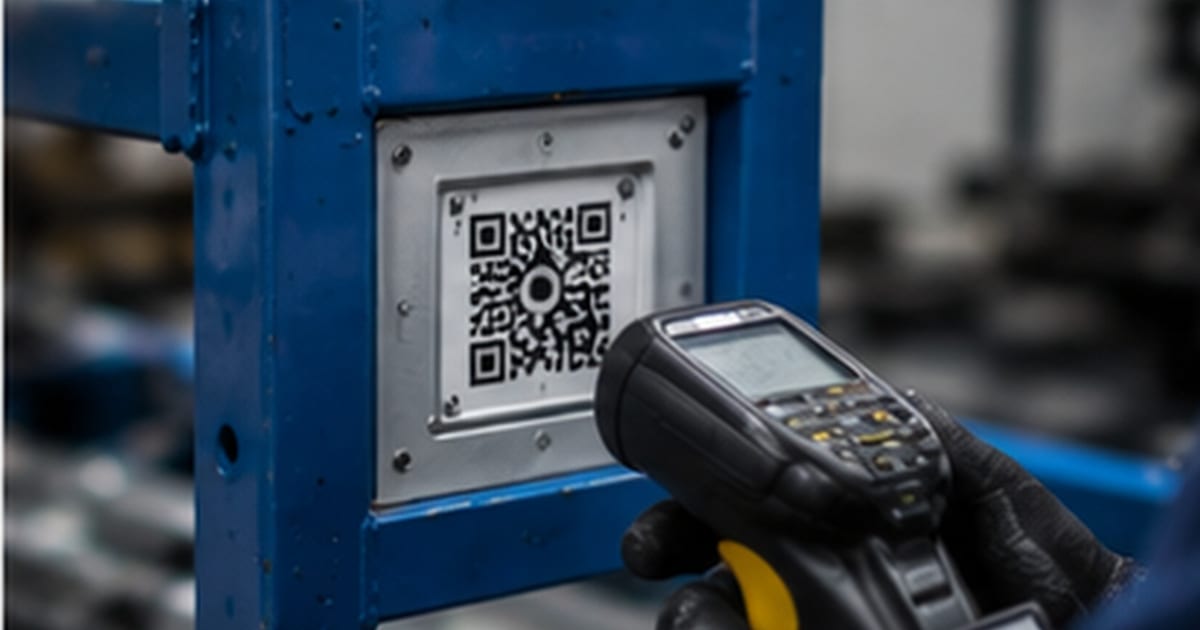
Rack identification in automotive assembly gives every returnable rack a unique ID — usually a barcode or 2D label following recognised standards — so parts, racks and locations can be scanned and tracked. Reliable identification and labelling for automotive manufacturing underpins error-proofing, returnable-container control and full traceability from supplier to line-side.
Quick answer: what rack identification in automotive assembly is
Rack identification and labelling gives every returnable rack a unique ID — usually a barcode or 2D label following recognised standards such as Odette, VDA and GS1 — so parts, racks and locations can be scanned and tracked. It underpins error-proofing, returnable-container control and full traceability from supplier to line-side.
Why rack identification matters on the line
In a returnable system, hundreds or thousands of racks circulate between suppliers and plants. Without clear identification you cannot track which rack holds which part, where it is, or whether it has been returned. Labelling turns each rack into a scannable unit that feeds the plant's logistics and quality systems.
Rack identification for automotive manufacturing: what to put on a label
| Element | Purpose |
|---|---|
| Unique rack ID | Distinguishes every physical rack in the fleet |
| Part number | Links the rack to the component it carries |
| Barcode / 2D code | Machine-readable scanning at each handoff |
| Supplier & plant | Routes returnable racks back to the owner |
| Quantity / batch | Supports counting, FIFO and traceability |
Labelling standards and formats
Automotive returnable-container and transport labels commonly follow Odette and VDA guidelines in Europe, with barcodes built on GS1 standards. Label content and shipping/parts identification also align with AIAG practice in North America. Following a recognised format means your labels scan in your customer's systems, not just your own.
Designing the rack for durable labelling
Labels fail if they are placed where they get knocked, painted over or torn. Good rack design builds in a protected label position — a recessed plate, angled holder or dedicated panel — so the code survives repeated handling and wash-down. Because this affects the steel structure, it should be specified when the rack is engineered, not added later. See how we design racks around real plant requirements in our automotive parts rack design guide.
Identification as part of a returnable system
Identification only pays off inside a well-run returnable loop. Combine durable labelling with the closed-loop thinking in our returnable-packaging stillage guide to keep racks tracked, returned and reused.
Build racks ready for identification
HAOFU designs custom racks with durable label mounts for automotive manufacturing built in. Explore automotive parts racks and stackable metal racks, watch our power-battery substrate frame for Benteler, or tell us your labelling standard and we will design the label position into your rack.
Frequently Asked Questions
- What is rack identification in automotive assembly?
- Rack identification gives every returnable rack a unique ID — usually a barcode or 2D label — so parts, racks and locations can be scanned and tracked from supplier to line-side. It underpins error-proofing, returnable-container control and full traceability on the assembly line.
- What information goes on an automotive rack label?
- Typically a unique rack ID, the part number it carries, a machine-readable barcode or 2D code, the supplier and destination plant, and quantity or batch data. Together these support scanning at each handoff, returnable-container routing and FIFO traceability.
- Which labelling standards do automotive racks follow?
- Automotive returnable-container and transport labels commonly follow Odette and VDA guidelines in Europe and AIAG practice in North America, with barcodes built on GS1 standards. Using a recognised format means the labels scan in your customer's systems, not just your own.
- How should a rack be designed for durable labelling?
- Build in a protected label position — a recessed plate, angled holder or dedicated panel — so the code is not knocked, painted over or torn during handling and wash-down. Because it affects the steel structure, the label position should be specified when the rack is engineered, not added later.
- Why does rack identification matter in a returnable system?
- In a returnable system, hundreds or thousands of racks circulate between suppliers and plants. Without clear identification you cannot track which rack holds which part, where it is, or whether it has been returned. Giving each rack a unique, scannable label turns it into a trackable unit that feeds the plant's logistics and quality systems, underpinning error-proofing and returnable-container control.