
Removable-Post Stackable Racks: Storage and Empty Return
A removable-post stackable rack, also called a demountable post pallet, uses corner posts that can be removed from the base for empty storage or return. Before requesting a quote, define the part and load, post height, forklift entry, loaded stacking requirement, empty-return method and where the loose posts will be stored. The post sockets, base, stacking interfaces and any post holder should then be checked together on a physical sample.
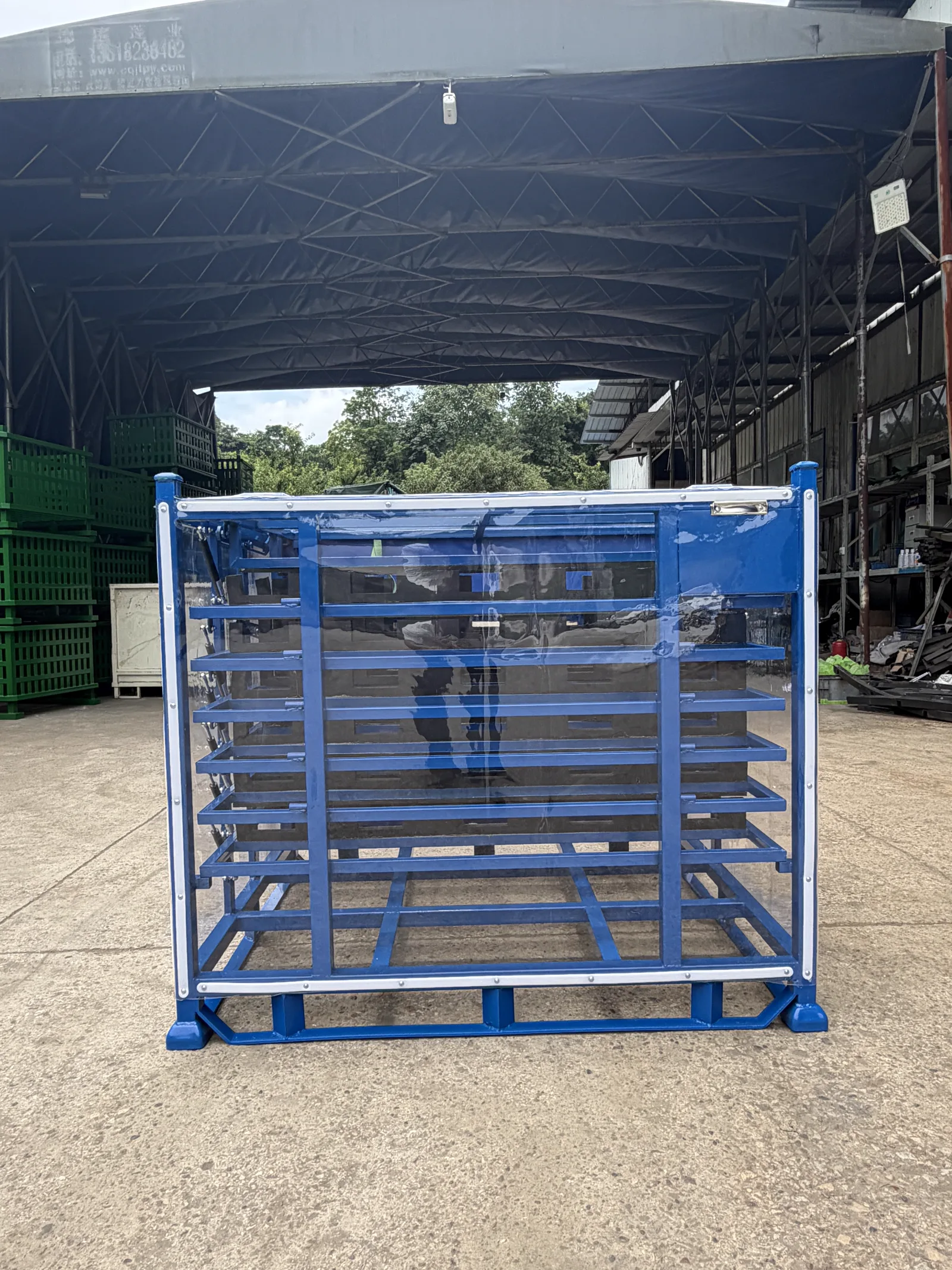
A removable-post stackable rack has a steel base with posts that fit into corner sockets to support stacking. Removing the posts reduces the empty rack profile and can make return transport or warehouse storage more compact. The tradeoff is that every loose post needs a defined storage position and handling method so the correct set stays with the base.
This format is also described in the market as a demountable post pallet, post pallet or portable stack rack. It is commonly considered when the load is too long, irregular or variable for a conventional pallet, while the empty return still needs to use less space. The final structure and capacity depend on the actual part, load distribution, stack height and handling equipment.
What information is needed for a removable-post rack quote?
| RFQ input | Information to provide | Why it matters |
|---|---|---|
| Part and load | Dimensions, weight, quantity per rack, support points and protection needs. | Defines the base, dunnage and post arrangement. |
| Loaded stacking | Target stack quantity, storage surface and loaded handling sequence. | Sets the geometry that must be checked in the rack design. |
| Forklift access | Fork direction, fork size, spacing and available clearance. | Shapes the base and entry openings. |
| Empty return | Whether bases nest or stack, return vehicle limits and handling method. | Determines how the empty set is arranged. |
| Post storage | On-base holder, separate stillage or another defined storage position. | Keeps loose posts organized with the returning rack set. |
Where should removable posts go during empty return?
There are two practical approaches: store the posts in a holder attached to the rack base, or collect them in a separate return container. An on-base holder keeps posts paired with the rack but occupies space and must stay clear of forklift entry and nesting features. A separate container may simplify the base but adds another item to count, move and return. Choose the arrangement around the warehouse sequence, return vehicle and operator access—not only the empty stack height.
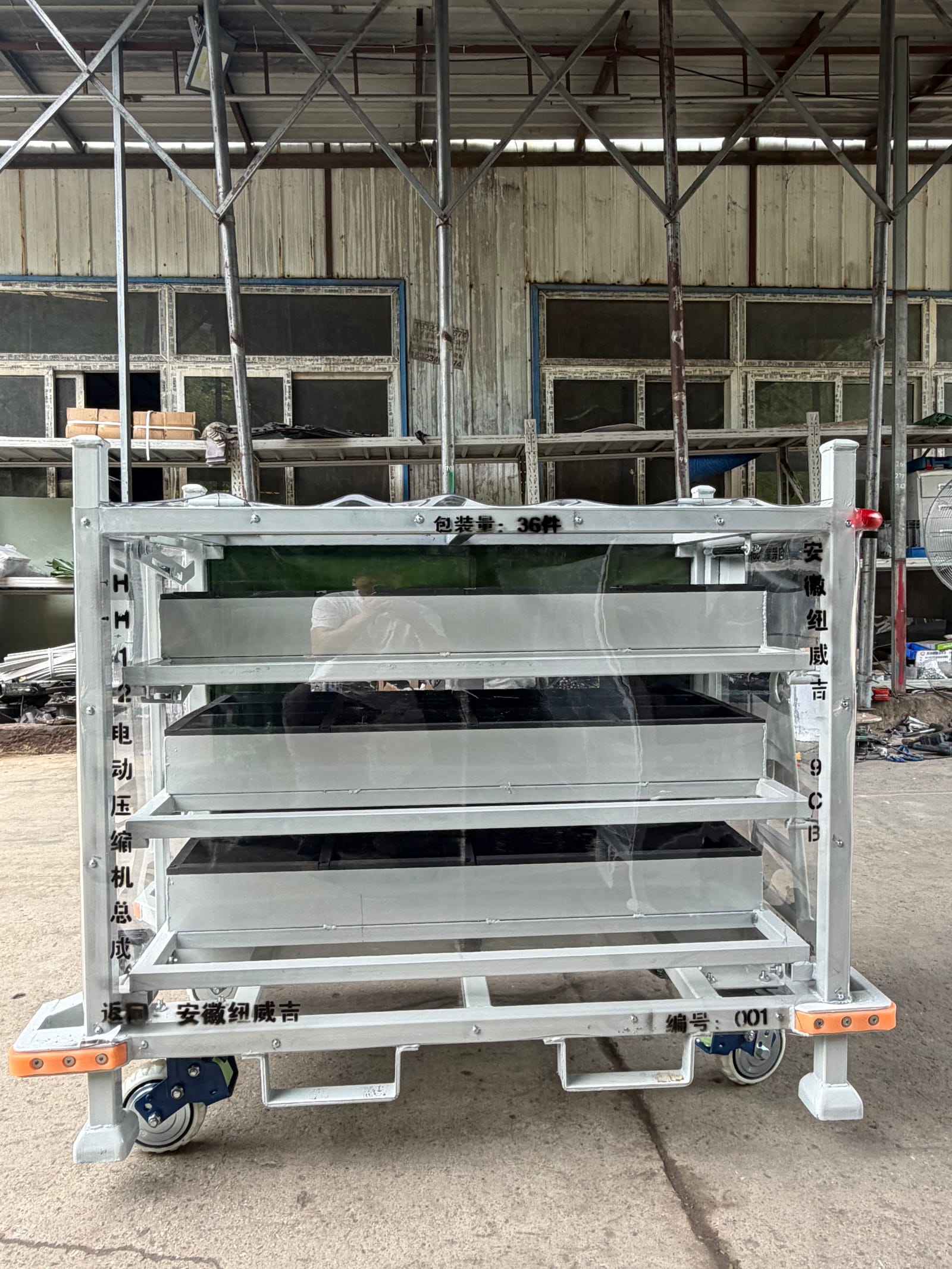
Five buying steps for a demountable post pallet
- Define the load. Share the part dimensions, total weight, center of gravity, quantity and required dunnage.
- Set the loaded arrangement. Specify post height, stack quantity, aisle conditions and how the rack is placed or removed.
- Confirm material handling. Provide forklift entry direction, fork dimensions, spacing and any crane or tugger interfaces.
- Plan empty return and post storage. Show how the bases and posts are arranged, counted, loaded and unloaded after the parts are removed.
- Test a production-intent sample. Check part fit, fork entry, post insertion, loaded stacking and the complete empty-return sequence.
Removable posts, fold-down frames or fixed uprights?
Removable posts suit projects that need an open base when empty and can manage loose components. Fold-down frames keep the uprights attached and may simplify component handling, while fixed uprights remove the folding or post-removal step but occupy the full rack height on return. Compare the complete route, labor and storage arrangement before selecting the mechanism. See the removable-post and height-extension guide, the loaded and empty-return rack guide, and foldable and collapsible stillage design for related options.
See a stackable metal carrier example
Watch stackable metal logistics carriers for real product context, then compare the visible base and upright interfaces with the needs of your own part and return route.
Request a removable-post rack quote
Send the part drawing or dimensions, load weight, quantity per rack, target stack quantity, forklift details, post height, empty-return arrangement and proposed post-storage method through the stackable rack RFQ form. HAOFU can review the base, post sockets, dunnage and return configuration for your project.