
Upgrading Used Battery Parts Racks for Benteler
See upgrading used battery parts racks for benteler in an automotive-parts logistics application. The footage focuses on the product structure and handling arrangement visible in the original project video. It gives buyers an application-level view of how the rack or service is used in that project. Look at the frame, part-contact areas, loading access, base and moving features that are actually visible, then compare them with your own part size, weight, orientation and protection needs. The related product category is Automotive Parts Racks. For a custom quotation, send the part drawing or photos, quantity per rack, loading method, forklift or line-side conditions, stacking and empty-return needs, project quantity and destination.
By HAOFU Engineering Team · Updated 2026-08-10
Video focus: Upgrading Used Battery Parts Racks for Benteler. Recorded detail: the structure or process stage named in the video. Closest product path: Automotive Parts Racks. Buyer decision: confirm part fit, access, handling and return conditions for the actual project. Next step: send drawings and route requirements through HAOFU customization.
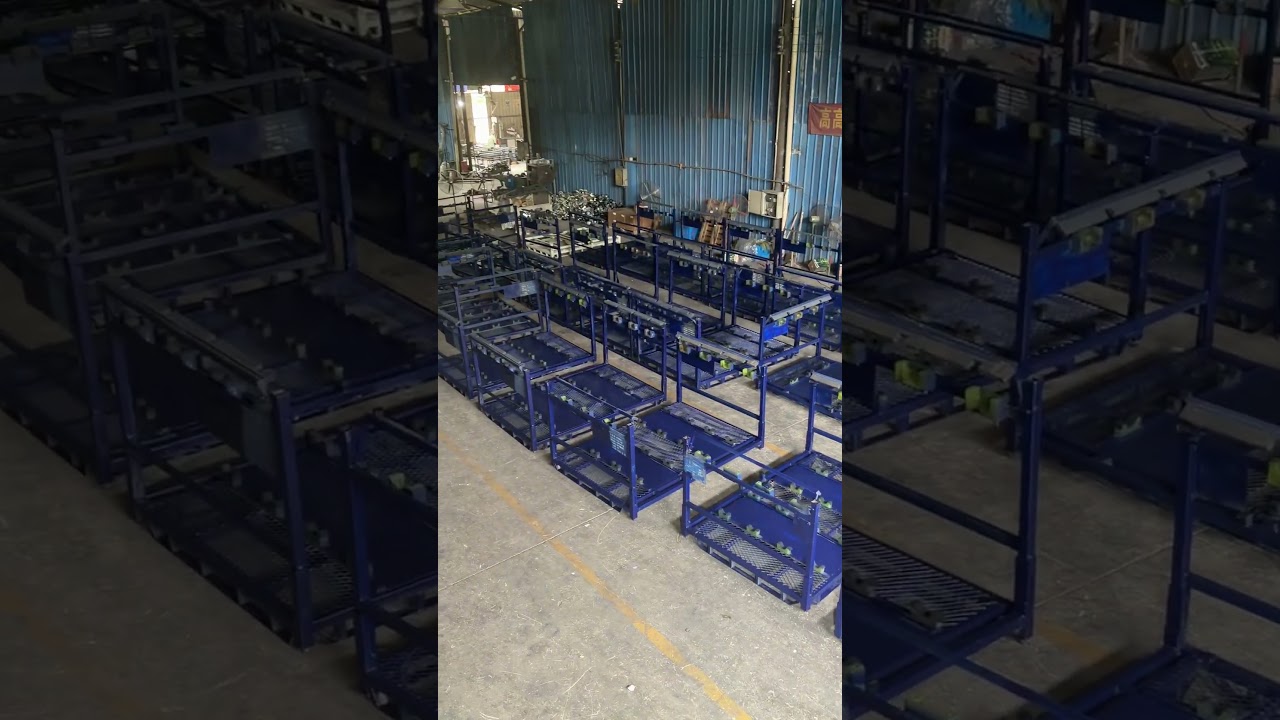
Direct answer: a battery parts rack upgrade is a retrofit path for a returnable rack whose steel frame may still be usable after the component changes. In the video, HAOFU updates the rack structure and internal positioning system for new battery base parts associated with Benteler instead of treating every change as a completely new rack project.
What changed in the shown project
The video post says the original battery base component racks had already served for several years. Because the component design changed, the rack's internal positioning and related structural details also needed to change. The important sourcing question is therefore not simply “new or used?” but “which parts of the asset still meet the revised brief?”
| Review area | Question | Evidence to collect |
|---|---|---|
| Core frame | Is the original structure suitable for the revised use? | Photos, identification and inspection notes |
| Part interface | Where did the new component geometry change? | Old/new drawings or physical samples |
| Positioning | Can the internal supports locate the new part? | Contact-point and clearance review |
| Finish and dunnage | Which components need replacement or rework? | Material, surface and cleaning requirements |
Why modification can be a useful sourcing option
Reusing a structurally suitable frame can reduce material waste and avoid discarding an asset solely because the part interface changed. That is a project outcome, not a universal cost or sustainability guarantee. Morrison's returnable packaging systems guidance describes modification and repair as part of managing a changing fleet, while Matcon's modification and refurbishment process highlights inspection, redesign, fabrication, finishing and delivery as separate stages.
Common retrofit mistakes
- Assuming a visually sound frame is automatically suitable for a changed part.
- Updating the insert without checking the rack's load path and handling interface.
- Failing to identify which units belong to the same fleet or revision.
- Skipping a fit review before modifying the entire quantity.
Start with the automotive parts rack range, review the EV battery rack guide, and send the existing-rack photos plus revised part information through customization. The original source is the Benteler rack-upgrade Short.
الأسئلة الشائعة
- What does the Upgrading Used Battery Parts Racks for Benteler video show?
- It shows the rack structure or production stage named in the video. Use the example to identify useful features, then specify a new rack from your own part and route requirements.
- Which HAOFU product is most closely related to this video?
- The closest catalog route is Automotive Parts Racks. Use that product page to understand the category, then submit project data for a configuration matched to the actual part and route.
- Are the video details standard specifications for every project?
- The details shown describe this example. Dimensions, capacity, materials, interfaces and finish for a new project are selected from the actual part, handling route and quotation requirements.
- What information should a buyer send for a related project?
- Start with part drawing, sample photos and protected contact surfaces, quantity and orientation required in each rack, loading direction, operator access and handling equipment, stacking, storage and empty-return requirements. These inputs let the engineering discussion focus on part fit and the real handling route.
- How can I request a quotation for a similar rack?
- Use the customization form to send drawings, photos, quantity per rack, handling conditions, project volume and destination. HAOFU can then review the application and respond around the supplied requirements.