
Repeat Customer Ordered 100 More Custom Automotive Parts Racks
A factory-production view of welding, powder coating and final assembly after a repeat customer increased the order by 100 custom automotive parts racks.
By HAOFU Engineering Team · Updated 2026-08-10
The video shows a repeat automotive customer ordering 100 additional custom parts racks, with welding, powder coating and final assembly supporting reusable transport and storage.
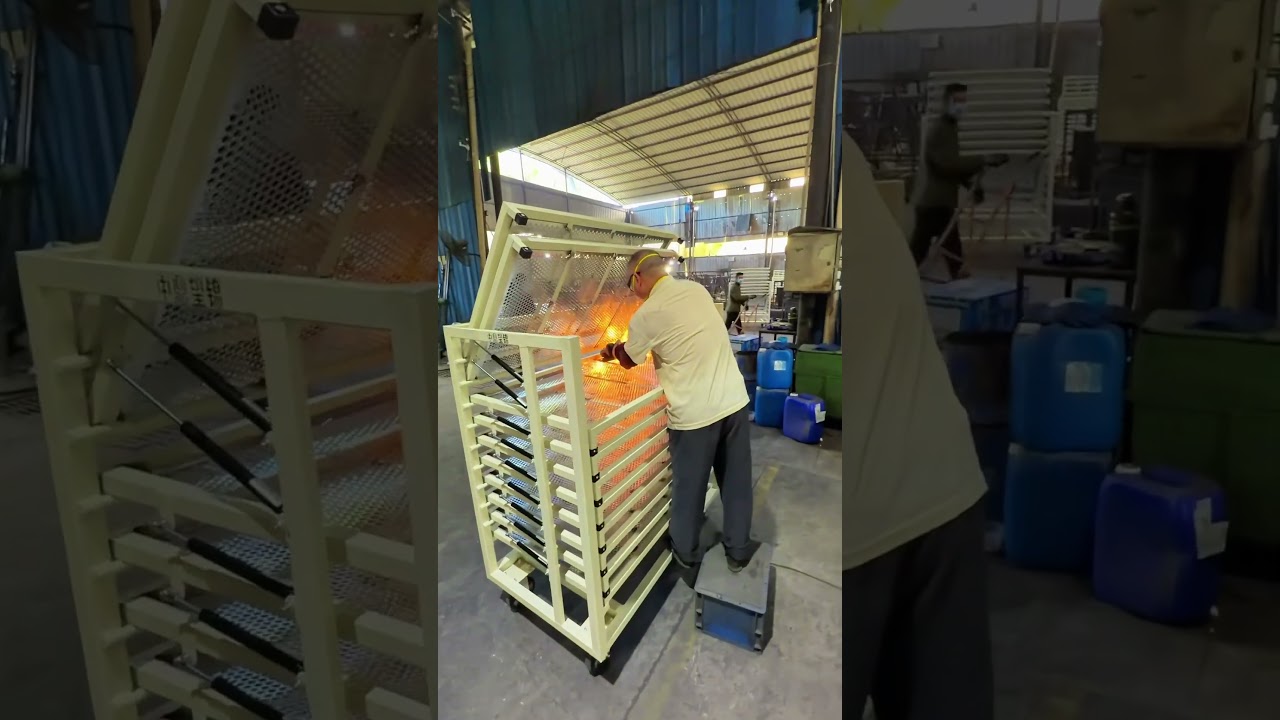
Direct answer: this video is a production-floor view of a repeat automotive customer increasing an order by 100 custom automotive parts racks. It shows welding, powder coating and final assembly—the practical stages a buyer should connect to an approved design, inspection plan and reusable logistics loop.
What the production sequence communicates
The footage is not a generic catalogue claim. It documents a specific production run after a repeat order. The useful sourcing signal is the connection between a defined rack design and repeatable fabrication stages: the frame is welded, the surface is finished, and the units are assembled for transport and storage.
| Stage | What to confirm with the manufacturer | Buyer evidence |
|---|---|---|
| Welding | Which drawing revision controls the frame and interfaces? | Approved drawing and revision record |
| Powder coating | What colour, surface preparation and inspection criteria apply? | Finish specification and sample approval |
| Final assembly | Are dunnage, hardware, labels and moving parts installed? | Assembly checklist and photos |
| Release | What makes the batch ready for shipment and reuse? | Inspection record and packing list |
Repeat orders are a control problem, not only a capacity question
For a recurring returnable-packaging programme, consistency matters as much as fabrication. The same part contact points, handling interfaces and identification should remain controlled across the batch unless a new revision is approved. MHI's packaging overview frames packaging around the product, handling and distribution system; Morrison's returnable-packaging guidance likewise treats the rack as part of the wider logistics loop.
Common mistakes before a repeat order
- Reordering from an old PDF without confirming the current revision.
- Assuming the finish or dunnage is unchanged because the frame looks similar.
- Leaving batch identification and packing evidence until loading day.
- Measuring factory output without checking the part interface and route.
Review HAOFU's automotive parts rack solutions, use the manufacturer buyer's guide to prepare your RFQ, and start a repeat or new project through customization. Watch the original production Short.
Häufig gestellte Fragen
- What does the repeat-order video show?
- It shows HAOFU's workshop after a customer increased an order by 100 custom automotive parts racks, including welding, powder coating and final assembly.
- Does a repeat order mean every rack has the same specification?
- A repeat order normally follows an approved project design, but the buyer should still control the revision, quantity, finish, dunnage and inspection requirements for each release.
- What should I check before ordering a production batch?
- Confirm the approved drawing revision, part interface, handling method, finish, identification, packaging, inspection evidence and quantity. A sample or first-article review can help close open fit questions.
- Are these racks intended for reusable logistics?
- The video post describes the racks as being built for safe transportation, efficient storage and long-term reusable packaging in automotive logistics. The actual loop should be defined from the buyer's route and handling conditions.
- How do I request a custom rack production review?
- Send the part drawing or photos, target quantity, loading method, route, storage state and required finish through HAOFU's customization page or contact form.