How to Audit an Automotive Rack Supplier: Buyer Checklist

Audit an automotive rack supplier by checking legal identity, engineering ownership, controlled drawings, sample and validation scope, fabrication evidence, change control and traceable inspection records. Use the checklist to compare evidence without assuming every supplier or project follows the same process.
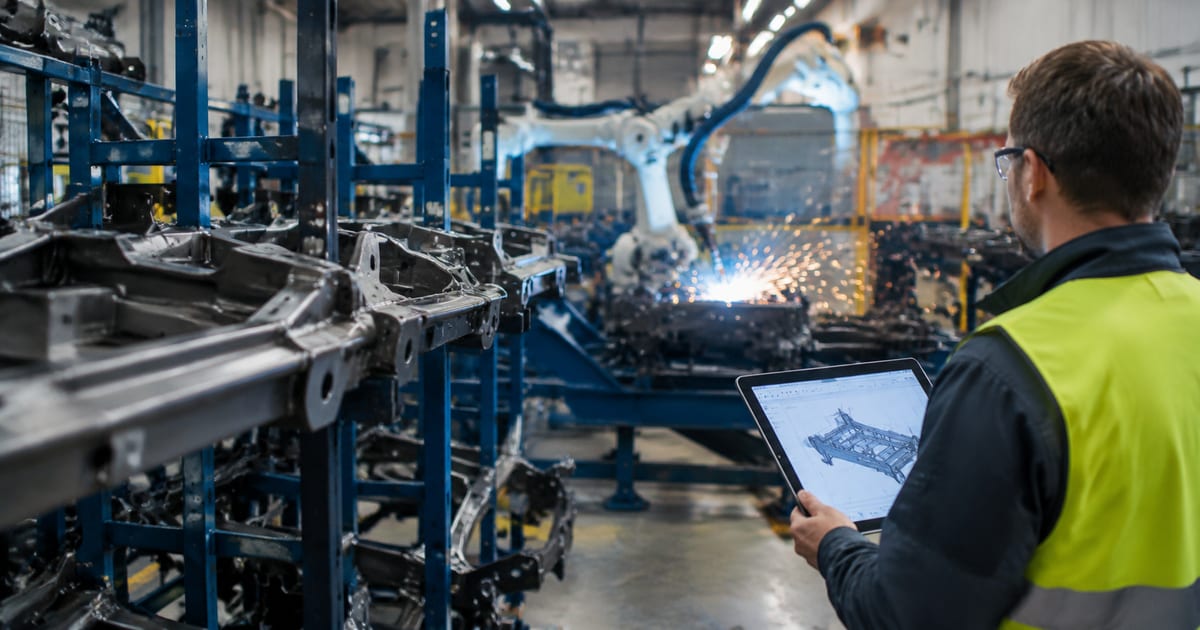
An automotive rack supplier audit should verify legal identity, engineering responsibility, drawing and revision control, fabrication evidence, sample approval, inspection records and change management. The objective is not to reward factory language; it is to establish who controls each requirement and what evidence will support release.
Quick answer: how to audit an automotive rack supplier
Ask the supplier to connect each claim to a controlled record: legal registration, named engineering responsibility, drawing revision, sample scope, fabrication process, inspection plan and nonconformance control. Compare evidence and project ownership rather than generic promises. The transactional product scope belongs on HAOFU's automotive parts rack manufacturer page.
Establish who controls the engineering
Ask who reviews the part data, releases the rack drawing, controls revisions and signs the sample or validation record. A supplier may use approved outside processes; what matters is transparent responsibility and traceable control rather than an unsupported claim that every process is under one roof.
Supplier evidence checklist
| Area | Useful evidence | Question to resolve |
|---|---|---|
| Engineering | Named owner, controlled inputs and released revision | Who approves design changes? |
| Legal identity | Registration and quoted contracting entity | Who accepts contractual responsibility? |
| Process evidence | Relevant current photos or video with an explained scope | Which operations are controlled directly or externally? |
| Sample & validation | Agreed checks, result records and approval responsibility | What does the sample prove—and not prove? |
| Commercial scope | Itemized quotation, exclusions and change process | Are engineering, tooling, testing and delivery clearly scoped? |
What good OEM/ODM production includes
- Custom engineering — structure, dividers and part cradles designed to your component, not adapted from a catalogue.
- Verified load rating — single-rack and stacked load calculated and confirmed with a physical test.
- Part protection — EVA foam, plastic blocks or rubber pads placed exactly at contact points.
- Return-friendly design — stackable or foldable frames that cut warehouse and return-freight space.
- Finish to environment — powder coat for indoors, hot-dip galvanizing for outdoor or wash-down.
- Quality system — a documented process such as ISO 9001, which HAOFU operates to.
What drives the price
Every automotive rack is quoted per unit because it is engineered around a specific part. Price is driven by steel weight and gauge, welding and structural complexity, finish and order quantity. For a full breakdown see our custom rack pricing guide, and to cut cost, standardise the design and raise volume.
MOQ, lead time and vetting
Expect a tested sample in about 7–15 days and mass production in roughly 25–45 days, with a typical MOQ of 20–50 units for welded racks — many factories accept smaller trial orders. For a full checklist on auditing a supplier, read our guide to sourcing racks from China. Industry buyers can also cross-check quality expectations against AIAG automotive supply guidance.
Why buy factory-direct
Buying direct from the custom rack manufacturer puts you in contact with the engineers who design and build the rack, removes trading-company markup, and keeps quality control and revisions in one place. See our range on the automotive parts racks page, or watch how we manufacture automotive logistics racks.
Have a part that needs a rack designed around it? Send us your drawings and our engineers will reply within 24 hours.
Frequently Asked Questions
- What does a custom automotive parts rack manufacturer do?
- A custom automotive parts rack manufacturer engineers a returnable steel rack around one specific component — sizing the frame, dividers and protection to the part's weight, contact points and handling flow — then builds, load-tests and finishes it in-house. It is engineering plus fabrication, not just welding a generic cage.
- How do I tell a real factory from a trading company?
- Ask for a business license with a manufacturing scope, a live video tour showing welding and finishing lines, and a load-tested sample before volume. A real factory has in-house engineers who review your drawings and quote direct; a trading company forwards the work and adds a 10–30% markup.
- What is the MOQ and lead time for a custom auto parts rack?
- Typical MOQ is about 20–50 units for custom welded racks, though many factories accept smaller trial orders. Plan for roughly 7–15 days for a tested sample and about 25–45 days for mass production, plus ocean transit to your country.
- Why is a parts rack quoted per unit instead of from a price list?
- Each rack is engineered around a specific part, so price is driven by steel weight and gauge, welding and structural complexity, finish and order quantity. Higher volumes and more standardised designs lower the unit price; there is no fixed catalogue price.
- Is buying factory-direct cheaper than through a trading company?
- Usually yes. Buying direct removes the trading-company margin and puts you in contact with the engineers who design and build the rack, which also keeps quality control and revisions in one place. For ongoing custom work it is normally better on both price and quality.