Automotive Rack Forklift Entry and Pocket Clearance
Specify automotive rack forklift entry from the actual truck: fork width, thickness, length and spacing, carriage or attachment clearances, entry direction, floor condition and required lift height. Also check approach space, rack feet and guides, loaded center of gravity, stacking alignment and empty handling. A sample trial with the intended forklift is the clearest way to confirm access before production.
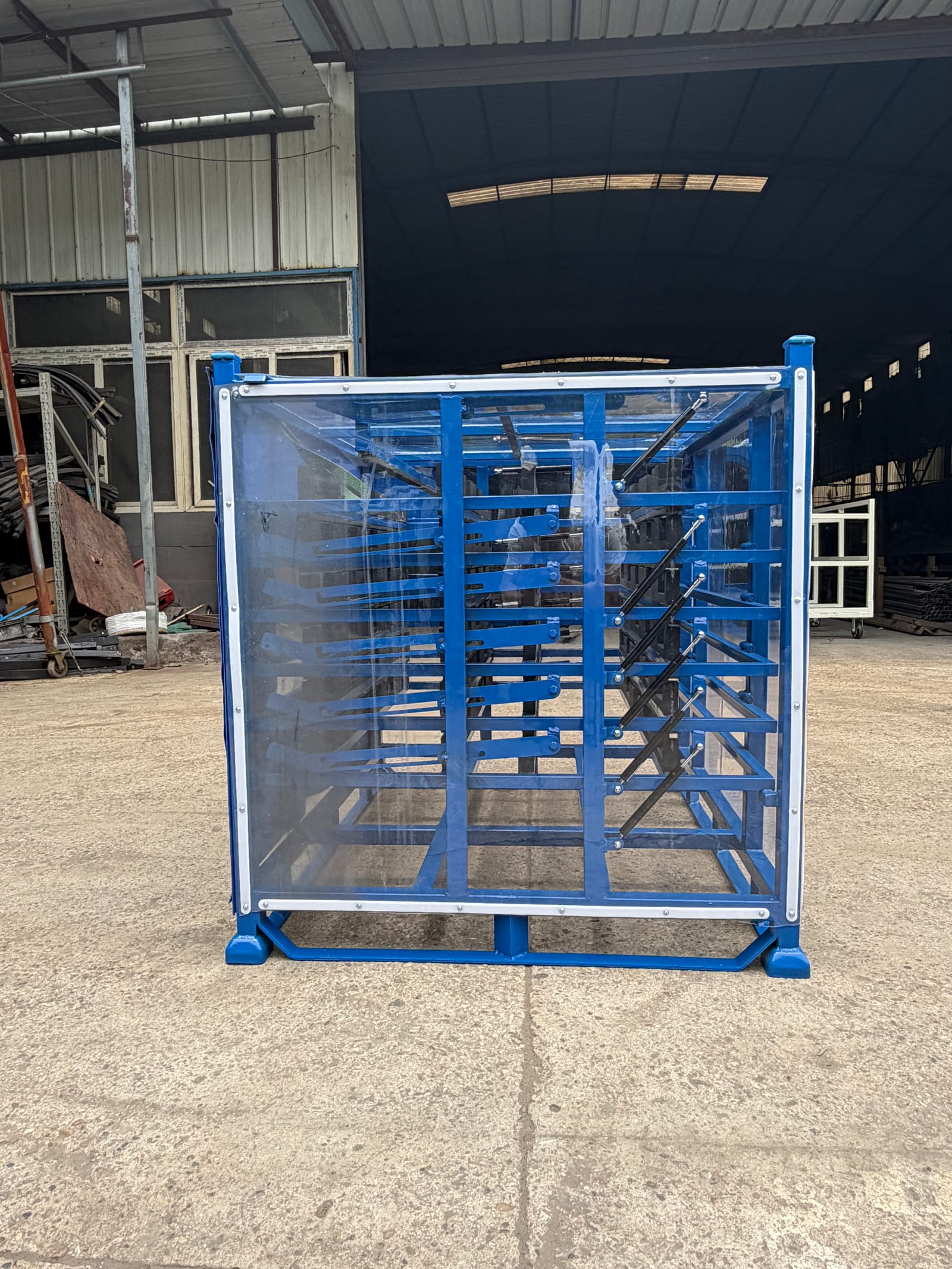
Automotive rack forklift entry should be designed from the actual truck and handling route. Provide fork width, thickness, length and spacing; the carriage or attachment envelope; entry direction; floor condition; required lift height; and loaded rack weight and center of gravity. These inputs shape pocket width and height, guides, base rails and the clearance around rack feet.
Forks entering the pocket are only the first step. The truck also needs room to approach, lift, turn, travel, stack and withdraw without contacting the load, frame, floor or nearby equipment. Review loaded and empty rack states because dunnage, fold-down parts or nesting features can change the handling interface.
Which forklift dimensions are needed for a rack RFQ?
| Input | Information to provide | Rack feature affected |
|---|---|---|
| Forks | Width, thickness, usable length, spacing range and tip shape. | Pocket opening, guides and insertion depth. |
| Truck and attachment | Carriage width, mast or attachment envelope and capacity at load center. | Frame clearance and load positioning. |
| Entry and lift | Two-way or four-way entry, pickup height and stacking sequence. | Base rails, feet and locator geometry. |
| Route | Aisles, doors, trailers, slopes, floor transitions and staging space. | Approach and travel clearance. |
| Load | Loaded weight, center of gravity, part overhang and rack state. | Support and handling stability review. |
Fork pocket clearance is more than the fork thickness
Allow space for fork entry angle, floor unevenness, manufacturing tolerance and practical alignment, while limiting excessive movement that makes pickup inconsistent. Check that pocket guides do not interfere with fork heels or attachments and that the fork length supports the rack as intended without striking components behind the pocket.
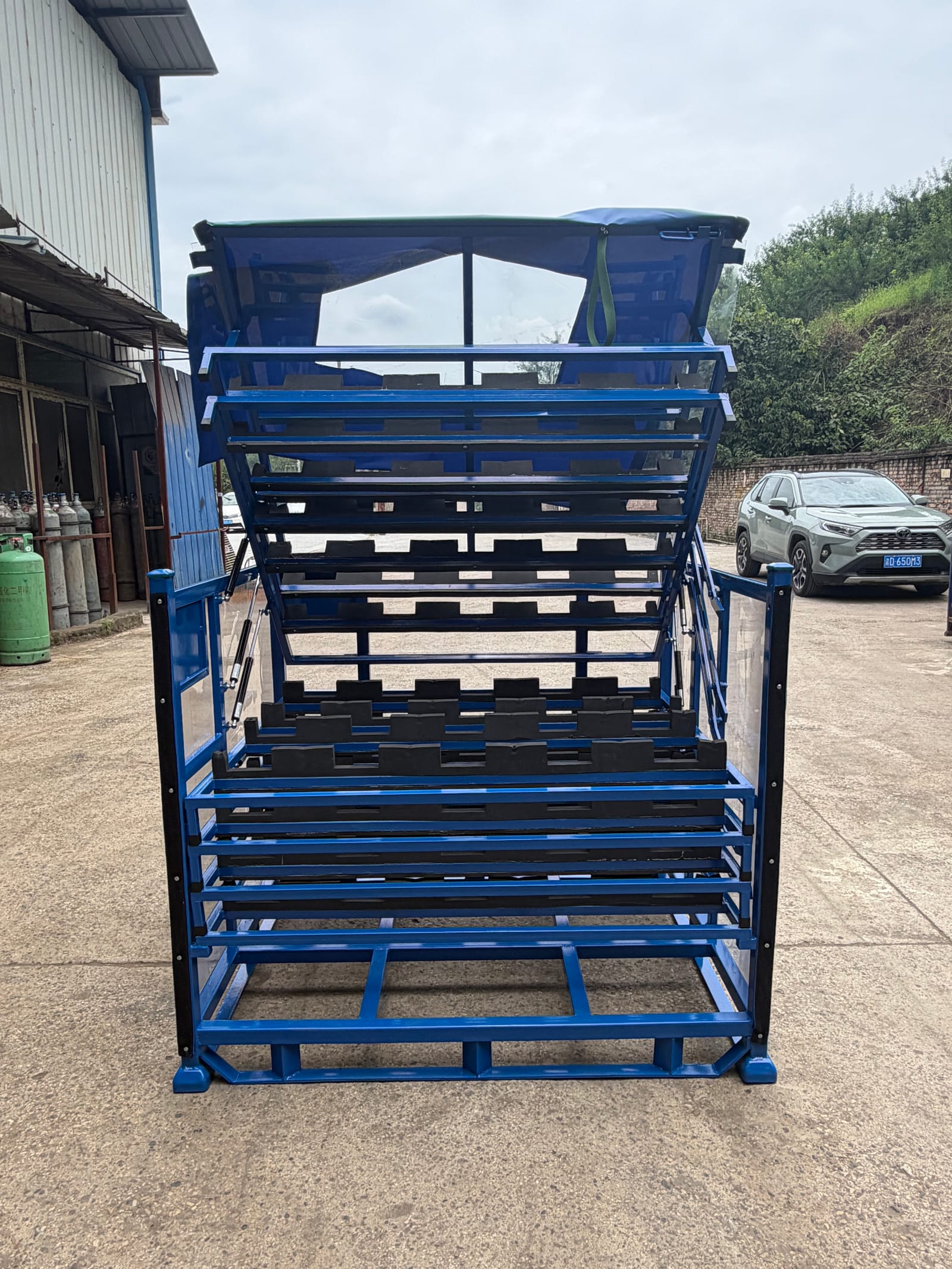
Five checks for automotive rack fork entry
- Measure the intended forklift. Record fork and carriage dimensions rather than relying on a model family name.
- Define loaded and empty states. Include weight, center of gravity and any features that move or fold.
- Map the route. Check approach, pickup, travel, stacking, trailer entry and deposit locations.
- Review the rack base. Confirm pocket openings, guides, underclearance, feet and stacking locators.
- Run a sample trial. Use the intended forklift and representative load before production.
Related automotive rack guides
See the engine rack RFQ guide, the steel pallet forklift interface guide and custom automotive parts racks.
Request an automotive rack quote
Send the part and rack drawings, loaded weight and center of gravity, fork dimensions and spacing, truck or attachment details, entry direction, route clearances and quantity through the automotive rack RFQ form.