Engine Rack RFQ: Contact Points, COG and Loading Access

Send the current engine drawing, 3D model or sample; mark permitted supports and no-contact zones; provide mass and centre of gravity; show the loading direction and crane, fork or conveyor interfaces; and define the route, rack quantity and sample checks. These inputs let manufacturers quote the same engine-rack scope and reduce redesign after the first sample.
Direct answer: An engine rack RFQ should give the manufacturer the current engine geometry, mass and centre of gravity, permitted support points, prohibited contact zones, loading orientation and access, handling-equipment interfaces, route conditions, quantity and sample-check criteria. Mark unknown values as TBC so each supplier prices the same scope.
This checklist is for packaging engineers, logistics engineers and sourcing teams preparing a request for quotation for a custom engine transport rack. It turns the broader decisions on our automotive engine racks application page into an RFQ evidence pack. For a generic rack brief covering 20 cross-category fields, use the rack specification sheet checklist instead.
What an engine rack manufacturer needs first
The starting point is the engine revision and its approved data, not a preferred rack footprint. Engine assemblies can differ in attachments, accessible mounting features, mass distribution and loading sequence even when a purchasing description looks similar. Freeze the component revision and identify who can approve each input before asking a supplier to position supports.
| RFQ field | What to provide | Acceptable evidence | Why it changes the rack |
|---|---|---|---|
| Part identity | Engine family, current revision and included attachments. | Current drawing, 3D model, envelope or physical sample. | Prevents a support or clearance being designed for the wrong configuration. |
| Mass properties | Loaded mass and centre-of-gravity location in the stated orientation. | Approved engineering data or a documented measurement method. | Controls support layout, handling stability and validation inputs. |
| Contact map | Permitted support points, restricted surfaces and retention zones. | Marked drawing, annotated model or approved sample review. | Separates locating surfaces from machined, sealed, wired or otherwise restricted areas. |
| Loading access | Direction, sequence, tool envelope and operator or robot clearance. | Work instruction, station layout, robot study or loading trial record. | Sets opening sides, removable or moving members and presentation height. |
| Handling interface | Fork, crane, conveyor, AGV, tugger or manual interface at each hand-off. | Equipment drawing, fork data, lifting plan or integrator interface sheet. | Defines pockets, lifting access, datums, stops and clearances. |
| Route and states | Internal moves, transport, storage, loaded stacking and empty return. | Route map plus the conditions at every transfer point. | Shows where protection, access, restraint, covers or return features are required. |
| Programme data | Parts per rack, rack quantity, identification and destination. | Packaging plan, demand data and buyer labelling requirements. | Connects the engineering concept to capacity planning, identification and quotation scope. |
| Acceptance | Drawing review, sample checks, fit trial and required records. | Buyer-approved inspection and validation plan. | Defines what evidence releases the rack revision for production. |
Contact points and prohibited zones
A contact map should answer two different questions: where the engine may be supported or located, and where the rack must not touch. Mark each permitted point in the same orientation used for the centre-of-gravity data. Then identify restricted machined faces, seals, connectors, hoses, sensors, covers and any service access that must remain clear. The rack designer can then propose locator geometry, dunnage and retention.
Do not describe a point merely as “strong.” State its reference, permitted direction of support, clearance around it and the buyer role that approves it. If the project uses a physical sample because complete digital data are unavailable, record the sample revision and any attachments present during the review.
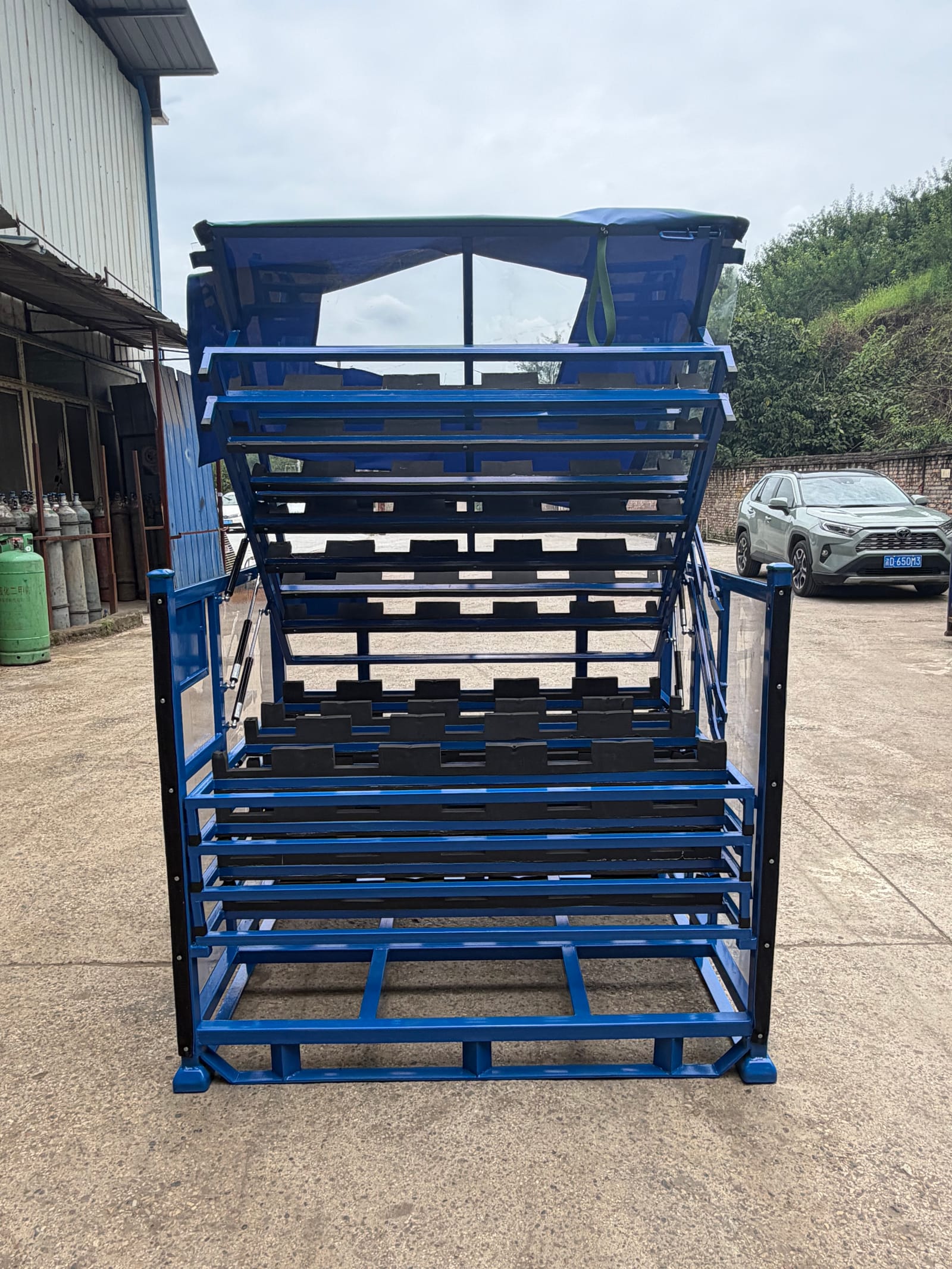
Centre of gravity belongs in the RFQ
Centre of gravity affects the loaded rack and the handling system together. OSHA's powered-industrial-truck guidance on load composition explains that off-centre loads and increased load-centre distance change the load moment and must be handled within the truck's stated capacity. That does not create a universal rack rule; it is a reason to give the manufacturer accurate mass properties and the actual equipment interface.
Provide the coordinate system, orientation and data source with the centre-of-gravity value. If attachments or fluids change between logistics states, identify which condition the rack must accommodate. The rack supplier should not derive a final COG from a marketing photo or assume that a previous engine programme is equivalent.
Loading access and handling interfaces
“Forklift handled” is not enough for an engine rack RFQ. State the fork-entry side, available fork dimensions and spacing, pickup direction, floor and aisle constraints, and whether the rack meets a conveyor, crane, AGV, tugger or line-side station. For crane loading, show the lifting tool and its approach envelope. For conveyor or automated transfer, provide the system owner's datum, support, stop and detection requirements.
MHI describes industrial packaging as a system that combines containers or platforms with dunnage and handling features according to the product being protected. Its packaging overview also distinguishes fork openings, access doors, dunnage and automated-storage interfaces. Use those functions as prompts, then specify the real route rather than copying a catalogue arrangement.
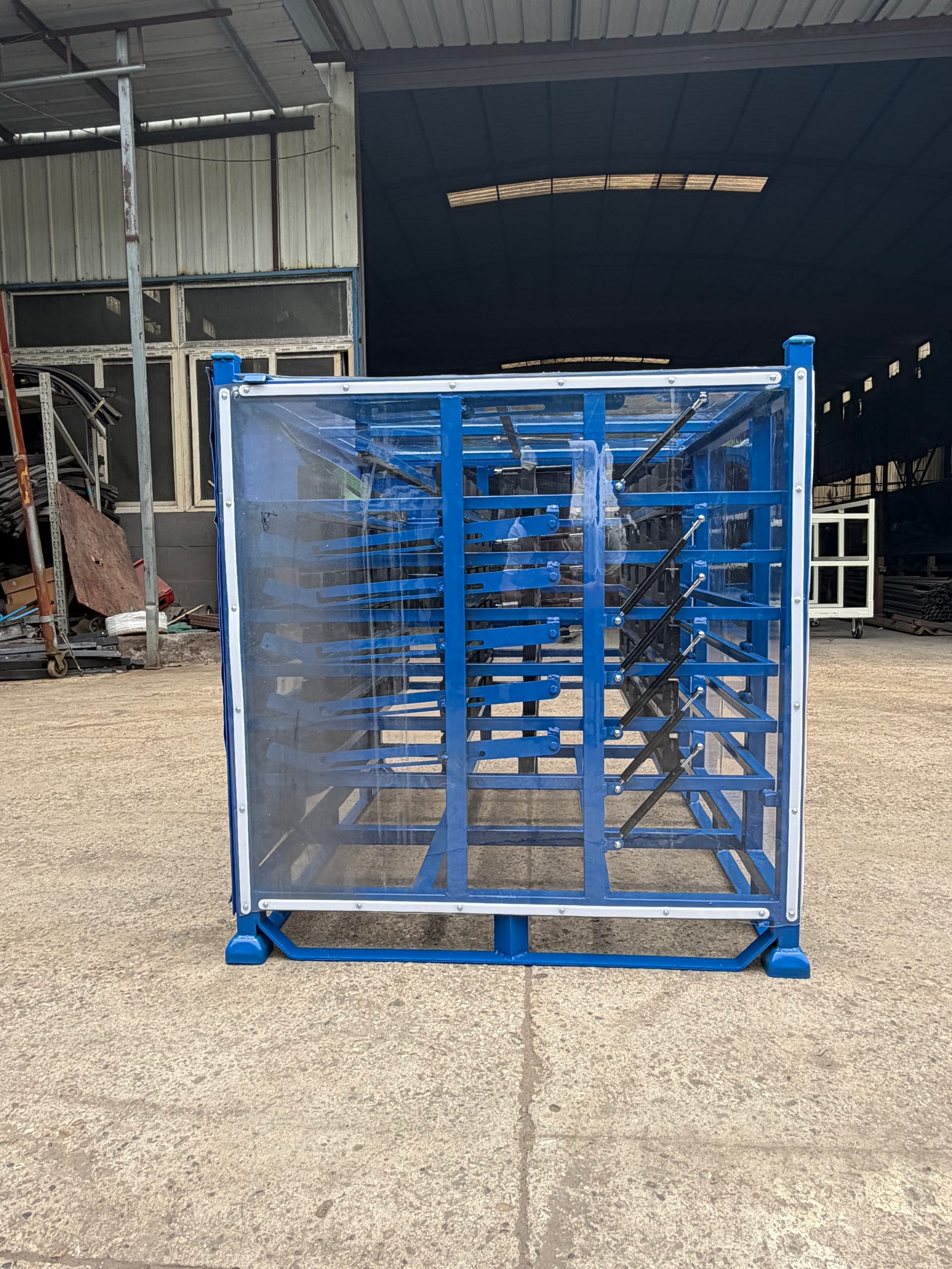
Engine rack RFQ workflow
- Confirm the engine revision. Gather the current drawing, model or agreed physical sample and list included attachments.
- Mark contact and clearance zones. Show permitted supports, prohibited surfaces, retention zones and access that must remain open.
- Add mass properties and orientation. Record loaded mass, centre of gravity, coordinate system, source and the logistics state represented.
- Map loading and handling interfaces. Document the loading sequence and every fork, crane, conveyor, AGV, tugger or manual hand-off.
- Agree the acceptance evidence. Define the drawing review, sample fit, route trial, inspection record and responsible release parties before production.
The automotive industry also treats packaging as a supply-chain process rather than an isolated frame. AIAG's supply-chain materials cover packaging, labelling, identification, shipping and return. Use that system-level framing to check the hand-offs around the rack, while keeping the receiving plant's current packaging specification and responsible approval parties as the project authority.
Common engine rack RFQ mistakes
- Sending only overall dimensions. An envelope does not identify usable supports, restricted surfaces or the loading path.
- Leaving COG without an orientation or source. A coordinate is unusable if the rack team cannot relate it to the controlled model and logistics state.
- Writing “forklift and crane compatible.” Each interface needs actual equipment data, direction, clearance and an approval owner.
- Combining loaded and empty conditions. Loaded transport, loaded storage and empty return can create different interfaces and restraints.
- Requesting a price before defining acceptance. Suppliers will scope different samples, inspections and trials unless the release evidence is part of the RFQ.
Technical references
- OSHA — Powered Industrial Trucks: Load Composition
- AIAG — Automotive Supply Chain Management
- MHI — Packaging Fundamentals
Send an engine rack RFQ to HAOFU
HAOFU manufactures custom automotive parts racks in China for global shipment. Send the engine drawing or sample, contact map, COG, loading method, route and required quantity through our custom rack design process. You can also read the broader engine handling and storage guide or watch the engine transport rack repair video for existing-fleet context.
Frequently Asked Questions
- What should I send an engine rack manufacturer for an RFQ?
- Send the current engine drawing, model or sample; engine revision; mass and centre of gravity with orientation; permitted support points; prohibited contact zones; loading sequence; handling-equipment interfaces; route; parts and racks required; destination; identification needs; and the sample-check plan.
- Why does an engine rack RFQ need centre-of-gravity data?
- The centre of gravity affects support layout and the combined handling condition of the loaded rack and its forklift, crane or transfer equipment. Provide the approved value with its coordinate system, orientation, logistics state and source. The supplier should not estimate a final COG from a photograph or a different engine programme.
- How should engine rack contact points be specified?
- Mark permitted support or locating zones and prohibited surfaces on the controlled drawing or model. Include the allowed support direction, required clearance, restricted machined faces, seals, connectors or sensors, and the buyer role responsible for approval. Do not describe a contact point only as 'strong.'
- Is saying forklift compatible enough for an engine transport rack?
- No. Define the fork-entry side, fork dimensions and spacing, pickup direction, clearances, floor and aisle conditions, and the lift truck or equipment data used by the project. Crane, conveyor, AGV and tugger hand-offs need their own interface drawings or controlled requirements.
- When is an engine rack RFQ ready for quotation?
- It is ready when the supplier can identify the engine revision, contact restrictions, mass properties, loading and handling interfaces, route, quantity and sample checks. Unknown values can remain TBC, but they should be listed as quotation assumptions.