
Automotive Rack Dunnage Approval: Inputs Before Release
Approve automotive-rack dunnage from the current part revision, permitted and prohibited contact zones, loading and handling sequence, sample-review method and named release owner. A foam, rubber or plastic feature is not approved merely because it appears on a prior rack or a generic drawing.
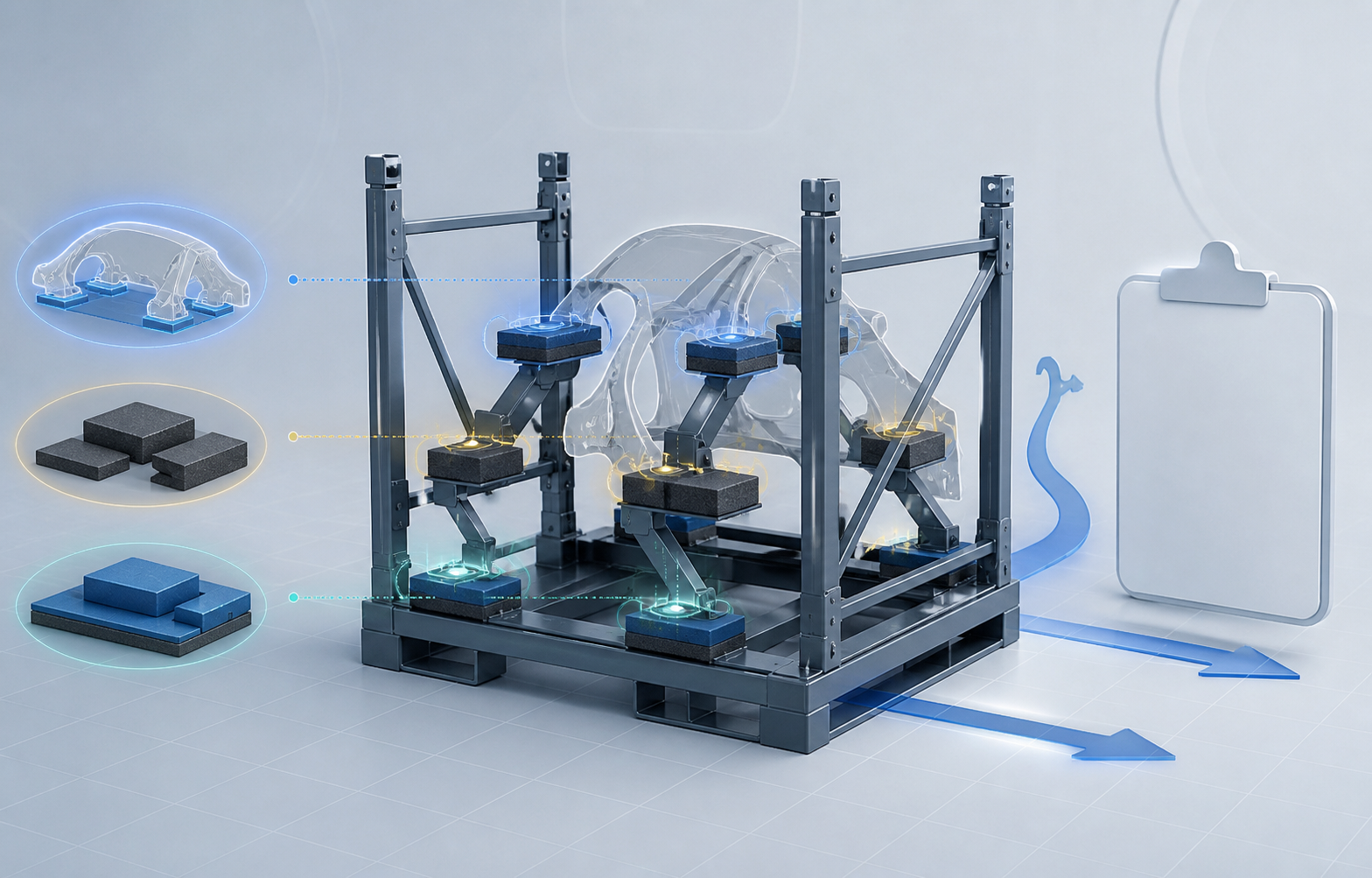
Automotive rack dunnage should be approved against a controlled part and route—not against a familiar pad material. For packaging engineers, quality owners and sourcing teams, the useful approval file identifies the current part revision, allowed and prohibited contacts, loading orientation, handling and return states, sample evidence and the person who may release the drawing. That makes the final decision reviewable without inventing a universal protection claim.
Start with the controlled part, not the dunnage material
Foam, rubber, plastic blocks, dividers and straps are interfaces between a part and a rack. Begin by marking the part revision, cosmetic or restricted surfaces, permitted supports, quantity per rack, orientation and access needed for loading or removal. Then map every state in which the part can touch the carrier: loading, storage, transport, unloading and empty return.
The AGC Automotive packaging guidelines are a useful industry example: they separate design/prototype work from the later production purchase release and require engineering approval for the design and analysis stage. That does not set the requirements for another buyer programme, but it supports keeping the controlled part, review evidence and release decision together.
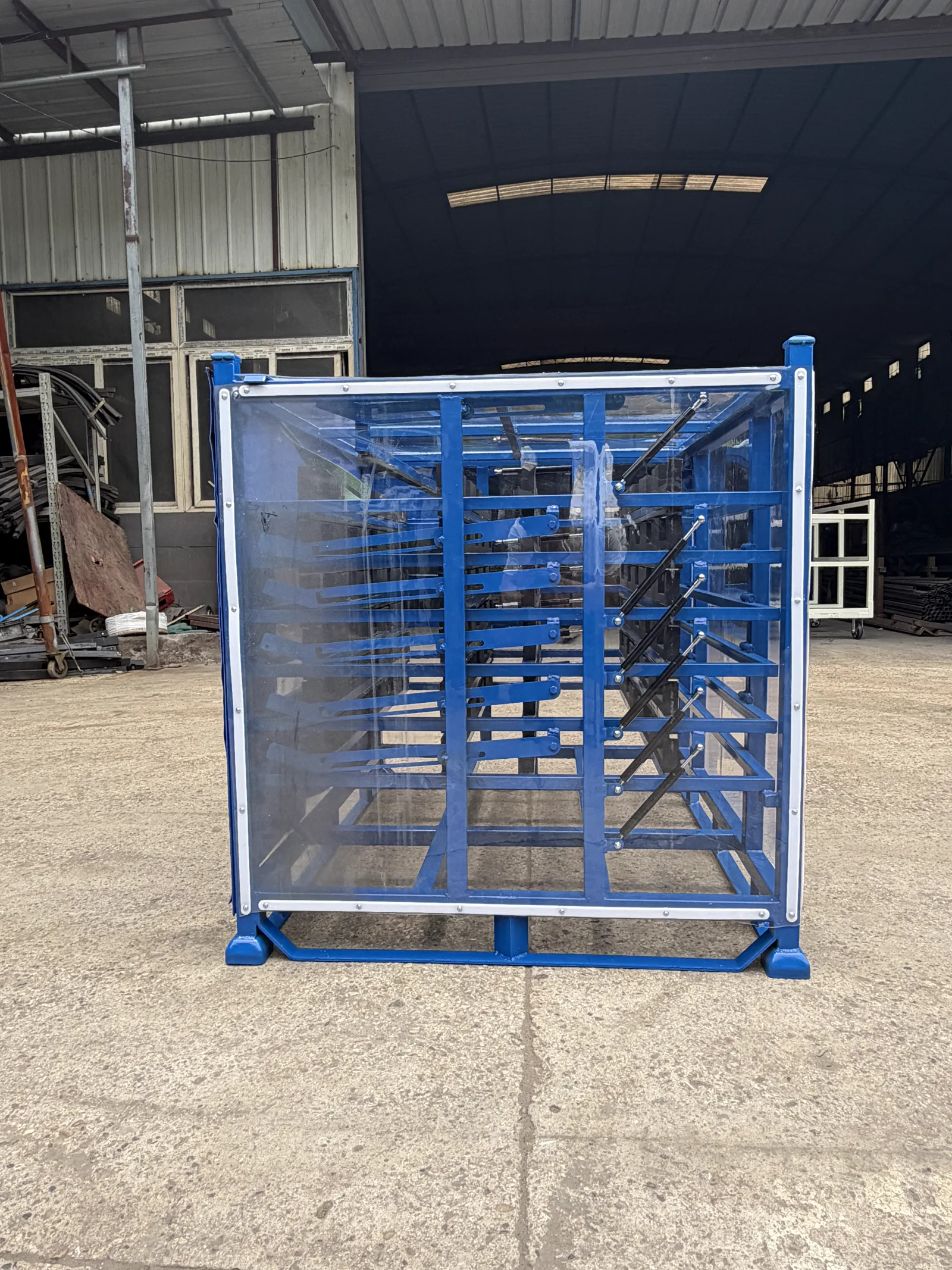
Approval inputs that prevent an ambiguous rack brief
| Input | What to identify | Approval evidence |
|---|---|---|
| Part and zones | Revision, orientation, permitted support and restricted surfaces | Controlled drawing or approved sample reference |
| Dunnage interface | Pad, separator, locator or restraint location and replacement approach | Marked drawing and visible sample condition |
| Working route | Loading, handling, storage, transport and return states | Representative sequence and equipment inputs |
| Release control | Acceptance criteria, deviations and named decision owner | Signed or controlled release record |
Run a four-step approval review
- Freeze the input set: use the buyer-controlled part revision, part quantity, presentation and contact map; mark unknowns as open rather than estimating them.
- Map the physical interfaces: show where dunnage, locators, dividers and restraints contact the part, plus the access needed by people or equipment.
- Review a representative sample: run the intended loading, handling, storage and unloading states with the controlled part or agreed representative evidence.
- Release the drawing and exceptions: record what was accepted, what changed, who owns any open item and which revision production may follow.
Keep the sample review separate from a generic safety claim
Powered handling and storage have to reflect the actual workplace condition. OSHA materials-handling guidance is a useful reminder to review the real handling context, while AAR technical-services references show that loading methods and materials can require controlled evaluation. Neither source approves a specific automotive rack, pad or route for this project.
Use adjacent guides for the next decision
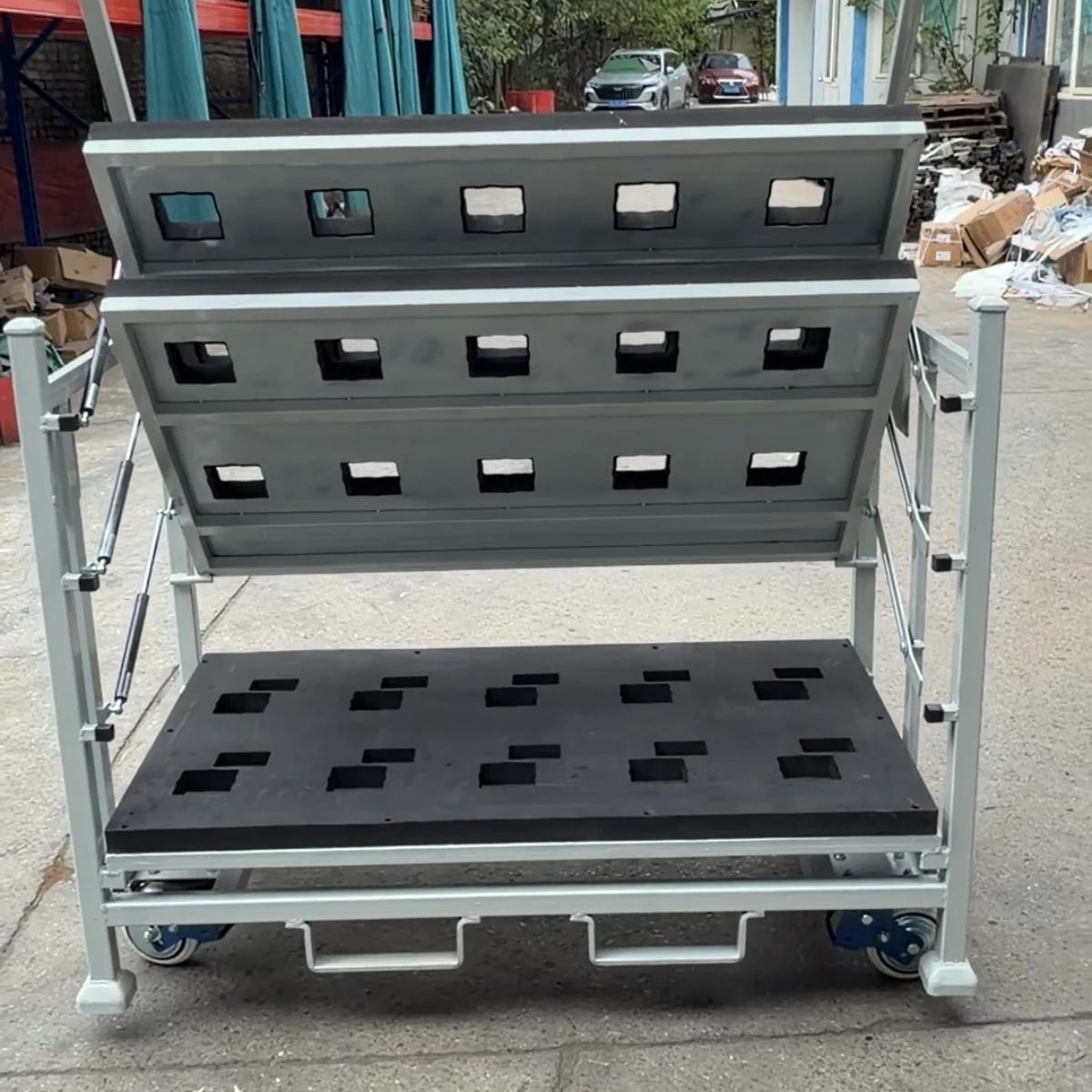
For protection features, see our painted-parts dunnage guide; for the broader product and engineering context, use the automotive metal-racks guide and the automotive rack design guide. A visible configuration context is available in our EVA foam-slot automotive rack video; it is a project video, not an acceptance record for this brief. The paired returnable fleet acceptance checklist starts after an approved design becomes a circulating programme.
Explore custom automotive parts racks, then send the controlled part drawing or sample, contact restrictions, quantity, route, handling equipment and intended approval evidence through customization.