Material Handling Trolleys and Tugger Carts: Choosing the Right One
A material handling trolley moves parts point-to-point; a tugger cart connects into a train pulled by a tow tractor to deliver many parts in one milk-run trip. Use trolleys for light, ad-hoc moves and tugger carts for high-volume, routed line-side replenishment.
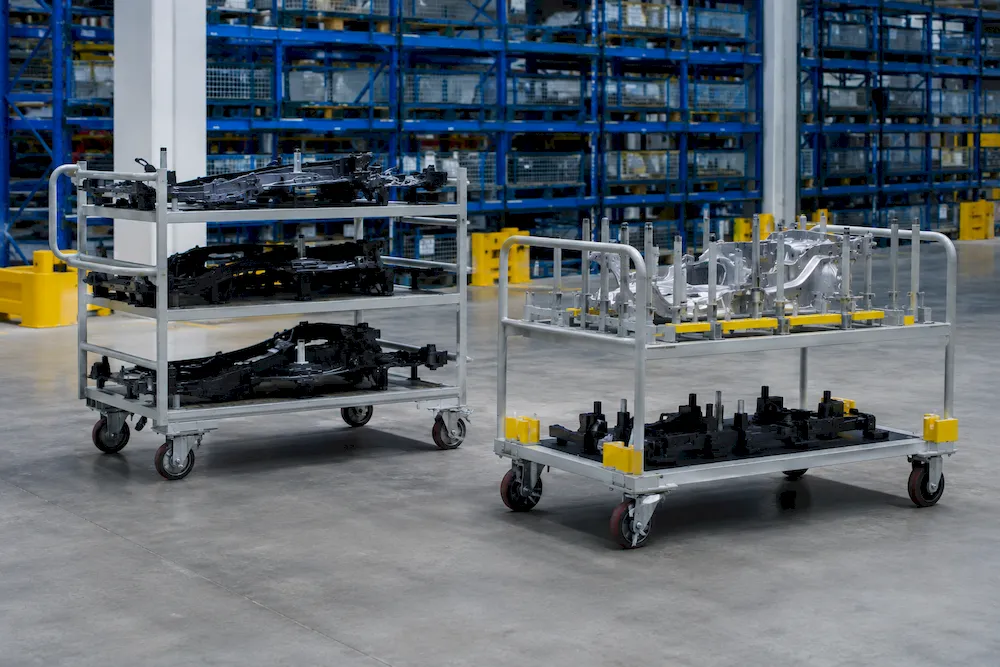
A material handling trolley moves parts, tools and materials between stores, lines and workstations with less lifting and fewer handling steps. Choosing the right trolley — and the right wheels — directly affects throughput, ergonomics and safety on the factory floor.
Quick answer: trolley vs tugger cart
A material handling trolley moves parts point-to-point between stores, lines and workstations; a tugger cart is towed in a train behind a tow tractor to deliver many loads in one trip. Use manual trolleys for short, light, ad-hoc moves and tugger carts for high-volume, just-in-time line-side replenishment. Match wheels and brakes to the load, floor and distance.
Manual, towable or forklift?
Manual trolleys
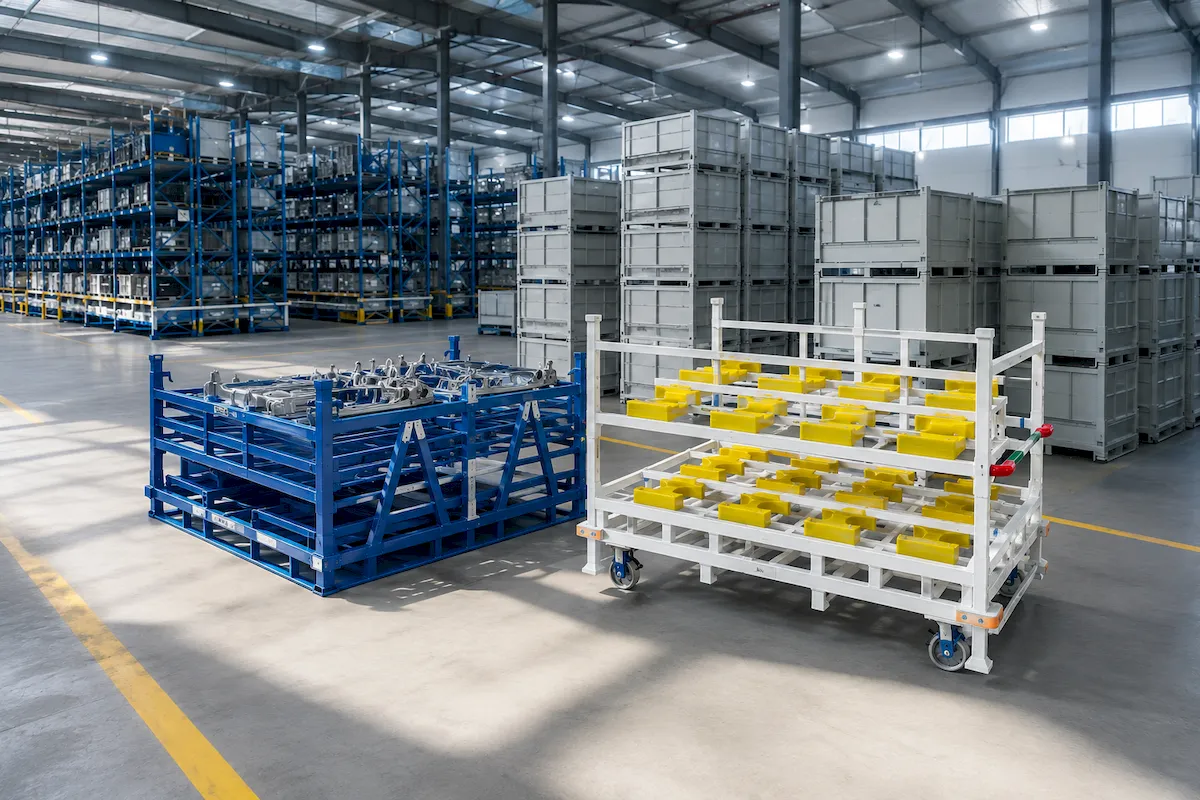
Pushed by hand for short moves and line-side delivery. Need ergonomic handles, good casters and brakes.
Tugger carts
A tugger cart is towed in a train behind a tow tractor, delivering many loads in one trip — the backbone of lean, just-in-time material flow.
Forklift-handled trolleys
Fitted with fork pockets for longer moves or heavier loads between areas.
Wheels and brakes matter
Wheel type, diameter and brake system should match the load, floor and travel distance:
- Swivel + fixed casters for controlled steering
- Wheel brakes for safe stops and parking
- Polyurethane wheels for quiet, floor-friendly rolling
- Heavier wheels for high loads and long runs
Match the trolley to the part
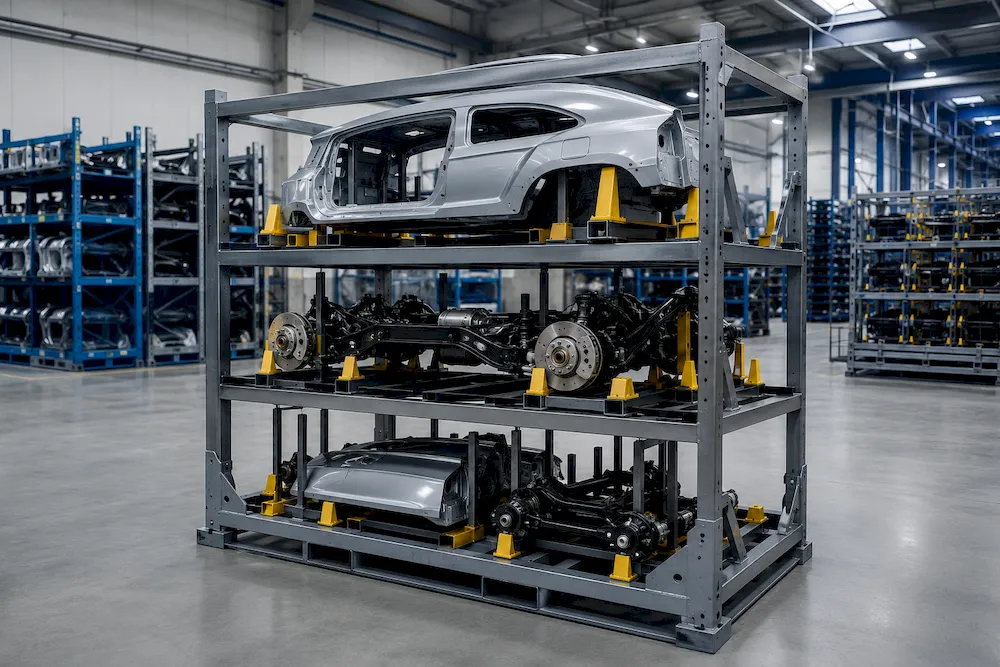
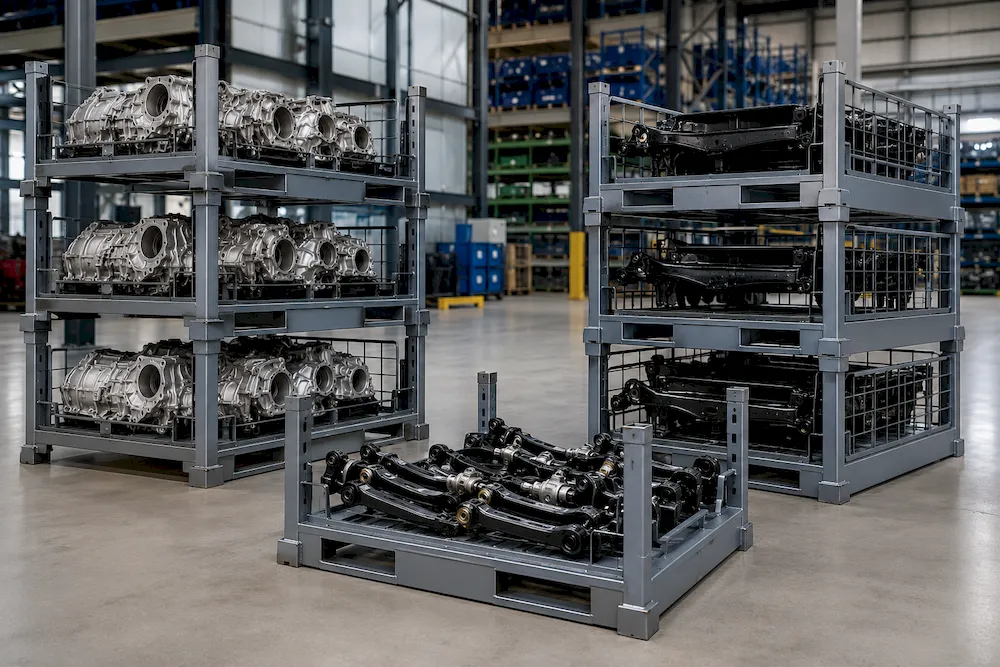
Shelves, dividers, part holders and protective pads can reduce shifting and hard contact in transit. The trolley layout should suit how workers load and unload, with the final arrangement checked against representative parts and the actual handling route.
Custom trolleys for your process
Standard carts rarely fit a specific part flow. HAOFU builds material handling trolleys to your load, route and process, including tugger-train and forklift designs. Tell us your handling route for a tailored recommendation.
Frequently Asked Questions
- What is a tugger cart or tugger train?
- A tugger train is a tow tractor pulling a line of connected carts (a mother-daughter system) that delivers parts to the line in one trip — a lean alternative to many separate forklift runs.
- Do I need a trolley or a tugger cart?
- Use a manual trolley for point-to-point moves and light loads; use tugger carts when you deliver many parts along a route and want to replace forklift trips with milk-run replenishment.
- What load can a material handling trolley carry?
- It depends on the design, wheels and frame; custom trolleys are engineered to your load and handling method. Casters, brakes and ergonomics are matched to the weight and route.
- How do I choose the right wheels and brakes for a trolley?
- Wheel type, diameter and brake system should match the load, floor and travel distance. Use swivel plus fixed casters for controlled steering, wheel brakes for safe stops and parking, polyurethane wheels for quiet, floor-friendly rolling, and heavier wheels for high loads and long runs. The right wheels directly affect throughput, ergonomics and safety.
- How can a material handling trolley reduce part movement and surface contact?
- Shelves, dividers, part holders and protective pads can reduce shifting and hard contact in transit. Match the layout to the specific part flow and validate it with representative parts and the actual handling route rather than relying on a standard cart.