What Is a Stillage Rack? Types, Uses and How to Choose

A stillage rack is a heavy-duty steel frame with posts, sides or dividers that stores, stacks and moves heavy or awkward parts. Unlike a flat pallet it supports and contains the part; the main types are fixed, stackable, foldable and mesh (cage) stillages.
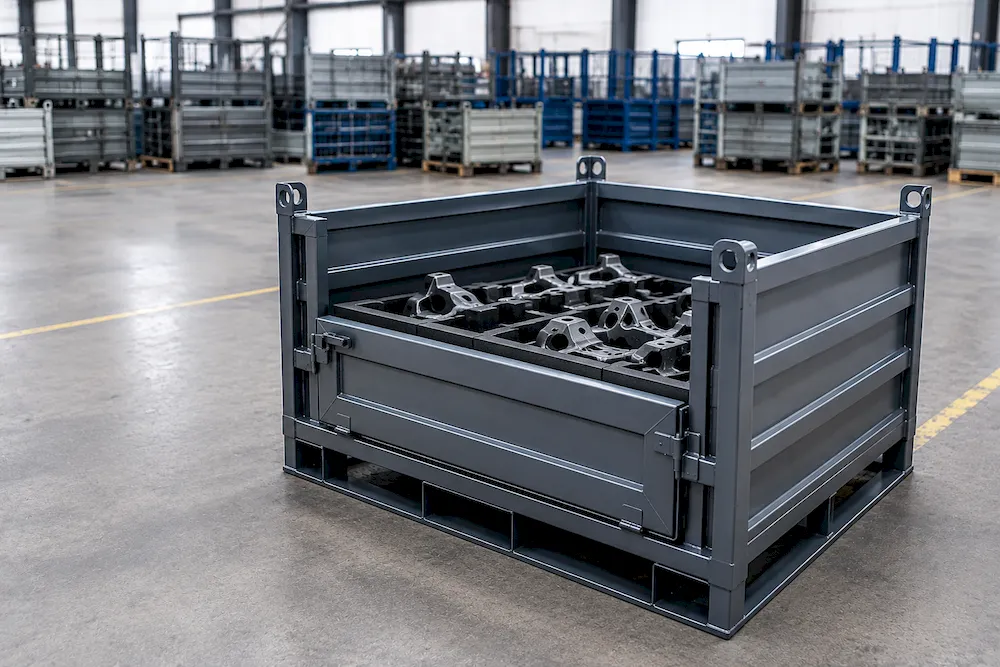
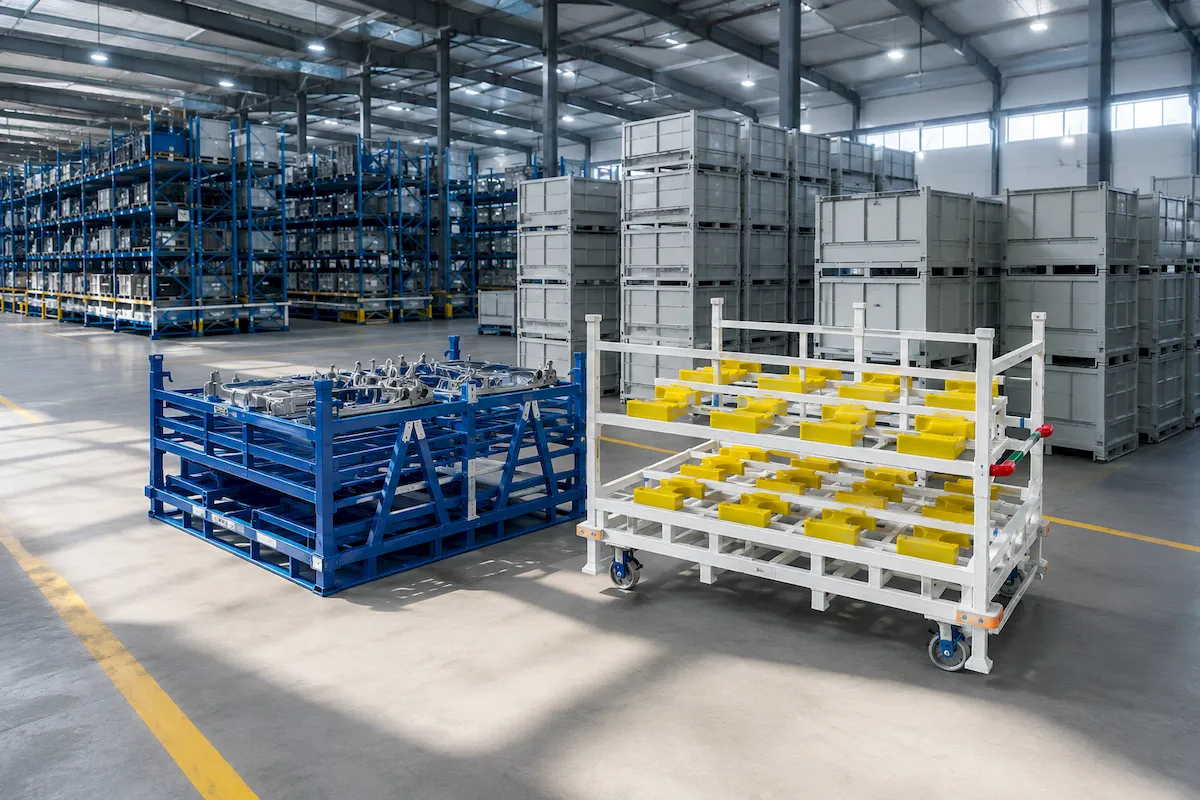
A stillage rack — also called a stillage cage — is a heavy-duty steel frame used to store, stack and transport parts inside factories and across supply chains. Unlike a simple pallet, a stillage has a built-up structure with posts, sides or dividers that hold parts in place, protect them and allow safe stacking.
Quick answer: what a stillage rack is
A stillage rack is a heavy-duty steel frame with posts, sides or dividers that stores, stacks and moves heavy or awkward parts a flat pallet cannot support safely. Unlike a pallet it holds and protects the component. The main types are fixed, stackable, foldable and mesh (cage), each matched to the part and process.
For automotive plants and Tier-1 suppliers, the stillage rack is the backbone of returnable, reusable logistics. Choosing the right one affects part damage, floor space, transport cost and line-side handling.
What is a stillage rack used for?
A stillage rack holds heavy or awkward components that a flat pallet cannot support safely. Typical uses include:
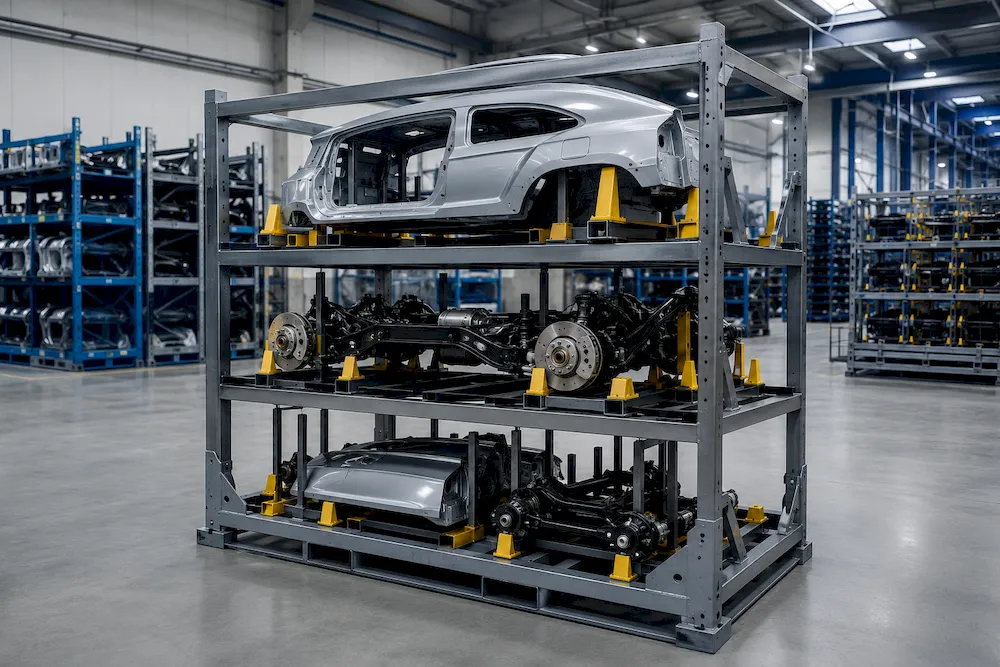
- Storing body panels, bumpers, glass and engine parts
- Moving parts between presses, welding lines and assembly
- Returnable transport between suppliers and OEM plants
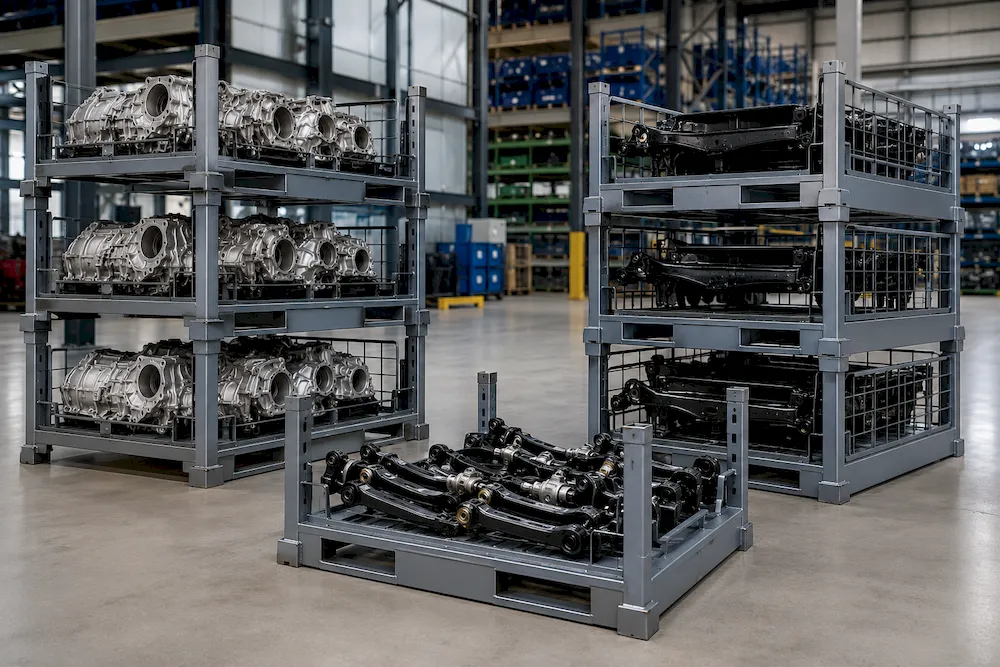
- High-density vertical storage when stacked several units high
Main types of stillage racks
Fixed (rigid) stillage
A welded, non-folding frame. Strongest option, ideal for very heavy or high-cycle parts.
Stackable stillage
Built with stacking feet so loaded units lock together vertically, saving warehouse floor space. See our stackable metal racks.
Foldable / collapsible stillage
Sides fold down when empty to cut return-transport volume — important for returnable packaging programs.
Mesh stillage (cage)
Open wire sides give visibility and ventilation, useful for smaller loose parts. Compare with our wire mesh containers.
How to choose the right stillage rack
Match the stillage to the part and the process, not the other way around. Check:
- Part data — dimensions, weight and contact points
- Load capacity — single-rack load plus stacking load
- Handling — forklift pockets, manual wheels or tugger tow bars
- Protection — rubber pads, plastic blocks or dividers
- Stack / fold — to save storage and return-freight space
- Surface — powder coat or galvanizing for the environment
Custom vs standard stillage
Standard cages fit general storage, but automotive parts usually need a stillage designed around the component. As a custom stillage rack manufacturer, HAOFU develops the structure from your drawings, samples and load data, then builds a sample for testing before mass production.
Need a stillage built for a defined part and route? Visit HAOFU's custom stillage rack manufacturing page, then send the part drawing and handling requirements.
Frequently Asked Questions
- What is a stillage rack?
- A stillage rack (or stillage cage) is a heavy-duty steel frame with posts, sides or dividers used to store, stack and move parts inside factories and along supply chains. Unlike a flat pallet, it holds parts in place, protects them and allows safe stacking.
- What are the main types of stillage rack?
- The main types are fixed (rigid welded) stillages, stackable stillages, foldable/collapsible stillages and mesh (cage) stillages — chosen by the part weight, protection needed and how much you want to save on storage and return freight.
- What is a stillage rack used for?
- It holds heavy or awkward parts a flat pallet cannot support safely — storing body panels, castings and components, moving parts between lines, and returnable transport between suppliers and OEM plants.
- How do I choose the right stillage rack?
- Match it to the part and process: part dimensions and weight, load and stacking capacity, handling method, protection at contact points, whether it should stack or fold, and the surface finish for the environment.
- Do I need a custom stillage or a standard one?
- Standard stillage cages suit general storage, but automotive parts usually need a stillage designed around the specific component. A custom stillage is engineered from your drawings, samples and load data, with a sample built for testing before mass production, so the structure, load capacity and part protection fit that exact part. Choose custom when the part's weight, shape or protection needs exceed a generic cage.