Returnable Packaging Change Management: From Drawing to Fleet

To implement a returnable-packaging change, release the new drawing, define when it becomes effective, identify which racks or containers are affected, update fabrication or retrofit instructions, check the changed feature, and record remaining old or mixed configurations. Use asset IDs, serial ranges, production batches or locations—whichever method can reliably separate the old and new versions in your programme.

Returnable packaging change management connects an approved drawing revision to the physical racks or containers that must be built or updated. The plan should state the new revision, effective date or production batch, affected assets, update instructions, identification changes, inspection points and the treatment of remaining old units. Without that connection, old and new configurations can be mixed in the same return loop.
The identification method depends on the programme. Fleets with individual asset IDs can use a specific update list; other projects may use serial ranges, purchase orders, batches, locations or a planned exchange date. Choose one method that warehouse, production, quality and suppliers can all follow.
What belongs in a packaging change rollout plan?
| Change input | What to define | Practical result |
|---|---|---|
| Released revision | Drawing number, revision, approved change and effective date. | One clear technical definition for the update. |
| Affected units | Asset IDs, serial range, batch, order, location or exchange group. | Old and new units can be separated. |
| Implementation method | New production, field retrofit, component replacement or label update. | Suppliers and sites know what action to take. |
| Verification | Changed dimensions, interfaces, labels and functional checks. | The updated feature can be confirmed. |
| Exceptions | Missing units, mixed components, failed checks and open locations. | Incomplete work remains visible. |
Choose a clear effectivity point
An approval date alone may not tell production which configuration to build or the warehouse which units to exchange. Use a specific purchase order, serial number, batch, manufacture date or planned site conversion date. If the fleet will contain both versions temporarily, define how people distinguish them and whether the versions or loose components can be mixed.
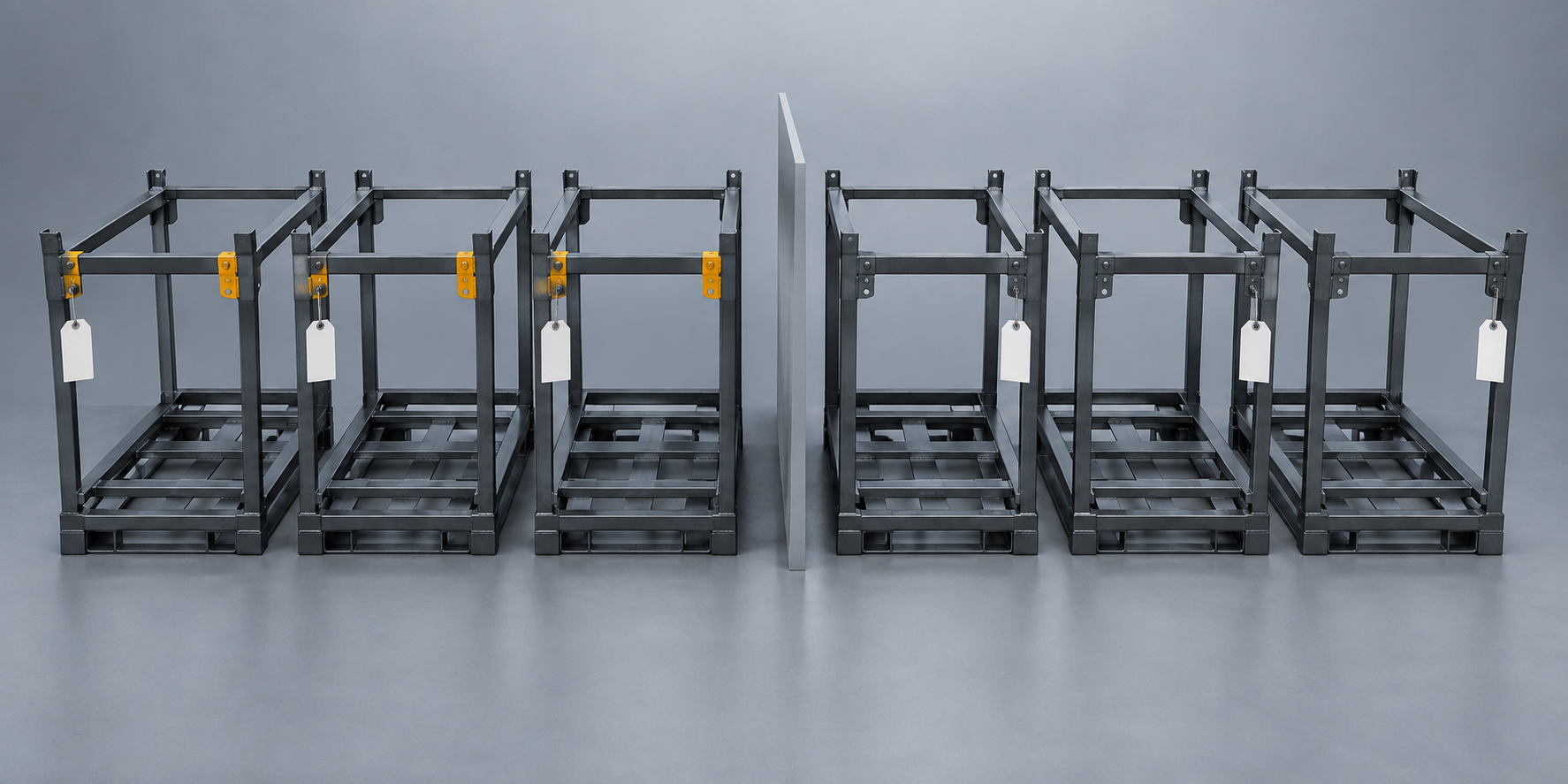
Five steps for a rack or container revision rollout
- Release the engineering change. Publish the approved drawing and a plain description of the changed feature.
- Set effectivity. Define the first new-production unit and the existing assets, batches or locations included in the update.
- Prepare implementation instructions. Identify parts, tools, labels, drawings and inspections needed for production or retrofit.
- Verify the changed feature. Check the relevant identity, dimension, interface or function and record completed units.
- Close exceptions. Resolve missing assets, mixed revisions and failed checks before the rollout is marked complete.
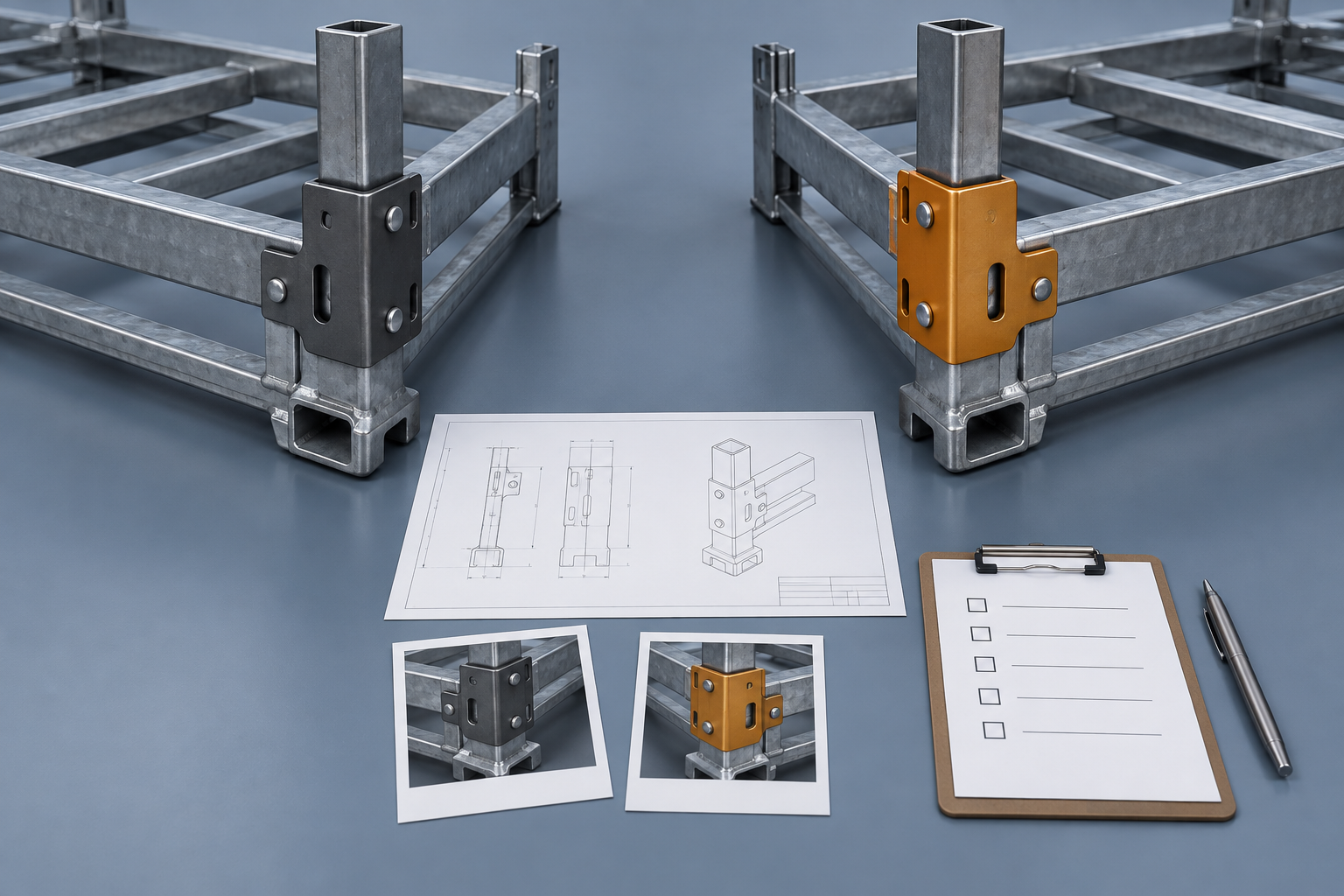
Connect approval, implementation and future orders
Use the packaging change request guide before approval and the prototype-to-production guide when a physical sample is required. Keep the released revision in future purchase orders so replacement racks and repeat orders use the correct configuration.
Discuss a returnable-packaging revision
Send the current and proposed drawings, changed feature, effective batch or asset group, quantity, retrofit location, inspection points and target schedule through the customization RFQ form.
Frequently Asked Questions
- How do you implement a returnable-packaging engineering change?
- Release the revised drawing, set an effective unit or date, identify affected racks or containers, issue production or retrofit instructions, verify the changed feature and resolve exceptions.
- How should old and new rack revisions be separated?
- Use asset IDs, serial ranges, batches, purchase orders, locations or clear labels. Select a method that production, warehouse and suppliers can consistently recognize.
- What is effectivity in packaging change management?
- Effectivity defines when the new configuration starts, such as a purchase order, serial number, production batch or planned site conversion date.
- Can old and new returnable racks operate together?
- Sometimes, but compatibility of parts, loose components, labels and handling must be checked. If versions cannot be mixed, the rollout plan needs a segregation or exchange method.
- What should I send for a returnable-packaging revision?
- Send current and proposed drawings, the changed feature, effective batch or asset group, quantity, retrofit location, inspection points and schedule.