Damaged Steel Pallet Inspection and Repair Decisions

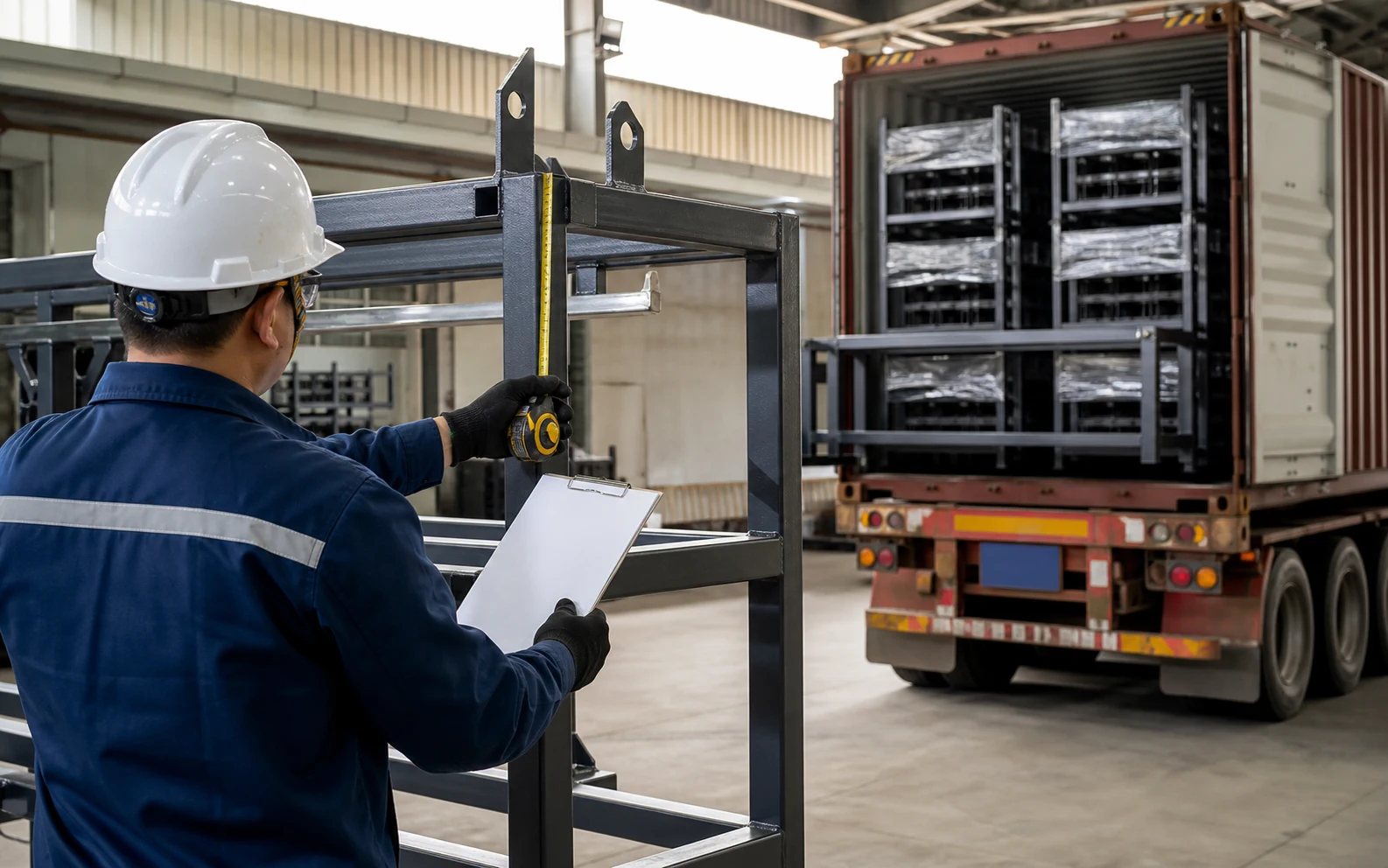
When steel pallet damage is found, unload and identify the pallet, remove it from service according to the site's process, photograph and measure the affected area, and compare it with the correct drawing and intended load case. A qualified decision can then be made to repair, replace a component, downgrade the application or retire the pallet. Any repaired unit should be reinspected against an approved method before it returns to use.
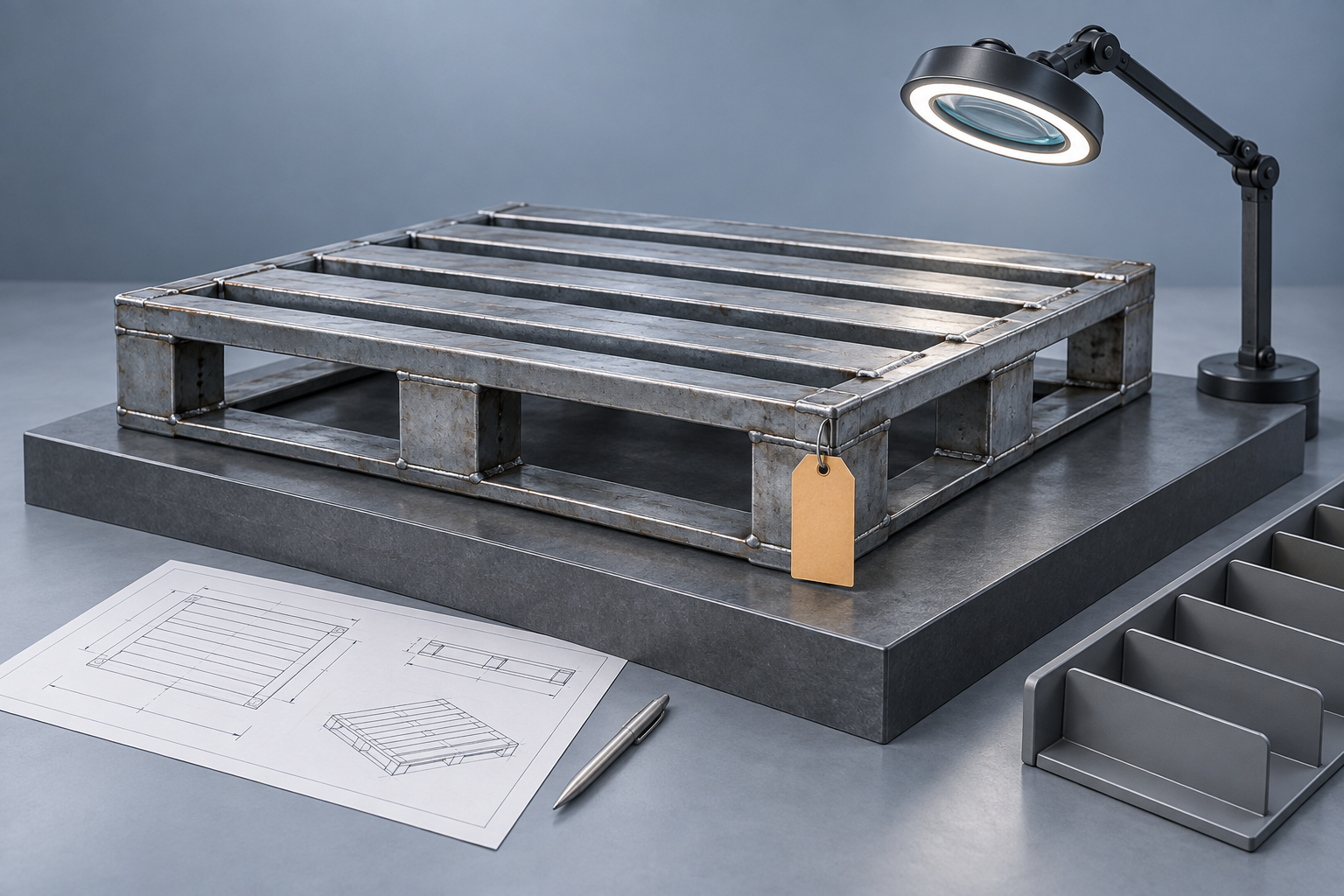
Damaged steel pallet inspection starts by identifying the exact pallet and removing it from normal use under the site's safety process. Record the asset or model ID, damage location, photographs, relevant measurements, event history and current load state. Then compare the finding with the correct drawing, intended load, support conditions and handling interfaces before choosing repair, component replacement, restricted use or retirement.
Bent fork pockets, distorted feet, cracked weld areas, damaged deck plates and deformed stacking interfaces can affect different parts of the load path. A photograph is useful for triage, but a repair decision may require measurements and an engineering review of the original design. Do not return a damaged pallet to service solely because the visible area has been straightened or rewelded.
What information is needed for a steel pallet repair review?
| Inspection input | Information to record | Why it matters |
|---|---|---|
| Pallet identity | Asset or model ID, drawing revision, owner and location. | Connects the pallet to the correct design. |
| Damage details | Location, type, dimensions, photos, date and known event. | Shows which part of the structure is affected. |
| Current status | Loaded or unloaded, isolation marking and storage location. | Prevents unintended reuse while the review is open. |
| Application | Load, supports, forklift, conveyor, stacking and environment. | Defines the service conditions the pallet must meet. |
| Proposed action | Repair method, replacement part, reinspection and authorization. | Provides a consistent route back to service or retirement. |
Common steel pallet damage areas
Check fork-entry edges and pockets for impacts; feet and runners for bending or uneven contact; welds near high-load joints for visible cracking; deck plates and supports for permanent deformation; and stacking locators for damage that changes alignment. Also look for severe coating loss or corrosion where the environment could affect the structure. The original drawing and project inspection criteria should guide the detailed assessment.
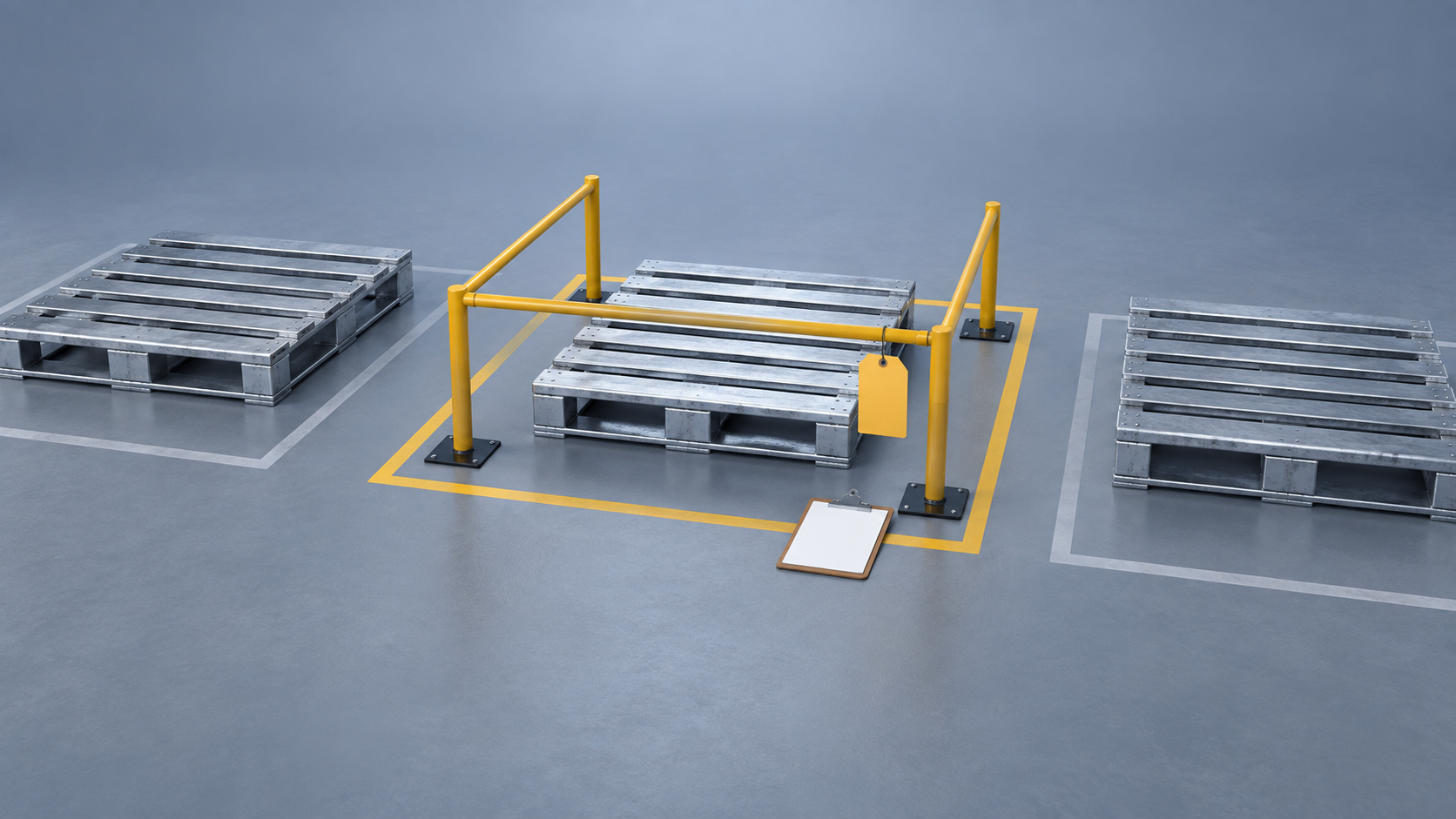
Five steps after steel pallet damage is found
- Unload and identify the pallet. Follow the site's process to stop normal use and keep the pallet ID visible.
- Document the damage. Record the location, size, photographs and any known impact or overload event.
- Confirm the design and load case. Retrieve the drawing and the pallet's actual support, handling and stacking conditions.
- Select an authorized action. Use a qualified review to choose repair, component replacement, restricted use or retirement.
- Reinspect before reuse. Confirm the approved work and required checks, then update the pallet status.
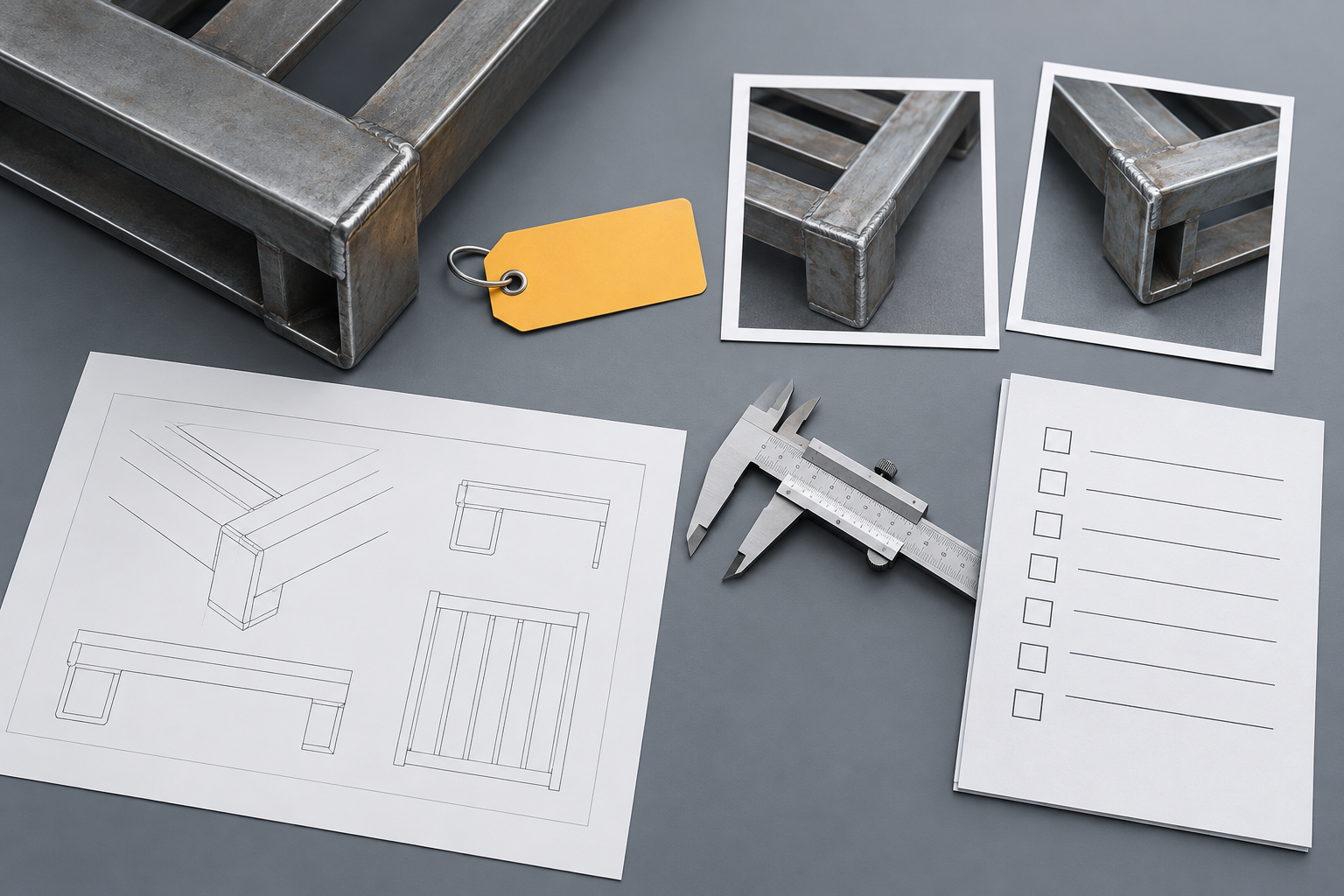
Repair, replace or retire?
Repair can be practical when the original specification is known, the damaged area is accessible and an approved method can restore the required geometry and function. Replacement may be better when damage is extensive, the design is unknown, repeat failures point to an application mismatch, or the repair cannot be verified. See the steel pallet load-capacity guide for load terminology and a returnable rack refurbishment video for a separate real project example.
Request steel pallet repair or replacement support
Send the pallet ID and drawing, overall and close-up photographs, damage measurements, load and stacking information, handling equipment and required quantity through the steel pallet RFQ form. Browse custom steel pallets for new-build options.
Frequently Asked Questions
- What should I do when a steel pallet is damaged?
- Unload and identify it, remove it from normal use under the site's process, document the damage, retrieve the correct drawing and obtain a qualified repair, replacement or retirement decision.
- Can a bent steel pallet be straightened and reused?
- Do not assume so. Bending can affect geometry and the load path. The pallet should be reviewed against its design and service conditions, then reinspected after any authorized repair.
- Which steel pallet areas should be inspected?
- Check fork pockets and entry edges, feet and runners, weld areas, deck supports, stacking locators, permanent deformation and significant corrosion or coating loss.
- When should a steel pallet be replaced instead of repaired?
- Replacement may be appropriate when damage is extensive, the original design is unknown, repeat failures indicate an application mismatch, or the repair cannot be reliably verified.
- What should I send for a steel pallet repair enquiry?
- Send the pallet ID and drawing, overall and close-up photos, damage measurements, load and stacking conditions, handling equipment and required quantity.