Wire Mesh Container Small-Parts Mesh-Opening Brief

A wire mesh container for small parts should be reviewed from the documented smallest relevant part profile and orientation, the required visual check and access task, and the actual handling states. Do not infer a mesh opening or containment result from a photograph, a generic bin or a different project; record the requirement on the controlled drawing and review it with the purchaser.
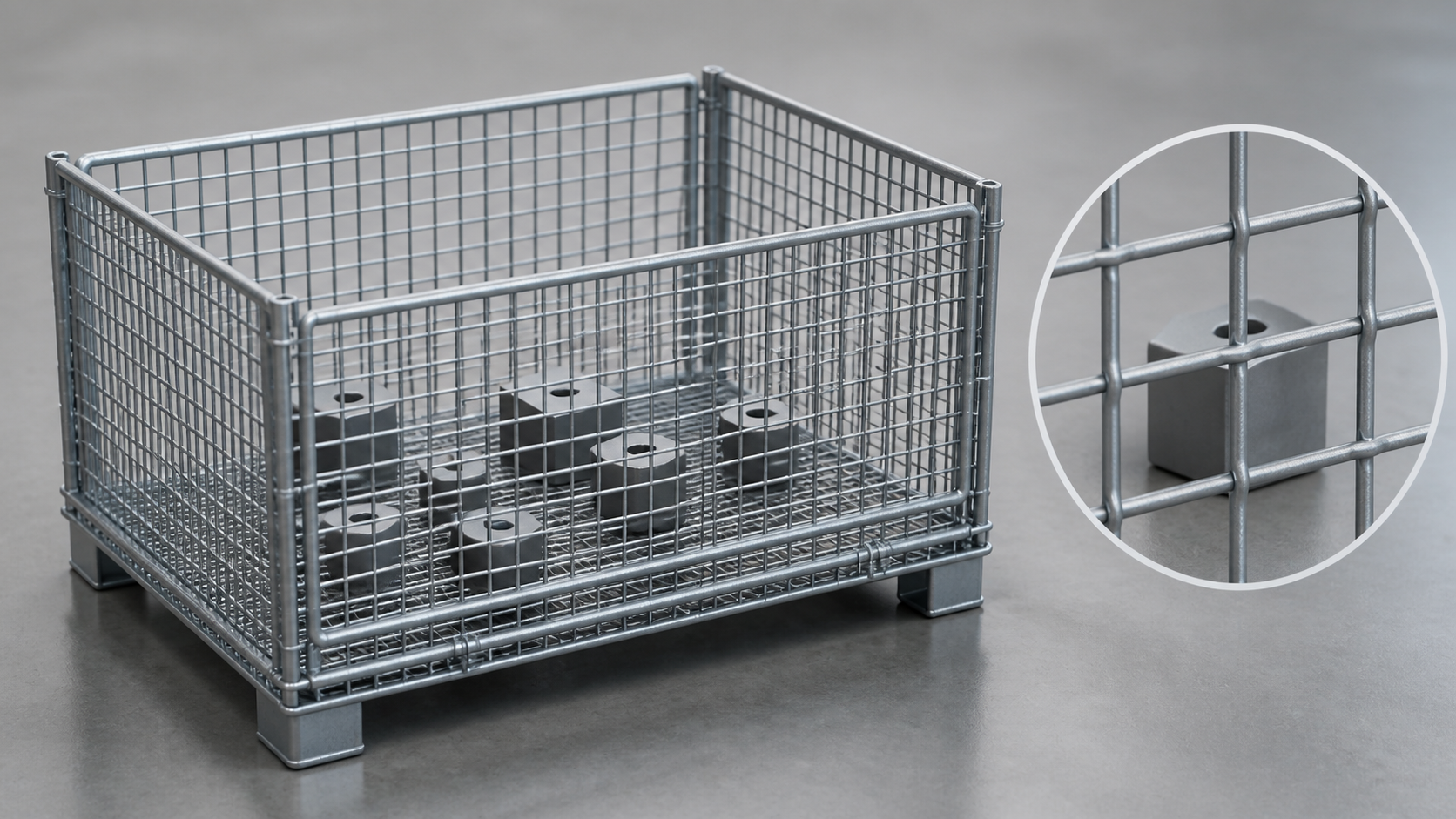
A wire mesh container small-parts review starts with the smallest relevant part profile, its presented orientation and the mesh-opening requirement—not with a generic mesh size. Record the part or part-family mix, visual identification need, loading/picking/inspection access, handling states and any proposed liner, divider or solid insert. Use those inputs to review a configuration on the controlled drawing with the purchaser.
This deliberately narrow brief is for teams who need to connect mesh opening with small-part visibility and access. It does not promise that parts will be retained, specify a standard opening, rate a gate, claim ventilation or hygiene performance, or replace project validation. CustomMHS's small-parts bin example is useful only for the general decision principle that a mesh opening has to be evaluated against the smallest relevant item; its mesh dimensions, material and application claims are not transferable to a HAOFU configuration.
Quick decision: mesh opening, part presentation and access are one review
| Question | What to document | Why it belongs in the drawing review |
|---|---|---|
| Smallest relevant profile | Controlled part drawing or sample, smallest profile that matters, orientation and part-family mix. | A single nominal part dimension does not describe every presentation state. |
| Visibility task | What the team must identify: count, tag, mix, condition or location—and from which side. | Visibility is a work requirement, not a standalone reason to choose a mesh pattern. |
| Access task | Loading, picking, replenishment or inspection path; reach and any tool or dunnage constraint. | Access must be reviewed with the part arrangement and closed handling state. |
| Handling and route | Forklift, storage, transport, return and any requested cover, liner or divider state. | The candidate configuration must be considered across the real route, not one static view. |
Why this replaces the broader visibility-and-access topic
The originally proposed broad visibility/access topic would overlap with the published access-gate replenishment brief and mesh versus solid container comparison. This page therefore owns only the smallest-part profile and mesh-opening review. It does not compete for gate-operation or material-comparison intent.
Start with part presentation, not the container photograph
Send a released drawing or agreed sample reference and identify the smallest relevant profile in each permitted orientation. If multiple small components circulate together, show the part-family mix rather than treating one representative item as the full requirement. Then identify whether the planned task is visual confirmation, loading, picking, replenishment or inspection, and from which side the task happens.
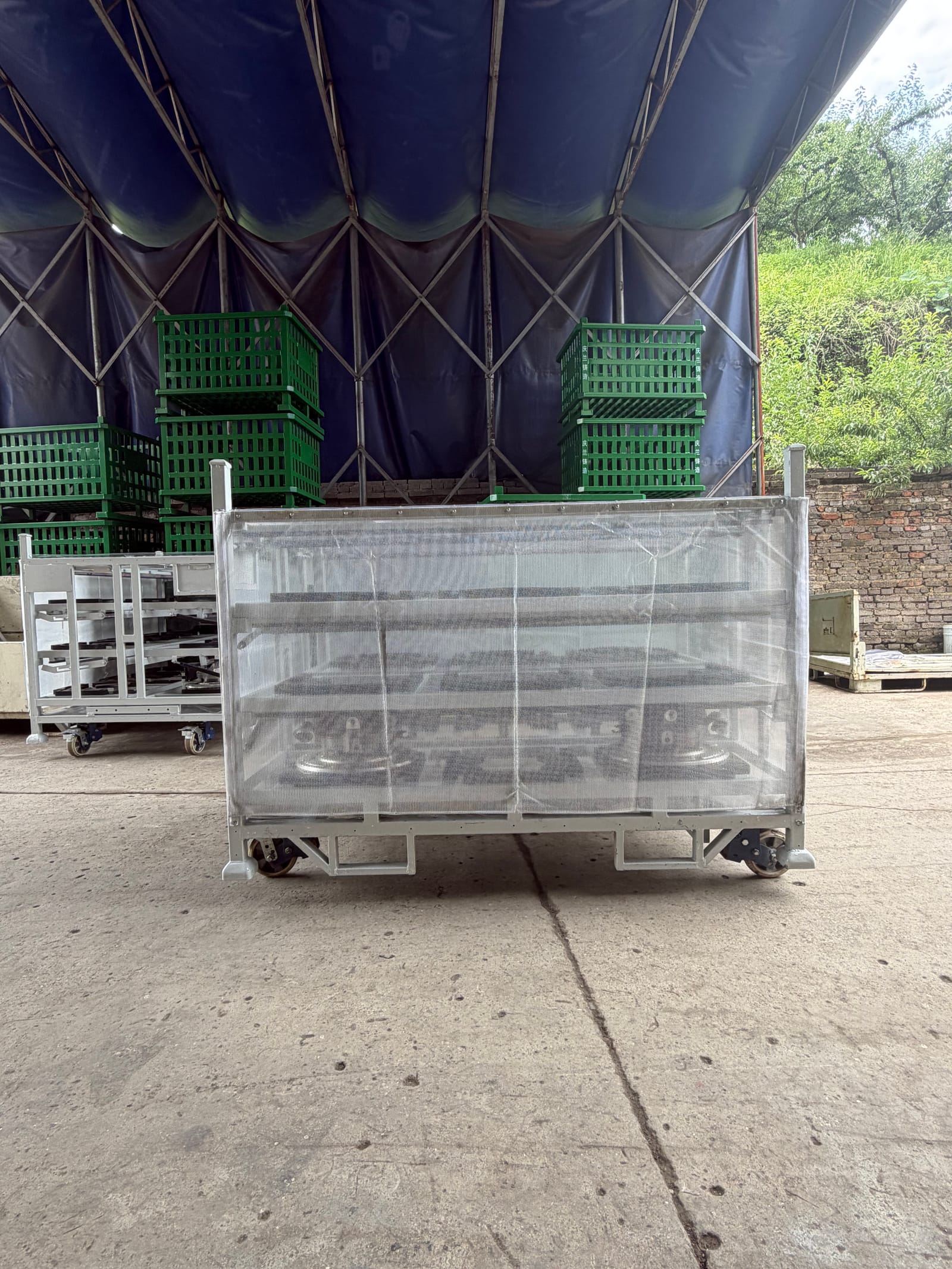
Review visibility and access without turning them into performance claims
A mesh side can make a container's contents observable from a relevant viewing position, but the useful project question is what needs to be seen, by whom and at which stage. Likewise, access is a task path: show the hand, tool, dunnage and part orientation required for loading or picking, then review the closed unit across its intended handling route. If the documented part and opening requirement do not align, record the alternative under consideration—such as a liner, divider, solid insert or different containment path—rather than assuming a mesh solution.
Peer pages from Morrison Industries and CustomMHS illustrate how industry pages frame component geometry, access and visual needs. Their stated designs, materials, dimensions and outcomes belong to their products. The current circular automotive packaging guidance announcement also keeps reuse and fleet management visible, but it does not determine a mesh opening or a small-parts configuration for a specific project.
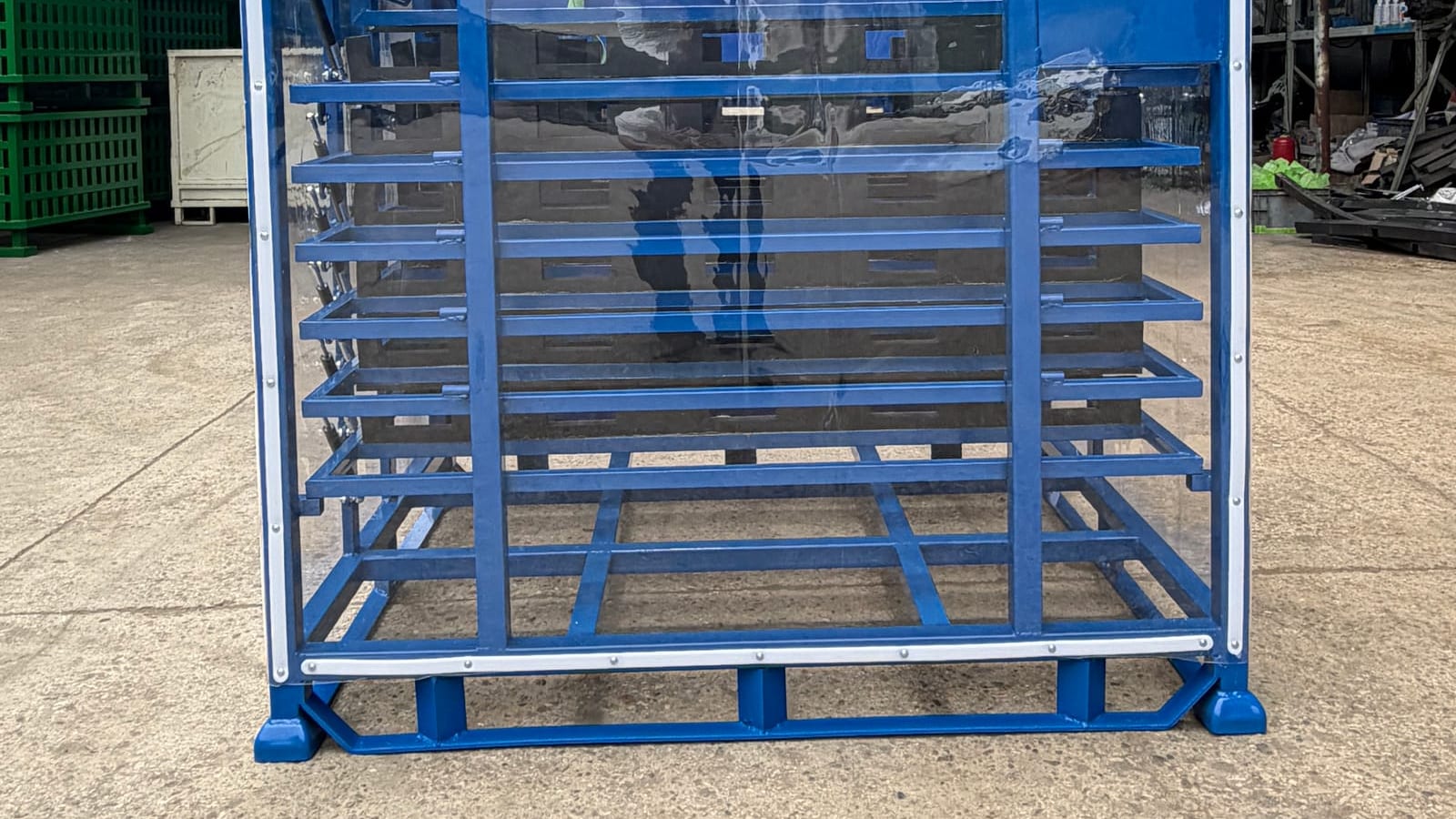
Five inputs to send for a mesh-opening review
- Freeze the controlled part data. Send the current drawing or sample reference, smallest relevant profile, permitted orientations and any mixed part family.
- Describe the work task. State what operators or equipment must see, load, pick, replenish or inspect and from which direction.
- Map the route states. List loading, storage, handling, transport, return and any condition in which the container is covered, lined or divided.
- Record the candidate interface. Put the requested mesh-opening, proposed access feature and any liner/divider/insert on the controlled drawing as review inputs.
- Agree the evidence gate. Name the purchaser acceptance owner and keep the drawing revision, representative sample or inspection scope and open exceptions together.
Internal video reference
For a general visual introduction to organised automotive small-parts handling, see HAOFU's organised warehouse automotive parts racks video. It does not establish a mesh size, retention method or approved configuration for this brief.
Request a small-parts mesh-opening review
Send the part drawing or sample reference, smallest relevant profile and orientations, quantity per container, visibility and access task, route map, handling equipment, any liner/divider/insert request and the named acceptance owner. HAOFU can review those inputs for a custom wire mesh container and take the controlled configuration through customization.
Frequently Asked Questions
- How do I choose a mesh opening for small parts?
- Start with the controlled smallest relevant part profile, its permitted orientations, the mixed part family if applicable, the required visibility and access task, and every handling state. Put the requested opening and any liner, divider or insert on the controlled drawing for purchaser review.
- Can a generic wire mesh container retain every small part?
- No. A generic mesh pattern or photograph cannot establish retention for a different part profile, orientation, route or configuration. Review the actual part and proposed interface with the responsible project owner.
- Does visibility mean wire mesh is always the right choice?
- No. Define exactly what must be seen, by whom and at which work stage. The visibility task must be reviewed alongside part presentation, access, handling route and any containment requirement.
- When should a liner, divider or solid insert be considered?
- Consider an alternative interface when the documented part presentation, mesh-opening requirement or work task calls for it. The selected interface should be shown on the controlled drawing and reviewed for the actual route.
- What should I send for a small-parts mesh-opening review?
- Send the part drawing or sample reference, smallest relevant profile and orientations, quantity per container, visibility and access task, route map, handling equipment, any liner/divider/insert request and named acceptance owner.