
Engineering
Custom Rack Design Process
Custom rack design translates a controlled part and material-flow requirement into an approved steel carrier. HAOFU's process begins with the buyer's part, load case and interfaces; it does not assign universal dimensions or load ratings before those inputs are reviewed.
Reviewed by Mr. Li · Last reviewed 2026-09-02
Direct answer
A custom steel rack design process should define the part, contact points, quantity per carrier, handling equipment, loaded and empty-return states, environment and validation criteria before production. The normal control path is requirement review, concept, drawing review, sample manufacture, agreed inspection/validation and production release.
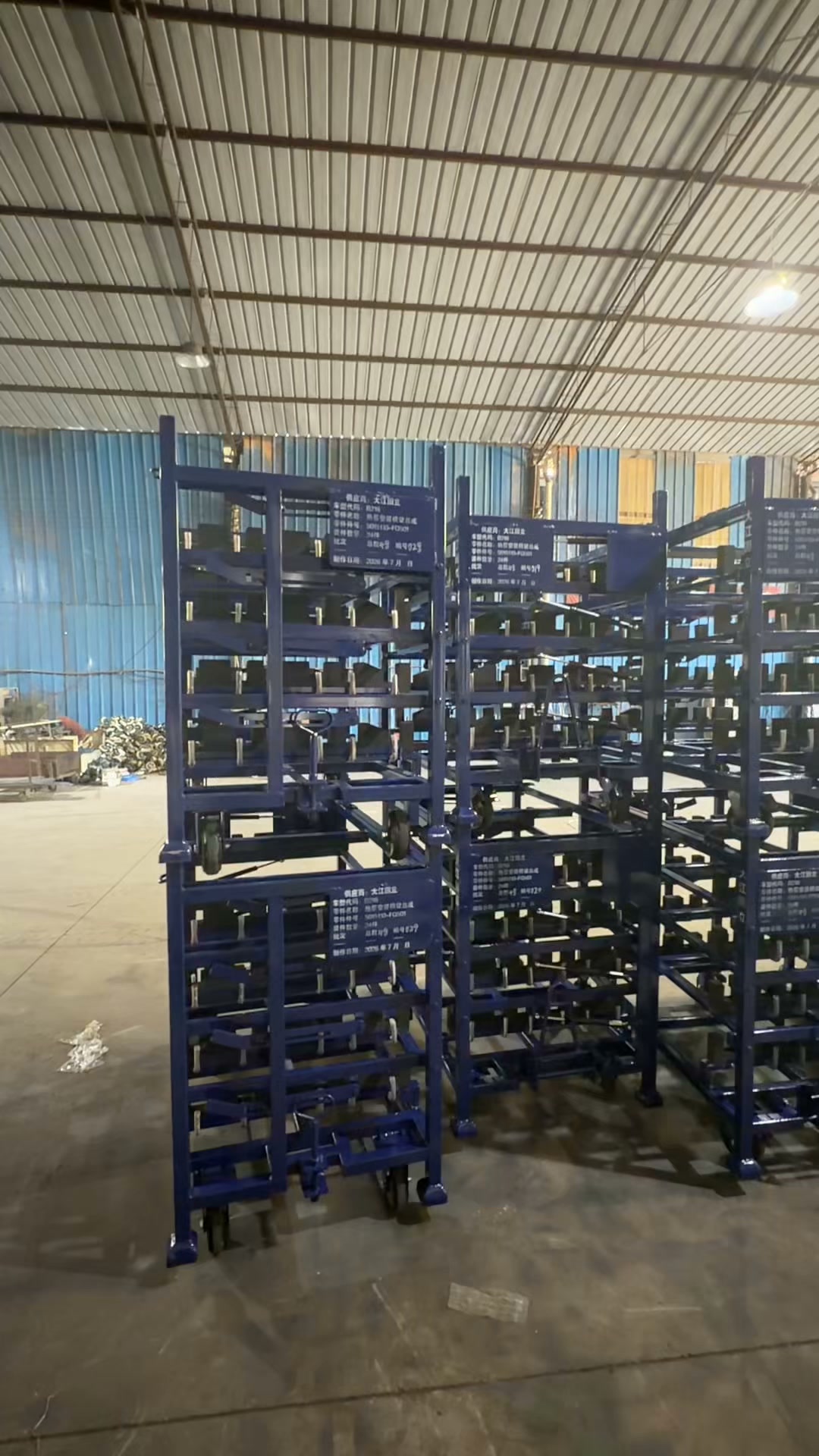
Minimum engineering inputs
A useful RFQ identifies the controlled part and process rather than asking for a generic rack by external dimensions alone.
- Part drawing, CAD or representative sample
- Mass, centre of gravity and load case
- Permitted and restricted contact areas
- Handling and automation interfaces
- Stacking, transport and empty-return states
- Finish, labels and inspection requirements
Approval boundaries
Project drawings, samples and validation records govern the supplied configuration. Company-wide capabilities are not substituted for project-specific parameters.
Design-stage outputs
Use this matrix to identify required project inputs. It does not publish universal dimensions, load ratings or tolerances.
| Decision | Guidance | Buyer input |
|---|---|---|
| Requirement review | Resolve missing part, route and interface inputs. | Buyer RFQ and controlled source files |
| Concept/drawing | Define structure, contact, access and interfaces for review. | Approved design assumptions |
| Sample | Manufacture the approved sample configuration. | Released drawing and sample plan |
| Validation/release | Check the agreed dimensions, function and project criteria. | Approved inspection and validation plan |
Project workflow
- 1
Submit controlled inputs
Provide the part, load case, contact map, route and equipment interfaces.
- 2
Review the concept
Resolve assumptions and approve the drawing revision used for the sample.
- 3
Build and inspect the sample
Manufacture the sample and record the agreed dimensional and functional checks.
- 4
Release production
Approve the validated design revision and production inspection requirements.
Send a controlled rack requirement
Start with the part drawing or sample, actual handling route and equipment interfaces.
Send drawings or requirements