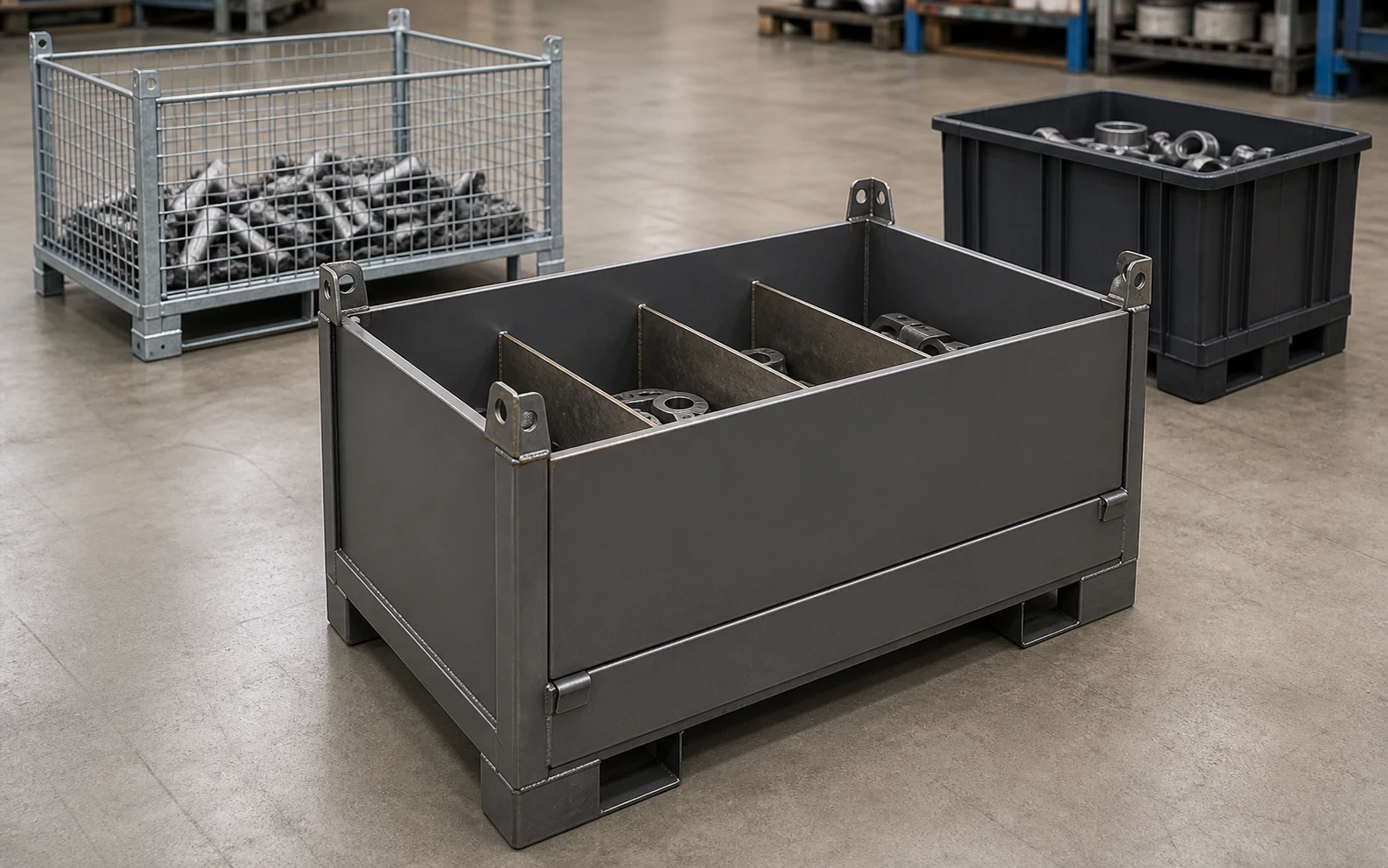
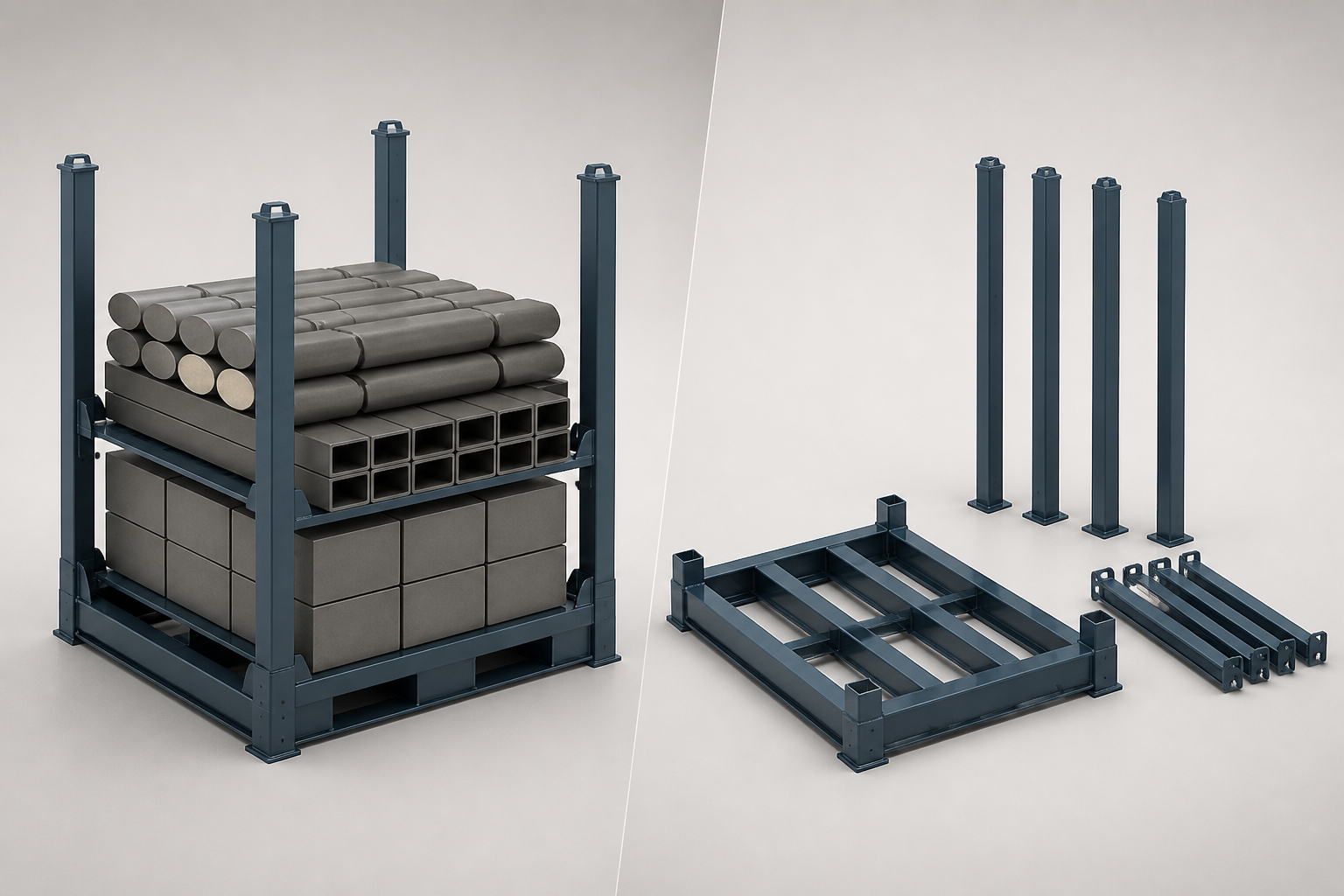
Custom Metal Container Access Doors, Lids and Panels

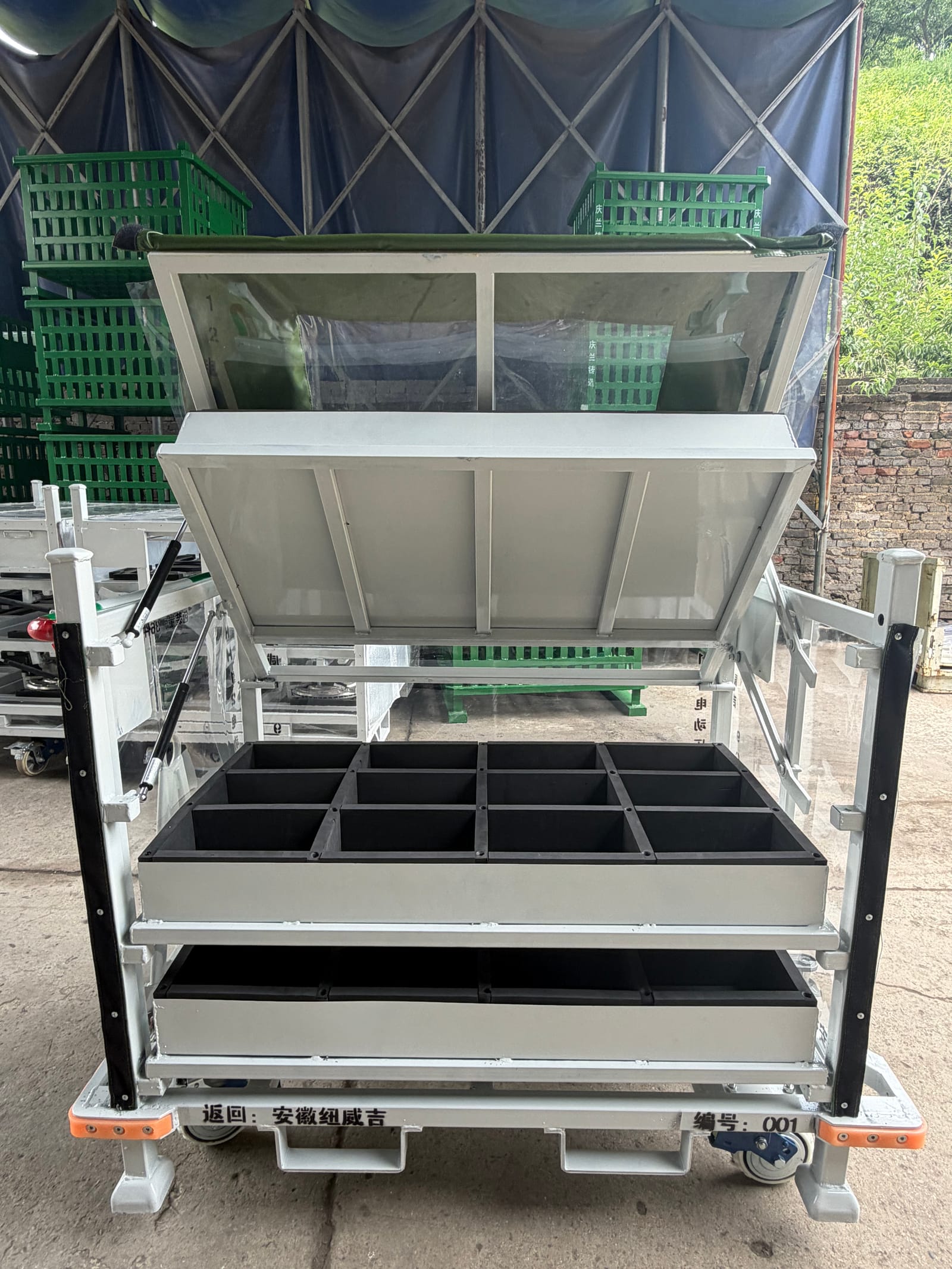
Choose a metal container access feature from the real loading or picking task. Define the approach side, part orientation, reach and tool clearance, how the open door or lid is supported, and how the container is handled, stacked and returned when closed. Open top, hinged lid, side door and drop-down panel designs each trade access against enclosure, moving parts and required clearance.
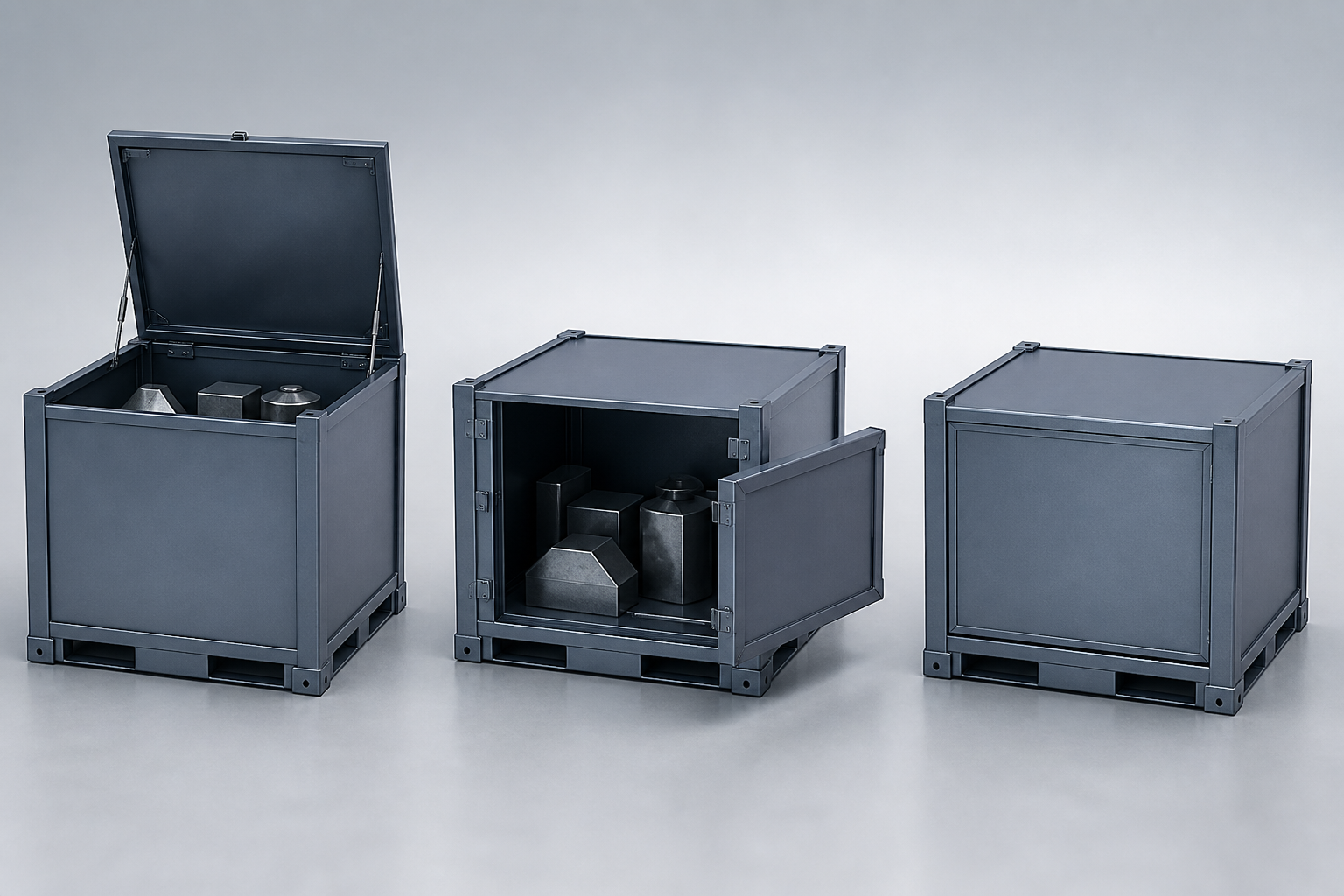
A custom metal container access door or panel should match the real loading, picking or inspection task. Define the approach side, part orientation, reach or tooling clearance and the position of the open lid, door or panel. Then check the closed container through forklift handling, storage, stacking and empty return.
This brief is for packaging engineers, warehouse leads and procurement teams comparing a focused access feature. It does not declare a universal door size, latch method, containment result, ergonomic outcome, security level or compatibility. MHI notes that container selection includes protection, accessibility for manual or automated retrieval, stackability/nestability and the difficulty of handling the container itself; the project must decide how those factors interact.
Quick decision: an access feature has two operating states
| Feature candidate | Open-state question | Closed-state question |
|---|---|---|
| Open top or open face | Can the part be loaded, picked or inspected without conflicting with dunnage, reach or the required orientation? | Does the route need an additional cover, restraint or different containment condition? |
| Lid | Where is the lid held during loading or inspection, and what clearance does it require? | How is the lid located and checked before the container moves or stores? |
| Door or drop-down panel | Does the panel opening preserve a clear, controlled path to the relevant part position? | How does the panel sit, close and remain accounted for through the defined handling and return states? |
Related custom metal container options
This guide addresses the specific decision of defining an opening and its closed state. For adjacent questions, see the container dividers, lids and nesting guide, the metal turnover box definition guide and the metal-versus-plastic comparison.
Start with the access task, not the feature name
Describe the exact task: loading from above, side picking, visual inspection, replenishment, or controlled removal of a divider or tray. Mark the part orientation, no-contact zones, tooling, operator or equipment approach, and any required hand clearance. A visual opening can be useful only if it leaves the requested part path and protection arrangement clear in the real sequence.
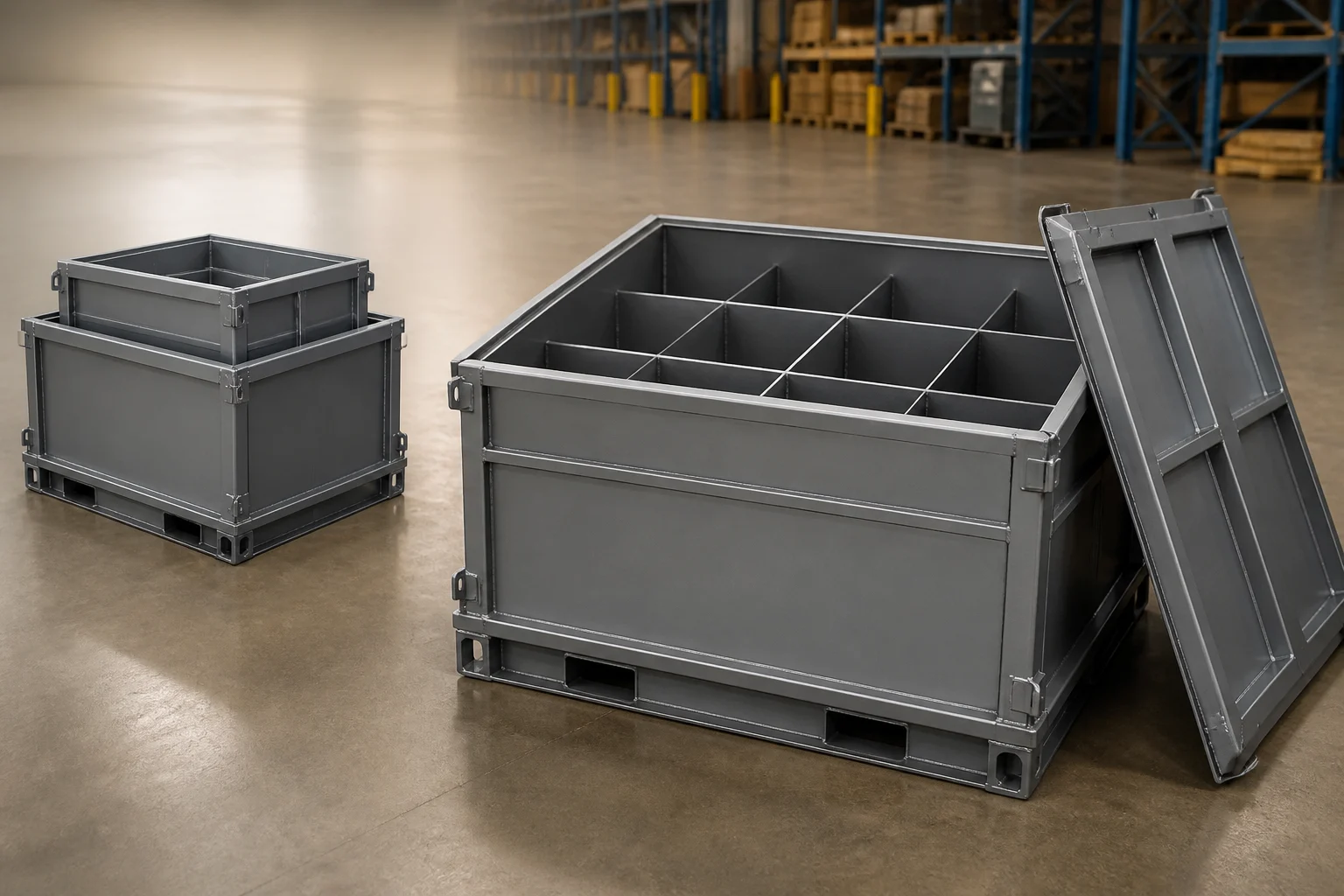
Review open state and closed state with the same route map
For the open state, record where the panel or lid goes, what it can contact and whether the part can be reached without defeating the intended separator or locator arrangement. For the closed state, map the same unit through handling, storage, transport and empty return. A closed panel should not be described as secure, sealed or protective unless the approved project evidence specifically supports that claim.
Peer wire-container pages from Premier Handling Solutions and Reusable Transport Packaging show that drop-gate pages commonly address accessible retrieval and gate form. Their stated capacities, finishes, gate designs and product claims do not apply to a custom HAOFU metal container.
Five inputs for an access door or panel
- Freeze the part and access task. Send the current drawing or agreed sample, part orientation, quantity, required access task and prohibited contact zones.
- Draw the opening path. Show the intended opening direction, reachable positions, clearance needs and the expected location of the open panel or lid.
- Map the closed route. List handling, storage, transport, return and any stacked or nested state that occurs after the opening is closed.
- Define component control. Identify whether lids, removable panels, dividers or accessories need an assigned location and a completeness check.
- Agree review evidence. Name the approval owner and the sample, fit, inspection or drawing-review evidence required before production release.
Internal video reference
HAOFU's custom metal rack design-to-delivery video provides general context for turning a requirement into an engineered project. It is not evidence for this container's panel design, access sequence or acceptance result.
Request a custom metal container quote
Send the part drawing or sample, quantity per container, loading or picking task, required opening clearance, handling route, stacking and return needs and destination. HAOFU can develop a custom metal container through the customization process.
Frequently Asked Questions
- When does a custom metal container need a door or drop-down panel?
- When the documented loading, picking or inspection task needs a defined side-access path. The exact feature must be reviewed with the part, required reach, dunnage, handling route and closed-state condition; it is not a default option.
- Is an open-top container always easier to use?
- Not necessarily. An open top can suit some loading or inspection paths, but the part's orientation, reach, required containment, dunnage and closed-route condition still determine whether it is suitable.
- What must be checked when a panel is open?
- Show the opening direction, clearance, where the panel or lid is held, the reachable part positions and whether the intended separator, locator or restraint still works in the real sequence.
- What must be checked after the panel is closed?
- Check latching, part and dunnage clearance, forklift or crane handling, stacking, transport and the empty-return arrangement.
- What should I send for a container access-feature quote?
- Send the part drawing or sample, quantity per container, loading or picking task, open clearance, handling route, closed-state needs, destination and quantity.