Returnable Packaging Staging: Choose Bays, FIFO Lanes and Empty-Return Zones

Use individual bays when the next rack must be selected independently, and a two-ended FIFO lane when withdrawal should follow arrival order. Give usable empties and carriers awaiting attention their own positions. Size the local waiting area from the busiest arrival/pickup sequence, then overlay the complete carrier and vehicle movement. Send HAOFU the site sketch, loaded and empty outlines, approach direction and pickup pattern before requesting a staging-compatible packaging quotation.

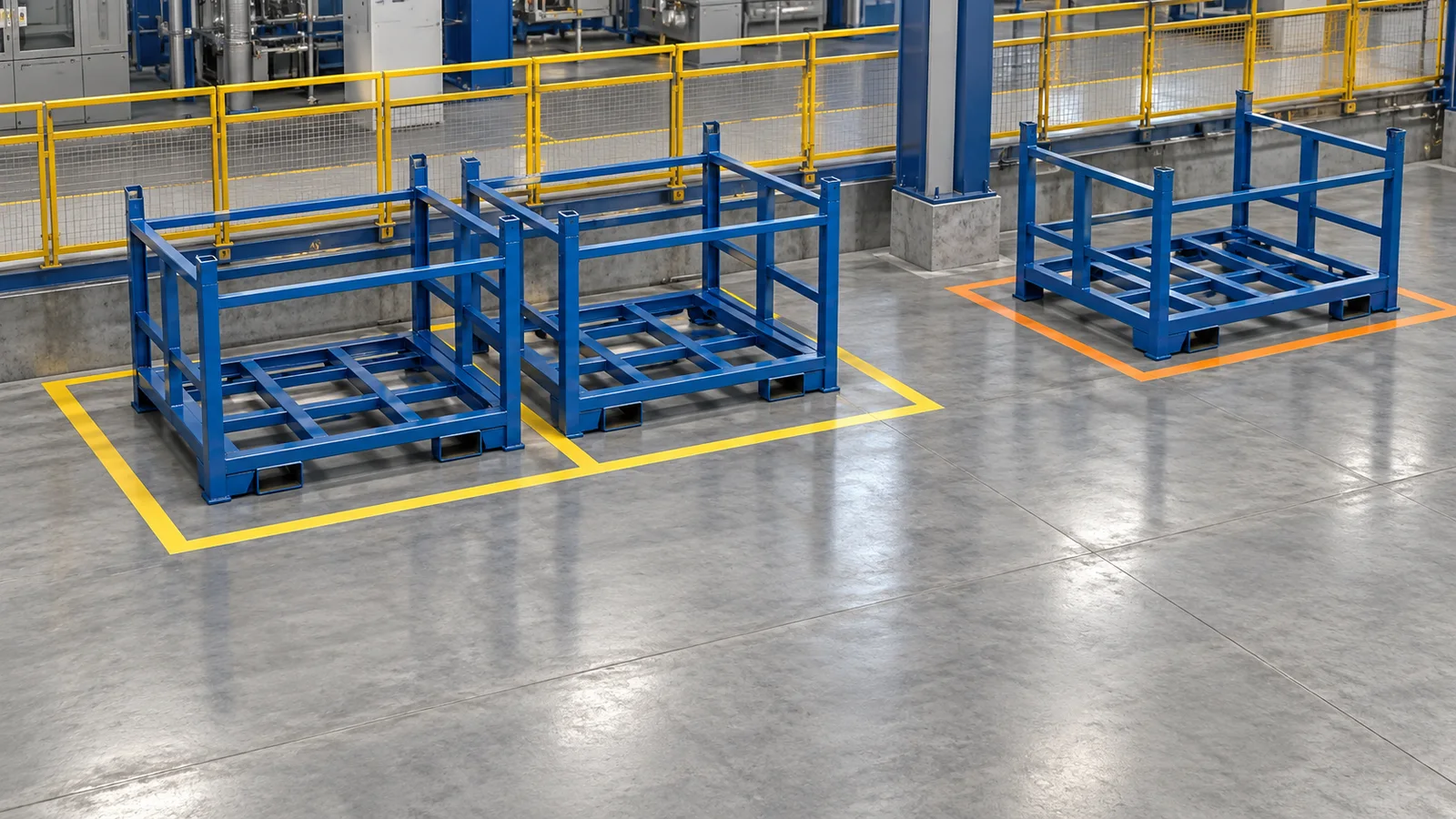
A useful returnable packaging staging layout gives every waiting rack a place, a facing direction and a clear next move. Choose individually accessible bays for selective pickup, or a lane with separate entry and exit ends for ordered withdrawal. Keep usable empties separate from loaded carriers and from units awaiting attention. Draw the handling space in front of each position as carefully as the position itself: the next rack must leave without moving another rack into an aisle. This guide helps packaging engineers, plant logistics teams and buyers turn that floor arrangement into practical carrier and RFQ inputs.
Start with the next pickup, not a rectangle on the floor
At receiving, carriers may arrive together but leave for different cells. At line-side, a new loaded rack may arrive while the previous rack is still being used. At the return point, empties may wait until a collection run. These are different waiting tasks. Putting all of them into the same painted block saves drawing time but can force a driver to reshuffle carriers before reaching the one needed next.
Sketch each next move. Identify what arrives, which face the driver approaches, how the carrier leaves and whether the next selection follows arrival order. Include a location for a rack whose part, cover or condition needs attention. That location should be accessible without using the route reserved for ready material. Choose its treatment under the site's existing process rather than relying on the colour of a floor line alone.
Mecalux's staging-area guide connects waiting space with product characteristics, movement volume and handling equipment. For returnable steel carriers, add the empty configuration and the pickup face to that analysis. The same rack can occupy a different usable space when its tow bar, cover or folding frame changes position.
Returnable packaging staging layout: bays or FIFO lanes?
| Site condition | Arrangement to compare | Space that must remain usable | Buyer input |
|---|---|---|---|
| The next rack depends on part variant or destination | Individual accessible bays | Approach and withdrawal at each selected bay | Part mix, pickup face and destination map |
| Same route and first arrival leaves first | Short FIFO lane with access at both ends | Entry end, exit end and queue boundary | Arrival order, collection order and permitted waiting quantity |
| Loaded delivery and empty collection happen together | Separate loaded and empty positions | Exchange position plus the vehicle stop | Handoff sequence and loaded/empty outlines |
| Some carriers need attention before reuse | Separate accessible waiting bay | Inspection or removal approach outside ready lanes | How the unit is identified and where it moves next |
Select any ready carrier. Resolve: access to each chosen bay.
Take the oldest arrival first. Resolve: clear entry and exit ends.
Collect empties in a batch. Resolve: empty outline and pickup face.
The Lean Enterprise Institute describes FIFO as preserving entry-to-exit order through a bounded lane. Apply that principle only where order is genuinely required. If a single-ended row is loaded from the front and the latest rack blocks the oldest, painting “FIFO” beside it does not create first-in-first-out access. Shorten the row, provide access at the opposite end, or use selective bays.
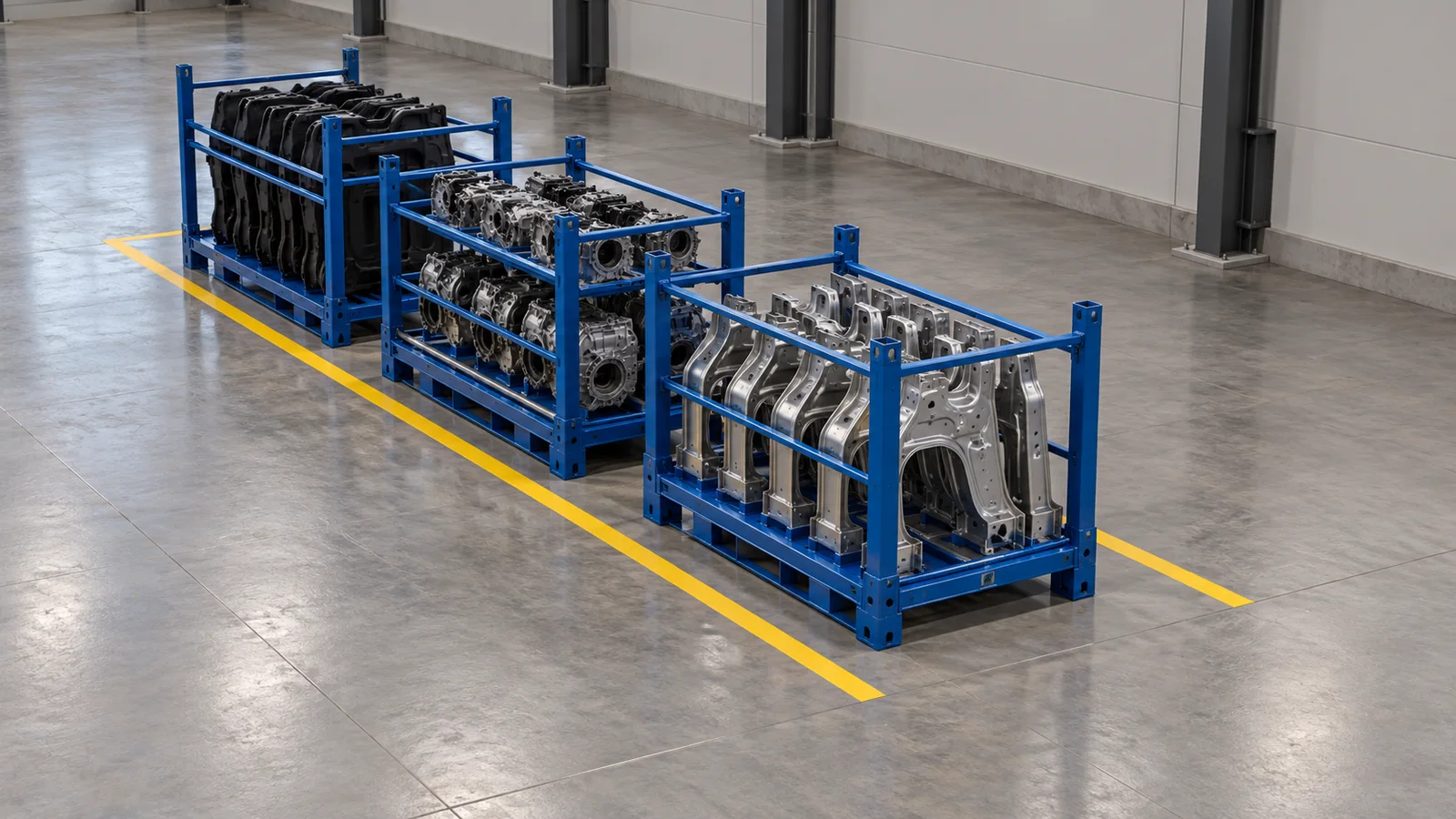
Draw the carrier in the state that actually waits
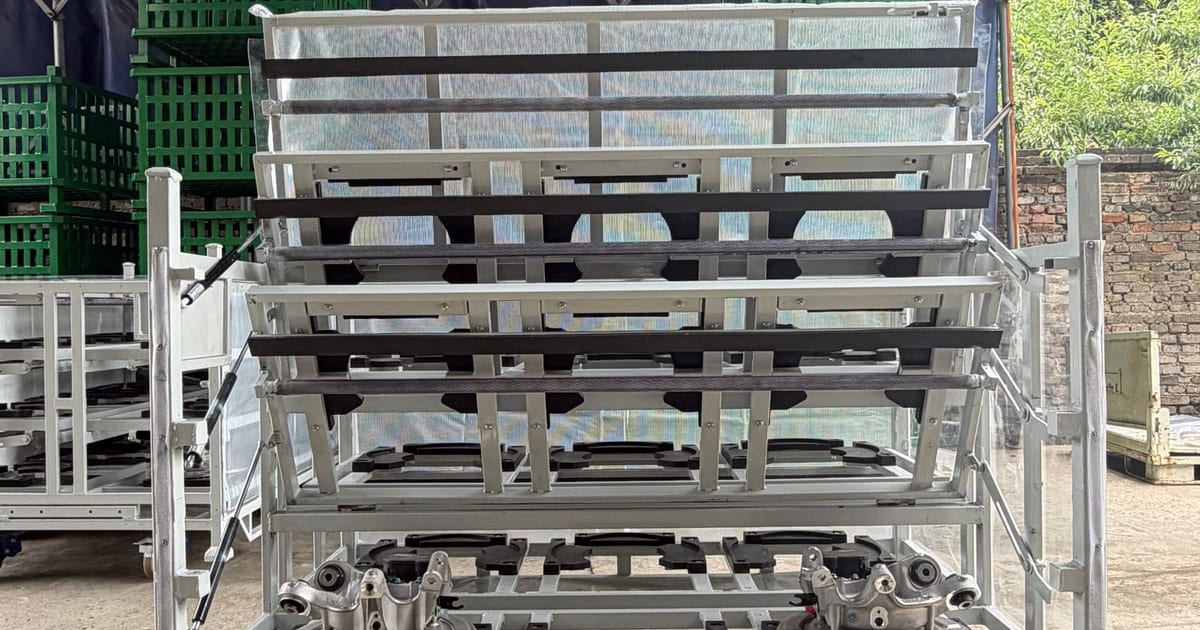
Use plan views of the loaded, empty and exchanged states. The loaded outline includes protruding parts and fitted packaging, not just the welded base. The empty outline includes folded sides, removed bars, covers and any retained accessories. A handle that fits between bays when parked may still swing into the next bay during pickup. Mark both positions.
Turn the fork-entry or tow face towards the intended approach only after plotting the actual equipment. Include fork insertion, mast or load projection, withdrawal and the following turn. At a tugger stop, show the whole train rather than parking one cart in a rectangle and assuming the rest will fit. Do not use the pedestrian route as temporary manoeuvring space.
As a US workplace reference, OSHA 1910.176(a) requires appropriate mechanical-handling clearance and unobstructed aisles. It does not supply a universal bay allowance for a custom carrier. Obtain the actual equipment envelope and the site's access requirements before agreeing the floor plan.
Keep the empty-return zone useful at collection time
Separate usable empty carriers from units awaiting cleaning, repair or a decision. Place the collection face towards the pickup apron and leave the exit of the ready-material area open. If empty frames nest or fold, draw the complete collected set, including covers and loose components. An empty stack that fits its parking bay can still be awkward to separate and withdraw.
At line-side, make room for the exchange itself. The arriving carrier, the carrier in use and the departing empty may briefly coexist. A dedicated handoff position can be more useful than extending a storage row into the route. First sketch the delivery and removal order; then decide whether that extra position is needed at that station.
item's FIFO equipment example separates filled-container presentation from an empty-return level. Give the return movement its own route. For floor-staged steel carriers, show the empty pickup face and whether units must be separated before collection.
Find the local buffer from events, not fleet size
Make a simple timeline of the busiest credible delivery and pickup interval. At each event, add the racks arriving and subtract the racks leaving. Keep loaded, empty and waiting units in separate columns. The highest simultaneous waiting count is a starting point for floor positions at this location. It is not the total fleet requirement across every supplier and plant.
Now test disruption: a pickup arrives late, a delivery arrives early, or one position cannot be used. Decide where the extra carrier can wait without occupying an aisle or hiding the next required rack. State a practical full-area response, such as holding the arriving load at an agreed upstream position. Extra floor rectangles without a receiving rule can simply move congestion to the next doorway.
Walk the proposed route with logistics and production staff before fixing steel details. Watch whether a label face becomes hidden, an open cover protrudes or an empty carrier needs to be rotated before collection. A small change to the carrier's access face or accessory holder may make the proposed bay workable without increasing the waiting area.
- Must withdrawal follow arrival order?Yes → Two-ended queue: reserve both ends. No → Selective bays: access each carrier.
- Resolve the physical positionOverlay equipment, empties and exceptions; trial the peak.
- Interference during the trial?Yes → change the position or arrangement and repeat. No → include the accepted arrangement in the quotation drawing.
Five steps before fixing the staging-compatible carrier
- Map the arrivals and next moves: Plot loaded arrivals, line-side withdrawals, empty returns and exception moves through the busiest credible interval.
- Draw the complete carrier outlines: Include the load, open or stored covers, handles, tow bars and folded-empty condition with dimensions and units.
- Choose bays or a queue: Use accessible bays for selective pickup, a two-ended FIFO lane for ordered pickup, and a separate place for waiting exceptions.
- Overlay the equipment and walking routes: Trace approach, insertion, withdrawal and turns using the intended equipment; preserve site pedestrian and emergency access.
- Trial the peak and recovery sequence: Test a late pickup, an early delivery and one unavailable slot, then adjust the layout before fixing the packaging drawing.
Send the floor plan with your custom packaging RFQ
HAOFU develops custom steel carriers from buyer drawings, part contacts and handling routes. For custom returnable packaging design and quotation, include the site drawing, part CAD or photos, loaded and empty carrier dimensions, approach face, vehicle information, arrivals and pickups, target quantity and destination. Mark fixed columns, doors, walkways and positions that cannot be used. Attach a sketch of the busiest exchange rather than only an empty-floor photograph.
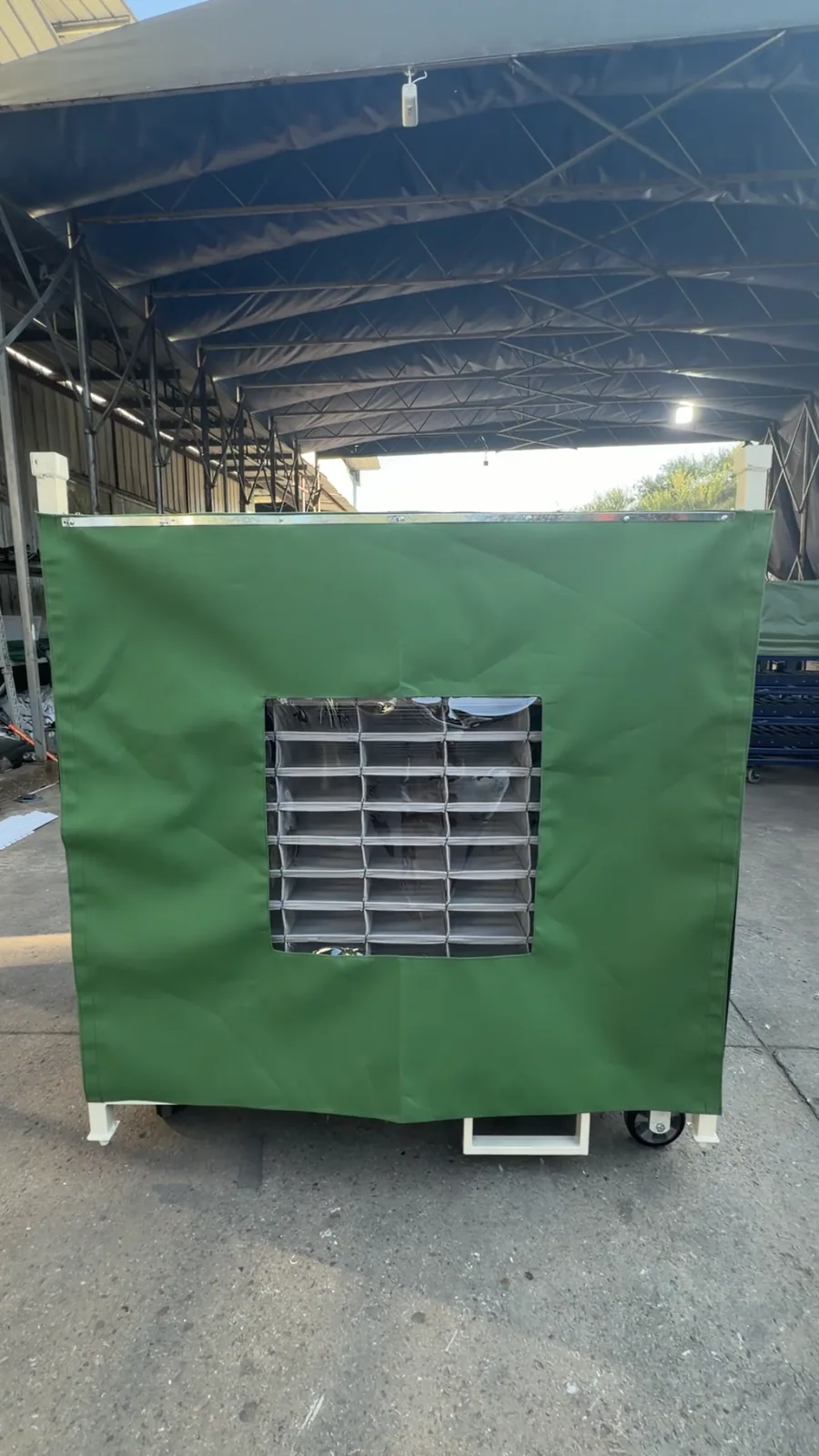
Keep adjacent decisions distinct: use the rack pool-sizing guide for total loop quantity and the label-placement guide for readable identification faces. If a parked curtain changes the carrier's waiting footprint, use the cover opening and stowage guide. Send your site sketch and carrier drawings for a staging-compatible packaging quote.
Frequently Asked Questions
- How should a returnable packaging staging area be divided?
- Give ready loaded carriers, usable empties and carriers awaiting action separate locations. Then divide the ready area by the next destination or pickup sequence. Keep the vehicle approach, pedestrian route and temporary overflow location outside those parking slots.
- When should I use a FIFO lane rather than individual bays?
- Use a FIFO lane when units share a destination and the first arrival should be the first withdrawal, with access at both ends. Use individual accessible bays when the next carrier may be selected by part variant, destination or condition rather than arrival order.
- Can empty racks share the loaded-carrier lane?
- Only if their pickup timing and access remain unambiguous. A separate empty-return area is usually clearer when empties are collected in batches or have different footprints after folding. Never let the empty queue block withdrawal of the next loaded rack.
- How many staging positions do I need?
- Plot arrivals and departures through the busiest credible operating interval and count the units waiting at each event. Test an early delivery, a late pickup and an unavailable position. This determines local waiting positions, not the total rack fleet or a universal warehouse percentage.
- What determines the clearance around a rack staging bay?
- Use the complete loaded or empty carrier outline, the actual truck or tugger approach, fork insertion and withdrawal, turning path, operator task and site access requirements. A floor rectangle that fits the rack alone does not establish a workable handling space.
- What should I send HAOFU for a staging-compatible packaging quote?
- Send a dimensioned site sketch, loaded and empty carrier drawings, part and quantity, arrival and pickup pattern, vehicle details, intended access faces, cover or loose-component positions, required carrier quantity and delivery destination.