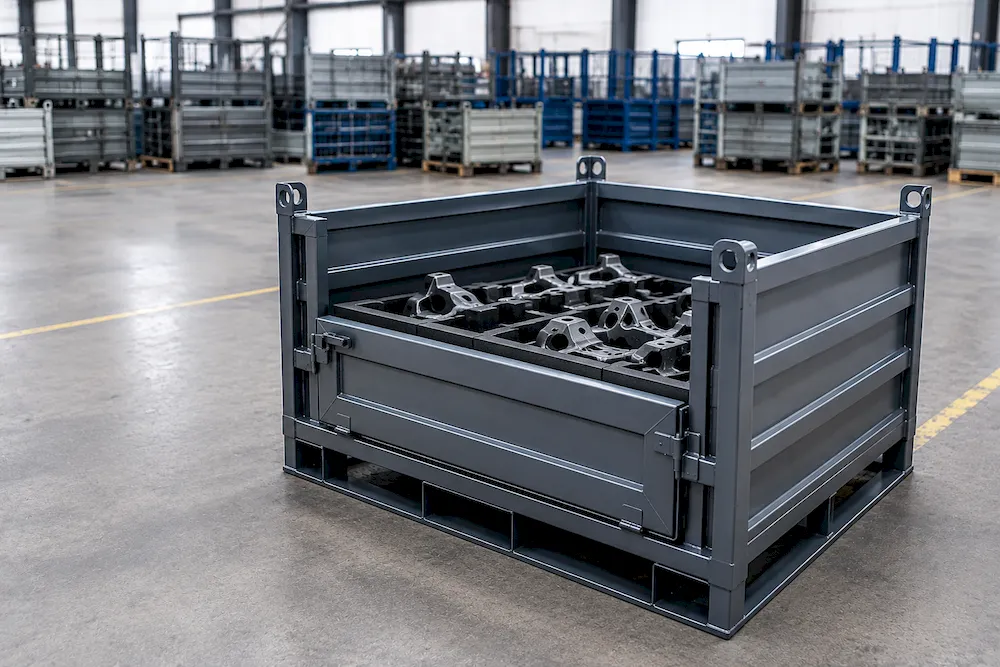
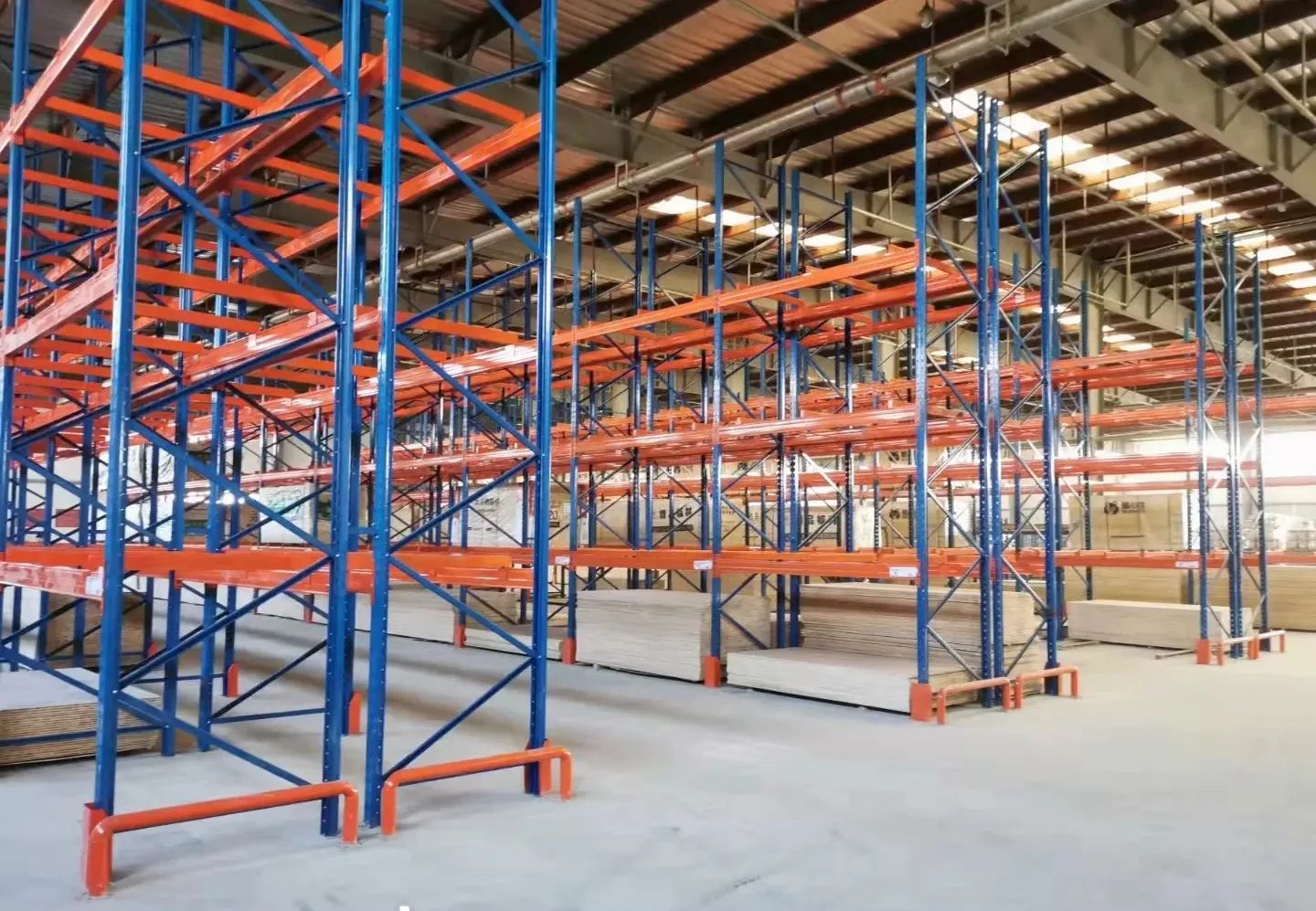
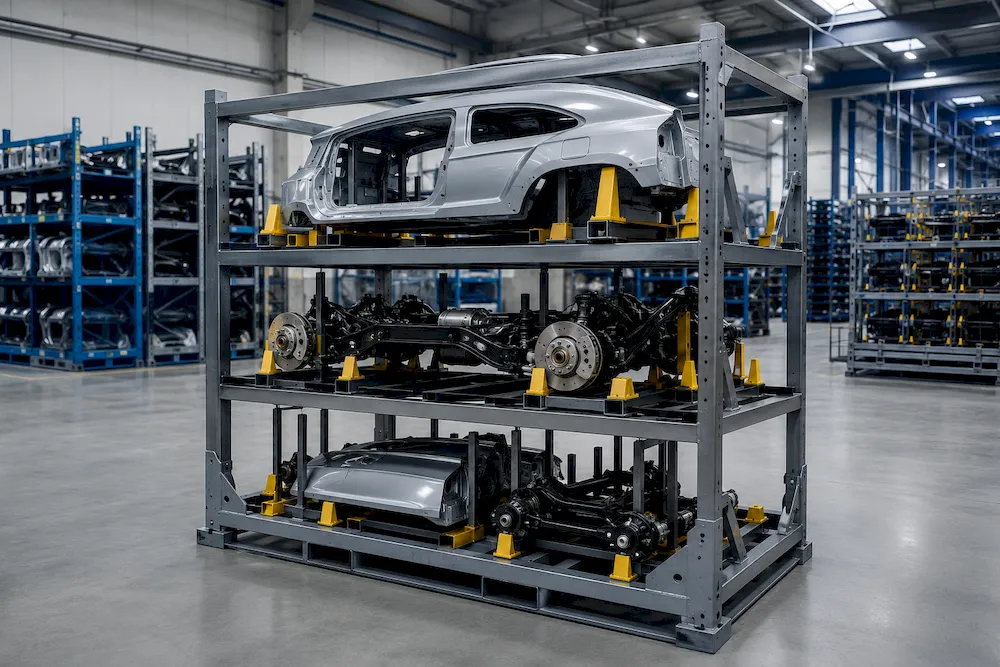
Steel Pallets vs Wooden Pallets: A Buyer's Guide for Factories

Steel pallets cost more up front but carry heavier concentrated loads of 1,000–4,000 kg, last 10+ years and stay dimensionally stable for racking and AS/RS, so they are cheaper per trip for heavy or returnable use. Wooden pallets are cheaper to buy and suit one-way, lighter shipping, though they absorb moisture and need ISPM-15 treatment for export.
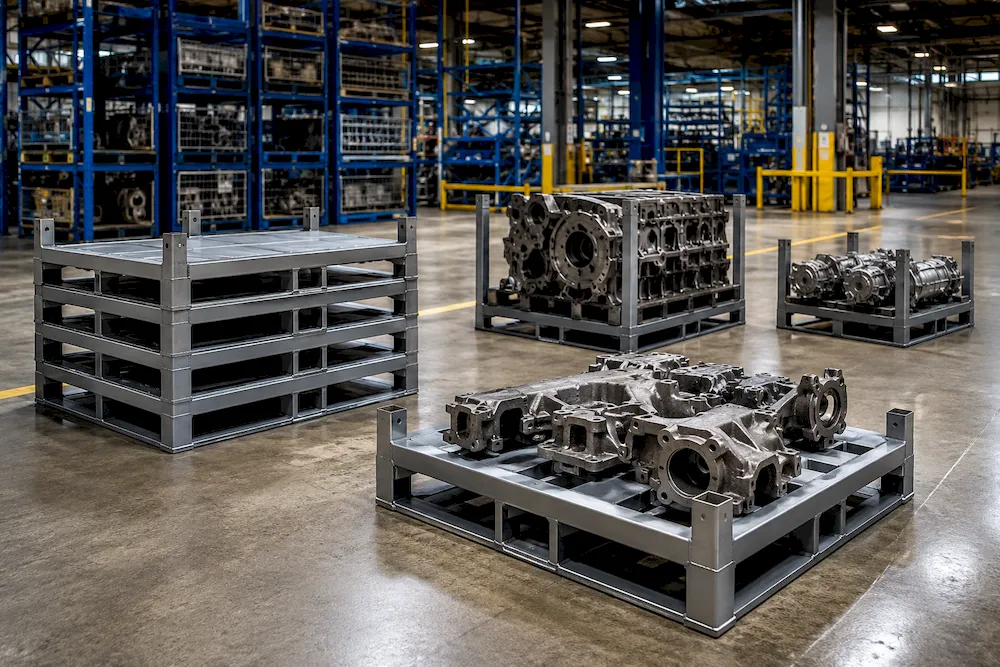
The steel pallet is the workhorse of heavy industrial storage. Compared with wooden pallets, a metal pallet carries more weight, lasts far longer and stays consistent in size — but it costs more up front. This guide helps factories decide which makes sense.
Quick answer: steel vs wooden pallets
Steel pallets cost more per unit but carry heavier concentrated loads of 1,000–4,000 kg, hold exact dimensions for racking and AS/RS, and last 10+ years, so they win on cost-per-trip for heavy or returnable flows. Wooden pallets suit one-way, lighter, low-budget shipping but absorb moisture and need ISPM-15 treatment for export.
Steel pallets vs wooden pallets at a glance
- Load capacity — steel pallets handle heavier, concentrated loads such as castings and coils
- Lifespan — a steel pallet can last 10+ years; wood often fails within months under heavy use
- Consistency — steel keeps exact dimensions, ideal for automated lines and racking
- Hygiene — no splinters, nails, moisture or pests; easy to clean
- Upfront cost — wood is cheaper to buy; steel wins on cost-per-trip over time
| Factor | Steel pallet | Wooden pallet |
|---|---|---|
| Load capacity | 1,000–4,000 kg; handles concentrated heavy loads | ~500–1,500 kg; can crack under heavy point loads |
| Lifespan | 10+ years, thousands of trips | Months to a few years under heavy use |
| Dimensional consistency | Exact, stable — ideal for racking & AS/RS | Varies; warps and swells with moisture |
| Hygiene | No splinters, nails or pests; easy to clean | Absorbs moisture; ISPM-15 treatment for export |
| Upfront cost | Higher per unit | Lower per unit |
| Cost per trip | Lower for high-cycle / returnable flows | Higher once replacement & disposal add up |
| Best for | Heavy parts, closed-loop returnable transport, automation | One-way shipping, light loads, low budget |
When a galvanized steel pallet is the right choice
Choose a galvanized steel pallet when you need rust resistance for outdoor, humid or wash-down environments. Powder-coated finishes suit indoor use, while hot-dip galvanizing adds long-term corrosion protection.
Steel pallets are a strong fit for:
- Heavy automotive components and metal stampings
- Closed-loop, returnable transport between plants
- Automated storage and retrieval systems (AS/RS)
- Cold storage and food-grade environments
Total cost of ownership
Wooden pallets look cheaper per unit, but in high-cycle operations the replacement, disposal and damage costs add up. A reusable steel pallet spreads its cost over thousands of trips, which usually makes it cheaper per cycle for heavy or returnable flows.
Design and customization
Steel pallets can be tailored: deck type (perforated, solid or mesh), runner or leg base, forklift entry, stacking lugs and load rating. As a metal pallet and custom rack manufacturer, we design the base structure around your load and handling method.
Not sure which pallet fits your line? Tell us your load and environment and we will recommend the right spec.
Frequently Asked Questions
- Are steel pallets better than wooden pallets?
- For heavy, high-cycle or returnable use, steel wins — it carries more, lasts 10+ years and stays dimensionally stable. Wood is cheaper up front and fine for one-way, lighter shipping. Judge on cost per trip, not unit price.
- Do steel pallets need ISPM 15 treatment for export?
- No. ISPM 15 heat-treatment or fumigation applies only to wooden packaging; steel pallets are exempt, which simplifies international shipping.
- When is a steel pallet worth the higher cost?
- When loads are heavy or concentrated, pallets cycle many times in a closed loop, you need dimensional consistency for automation, or you operate in humid, wash-down or cold environments where wood degrades.
- How much weight can a steel pallet carry compared with a wooden pallet?
- A steel pallet typically carries 1,000–4,000 kg and handles concentrated, heavy loads such as castings and coils, while a wooden pallet usually manages about 500–1,500 kg and can crack under heavy point loads. If your parts are heavy or the weight is concentrated, steel is the safer choice; wood suits lighter, one-way shipping. Confirm the rating for your specific pallet and load.
- When should I choose a galvanized steel pallet?
- Choose a galvanized steel pallet when you need rust resistance for outdoor, humid or wash-down environments. Powder-coated finishes suit indoor use, while hot-dip galvanizing adds long-term corrosion protection. Galvanized steel pallets are also a strong fit for cold storage and food-grade environments, closed-loop returnable transport between plants, automated storage and retrieval systems, and heavy automotive components and metal stampings.