Stillage vs Pallet vs Wire Container: Which Should You Choose?

Use a stillage for heavy or awkward parts that need support, since it cradles parts and stacks high; a pallet for boxed or unit loads on a flat, strong base suited to racking; and a wire mesh container for loose small parts needing visibility, ventilation and a foldable empty return. Most factories run a mix of all three through the same pallet racking.
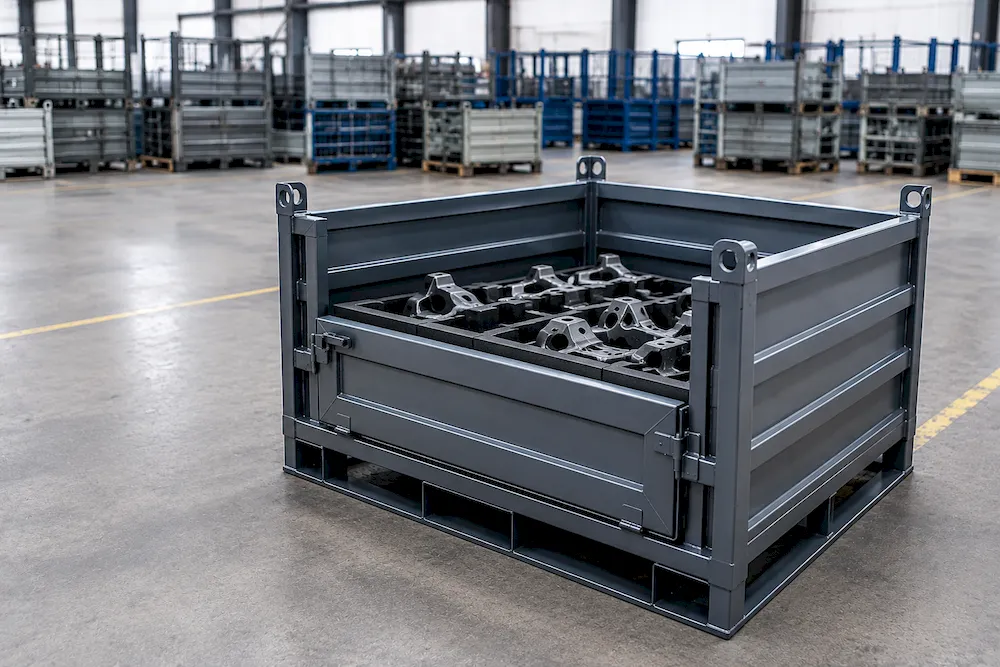
Stillage rack, steel pallet or wire mesh container? These three load units are the foundation of metal logistics, and choosing the right one depends on your parts, handling and storage. This guide compares them so you can pick the best metal storage cage or rack for the job.
Quick answer: which load unit to choose
Choose a stillage for heavy or awkward parts needing support, since it cradles parts and stacks high; a steel pallet for boxed or unit loads on a flat, strong base suited to racking; and a wire mesh container for loose small parts needing visibility, ventilation and a foldable empty return. Most factories run all three through the same pallet racking.
Quick comparison
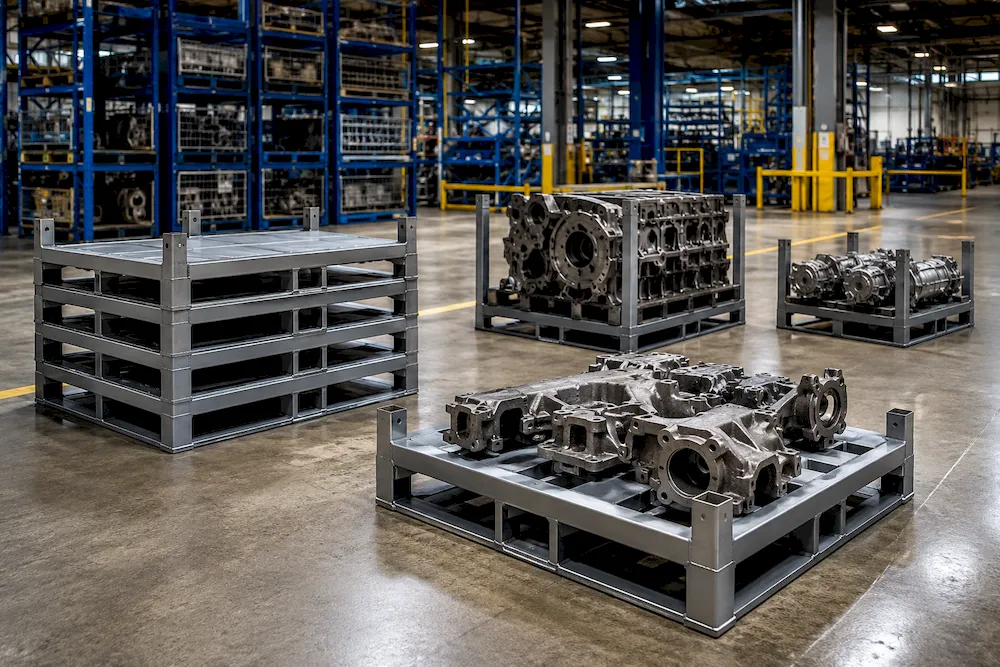
- Steel pallet — a flat, strong base for stable, stackable loads and racking. Best for boxed or unit loads. See steel pallets.
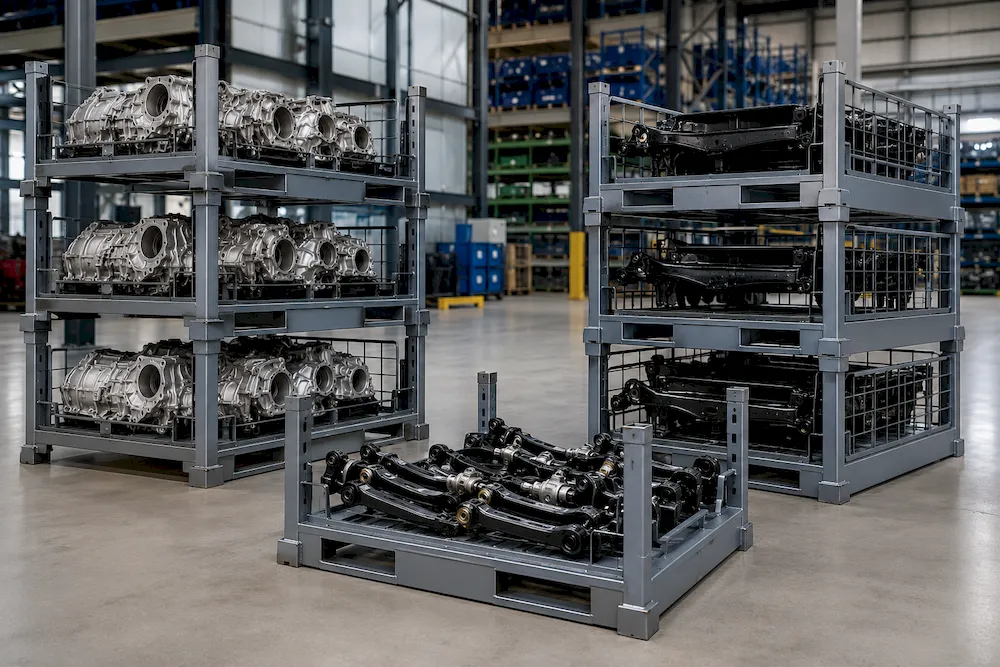
- Stillage rack — a framed structure with sides or posts that holds and protects heavy or awkward parts, and stacks high. See stillage racks.
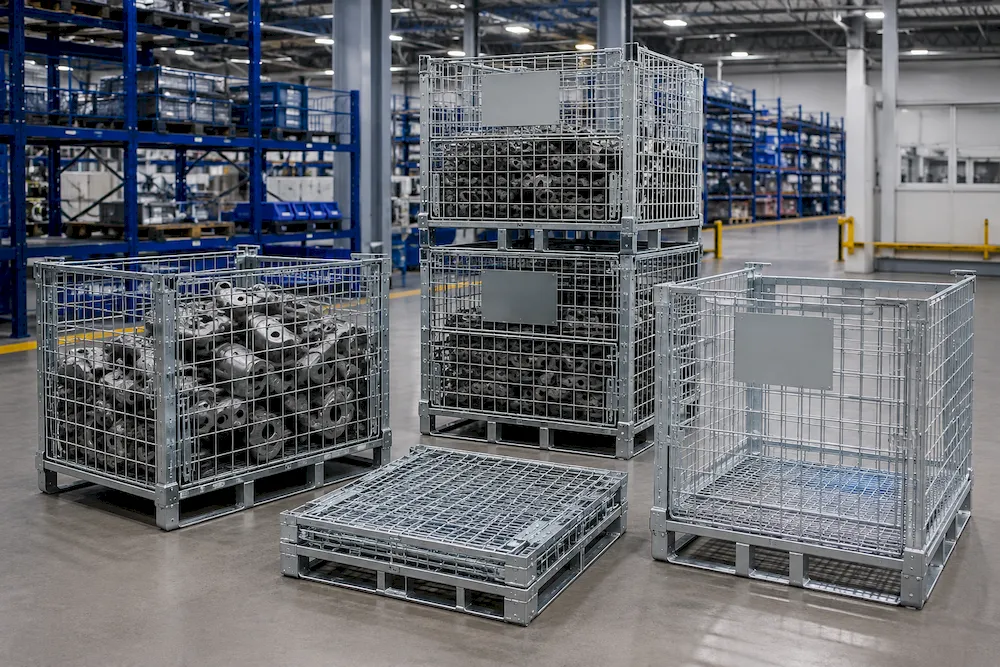
- Wire mesh container — an open mesh cage with visibility, ventilation and often a foldable design. Best for loose parts. See wire mesh containers.
| Feature | Steel pallet | Stillage rack | Wire mesh container |
|---|---|---|---|
| Structure | Flat base, no sides | Framed with posts/sides | Open mesh cage |
| Part protection | Low (base only) | High (supports & cradles parts) | Medium (contains loose parts) |
| Typical load | 1,000–4,000 kg | 500–2,000 kg | 300–1,500 kg |
| Stacking | With posts | Yes, stacks high | Yes |
| Visibility / access | Open | Partial | High (see-through, front gate) |
| Foldable empty | Removable posts | Optional | Yes (collapsible) |
| Best for | Boxed / unit loads, racking | Heavy or awkward parts | Loose small parts, picking |
How to choose
By part type
Heavy panels and engine parts suit a stillage; loose small parts suit a mesh container; boxed unit loads suit a pallet.
By protection
Stillages give the most part support and protection; pallets give the least unless combined with a frame.
By storage
Stackable stillages and pallets save floor space when full; foldable mesh containers save space when empty.
By visibility
Mesh containers win for at-a-glance inventory; solid custom metal containers win for full enclosure and security.
Often the answer is "a mix"
Most factories use a combination — pallets for bulk, stillages for heavy parts, mesh containers for loose components — all moving through the same pallet racking.
Not sure which load unit fits your parts? HAOFU designs all three, plus fully custom solutions. Send your part details and we will recommend the right mix.
Frequently Asked Questions
- Stillage vs pallet vs wire container — which should I use?
- Use a stillage for heavy or awkward parts needing support, a pallet for boxed or unit loads, and a wire mesh container for loose small parts needing visibility and ventilation. Many operations use a mix.
- What is the difference between a stillage and a pallet?
- A pallet is a flat base for forklift handling and stacking; a stillage adds a built-up frame with posts, sides or dividers that support and contain parts a flat pallet cannot hold safely.
- Can I use all three types together?
- Yes — most factories combine pallets for bulk, stillages for heavy parts and mesh containers for loose components, all moving through the same racking and handling system.
- What is a wire mesh container best for?
- A wire mesh container is an open mesh cage that offers visibility, ventilation and often a foldable design, so it is best for loose small parts and picking. You can see the contents through the mesh, and collapsible models fold flat when empty, which saves space on the return leg of a returnable loop.
- How much load can a pallet, stillage or wire container carry?
- Load capacity depends on the design and the parts, so treat any figure as indicative and confirm the rating for your specific unit and load. As a rough guide, a steel pallet typically carries the most, a stillage rack a medium-to-heavy load, and a wire mesh container a lighter load. Protection differs too: pallets give the least part protection, stillages the most by supporting and cradling parts, and mesh containers a medium level for loose components.