How to Keep Load Orientation in a Two-Sided Stillage Handoff
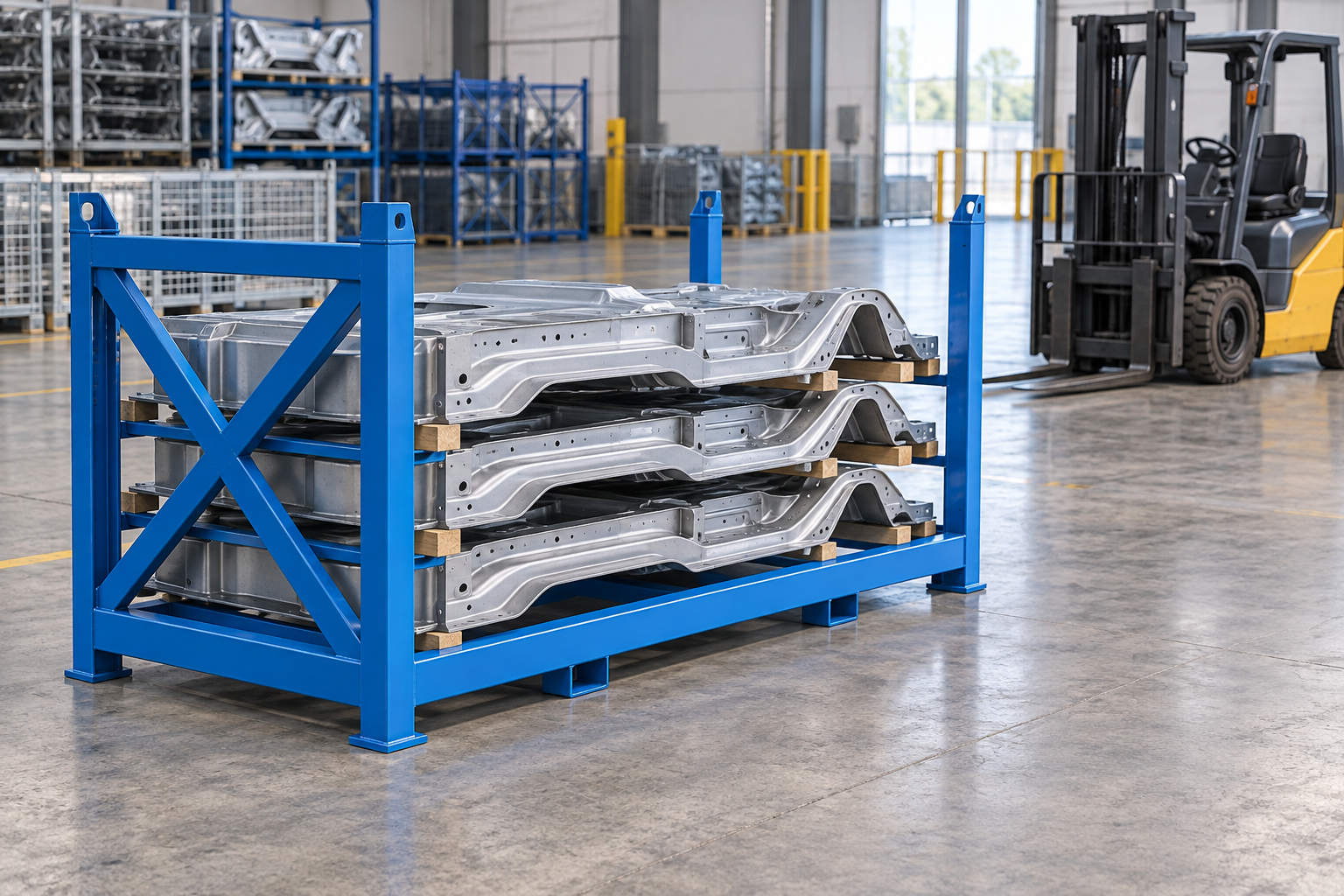
Specify opposite-side stillage fork access when dispatch and receiving must approach from different sides while the component stays in one orientation. Draw each station in plan view, mark the part’s functional end and show the complete loaded unit in its set-down position. Compare two approved pickup directions with a single direction and a revised bay layout. A second opening only helps if the truck can engage and withdraw with the load supported, the downstream operator sees the right part face and the route leaves room for the ends. Validate both approaches with the selected handling equipment and actual loaded configuration.
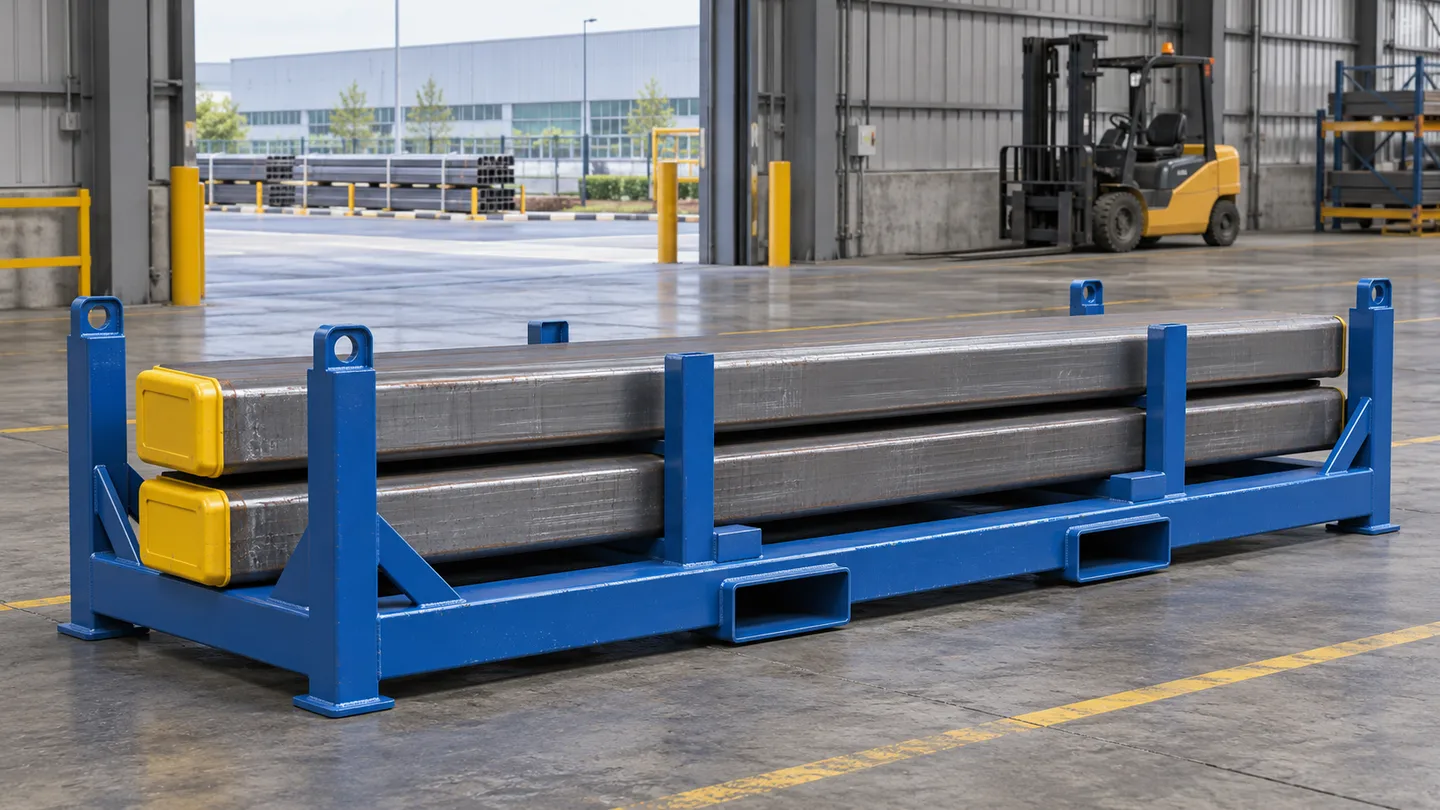
Specify opposite-side stillage fork access when dispatch and receiving must approach from different sides while the component stays in one orientation. Draw each station in plan view, mark the part’s functional end and show the complete loaded unit in its set-down position. Compare two approved pickup directions with a single direction and a revised bay layout. A second opening only helps if the truck can engage and withdraw with the load supported, the downstream operator sees the right part face and the route leaves room for the ends. Validate both approaches with the selected handling equipment and actual loaded configuration.
Draw the route from the part’s point of view
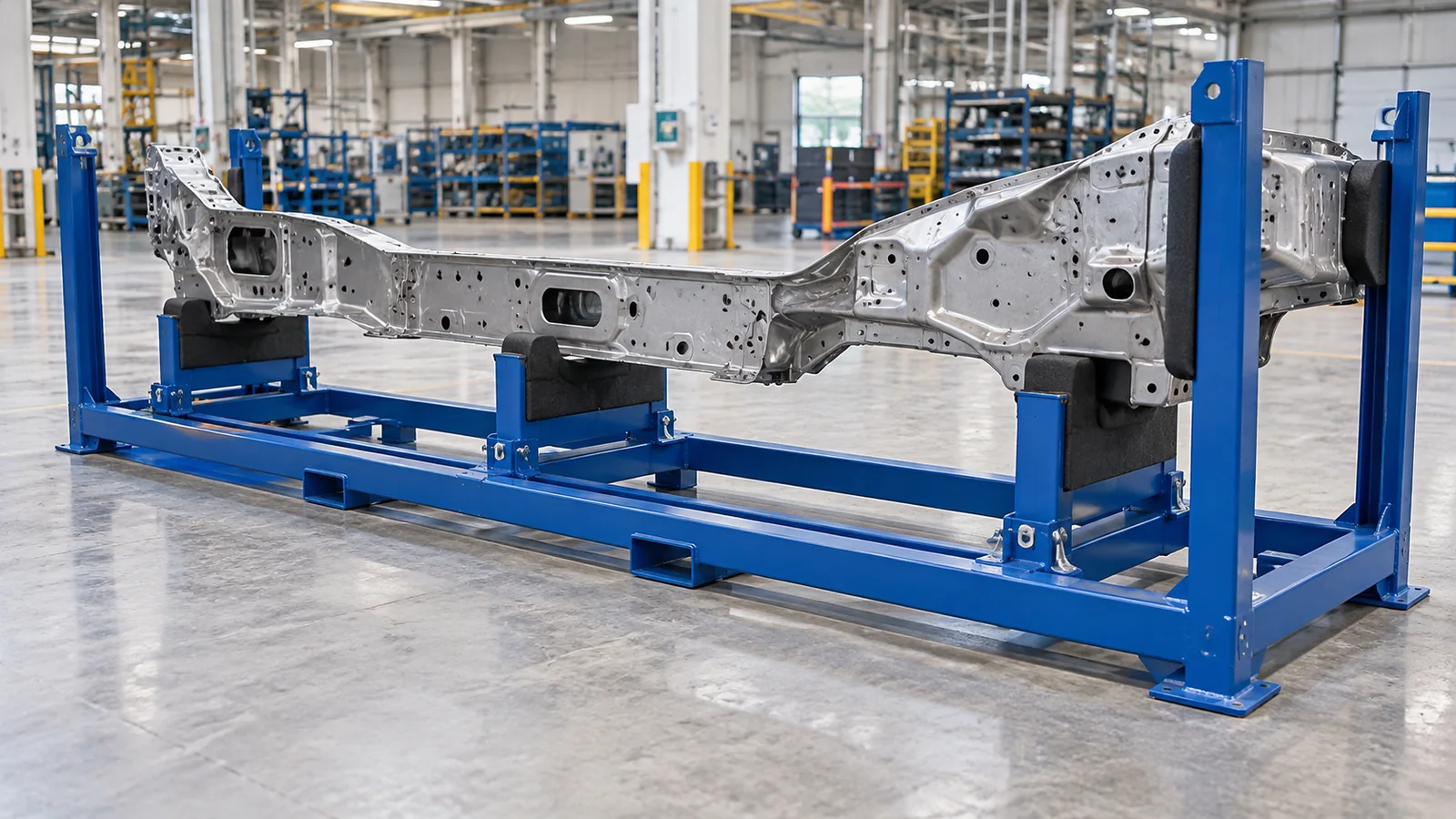
Picture a long formed section with an offset bracket at one end. Dispatch approaches the stillage from the north aisle. At receiving, the open aisle is on the south side, and the bracket must still arrive at the same end of the station. The forklift approaches are reversed. The part and stillage need not be turned if the frame and bay are approved for both directions.
Mark a common orientation reference on both station sketches. Show the bracket end, receiving fixture, stillage footprint, fully loaded envelope and each driver’s approach. Avoid instructions that rely only on left and right. The meaning changes with the operator’s viewpoint. A fixed functional end or an agreed drawing reference is easier to check during the trial.
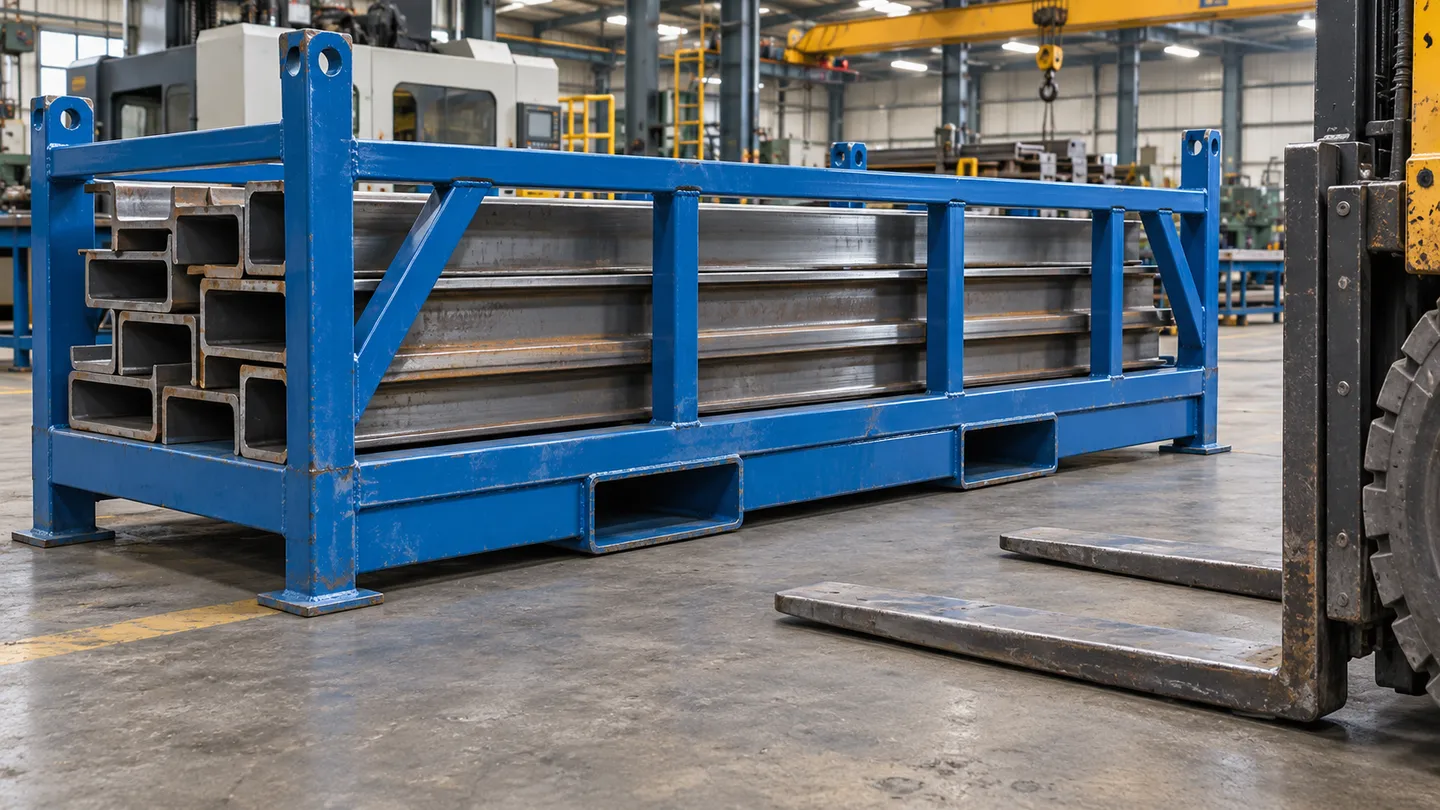
Compare two accesses with a station change
A second pickup direction is useful when the incoming and outgoing aisles cannot be aligned. A single approved direction may be simpler if the drop position can move or a shared aisle can be kept clear. Compare the complete handoff rather than optimising the frame alone. Ask both teams to mark barriers, pedestrian routes and fixed equipment before proposing a new bay.
If an additional pocket would cross the intended support members or interfere with locating features, have the engineer assess the frame options. A change to the station can preserve the same loaded orientation without adding another structural interface. Compare both drawings with the people who will move and receive the load.
| Option | When to compare | What to specify |
|---|---|---|
| One pickup side | Both stations can reach the same face | Keep an open aisle to that face |
| Opposite pickup sides | Stations face different sides | Validate both loaded pickup cases |
| Change the handoff bay | Second entry interferes with supports | Redraw approach and set-down |
Give each approach its own handling view
Prepare a drawing for each truck direction. Include the equipment model, fork dimensions and spacing, carriage or attachment outline, and how far the forks can engage without contacting the payload or base hardware. Include obstructions outside the frame, such as a floor stop or an adjacent parked stillage. The second pickup should have a defined engagement and withdrawal path.
Ask the equipment owner to review stability and suitability for the actual load. A geometrically symmetric opening can be used with an asymmetric load, so the load centre relative to the truck can differ by direction. Share the actual part configuration and centre-of-gravity information. A fork opening is only one input to the handling decision.
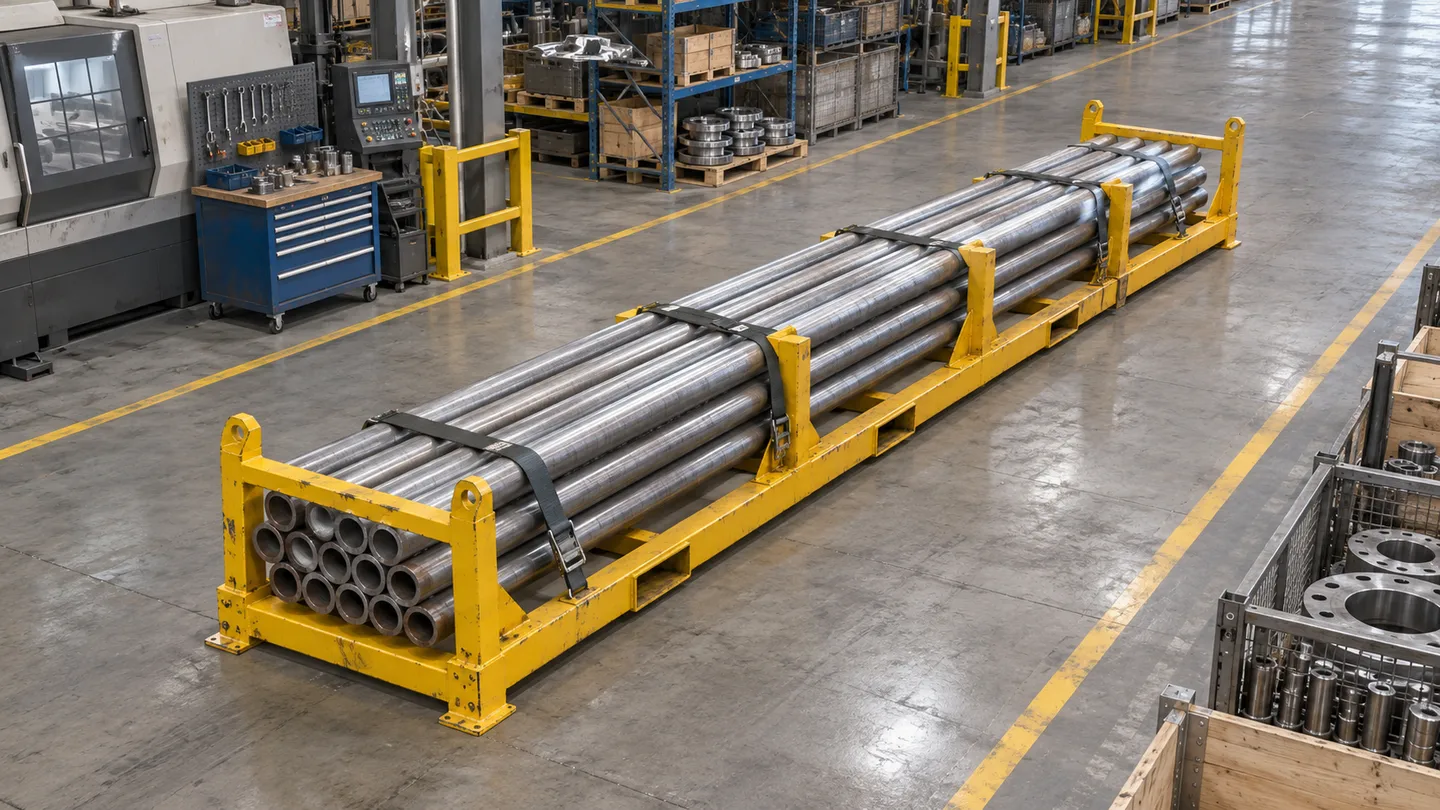
Check the handoff on the ground
Define the stillage’s set-down footprint and the surfaces it is intended to rest on. Receiving should be able to see which way the part faces before the next pickup or unload. If the second truck approaches with different clearances, check that the frame remains supported while the forks enter and withdraw. Include floor conditions and equipment clearances in the agreed trial.
Keep the space taken by long ends on both plans, including during the approach and departure. If an end extends beyond the base, use the loaded outline rather than just the base width in the bay review. Agree how a driver recognises a mispositioned unit and who resets it. Avoid relying on an improvised rotation of a loaded frame.
Separate the pickup face from the unloading face
Forks may approach the base from one side while an operator or machine removes the part from the other side or from above. Label these as separate actions. A frame that lifts successfully can still present the wrong part end at a receiving fixture. Ask the line team to confirm the final part orientation and available removal space.
If there are multiple load variants, list each approved configuration and whether its orientation or support changes. For a highly asymmetric variant, a keyed locator or distinct geometry can be evaluated by the designer. Signs can reinforce the approved method. They cannot create clearance or establish a load rating.
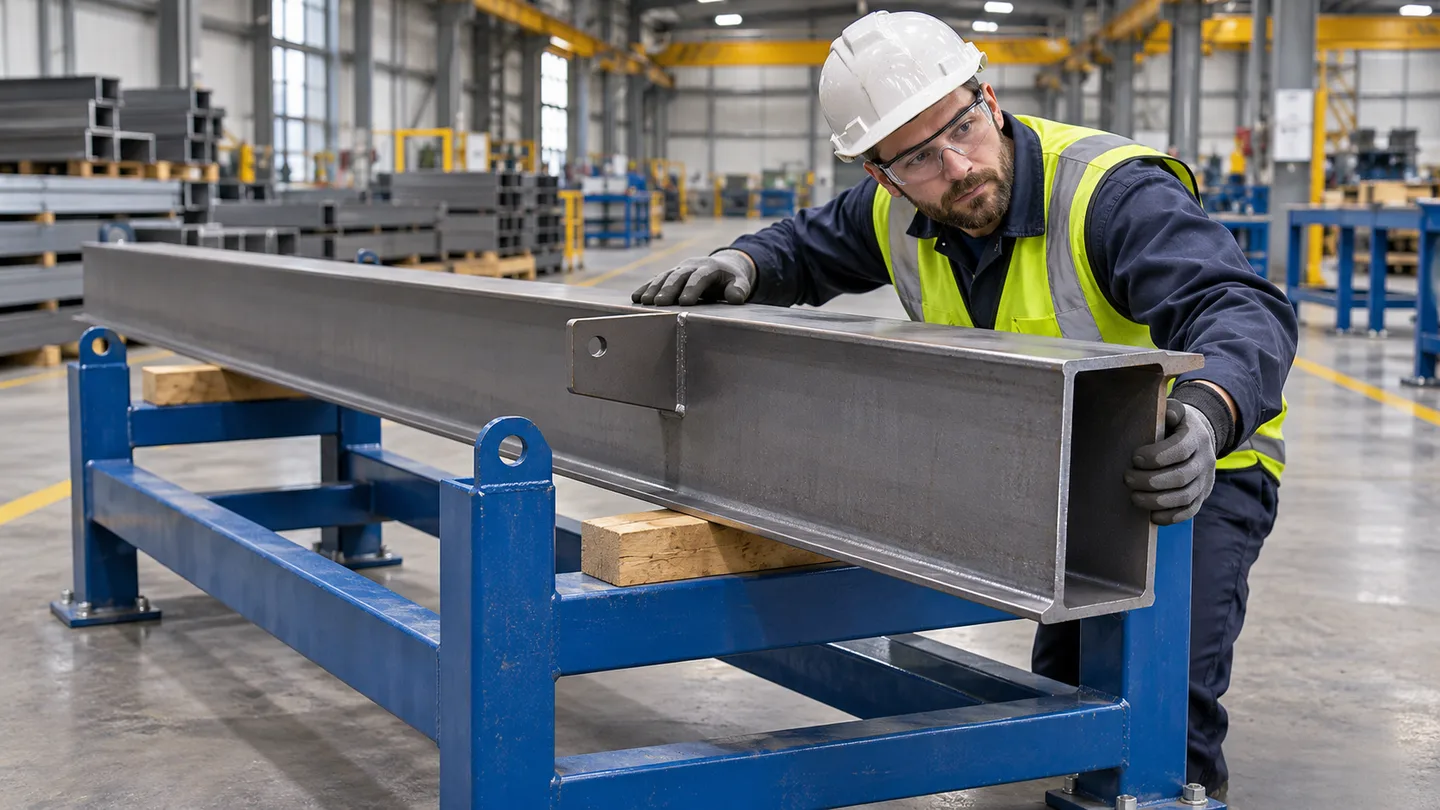
Trial the movement before repeat production
Agree on a trial with the selected equipment and representative load. Move through dispatch pickup, set-down, receiving pickup and delivery to the unload point. Have a competent team check clearances and operating conditions against the drawings, including the empty return state if the route changes. Record any contact or repositioning that was not in the plan.
Send HAOFU a sketch of both bays, the long part’s orientation and contact map, the loaded envelope, the planned trucks and the intended sequence. HAOFU’s stillage range includes configurable frame and handling interfaces. Ask for a layout review before fixing fork access in the quotation. Confirm the selected arrangement for the specific load and sites.
Use two sketches to review one handoff
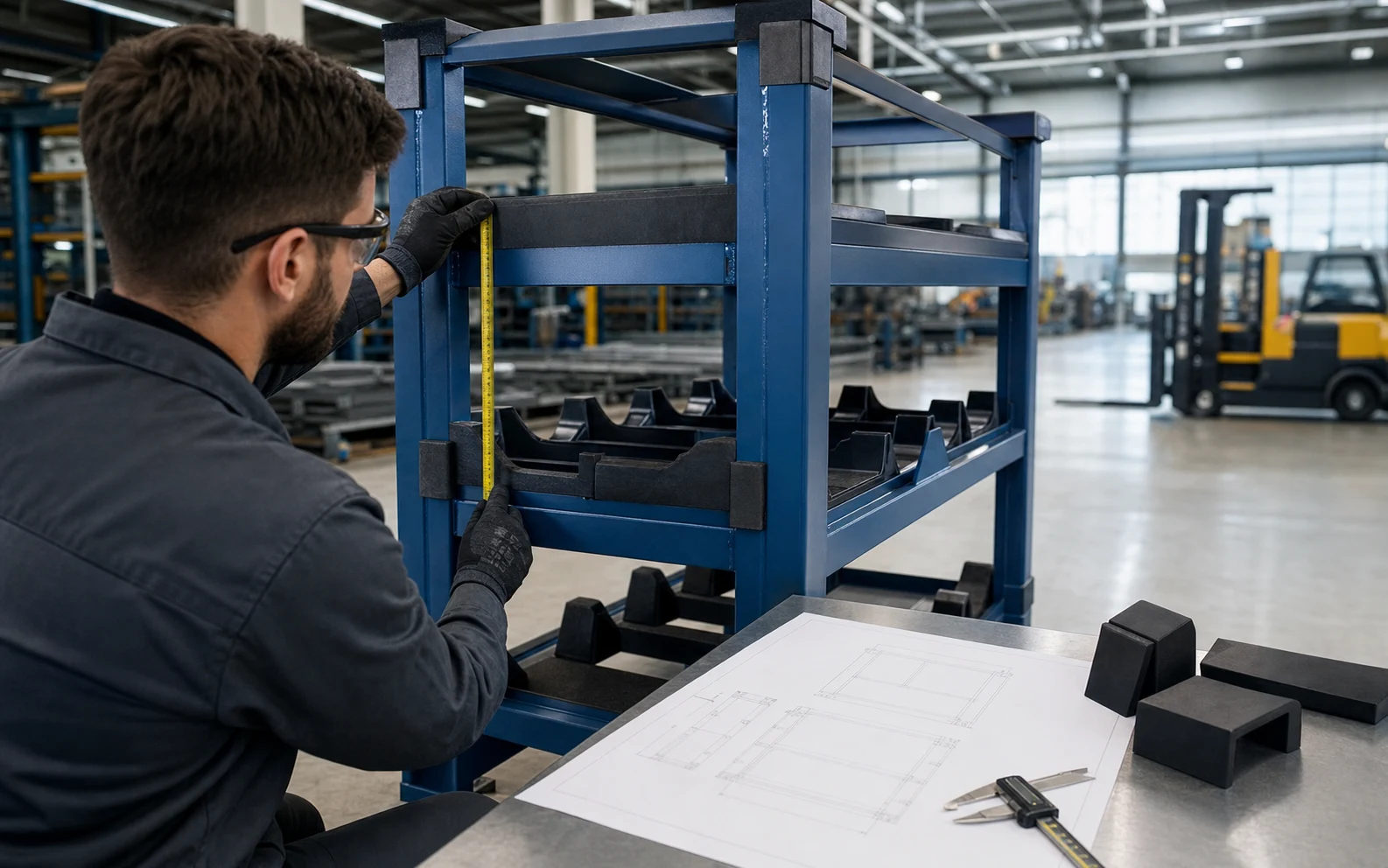
Place the dispatch and receiving plans side by side. On each plan, circle the actual support points and indicate the direction of travel after pickup. Mark the end that must face the receiving fixture. If the planned approach changes because another vehicle parks in the bay, decide whether to keep that area clear or to provide an approved alternate route. Record the selected arrangement so a future shift can recognise the intended position before moving the frame.
DAYWALK’s transport frame shows that multiple pickup points can be designed into a long-load carrier. The Verdex equipment sheet distinguishes fork access by equipment type. Those examples help frame the questions for a custom stillage. Use your own trucks, route and load data for the approval.
Prepare your enquiry
- Compare two accesses with a station change A second pickup direction is useful when the incoming and outgoing aisles cannot be aligned.
- Give each approach its own handling view Prepare a drawing for each truck direction.
- Check the handoff on the ground Define the stillage’s set-down footprint and the surfaces it is intended to rest on.
- Separate the pickup face from the unloading face Forks may approach the base from one side while an operator or machine removes the part from the other side or from above.
Start with a photo or drawing and your main question. See the HAOFU product options or send your drawing and requirements.
Related guides and references
Frequently Asked Questions
- Does two-sided access mean all sides can be used?
- Specify the exact approved faces. Opposite-side access and four-side access are different requirements.
- Should receiving rotate the stillage?
- Compare the fixed orientation and both truck approaches first. If rotation is required, specify the planned method, space and validation separately.
- Can a forklift and pallet truck share the same entry?
- Compare each device against the complete base and operating path. Access for one device does not establish access for another.
- What should the buyer send?
- Send both station sketches, the loaded outline and orientation, part contacts, equipment details and the intended set-down and unloading sequence.