AGV/AMR-Compatible Carts & Dollies: Designing for Automation

An AGV/AMR-compatible cart gives robots what they need: under-cart clearance for under-ride lifting, consistent engagement or tow points, identical dimensions across every cart, controlled braking and a low, stable load — so the robot picks, tows and drops it reliably.
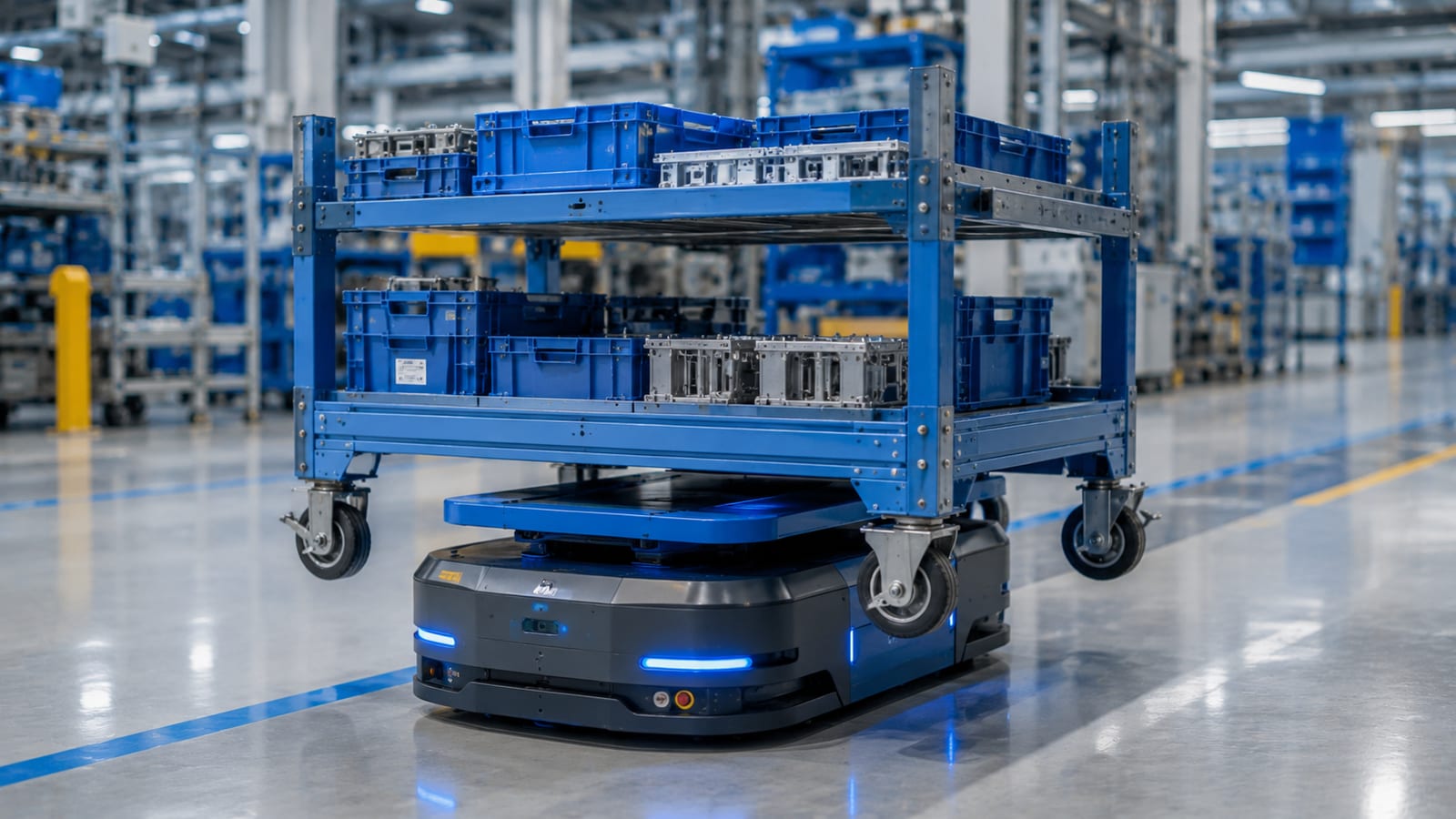
Automating material flow with AGVs (automated guided vehicles) and AMRs (autonomous mobile robots) only works if the carts are designed for the robots to handle. An AGV/AMR-compatible cart or dolly gives the robot the clearance, engagement points and consistency it needs to pick, tow and drop it reliably every time.
Quick answer: what a robot needs from an AGV/AMR cart
An AGV/AMR-compatible cart gives robots the clearance, engagement points and consistency to pick, tow and drop it every cycle. That means under-cart clearance for under-ride lifting, consistent tow or engagement points, dimensionally identical units, controlled braking that releases and holds, and a low, stable load — so the robot's routine works reliably every time.
What a robot needs from the cart
| Requirement | Why the robot needs it |
|---|---|
| Under-cart clearance | So an under-ride AMR can drive beneath and lift |
| Engagement / tow points | Consistent hitch or pick-up feature the robot locates |
| Dimensional consistency | Every cart identical so the robot's routine always fits |
| Controlled braking | Brakes that release for tow and hold when parked |
| Load stability | Low, secure load so nothing shifts during autonomous moves |
Design for safe, reliable automation
Driverless industrial trucks and their loads are covered by safety standards such as ISO 3691-4 from ISO, and shared human-robot workspaces still follow OSHA materials-handling practice. The key to reliability is consistency: when every cart is dimensionally identical and stable, the robot's routine works the same on every cycle.
Retrofit or design for AGV/AMR
Whether you are automating now or later, HAOFU designs carts and dollies that work manually today and are ready for AGV/AMR handling. Share your robot and parts and we will design compatible carts.
Frequently Asked Questions
- What makes a cart AGV/AMR compatible?
- Under-cart clearance for under-ride robots, consistent engagement or tow points the robot can locate, identical dimensions across all carts, controlled braking that releases for tow and holds when parked, and a low, stable load.
- What is the difference between an AGV and an AMR?
- An AGV (automated guided vehicle) follows fixed guide paths, while an AMR (autonomous mobile robot) navigates freely and plans its own route. Both need carts designed for reliable engagement and consistent handling.
- Can existing carts be retrofitted for AGVs or AMRs?
- Often yes — carts can be adapted with the right clearance, engagement features, wheels and braking. Designing carts that work manually today and are automation-ready avoids replacing them when you automate.
- Why does dimensional consistency matter for AGV/AMR carts?
- Robots run a fixed routine, so every cart must be dimensionally identical for that routine to fit each time. When carts share the same size, engagement points and a low, stable load, an AGV or AMR picks, tows and drops them the same way on every cycle. Inconsistent carts are a common reason automated handling becomes unreliable, so standardising every unit is key.
- How should braking work on a cart handled by robots?
- An AGV/AMR-compatible cart needs controlled braking: brakes that release when the robot tows the cart and hold when it is parked. That way the cart moves freely under the robot yet stays put once dropped, so nothing rolls away during an autonomous move. Controlled braking, together with a low, secure load, keeps the cart stable throughout automated handling.