Automotive Parts Racks: Go Direct to Line or Transfer to a Station Carrier?

Keep one carrier when transport retention, footprint and station presentation can work together. Compare a planned transfer when a genuine station conflict remains. Include both contact sets, the grip and reseating task, and incoming, part-used and empty carrier positions. Quote the full equipment arrangement rather than the shipping rack alone.
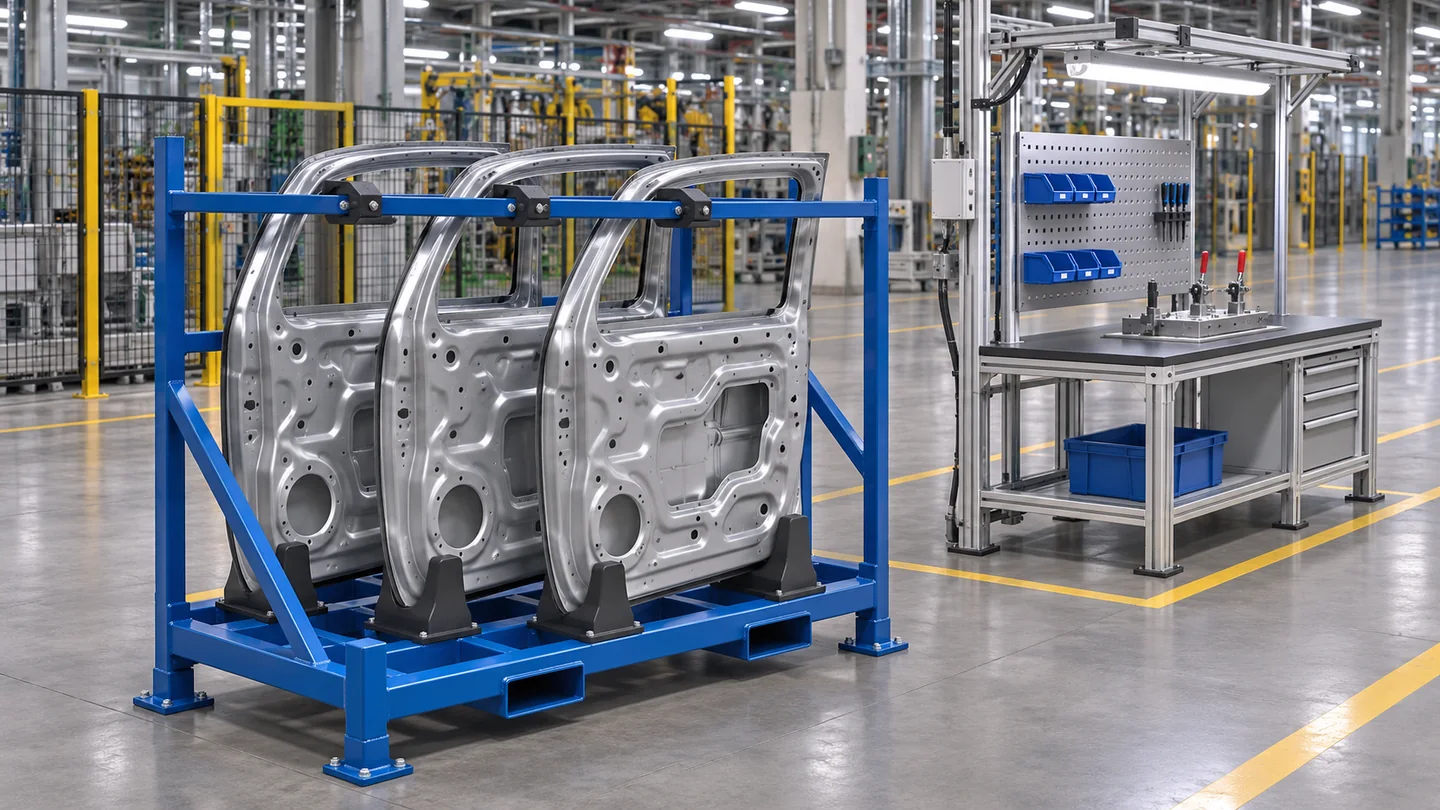
Compare a transport rack with a separate line-side rack only after following the component through both route legs. Keep one carrier from supplier to picking when its retention, outer envelope, handling interfaces and presentation can meet both jobs. Compare a planned transfer when the shipping configuration and station requirements genuinely conflict. In that case, include the release, grip, movement, reseating and carrier positions in the proposal. Removing a transfer is useful only if the remaining rack works at the station; adding one needs a defined part-handling task.
This guide helps packaging, production and procurement teams specify custom automotive parts racks before asking for a quotation. The decision is whether the part stays on the same supports across transport and use, rather than simply which rack type looks most compact.
Follow the component, not just the rack
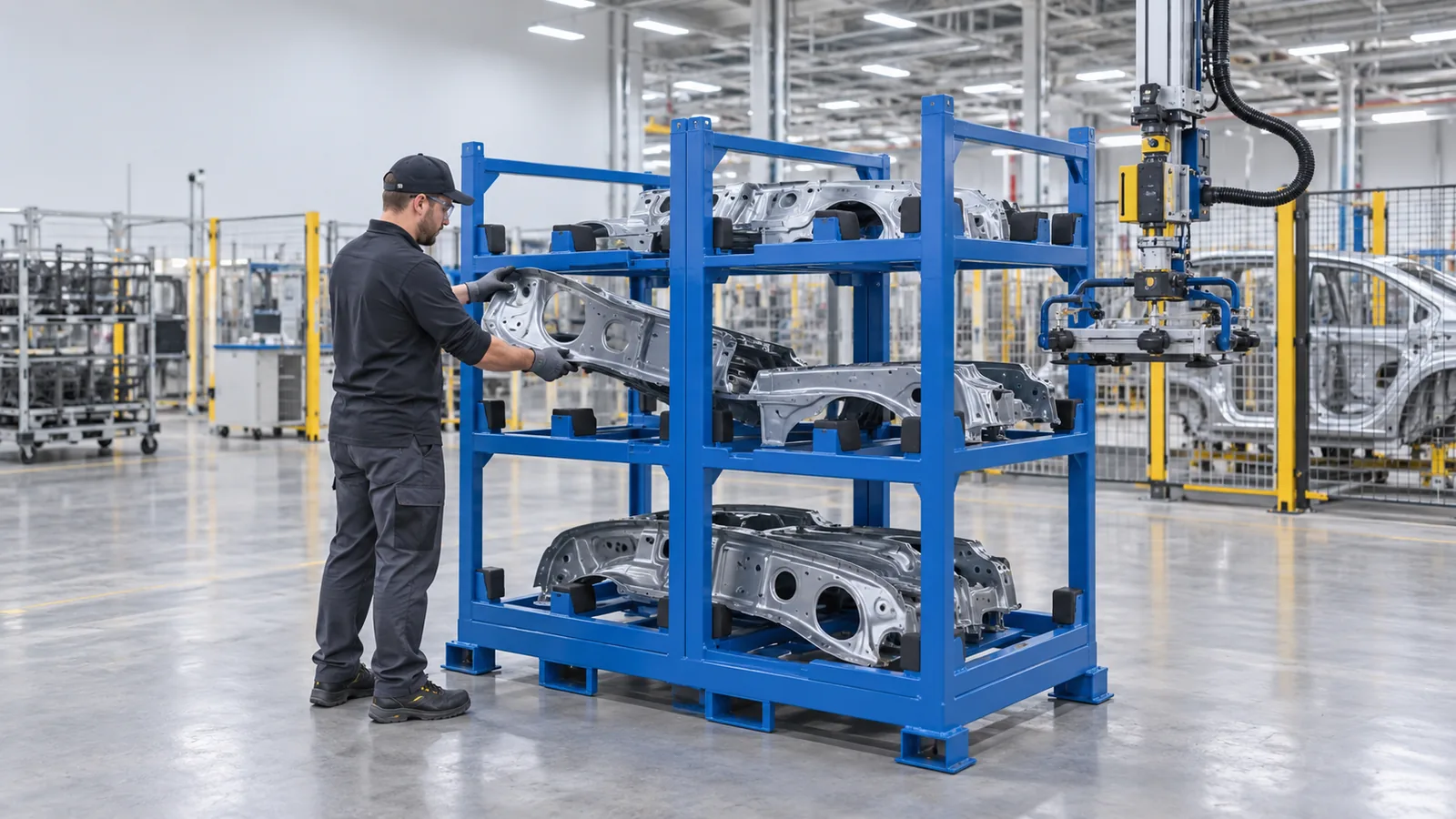
Consider a supplier shipping formed panels to another plant. The transport rack holds several panels upright behind a retention bar. At the receiving plant, production wants one panel presented at a particular angle beside an assembly fixture. The transport layout may provide that access after the bar is opened, or its frame may occupy too much of the station. Draw both possibilities before deciding to copy the existing shipping rack or order a second carrier.
Mark every point where the panel leaves a support. Include the first loading operation, any receiving transfer, station picking and handling of a part-used carrier. This exposes the actual difference between the options: one continuous support arrangement versus a handover between two arrangements. It also keeps the quotation from omitting the second carrier because it sits inside a different department's area.
Compare the complete carrier arrangements
| Arrangement | Useful starting condition | Main trade-off | Include in the proposal |
|---|---|---|---|
| Same rack to the station | Transport protection and station presentation can share a frame | One frame must meet two different envelopes and handling tasks | Transport retention and actual last-part access |
| Transfer to a station carrier | The station needs a different footprint or permitted part pose | Another support set, transfer action and carrier position | Grips, device, seating, release and full/empty positions |
| Different arrangements by part family | Some components fit direct delivery while others have a real conflict | More than one operating arrangement to supply and maintain | Explicit part-to-carrier assignment and both routes |
Both tasks fit one frame. Send the supplier: Transport and pick poses.
Real station conflict. Send the supplier: Complete transfer task.
Different physical needs. Send the supplier: Part-to-carrier map.
Do not force every component into the same answer. A retained transport pose can already suit the next operation for one panel, while another assembly needs a station-specific support arrangement. Group the parts by their actual route and contact requirements, rather than making a plant-wide decision from the most convenient example.
Use one rack when the two jobs fit together
A through carrier is worth examining when the part can remain in an acceptable orientation, the frame fits at the point of use and the operator or device can release and pick the part. Check the loaded transport state separately from the open working state. A retaining bar, cover or brace may be necessary during the journey but needs a practical retained position during picking.
Morrison's automotive rack overview considers part protection, handling, footprint, presentation and return together. That combined view is useful when you ask whether the same rack can do both jobs. For your proposal, make those jobs visible on two drawings or views, rather than describing the rack only as “returnable.”
Inspect the last accessible part as well as the first. A front panel can be easy to remove while a rear position requires reaching across unused slots or rotating the carrier. The rack loading-access guide explains how to represent the hands, tool or lift-assist movement once the carrier arrangement has been chosen.
Choose transfer for a specific station conflict
A separate station carrier can be worth comparing when a transport frame cannot enter the available space, or when the required presentation angle and approach cannot be obtained from its retained layout. Name the conflict on the enquiry. “We need a line-side rack” is less useful than a station sketch showing the restricted footprint and the permitted part pose.
Describe what changes at the transfer: orientation, support surfaces, number of parts presented or the carrier's footprint. If none of those changes is needed, ask what the extra transfer accomplishes before adding equipment. If a change is necessary, include the receiving arrangement in the quotation so the two support sets are designed around the same component information.
Rack & Shelf's assembly line-side rack page gives a practical picture of carriers returning for replenishment and asks for part drawings. It is a useful starting point, but your project also needs the transition from the arriving transport rack to that station carrier.
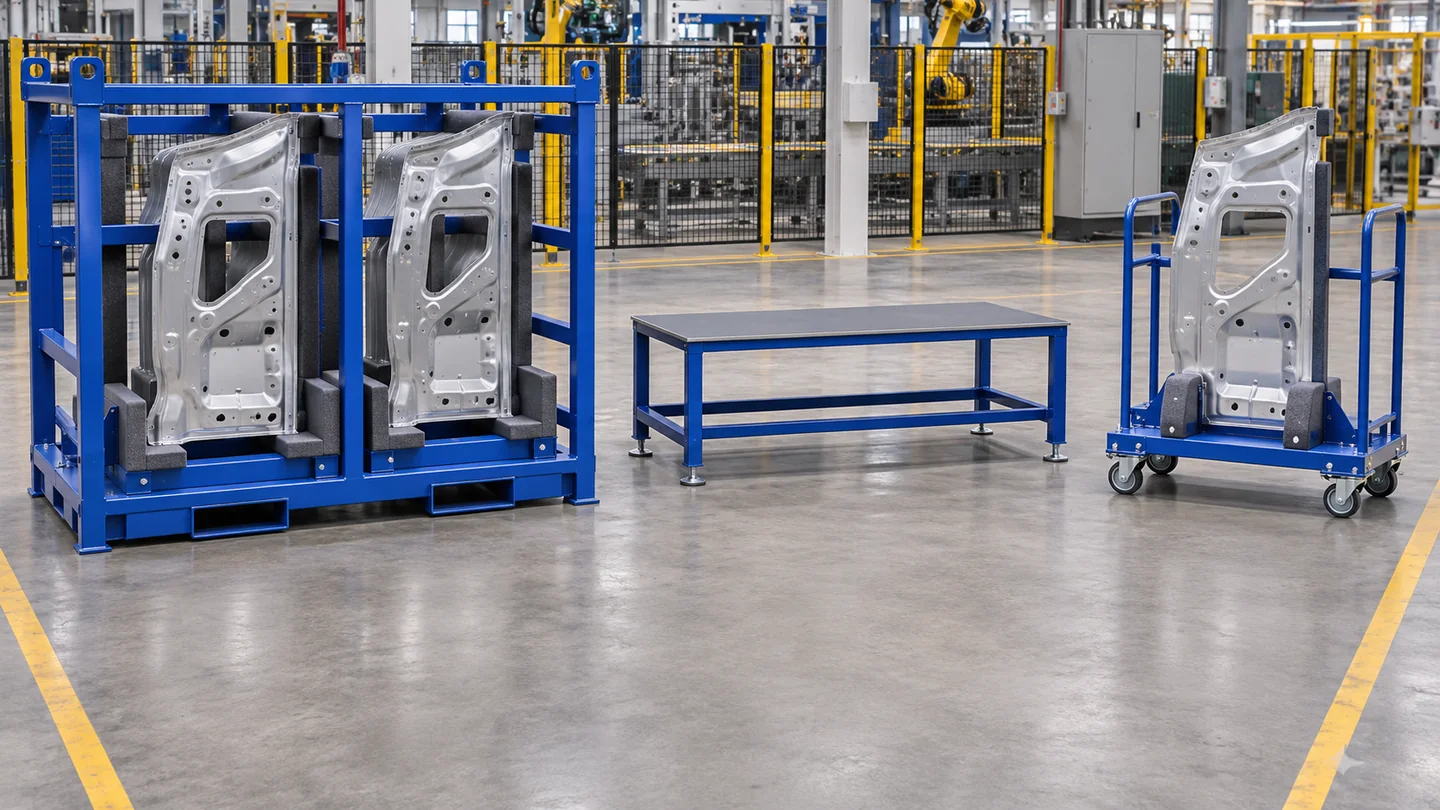
Keep permitted contacts visible during the handover
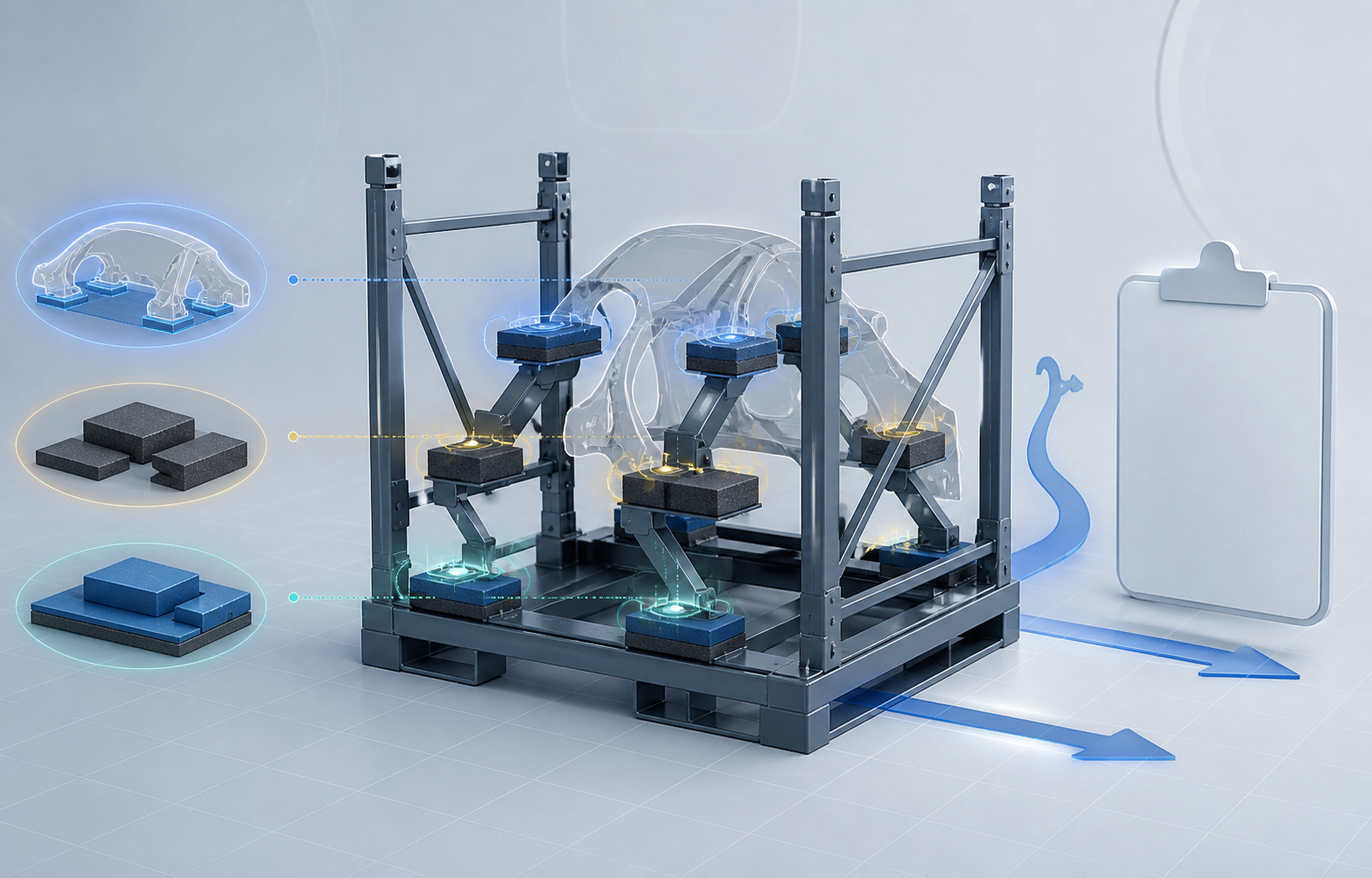
Mark the allowed transport contacts, station contacts and transfer grips on the same part model. They may be different surfaces. The important transition is the moment the component is released from one support and seated on the next: a part may need a controlled grip or intermediate support before its final station locators can carry it.
Specify the actual handling device where one is used, including the grip, approach and release. Do not assume that the part can be moved by hand because it can be reached. HSE's manual-handling guidance calls for considering the task, load, environment and individual capability, including posture, travel, frequency and equipment. Apply the site's assessment to the real operation rather than adopting a generic lifting threshold.
Where contacts change, use the automotive dunnage input guide to prepare the surface and support information. The carrier choice comes first; detailed pad or locator selection then follows the contacts and movements actually required.
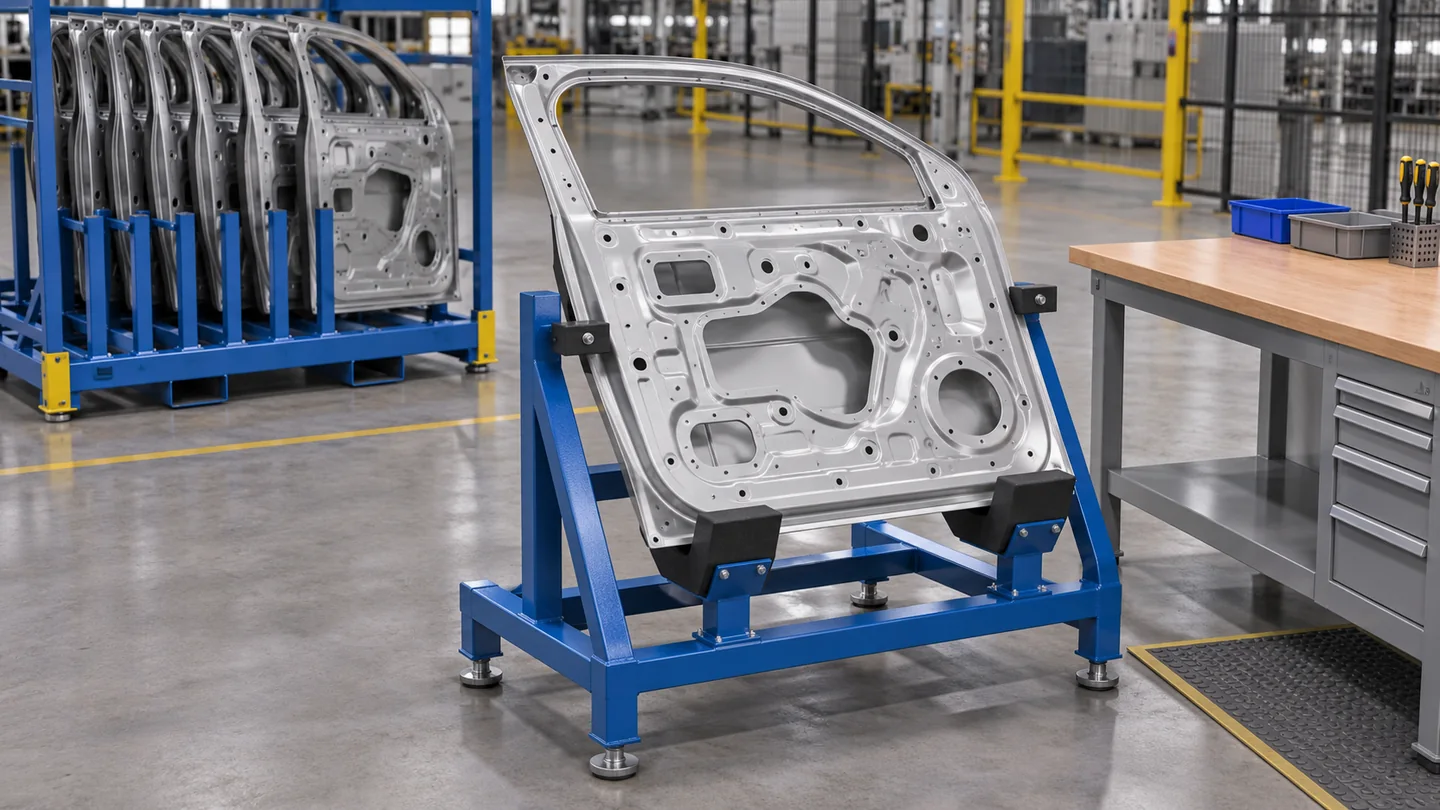
Draw the incoming, part-used and empty positions
A transfer area needs more than two rectangles labelled “rack.” Show where the incoming loaded rack waits, where the station carrier sits during transfer, what happens if it still contains parts, and where the emptied rack goes next. Draw the operator or device approach and keep the actual transfer path clear of the surrounding equipment.
The same exercise matters for direct delivery. A through rack must arrive at the station and later leave it. Identify which side receives it, whether the pick face remains accessible and how a part-used return is handled. Do not assume that an attractive picking position also provides the route needed by the incoming carrier.
The historical Automotive Logistics discussion of packaging and repacking describes the tension between transport packing and line-side needs, including the extra work introduced by repacking. Use that as context for evaluating the whole journey, not as a promise of savings from either option.
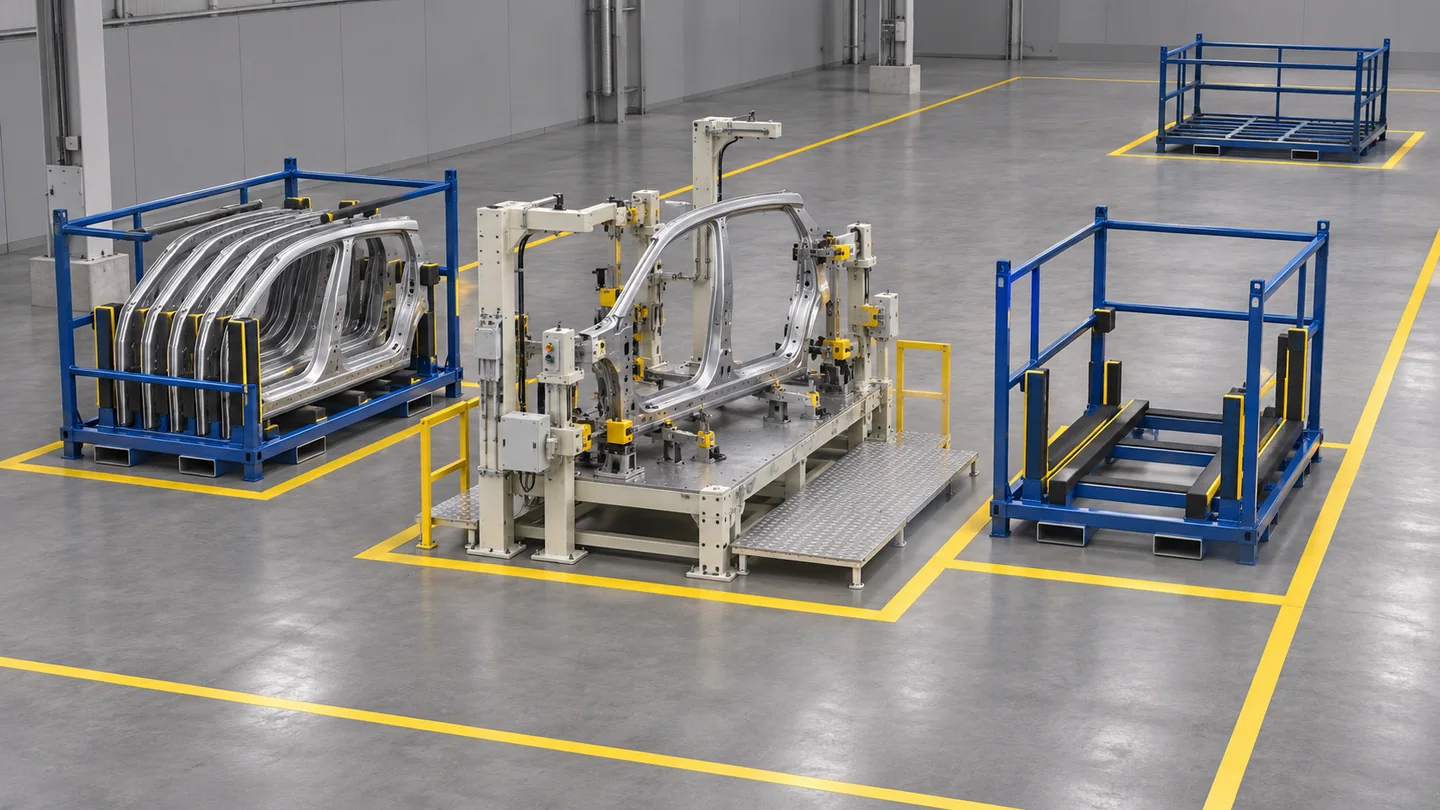
Five steps to a transport-to-line rack proposal
- Follow the part through both routes. Sketch supplier loading, vehicle transport, receiving, internal delivery, station picking and empty return. Mark each time the component leaves its support.
- Describe the two required poses. Show the retained transport orientation and the required station presentation, including permitted contact areas and the actual picking method.
- Compare the carrier arrangements. First test whether one rack can satisfy both routes. Compare a dedicated station carrier when footprint, access or presentation still conflicts.
- Draw any transfer as a complete task. Include release, grip, lift or movement, intermediate support if required, seating and tool withdrawal. Place incoming, part-used and empty carriers on the layout.
- Request a quote for the complete option. Send part information and both route sketches, then ask for the transport rack, station carrier and contact components included in each proposed arrangement.
- Can one carrier meet both route and picking needs?Yes → Compare direct delivery.No → Is a station conflict defined?
- Is a station conflict defined?Yes → Plan the transfer task.No → Observe the task first.
Try the complete sequence with representative parts and the intended device before freezing the layout. Include opening retention, removing a difficult position, placing the next part, withdrawing the device and moving the empty carrier. If the station follows a build order, the rack position and sequence guide helps define the positions without changing this carrier decision into a general sequencing article.
Ask for the equipment included in each option
Compare like-for-like scope: transport frame, part supports, retention, station carrier where needed, and the proposed handling interfaces. Describe each route's equipment and the required part pose. Keep the transfer device or station work outside the rack supplier's scope clearly identified in the purchasing request, so it is obtained from the appropriate supplier rather than overlooked.
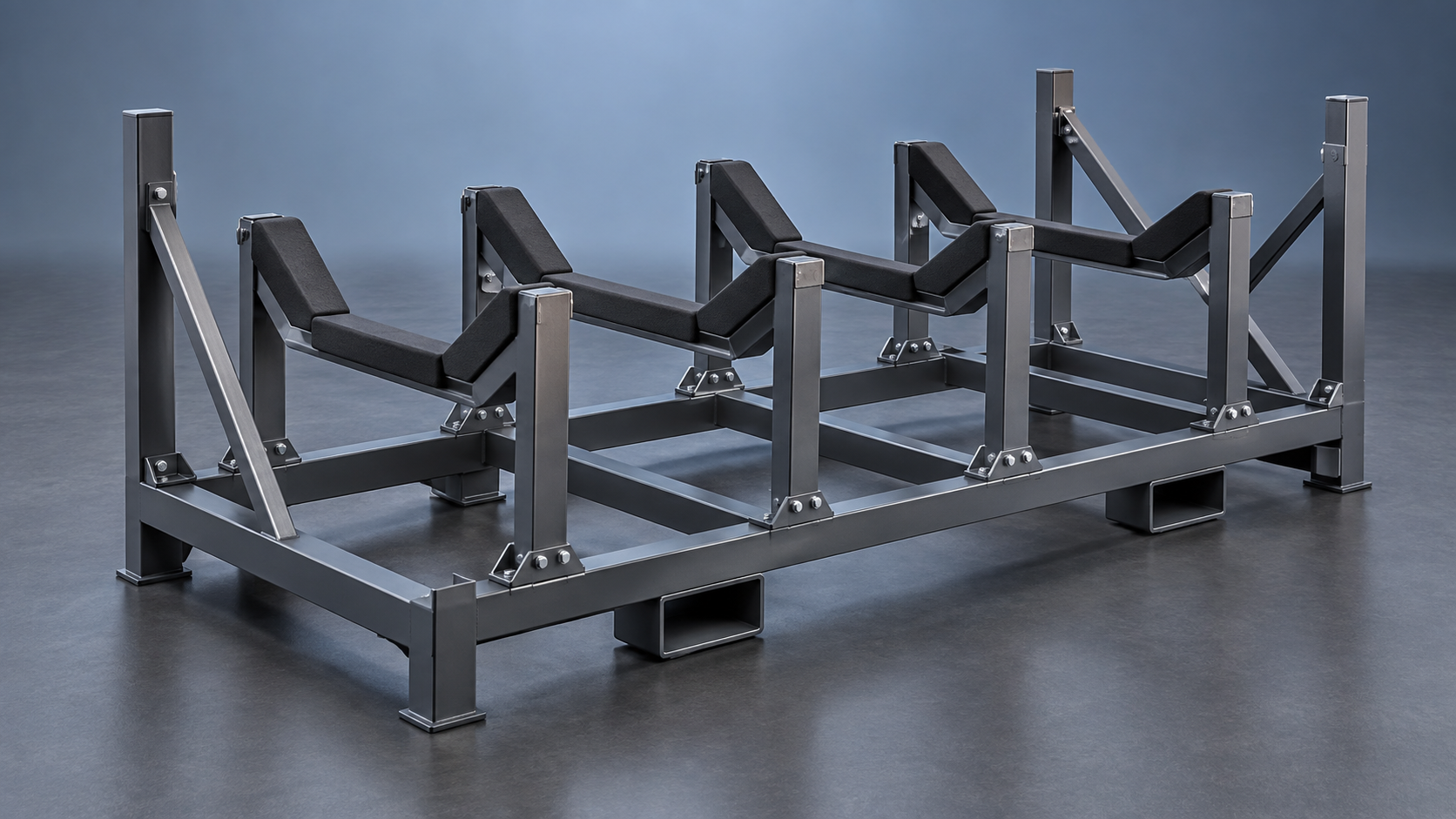
HAOFU develops fixed, stackable, folding and mobile automotive rack configurations from part and handling inputs. Send a photo and short description of the transport and station tasks to begin. Add CAD, allowed contacts, both route sketches, the transfer method if needed, quantity and destination for a developed proposal. The result should show how the component is supported in every selected carrier and how it enters and leaves each one.
Explore automotive parts racks
Send your part and transport-to-line requirement — photos and a short explanation are enough for first contact.
Frequently Asked Questions
- When should one automotive rack go all the way to the line?
- Keep one carrier under consideration when its transport retention, footprint, station access and part presentation can work together. Check the least accessible part and the returning condition, rather than choosing the option only because it removes a transfer.
- When is a separate station carrier worth comparing?
- Compare it when transport and station requirements genuinely conflict, such as an outer transport frame that cannot fit at the station or a required picking pose that cannot be provided from the shipping arrangement. Include the transfer task, extra support set and carrier positions in the comparison.
- Does avoiding a transfer automatically mean lower total cost?
- No. The same carrier still needs to meet both routes and the station task. Compare the actual rack configuration, handling work, occupied positions, return movements and maintenance requirements; use your own operation and supplier quotations for costs.
- Can transport and station supports touch different part surfaces?
- Only where the part's approved contact map permits it. Show both support sets and the grip used between them. Pay particular attention to the moment the part leaves one support and is seated on the next.
- Is this the same as deciding how often to replenish the line?
- No. Replenishment sets when material arrives and what supply unit is exchanged. This choice establishes whether the component stays on one part-specific carrier from transport to picking or is reseated on another carrier between those stages.
- What should I send for a transport-to-line rack proposal?
- Start with a part photo and a short description of the two routes. Add part CAD, restricted surfaces, transport and station poses, handling equipment, transfer method if any, station layout, quantity and destination as they become available.