One Automotive Rack for Several Part Variants—or Dedicated Positions?

Use a shared rack position only when every approved variant fits the same safe contact pattern, loading motion and identification method. If the outer frame can stay common but locator geometry differs, use divided bays or controlled change parts. Choose dedicated positions when variants have different support zones, surface protection, centre of gravity, loading access or line-side identity. Send the supplier every part revision, left/right status, permitted mix, contact map, pack quantity and changeover task—not one ‘largest’ sample.
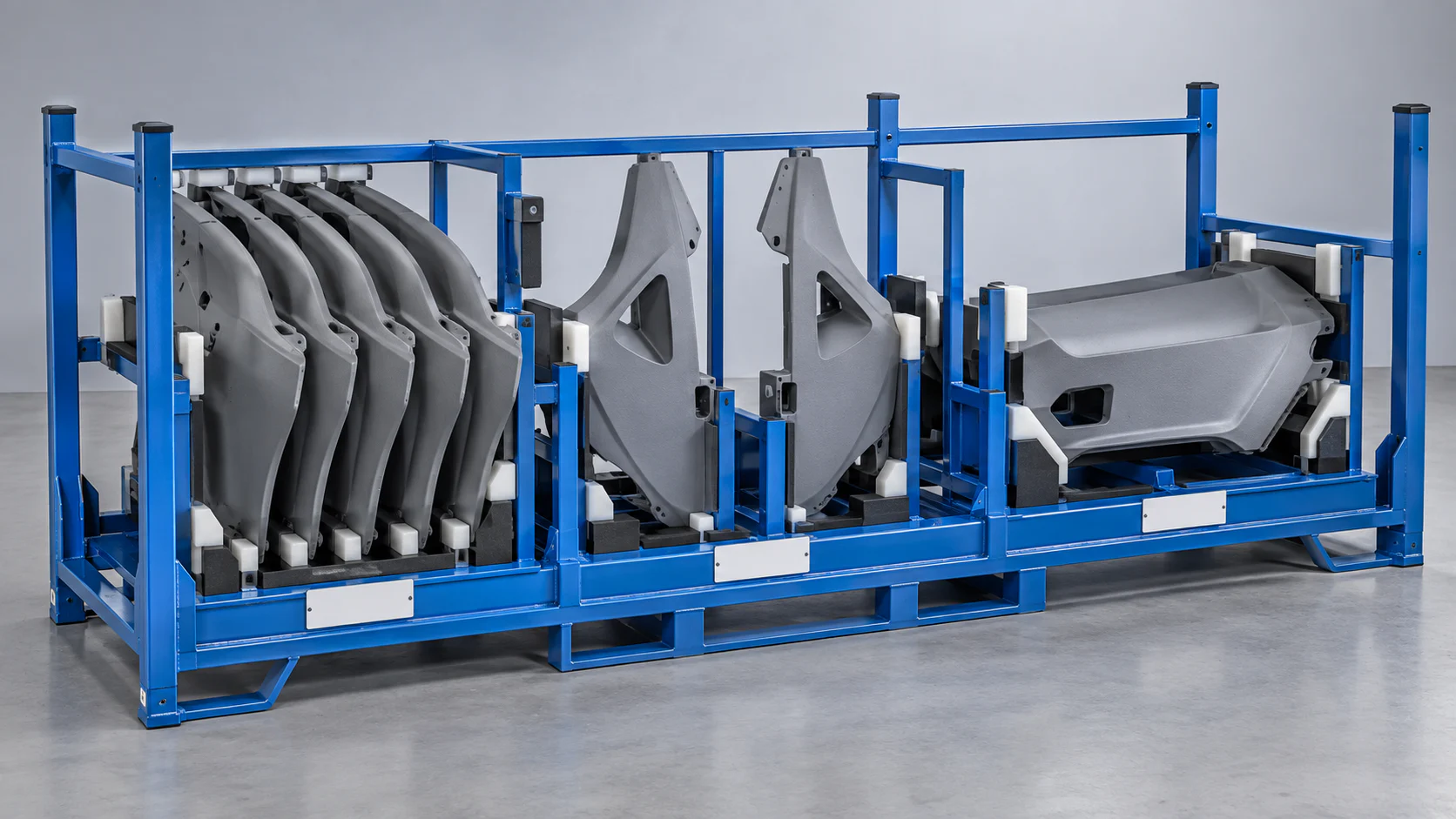
Do not decide that several automotive parts can share a rack just because their outside dimensions look similar. Overlay every approved variant, including left/right parts, and compare support zones, no-contact surfaces, centre-of-gravity information, loading motion and line-side identity. Use one adaptable position when those interfaces genuinely match. Use separate bays or controlled change parts when a common frame is practical but the locators differ. Use dedicated positions when the wrong variant can sit insecurely, be misidentified or block the intended pick. Give the rack supplier the complete variant family and every permitted mix before concept design.
This is a position-architecture decision, not a mixed-shipment shortcut. A current KTPconTeyor multi-variant case shows that a common rack can work when the largest envelope and variant-specific interfaces are deliberately designed together. Morrison Industries emphasizes part-specific dunnage, contact points and presentation, while Southern Perfection connects rack and dunnage design to the actual part and line-side flow. The missing buyer question is not “Can a supplier build a mixed rack?” but “Which differences must the rack make impossible to overlook?”
Choose shared, divided or dedicated positions
| Position format | Use it when | Key risk to check |
|---|---|---|
| Shared adaptable position | Variants share approved support and restraint zones, and one loading motion works for all. | A smaller or mirrored part can enter but not locate correctly. |
| Divided family rack | A common outer frame suits the route, while each variant needs a distinct bay, insert or key. | The operator can load a correct part into the wrong bay. |
| Controlled change parts | Variants run in planned batches and locator modules can be exchanged away from the live loading task. | Wrong or incomplete change parts remain installed. |
| Dedicated positions or racks | Contact, protection, centre of gravity, handling or line-side identity differs materially. | Extra fleet types and space are justified by clearer operation. |
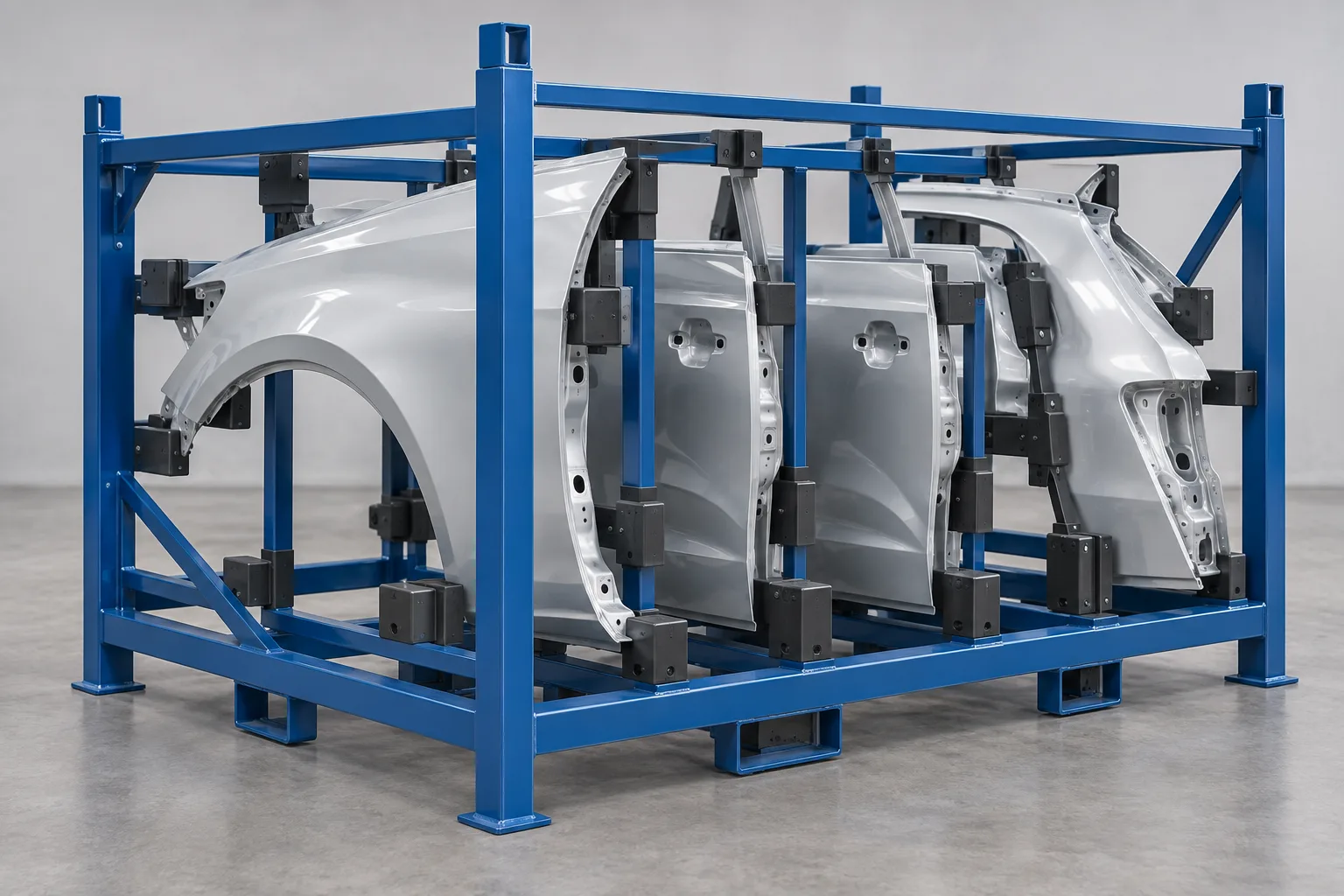
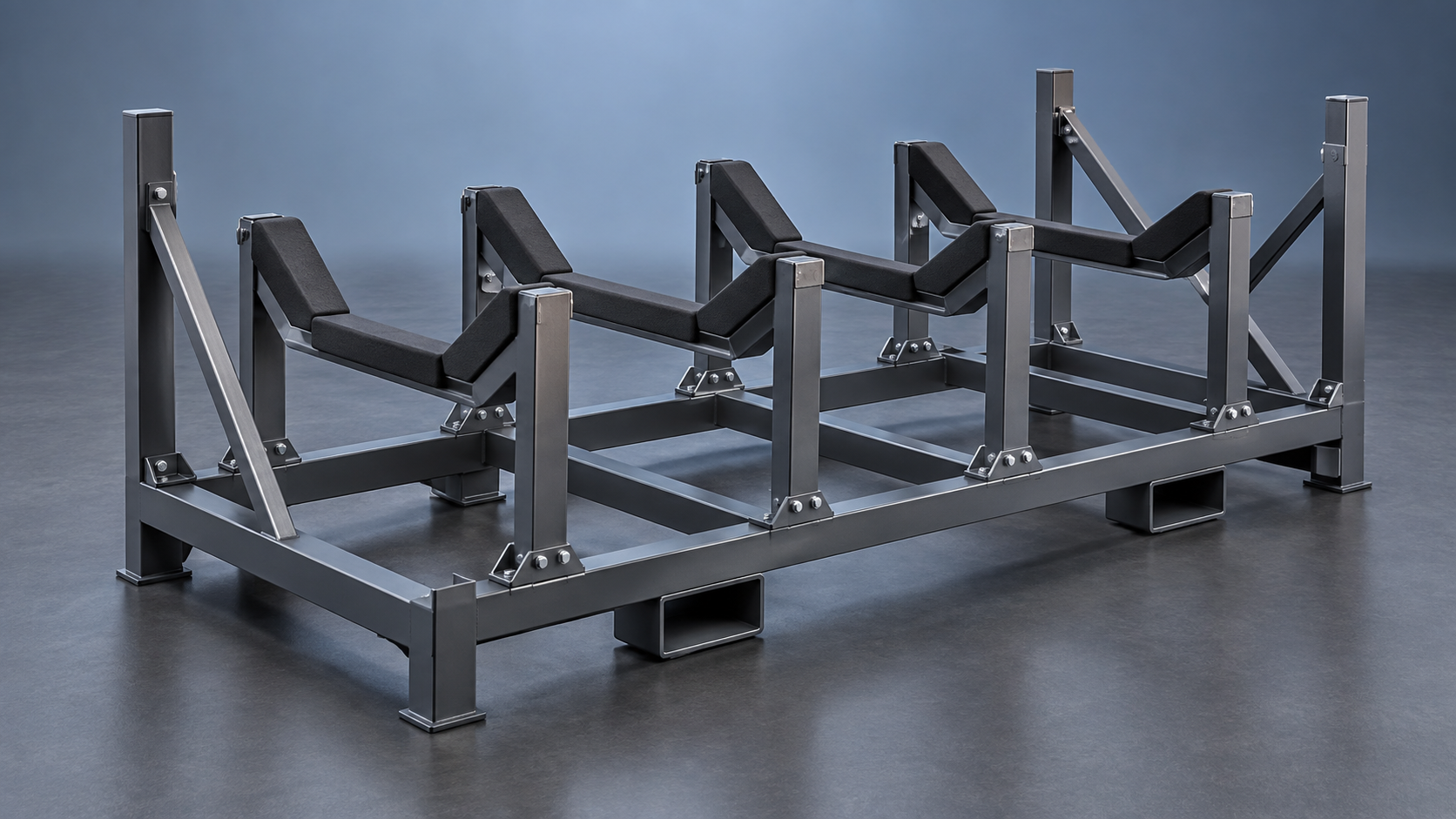
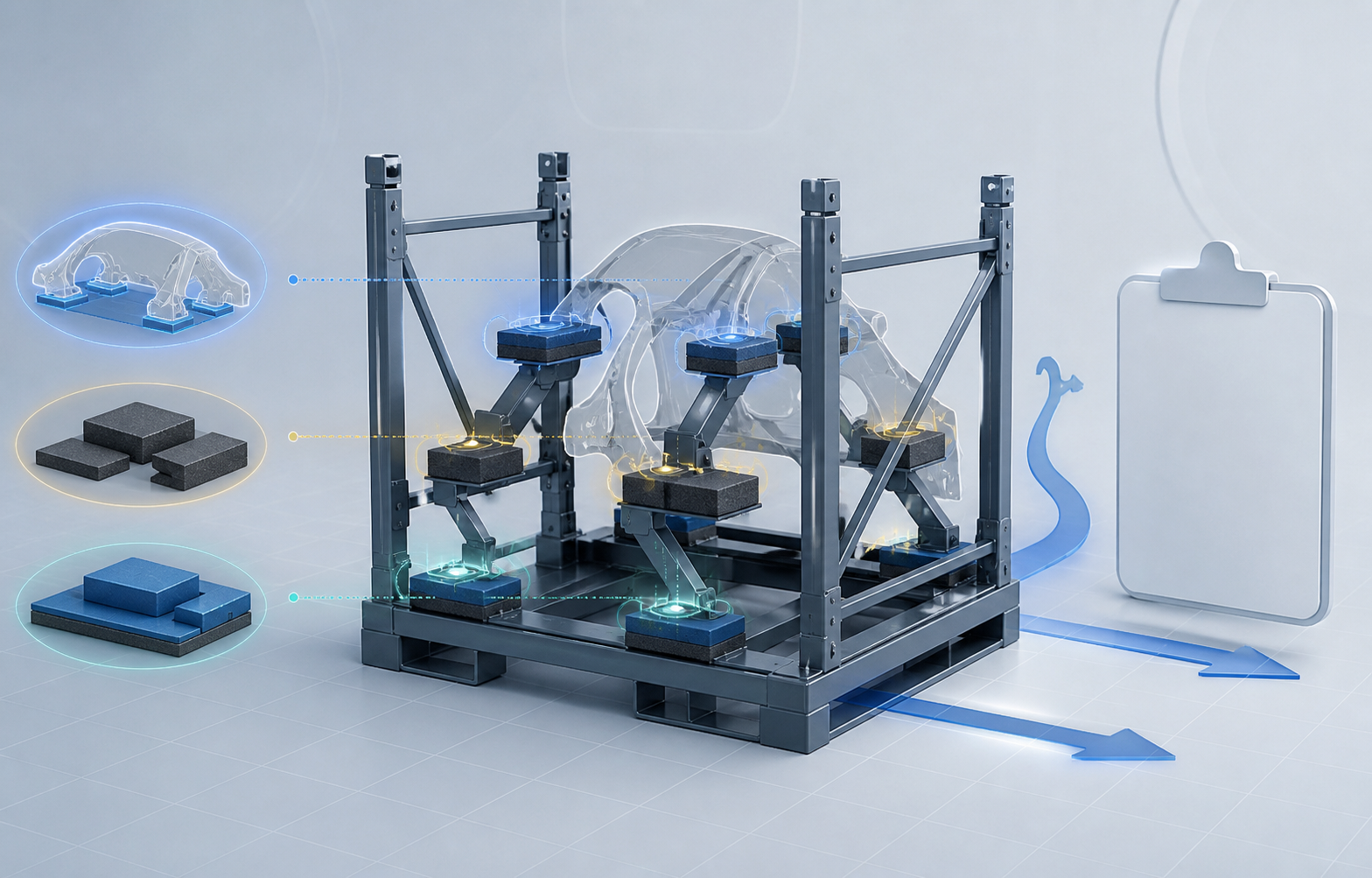
Useful only when related variants share a safe contact pattern and loading motion, with clear keying.
Use separate bays or change parts when variants can share the frame but need distinct interfaces.
Choose fixed positions when geometry, motion, protection or line-side identity differs materially.
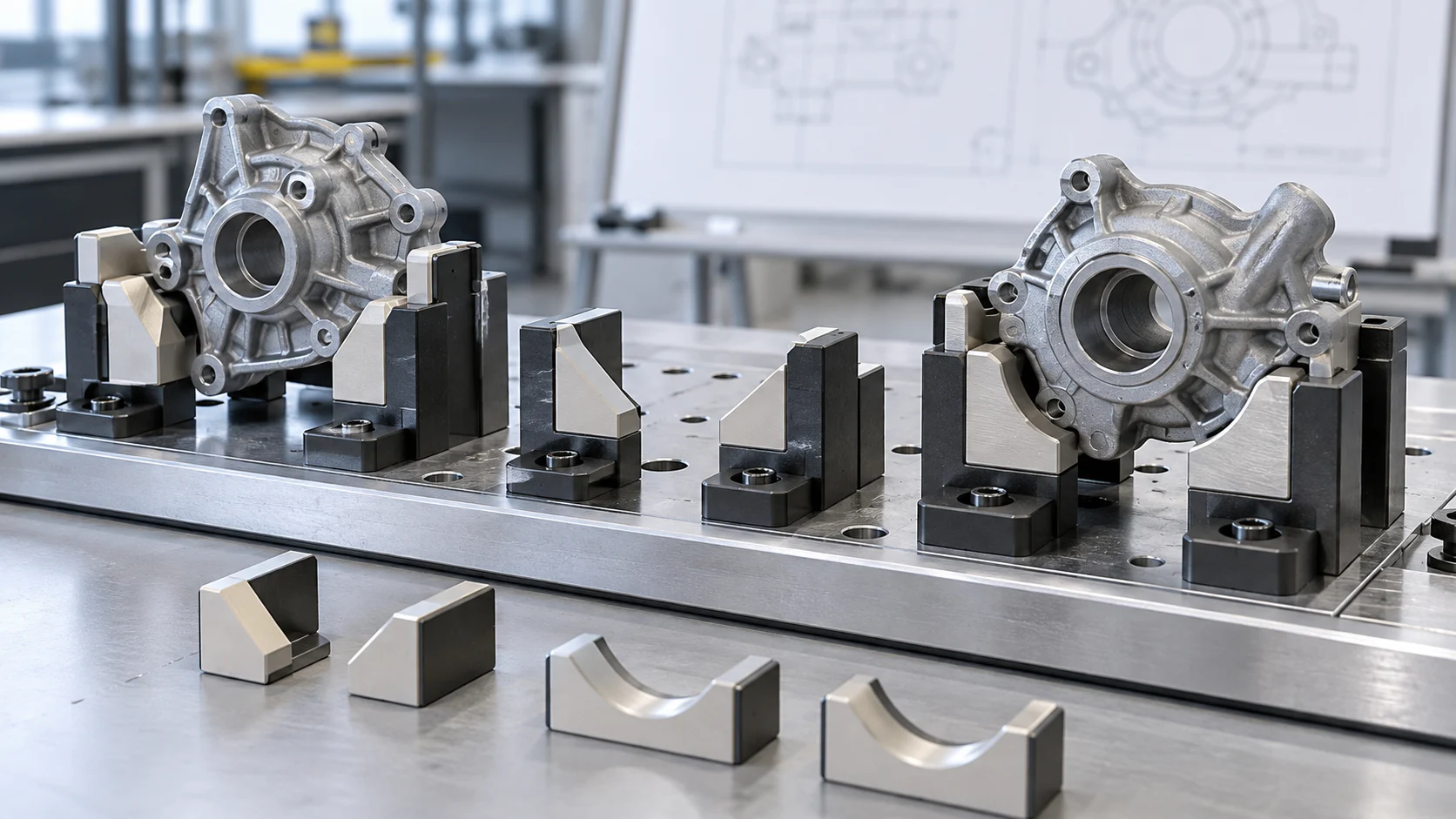
Overlay more than the outer dimensions
Start with controlled CAD or an agreed physical sample for every variant. Overlay the full part envelope, but also mark the permitted support and restraint regions, cosmetic faces, fragile features, grip points and areas needed by a robot or operator. Add mass and centre-of-gravity information from the responsible part owner. A common nest is credible only when the interface—not merely the bounding box—works across the family.
For left/right parts, test the mirror condition explicitly. Symmetry can simplify an outer frame, yet ports, brackets, finished faces or loading grips may not mirror cleanly. A physical key, distinct locator pattern or divided bay is usually more useful than relying on a label alone. If the variants require change parts, make the installed state obvious and give every loose module a defined storage place outside the part path.
Separate rack sharing from shipment mixing
A rack may be capable of carrying several variants without allowing every shipment combination. Daimler Truck's December 2025 supplier packaging requirements, for example, call for one part number per production-parts container. Mercedes-Benz's valid-from-December-2024 MTC specification normally separates part numbers and only allows exceptions with unambiguous inners and identification. Those programme rules are not universal, but they show why a buyer must give the rack supplier the receiving rule and permitted mix instead of asking for “universal” dunnage.
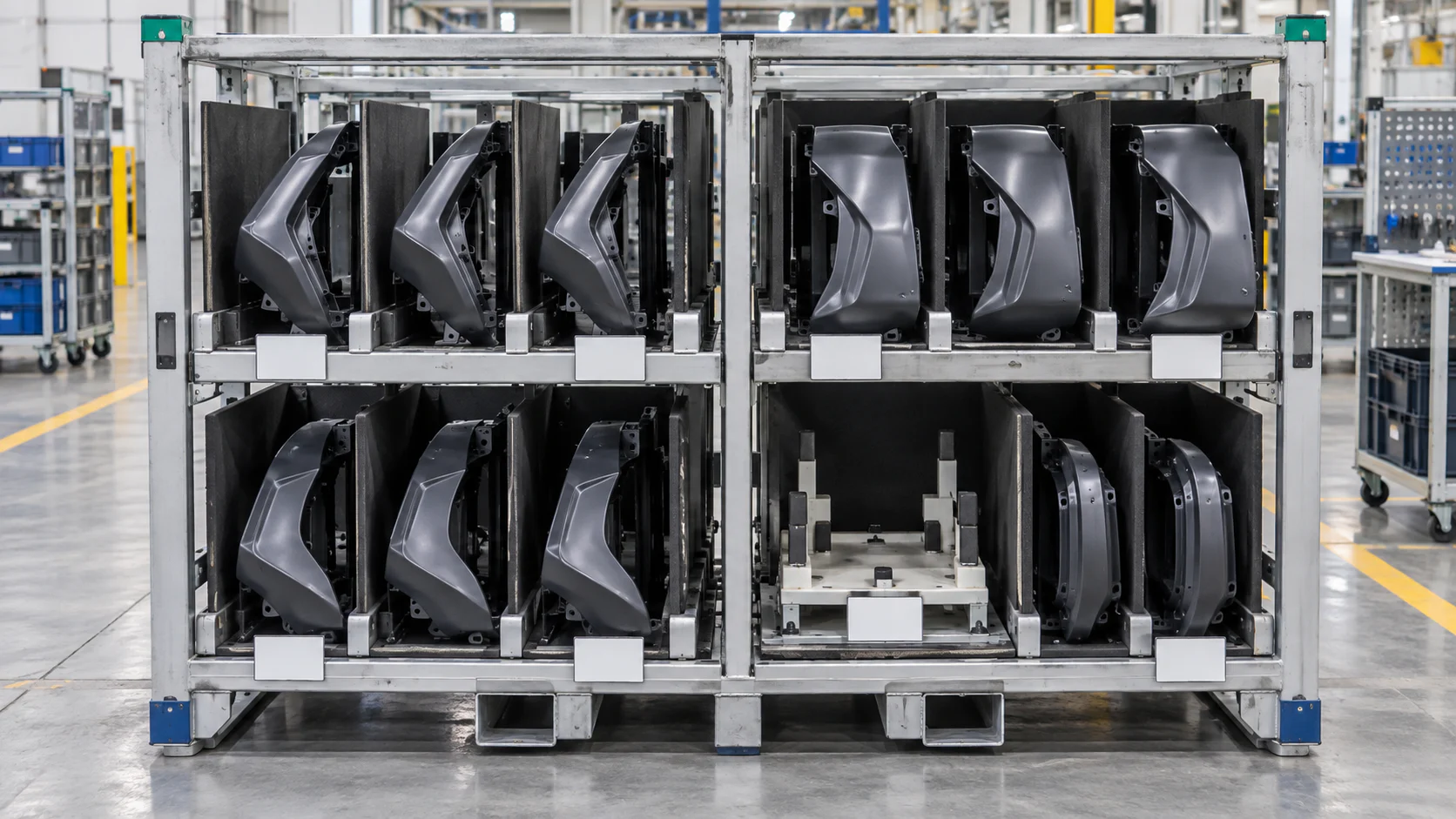
What should be fixed, adjustable or replaceable?
Keep an interface fixed when every approved variant uses it in the same way and fixed geometry makes loading clearer. Use an adjustable feature only when its positions can be positively located, inspected and protected from unintended movement. Use replaceable locator modules when the variant family is stable enough to control the modules, the change task happens at a sensible station and spares can be identified. If the changeover adds searching, loose hardware or ambiguous settings to every cycle, divided or dedicated positions may be the better purchase.
- Overlay every variantCompare contact zones, complete envelopes, centre-of-gravity information and grip points.
- Compare the operating taskCheck loading, picking, identification and replenishment by variant.
- Choose the position architectureSelect shared locators, divided bays or dedicated positions.
- Trial every allowed mixUse representative variants in the first, last and changeover conditions.
Five steps before approving a multi-variant rack
- Freeze the allowed family. List part numbers, revisions, left/right status, annual or launch mix and any combinations that must never share a load.
- Overlay the interfaces. Compare contact zones, no-contact faces, full envelope, mass properties, grip and insertion paths.
- Choose the architecture. Select shared adaptable locators, divided bays, controlled change parts or dedicated positions.
- Add mistake prevention. Use geometry, bay separation, visible position identity and a defined change-part home so the correct action is obvious.
- Trial the allowed combinations. Load and unload representative variants, including first/last positions, empty bays and the real changeover task.
What to send for a custom rack quotation
Send current CAD or sample information for every part variant; a variant matrix with left/right and revision status; mass and centre-of-gravity information; permitted contact and no-contact zones; quantity of each variant per rack; allowed mixed combinations; loading and unloading motion; operator, robot and line-side presentation; handling route; identification rule; quantity; and the sample-trial acceptance task. Related decisions are covered in the replaceable contact-pad guide, rack position-sequence guide and dunnage design guide.
Planning a family rack? Review custom automotive parts racks, then send the variant matrix, drawings and loading route for an engineering quotation.
Frequently Asked Questions
- Can several automotive part variants use one returnable rack?
- Yes, when every approved variant fits a defined support, restraint and loading interface. Compare the complete part family and the permitted mixes before choosing shared locators, divided bays or dedicated positions.
- Should left-hand and right-hand parts share the same rack position?
- Only when the mirrored parts use equivalent contact and handling interfaces and cannot be loaded incorrectly. If brackets, finished faces or grip points differ, separate or keyed positions are usually clearer.
- When are replaceable locator modules better than dedicated racks?
- They can suit planned batch changeovers when each module has a positive installed position, visible identity, storage location and practical change task. Dedicated positions may be better when changeover would add ambiguity or loose hardware.
- Does a multi-variant rack allow mixed part numbers in one shipment?
- Not automatically. The receiving programme decides whether part numbers may be mixed and how they must be separated and identified. Give that rule to the rack supplier before the layout is designed.
- How should a multi-variant automotive rack be trialled?
- Trial every approved variant and allowed combination, including left/right parts, first and last positions, empty bays and any locator changeover. Use the intended loading, unloading and line-side task.
- What should I send for a multi-variant rack quotation?
- Send CAD or sample information for every variant, revision and left/right status, contact restrictions, mass properties, parts per rack, allowed mixes, loading motion, identification method, route, quantity and sample-trial task.