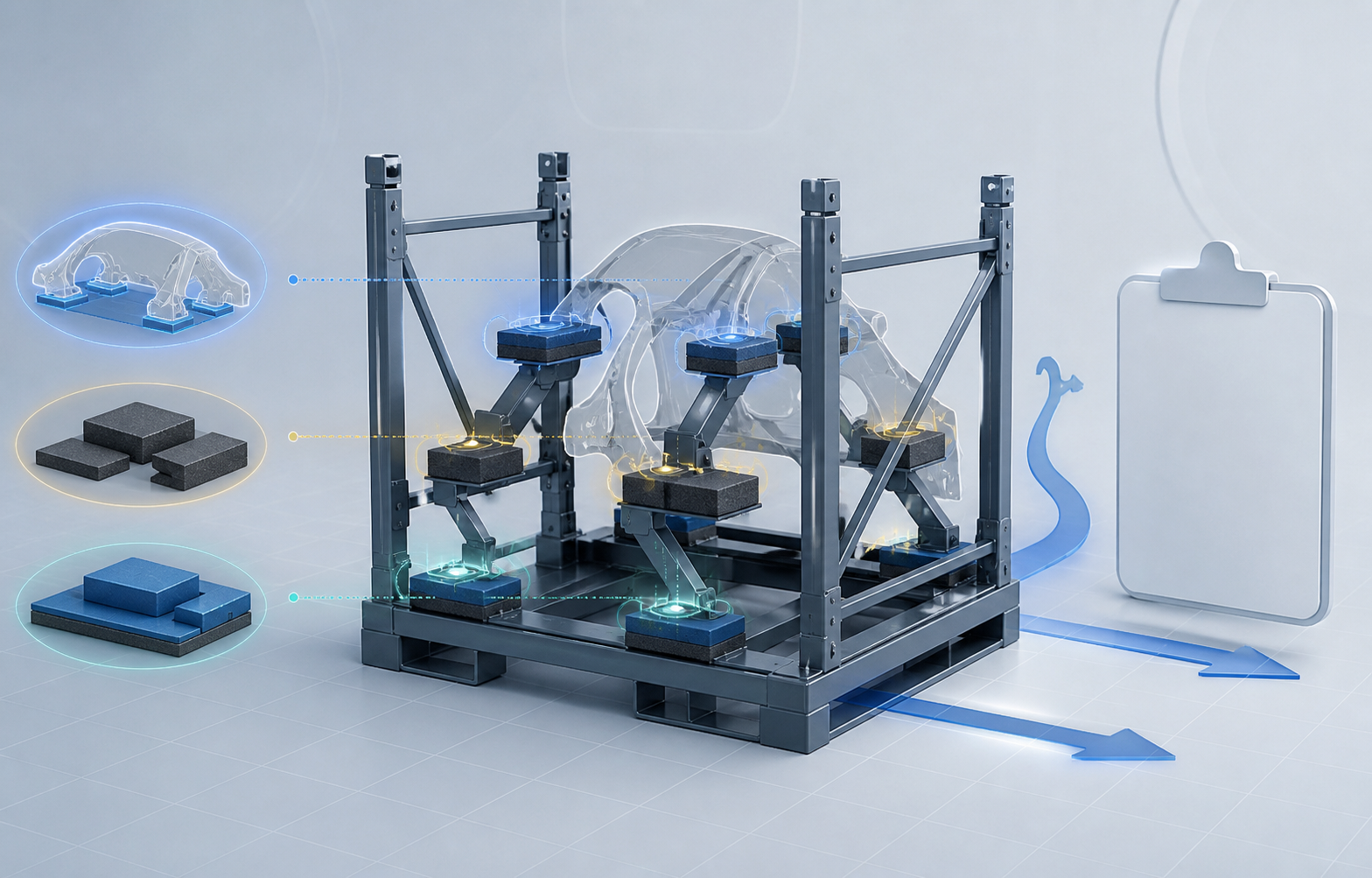
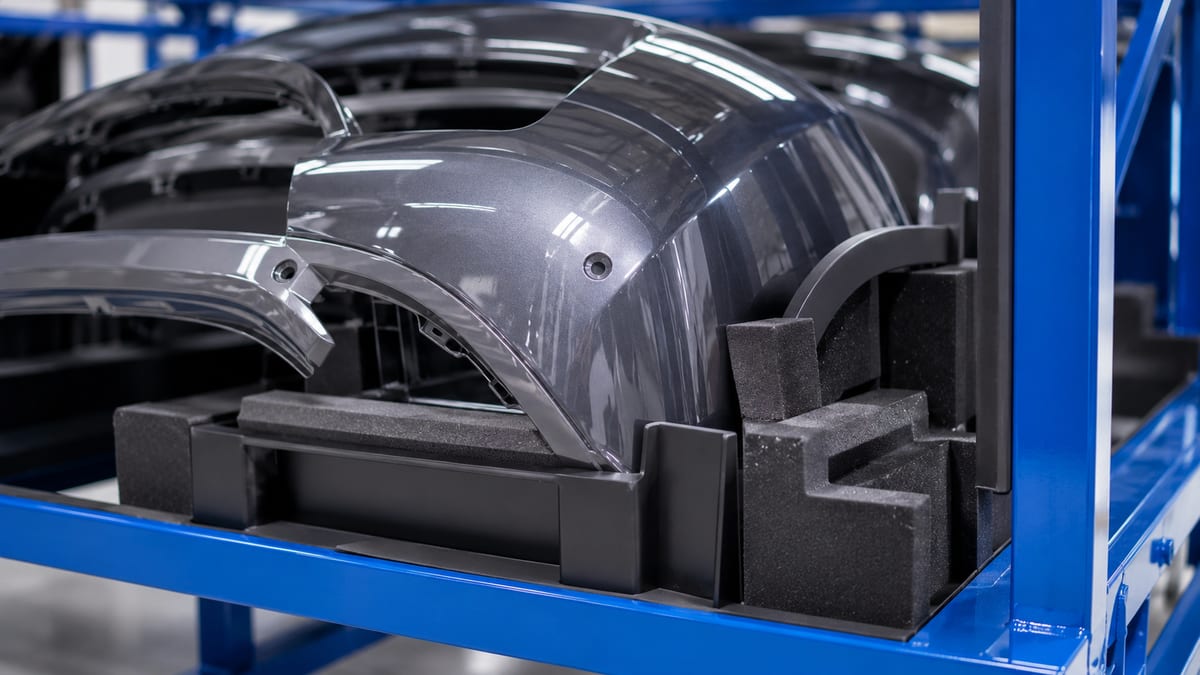
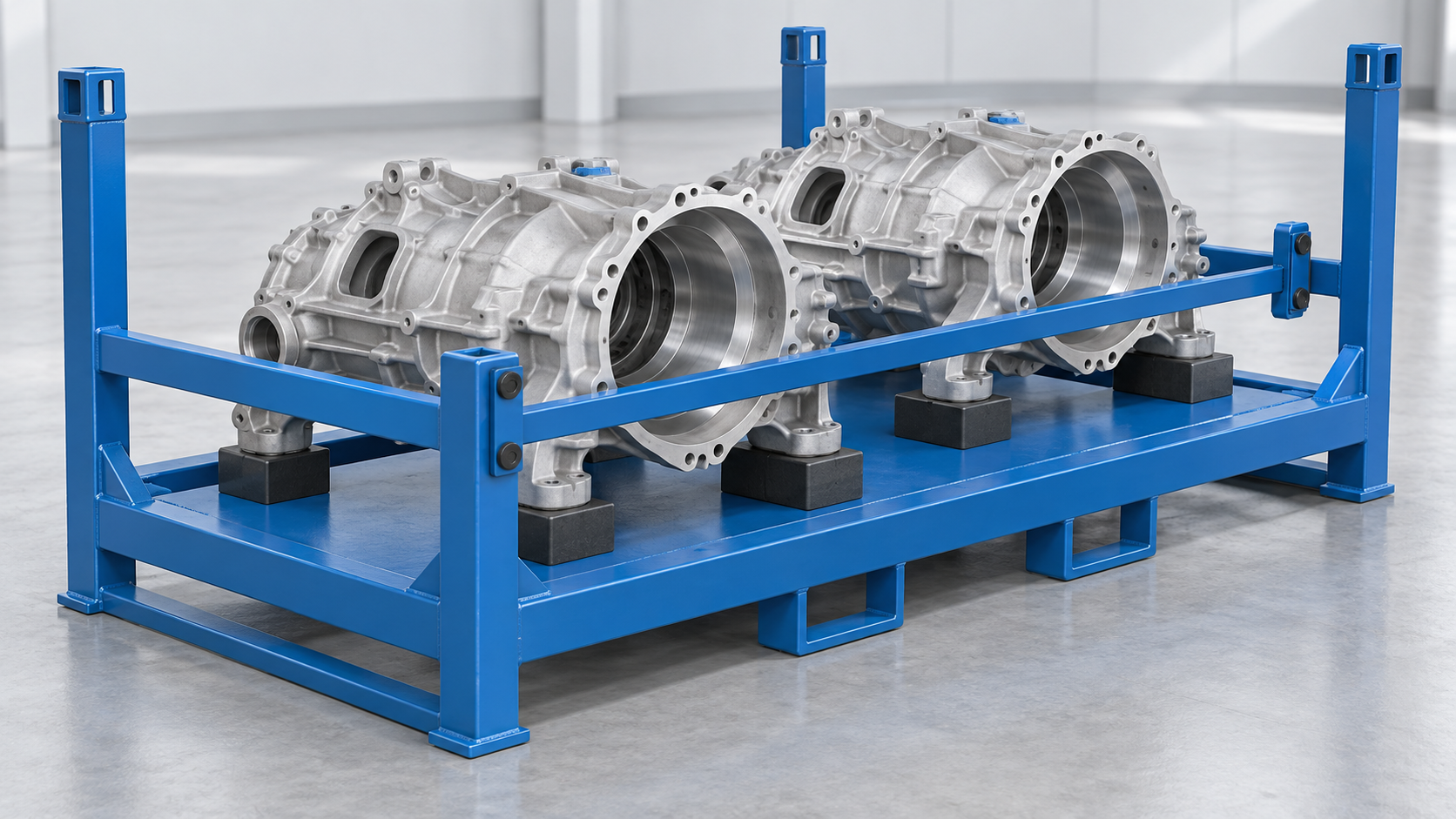
Replaceable Rack Contact Pads for Painted Automotive Parts

For painted or otherwise surface-sensitive automotive parts, select the rack contact together with its attachment and replacement path. A bonded layer suits some continuous faces; a captured strip or bolted pad can isolate individual service points if there is clearance to remove it. Give the supplier the permitted contact zones, part silhouette, finish, loading motion and service-access envelope, then trial one pad changeout with a representative part.
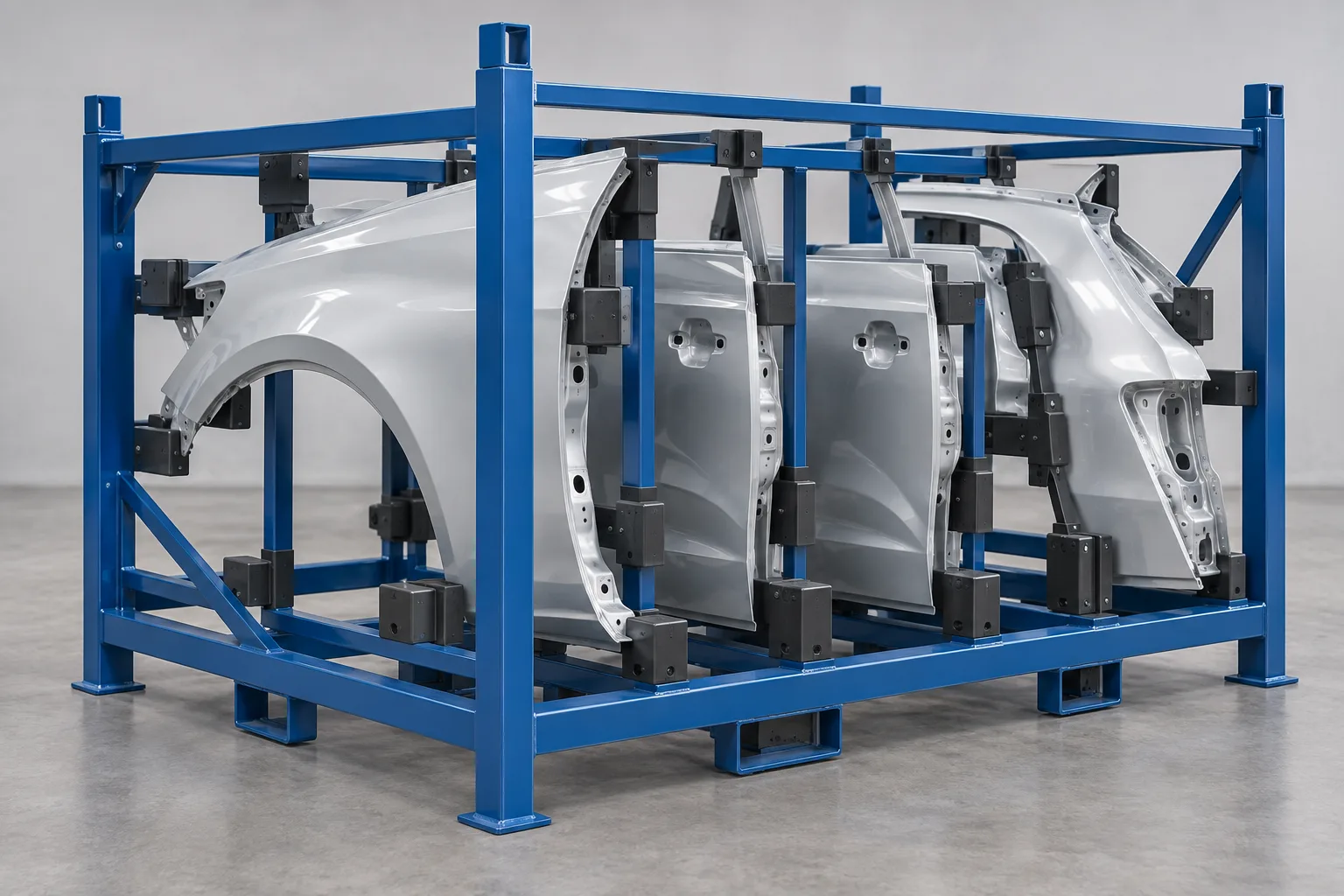
For a painted automotive part, choose a rack contact by asking two questions: where may the part touch, and how will that contact be replaced when it wears? A bonded strip can cover a continuous rail, while a captured strip or bolted pad may be easier to change at a discrete support point—provided a hand, tool or slide-out path actually fits. Draw the part silhouette and the service path on the same rack view. Before ordering a fleet, load and remove a representative part, then change one contact without disturbing its neighboring supports.
Consider a painted body panel carried on several supports. One high-wear location near the loading edge may need frequent attention while the other contacts remain sound. Replacing the whole protective layer may be unnecessary; a small replaceable contact is useful only if its fasteners and spare can be reached once the rack is built. The Morrison automotive-rack overview shows how part geometry and surface sensitivity shape rack design. The buyer's additional decision is the future service motion at each contact.
Draw the contact and the changeout path together
Mark approved bearing faces and no-contact finish areas on a current part drawing or 3D view. Add the loaded orientation, the motion into and out of the rack, and the space left around each pad when adjacent parts are present. A pad that looks accessible on an empty frame may be trapped behind another support or beneath the part. Identify whether a worn pad can be changed at the workstation or only after the rack is emptied.
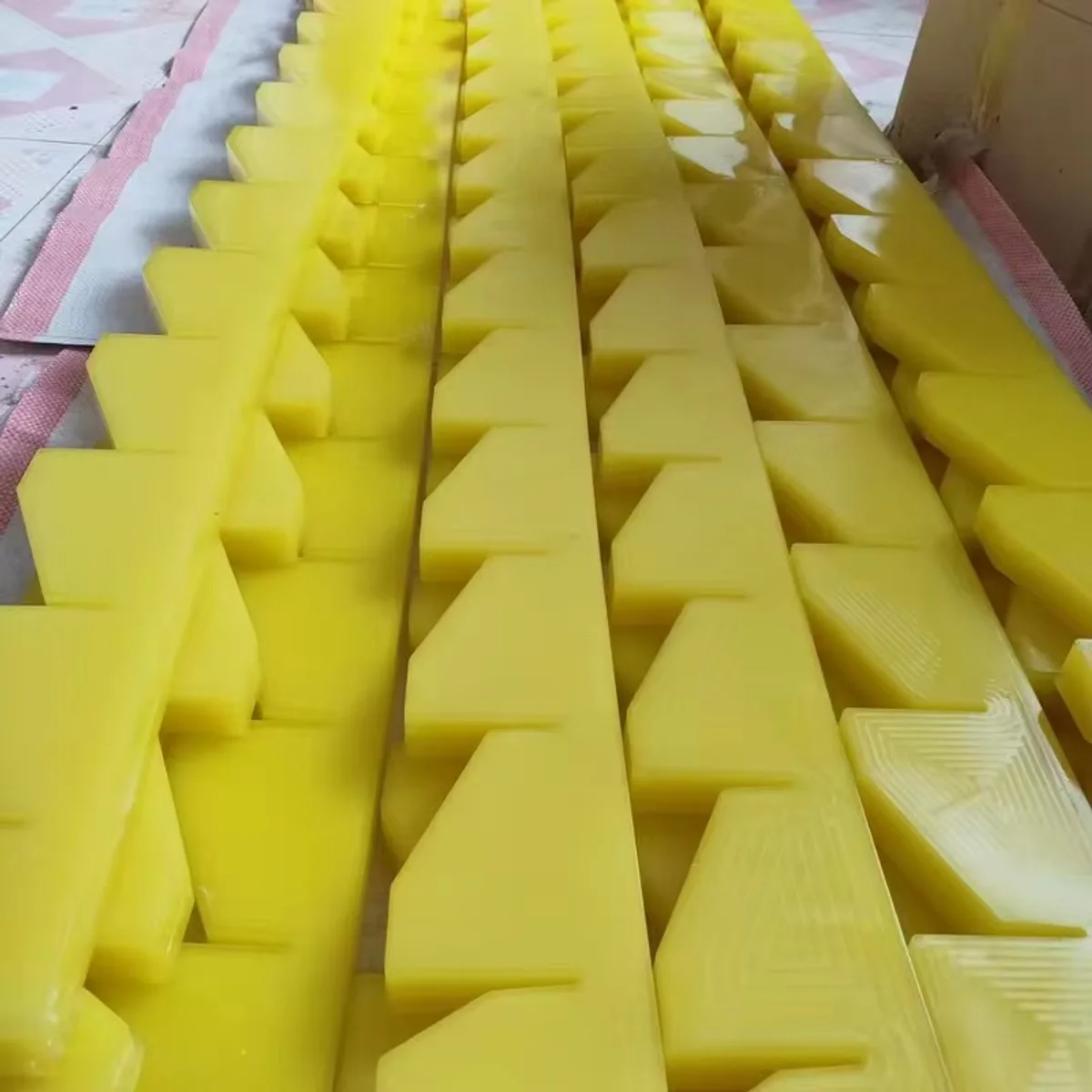
Compare attachment methods, not just pad materials
Continuous contact face; check stripping access and replacement process.
Shaped insert retained in a channel; check slide-out path, end stop and spare fit.
Discrete service point; check tool access and fastener clearance from the part.
Bonding is worth discussing for a long, uninterrupted contact face when the repair process can remove and renew the layer. A retained strip can suit a rail with a clear end to slide the spare into place. A bolted pad or shaped block can localize replacement at one support, but the bolt head, washer and tool sweep must remain away from the part. Compare each method with the actual finish, part movement and service access. EGA's bumper-rack example is a useful reminder to show the soft contact and mechanical holding detail together on the drawing.
| Send this | Why it changes the design | Drawing should show |
|---|---|---|
| Part CAD, revision, finish and approved bearing zones | Locates the contact without touching cosmetic or functional faces. | Contact footprint and part clearance. |
| Loading video or movement sketch | Shows rubbing, edge entry and where wear is likely. | Entry path and pad lead-in shape. |
| Rack density and neighboring parts | Determines whether a tool or spare fits at the worn position. | Service envelope with the rack loaded and empty. |
| Desired spare strategy | Separates a bonded repair from a strip or individual pad replacement. | Retainer, fastener or bond detail and spare identifier. |
| Handling and cleaning conditions | Affects exposed edges, retention and maintenance access. | Contact location and practical inspection points. |
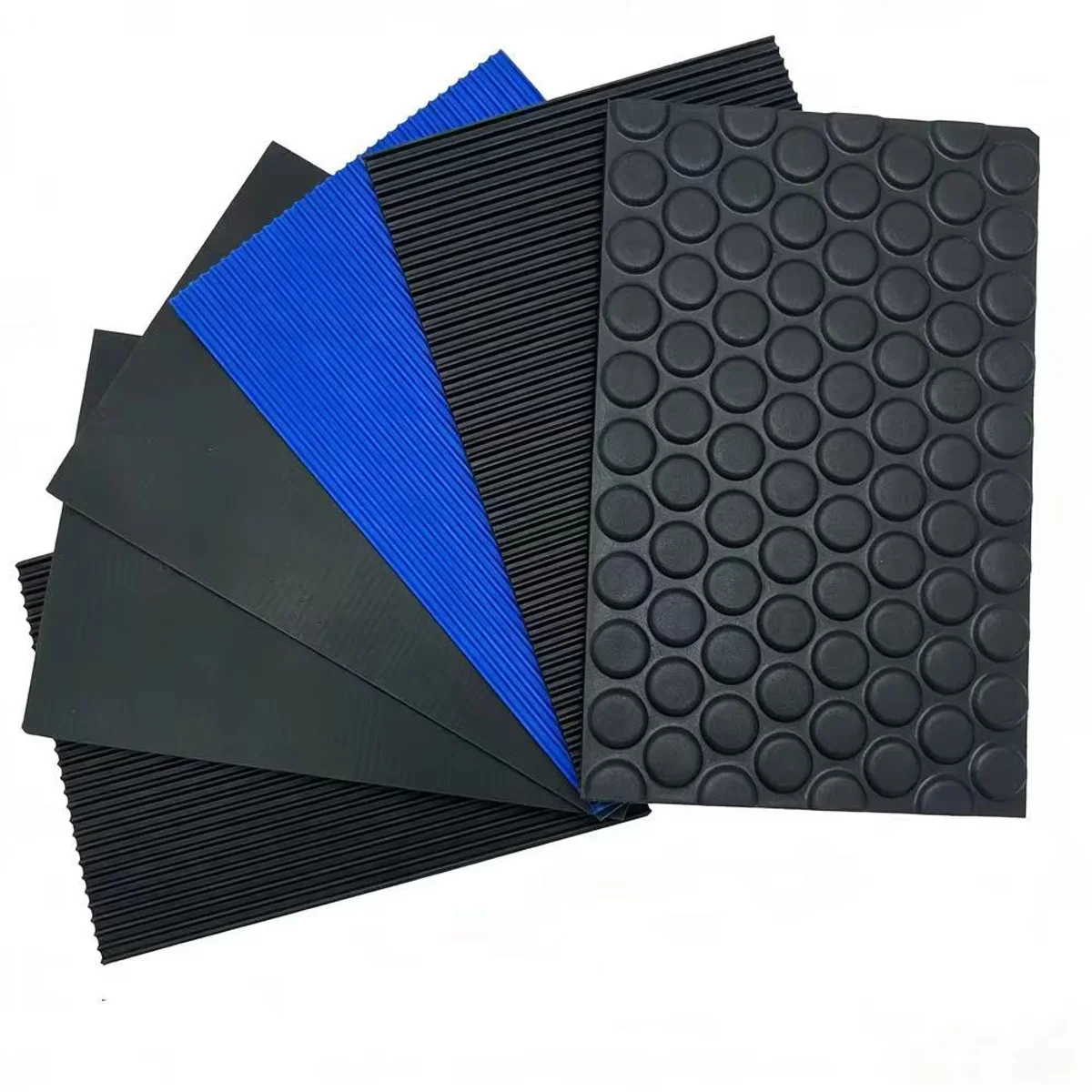
Trial the spare before approving the rack layout
- Mark permitted facesUse the part drawing and finish information.
- Locate worn zonesContinuous contact or discrete points?
- Select attachmentCompare bond, retainer and accessible bolts.
- Trial a changeoutCheck tool access, spare fit and part removal.
- Mark the real part. Send the latest CAD or sample with permitted and forbidden contact faces, finish and loaded orientation.
- Identify the service point. Show the loading edge, wear-prone supports and nearby rails or neighboring parts.
- Compare attachment layouts. Ask for a drawing of the contact plus its bond, retainer or accessible fastener and spare-removal direction.
- Change a contact on a sample rack. Use the intended tool and spare; then load and remove the representative part to check fit and contact motion.
- Release a usable spare definition. Keep pad geometry and attachment detail with the rack drawing so a replacement fits the same position.
Need to choose the contact material first? Use the painted-part protection guide. The dunnage approval guide helps prepare the part/packing sample, while the casting support guide addresses load-bearing points on a machined component.
Request a serviceable automotive rack layout
HAOFU develops custom automotive parts racks and contact components from part drawings and handling tasks. Send the part revision, sample or CAD, marked contact zones, finish, loading motion, rack quantity, service-access sketch and preferred spare approach through the automotive rack engineering RFQ. Ask for the pad attachment and changeout motion on the proposal drawing—not merely a material name.
Frequently Asked Questions
- Should a painted part rack use a bonded strip or a bolted pad?
- Use the part's approved contact area and expected wear location to compare them. A continuous face may favor a bonded layer; a discrete service point may favor a retained or bolted piece if the spare and tool can reach it.
- Can I replace a pad without emptying the rack?
- Only if the drawing leaves a clear spare-removal and tool path with adjacent parts present. Show both loaded and empty service access and trial the proposed changeout.
- What part data helps position a rack contact?
- Send current CAD or a sample, revision, finish, permitted bearing faces, no-contact faces, loaded orientation and the motion used to put the part into the rack.
- Does a soft pad guarantee a painted surface will not mark?
- No. Contact shape, movement and the actual finish matter. Trial the proposed part and pad together under the planned loading and removal motion.
- What should I ask a custom rack supplier to show?
- Request the pad footprint, attachment detail, spare identifier, removal direction and tool clearance on the rack drawing, then check a sample changeout.