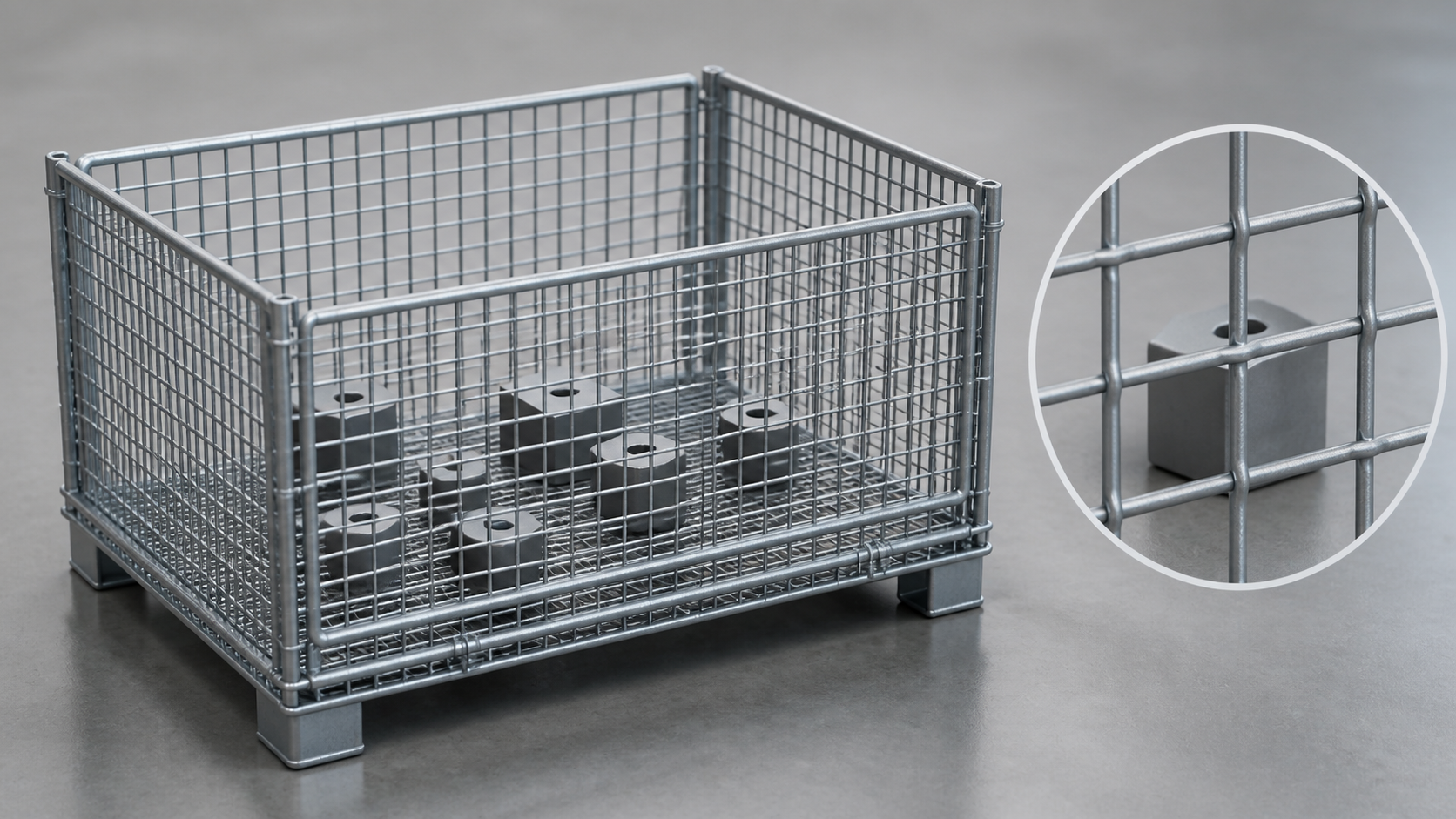
Picking Small Parts from a Deep Wire Mesh Container

For frequent small-parts picking from a deep wire mesh container, test the last-piece pick—not only a full container. If the worker must reach to the rear bottom, compare loose fill with shallow removable trays or a divided insert that can be brought to the workstation. Specify tray grip, filled mass, part retention, refill method and how the insert travels inside the outer container.
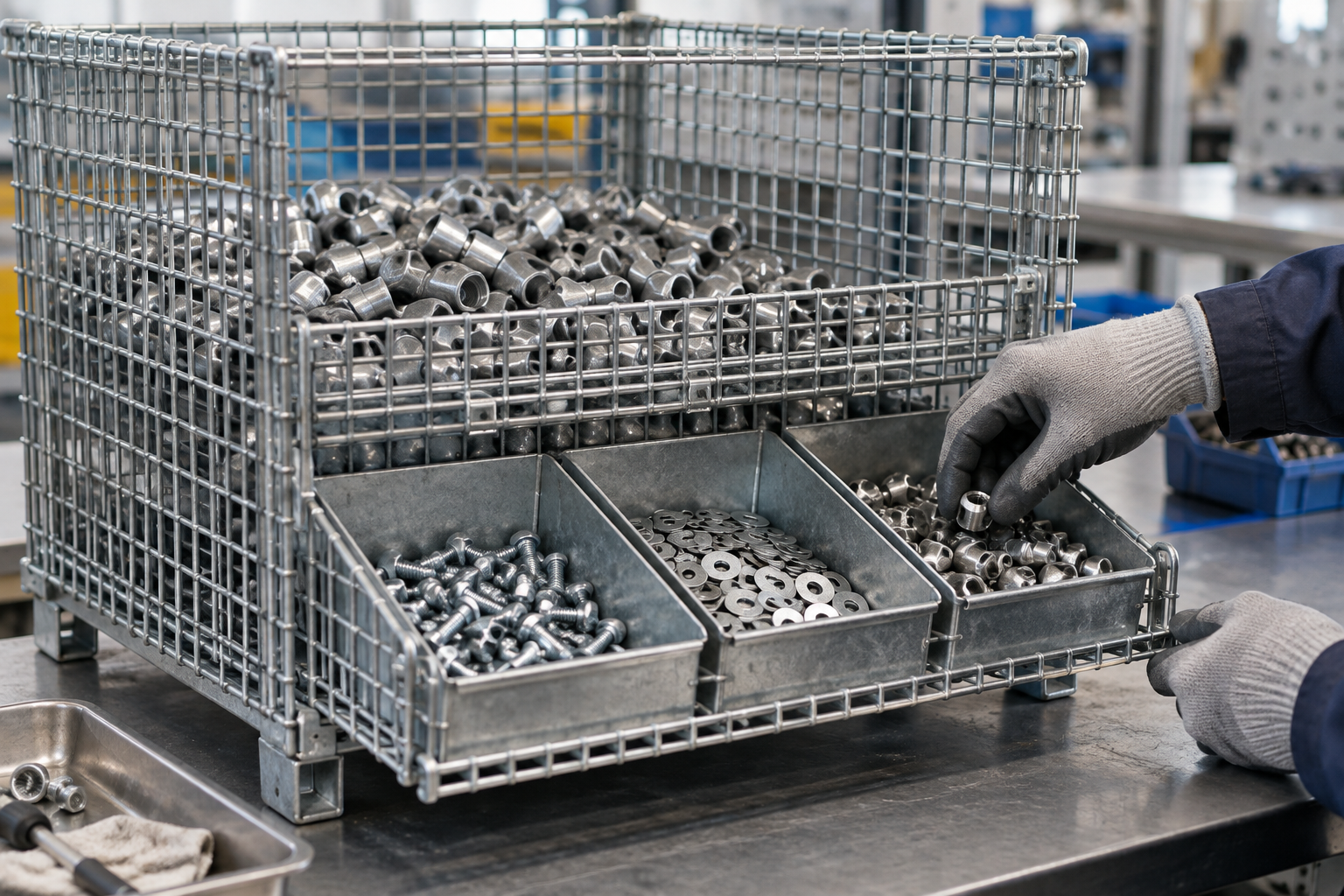
For repeated small-parts picking from a deep wire mesh container, check the last piece at the rear bottom before choosing the container's interior. A front gate can remove the front-wall obstacle, but it cannot bring a distant part toward the operator. If the worker still has to lean into the container, compare loose fill with a shallow removable tray or divided insert that can be lifted to the work surface. Use the actual smallest part, fill range, pick frequency and workstation height in the trial; the right choice may differ for bulk transfer and individual assembly picks.
The issue is not whether mesh is visible. It is where a hand must travel when only a few parts remain. The UK HSE's handling-aids guidance gives an order-picking example in which bringing goods forward reduces repeated reaching. Apply that principle to the proposed work task, not as a universal container dimension.
Start with the last-piece pick
Watch an operator take the first item, then the final few items, from a container at the planned station. Record the hand entry side, the farthest part position, whether the operator can see and grasp that part, and where the part goes next. Repeat with a representative load rather than an empty cage. If the container is on a trolley, include the parked trolley height; if it is stacked, identify the permitted pick state. A photograph of a full container rarely reveals the worst reach.
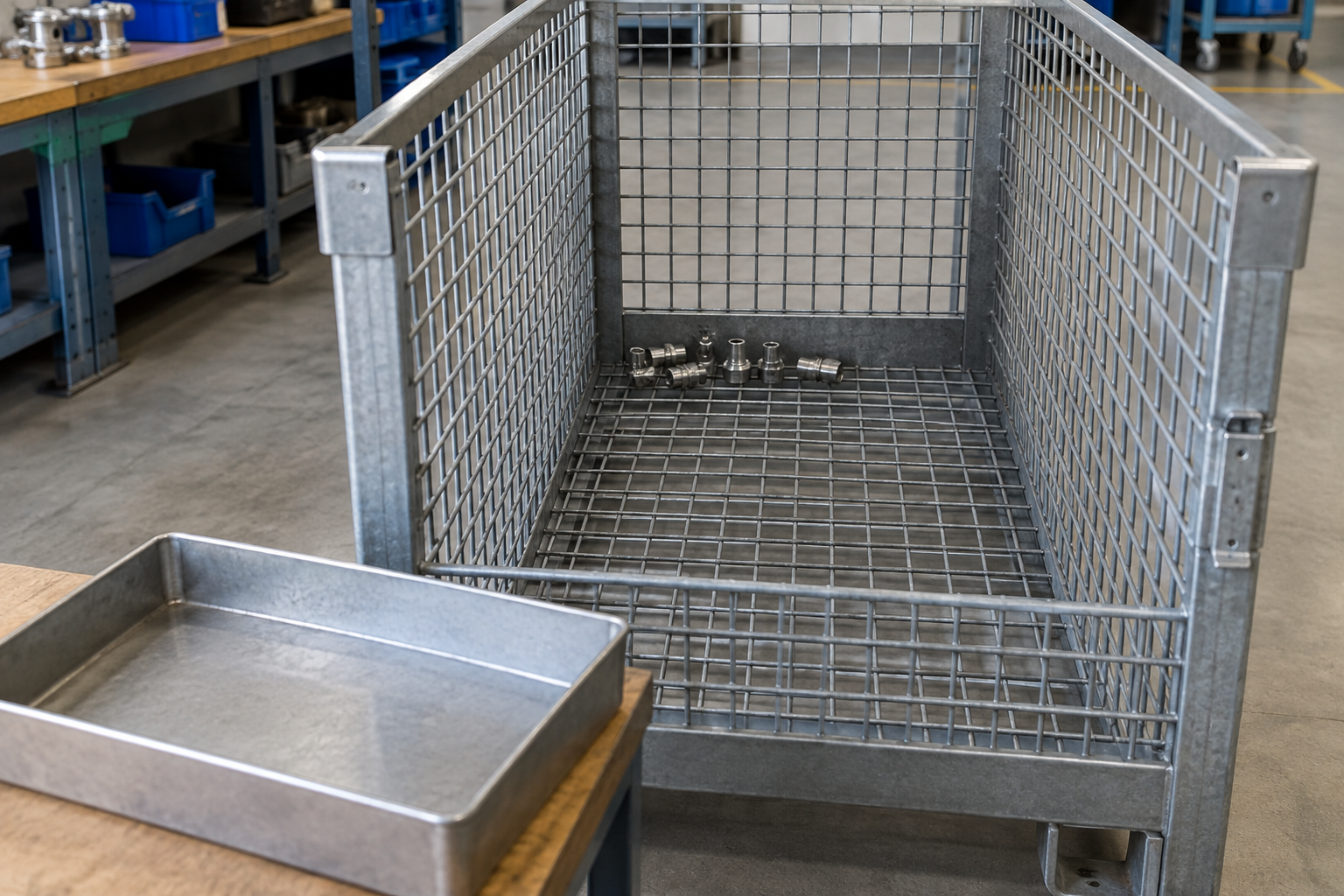
Loose fill or a removable inner tray?
What happens at the last pick?
Useful for bulk transfer or infrequent picks. Test the rear-bottom reach at the lowest fill level. Send part size, fill range and pick side.
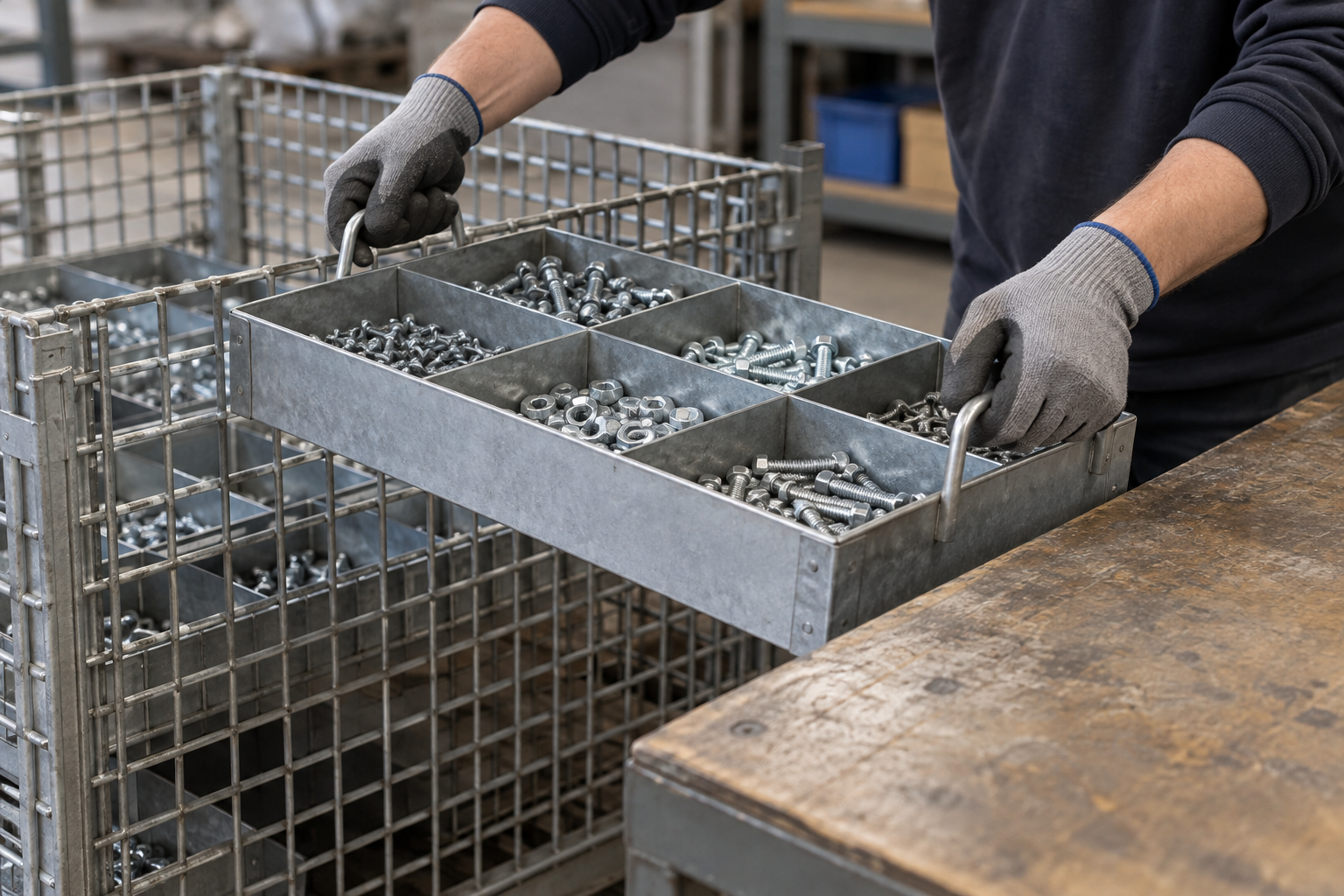
Consider for repeated piece picking. Move the tray to the bench, then check filled mass, grip, retention and empty-tray return.
Loose fill can be sensible when the box is emptied by bulk transfer or picks are rare and reach remains acceptable throughout the fill range. A tray gives the picker a smaller working depth and can preserve part groups, but it adds a separate object to lift, retain, clean, return and identify. A divider inside the deep box can separate SKUs without solving a rear-bottom reach. That difference is easy to miss in a quotation.
| Input | What to record | Decision it changes |
|---|---|---|
| Part and mix | Smallest profile, part family, quantity, sharp or sensitive features. | Whether loose fill, compartments or a separate small bin can contain the parts. |
| Last-piece position | Lowest fill level, rear distance, workstation height and pick side. | Whether the operator needs a movable inner unit rather than a different gate. |
| Tray handling | Filled tray mass, grip location, lift path and destination bench. | Whether an insert is practical and how it should be supported. |
| Return loop | How empty trays are counted, stored and returned with the outer container. | Whether removable components fit the operation. |
| Outer handling | Fork/pallet-jack route, stacking state and load restraint. | How the insert stays positioned while the container travels. |
Nashville Wire Products shows both tighter-mesh junior containers and dividers/drop gates as configuration choices. Nefab illustrates an outer steel container with modular inner trays. Those examples establish possible formats; neither supplies the dimensions or outcome for a HAOFU project.
Take the pick test from drawing to sample
- Watch the last pickPart, hand and fill level.
- Map the reachFront, rear and bench position.
- Choose a formatLoose fill, tray or divider.
- Trial and revisePick, refill and move.
- Describe the work. List part sizes, mix, pick count per shift, refill method and the station where the container is used.
- Measure the difficult pick. Mark the last-piece location and observe the hand path at the intended container height and orientation.
- Compare interior formats. Trial loose fill, a supported divided insert and a removable shallow tray with the real parts; include the filled tray lift.
- Check the route. Review how the chosen interior stays located during forklift movement, storage and return, including any loose components.
- Revise the drawing. Put the agreed outer dimensions, inner format, grip/access details and buyer acceptance task on the same controlled version.
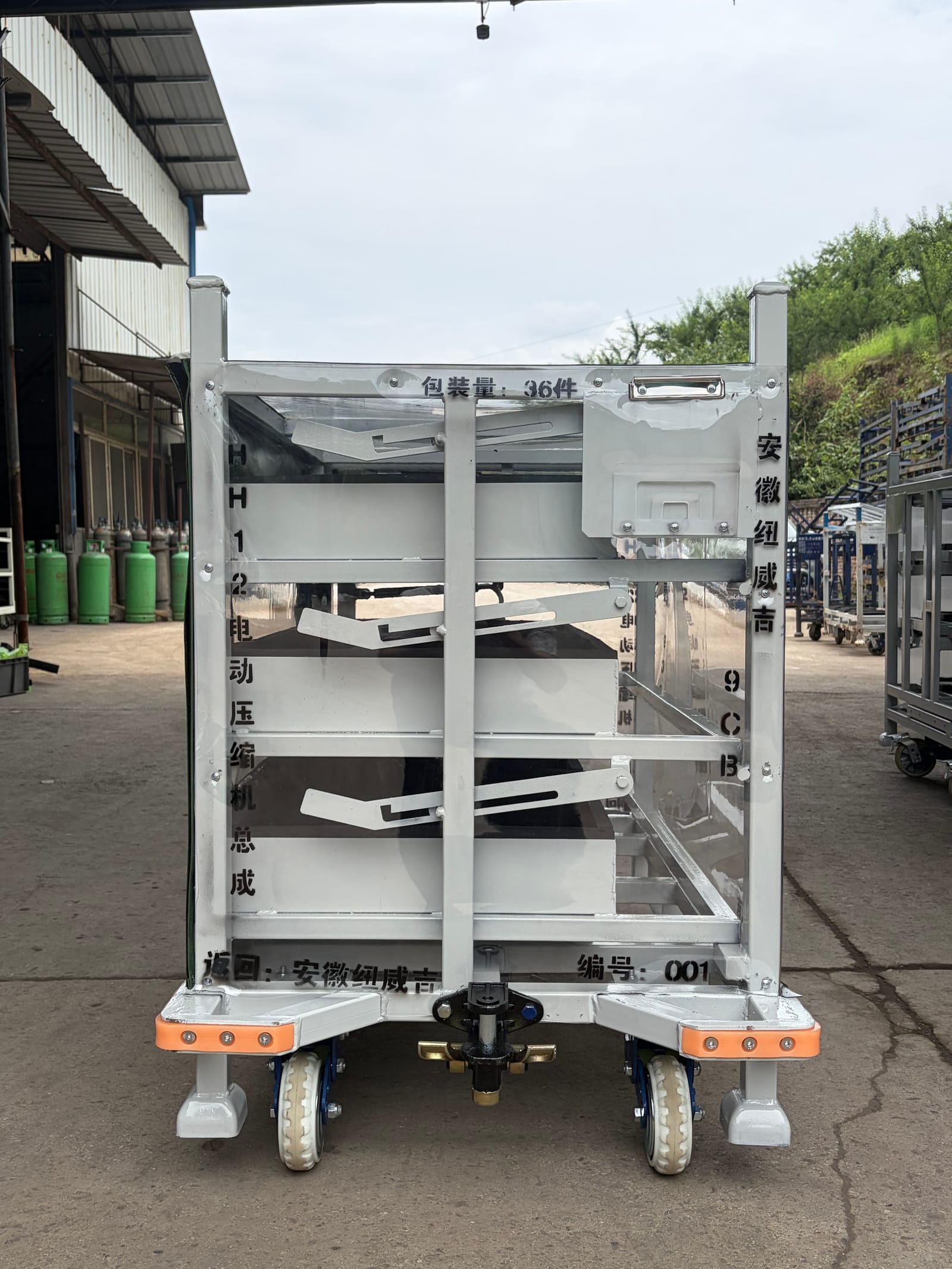
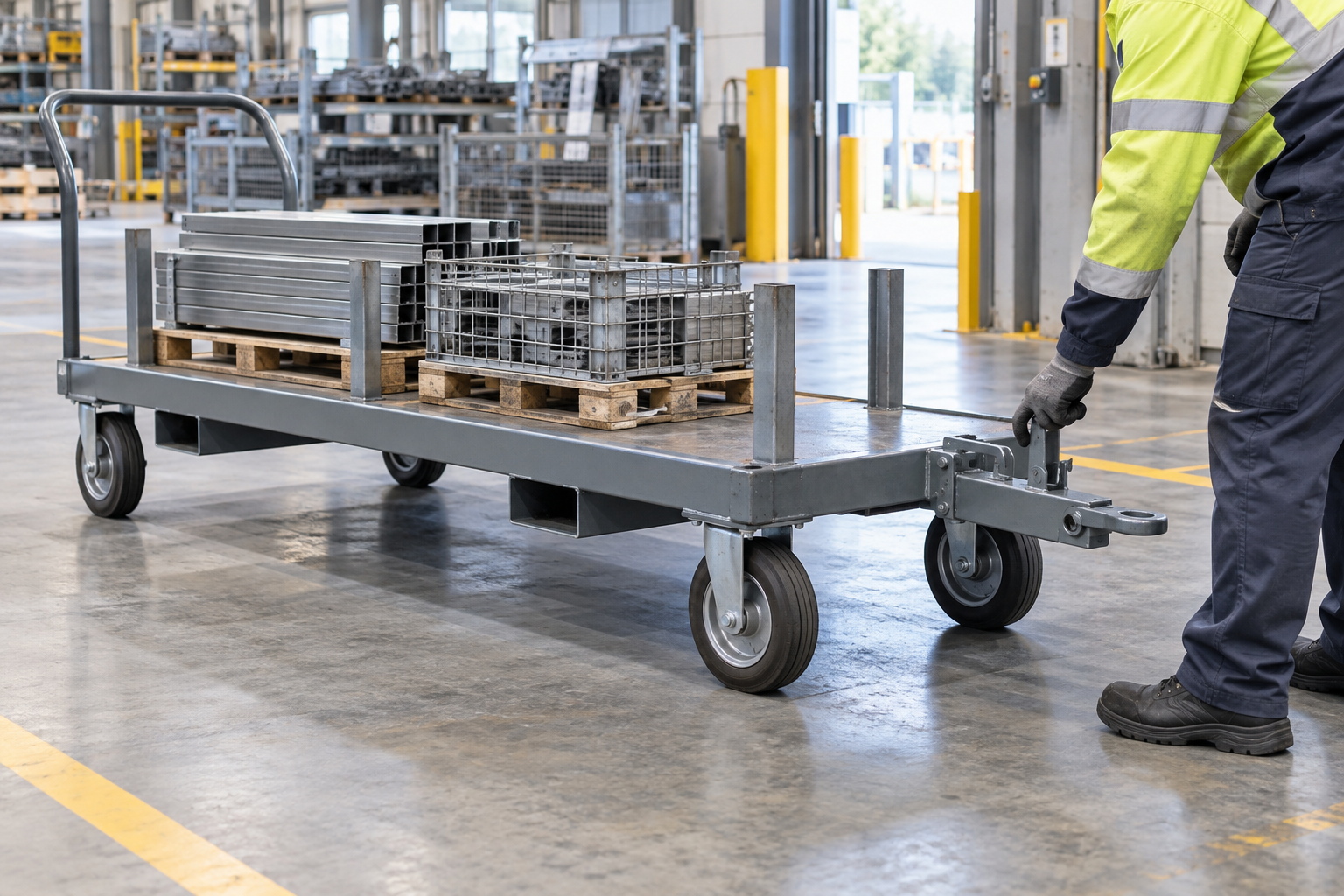
This guide does not reselect the mesh aperture or the front gate. Use the small-parts mesh-opening guide for retention and the access-gate guide for opening motion. If the container rides on a cart before picking, the manual-to-tow handoff guide covers that separate movement.
Ask for a container layout that fits the pick
HAOFU can review a custom wire mesh container around your part, outer handling route and access task. Send the part list or samples, smallest profile, pick-side sketch, lowest-fill photo or video, proposed workstation height, required quantity and whether an inner tray must travel and return with the box. Use the engineering RFQ to request a layout for review.
Frequently Asked Questions
- Why can a drop gate still leave small parts hard to pick?
- A gate removes the front-wall obstacle, but the final parts may remain at the rear bottom of a deep container. Test the last-piece reach at the actual workstation height before changing the gate or interior.
- When is loose fill reasonable in a wire mesh container?
- Loose fill is worth considering for bulk transfer or infrequent picks when the smallest part stays contained and every fill level can be accessed in the intended task. Check it with the real part and route.
- When should I consider a removable shallow tray?
- Consider a tray when repeated piece picking requires parts closer to the operator or grouped by type. Also check its filled mass, grip, support, travel retention and empty return.
- Will a divider solve a deep-container reach problem?
- A divider can separate parts but does not necessarily bring rear-bottom parts forward. Trial the lowest fill level and compare an insert or smaller pick bin if the reach remains awkward.
- What should I send for a small-parts mesh-container layout?
- Send representative parts, the smallest profile, pick frequency, fill range, workstation and pick-side sketch, handling route, proposed tray or divider task, container quantity and buyer acceptance method.