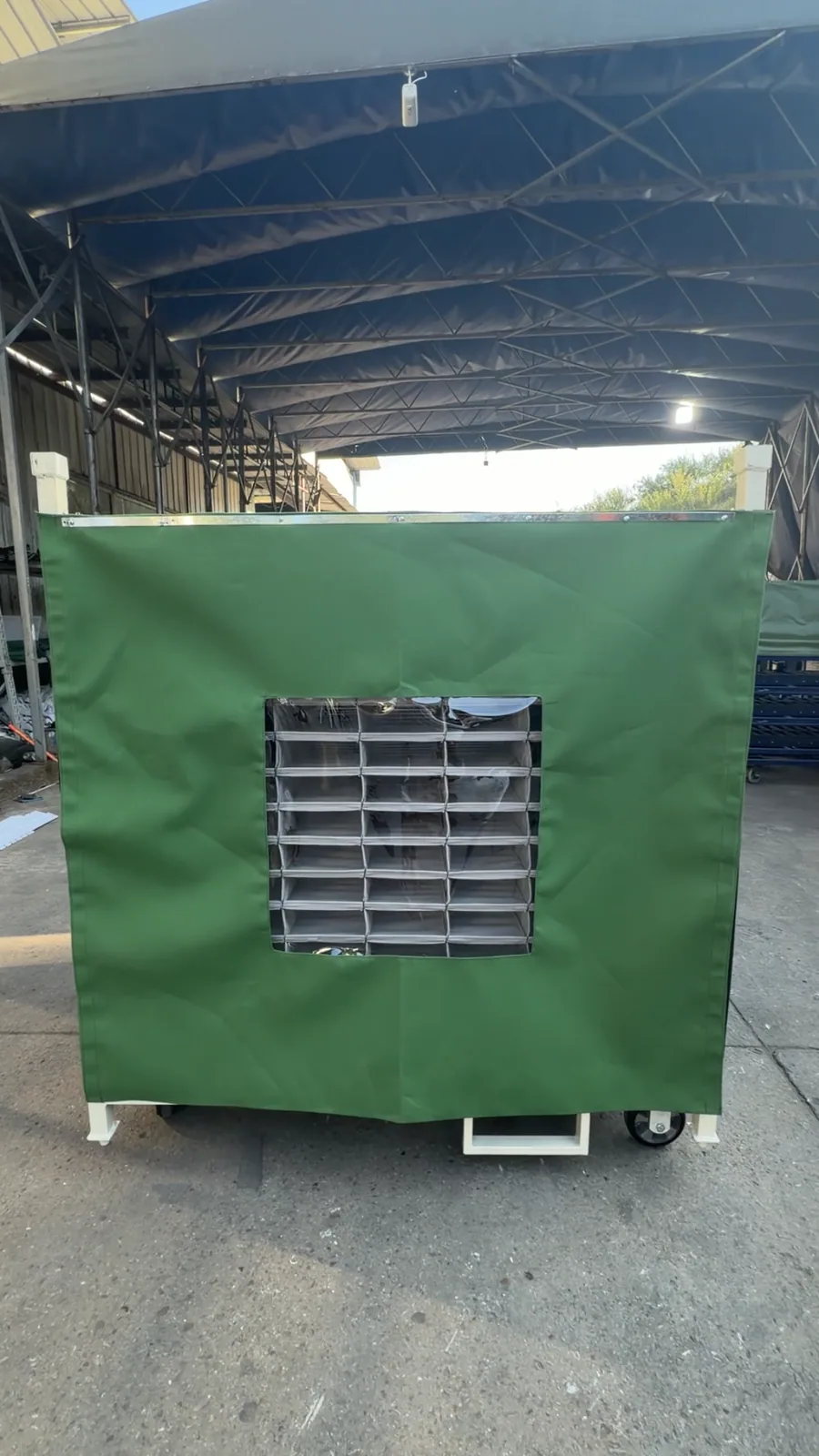
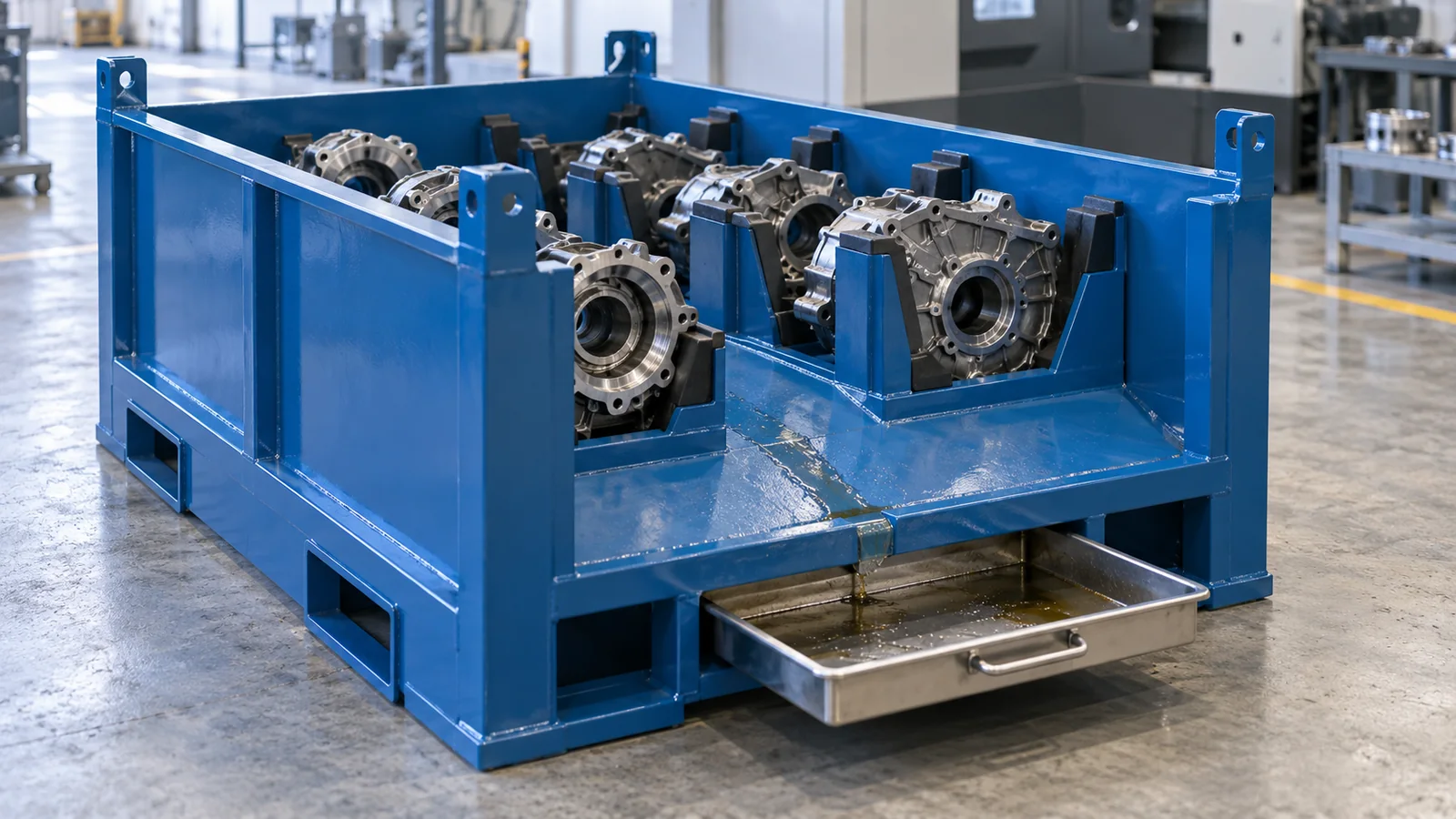
Line-Side & Sequencing Racks: JIT/JIS Delivery for Auto Assembly
Line-side and sequencing racks present the right part, in the right order, within arm's reach of the operator. JIT delivers the correct part just in time; JIS presents parts in the exact vehicle build order — cutting walking, searching and wrong-part errors.
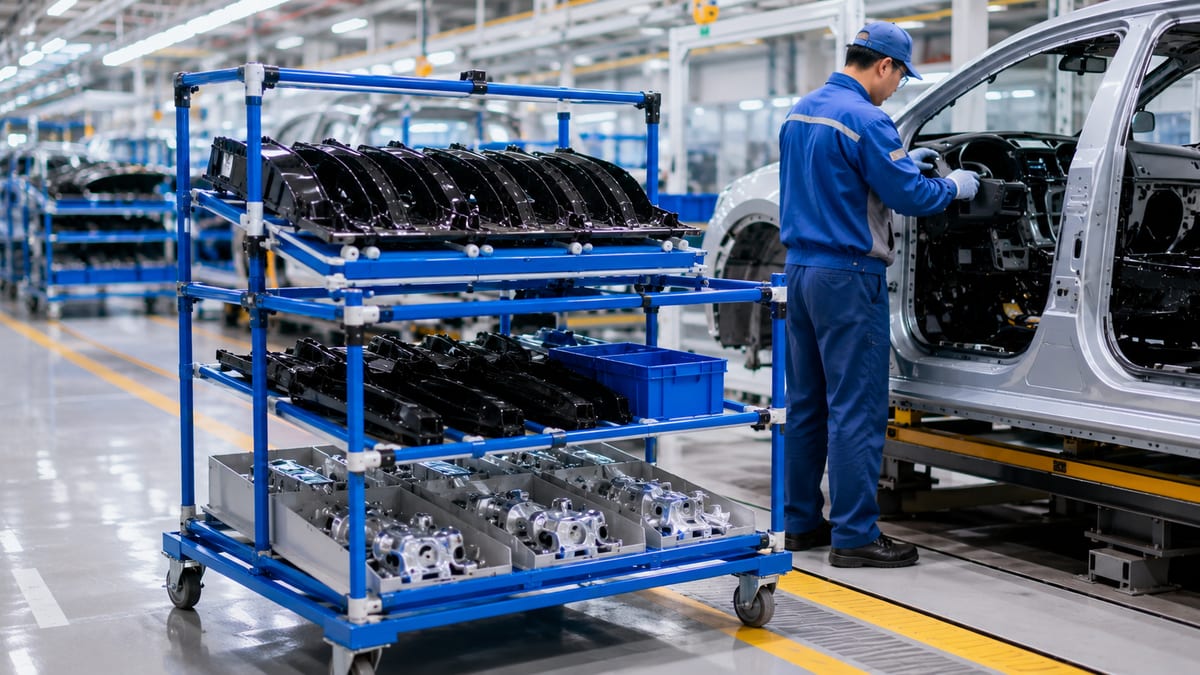
Line-side and sequencing racks deliver the right part, in the right order, within easy reach of the assembly operator — the physical backbone of Just-in-Time (JIT) and Just-in-Sequence (JIS) production. Good line-side design cuts walking, searching and errors, which directly lifts throughput.
Quick answer: JIT vs JIS line-side racks
Both deliver parts within arm's reach of the operator, but differ in ordering: a JIT rack buffers the correct SKU line-side just in time, while a JIS rack presents parts in the exact vehicle build order. Angled flow lanes, golden-zone ergonomics and mobility reduce walking, searching and wrong-part fits, lifting throughput.
JIT vs JIS — what's the difference?
| JIT (Just-in-Time) | JIS (Just-in-Sequence) | |
|---|---|---|
| Delivers | Right part, right quantity, right time | Right part, in the exact build order |
| Rack role | Buffer the correct SKU line-side | Present parts in vehicle sequence |
| Best for | High-usage common parts | High-variety / model-specific parts |
Design principles for line-side racks
- Present, don't store — angle shelves and flow lanes so the next part faces the operator.
- Golden-zone ergonomics — keep frequent picks between knee and shoulder height to reduce strain, following OSHA ergonomics guidance.
- FIFO flow — gravity flow lanes rotate stock and keep sequence intact.
- Compact footprint — narrow, mobile racks free up valuable line space.
- Mobility — casters or tugger bases so racks cycle to and from the line.
Why it pays off
Line-side and sequencing racks are a core lean-logistics tool — the Lean Enterprise Institute ties this kind of point-of-use presentation to less walking, fewer errors and smoother flow. In practice that means faster takt, less line-side inventory and fewer wrong-part fits.
Build the right line-side solution
HAOFU designs mobile line-side and sequencing racks around your parts, takt and layout — often paired with tugger trolleys and automotive parts racks. Tell us your line and we will design a presentation that fits your flow.
See a space-saving parts rack in our smart storage solution video.
Frequently Asked Questions
- What is the difference between JIT and JIS?
- Just-in-Time (JIT) delivers the right part, quantity and time to the line. Just-in-Sequence (JIS) goes further and presents parts in the exact order vehicles are built. JIT suits high-usage common parts; JIS suits high-variety, model-specific parts.
- What is a sequencing rack?
- A sequencing rack holds parts in the precise build order they will be fitted, so operators pick the next part without sorting or searching. It is the physical enabler of just-in-sequence delivery on a mixed-model assembly line.
- How do line-side racks improve efficiency?
- By presenting the next part within arm's reach, in the right order, they cut walking, searching and wrong-part errors. That reduces line-side inventory, smooths flow and helps maintain takt time.
- Should line-side racks be mobile?
- Usually yes. Casters or tugger bases let racks cycle to and from the line for replenishment, keep footprints small, and support milk-run / tugger-train replenishment instead of forklifts at the line.
- How should parts be presented on a line-side rack?
- The guiding principle is 'present, don't store': angle shelves and flow lanes so the next part faces the operator. Keep frequent picks in the golden zone between knee and shoulder height to reduce strain, and use gravity FIFO flow lanes to rotate stock and keep sequence intact. A compact, mobile footprint frees up valuable line space.