Line-Side Trolley Replenishment: Swap the Cart or Replace the Totes?

Compare whole-cart exchange when parts are consumed as a set or travel on dedicated supports. Keep a resident trolley and replenish individual totes when items run out at different times and the transfer task is practical. Split the supply when fixtures and consumables need different cycles. Include residual stock and both incoming and outgoing positions in the quote request.
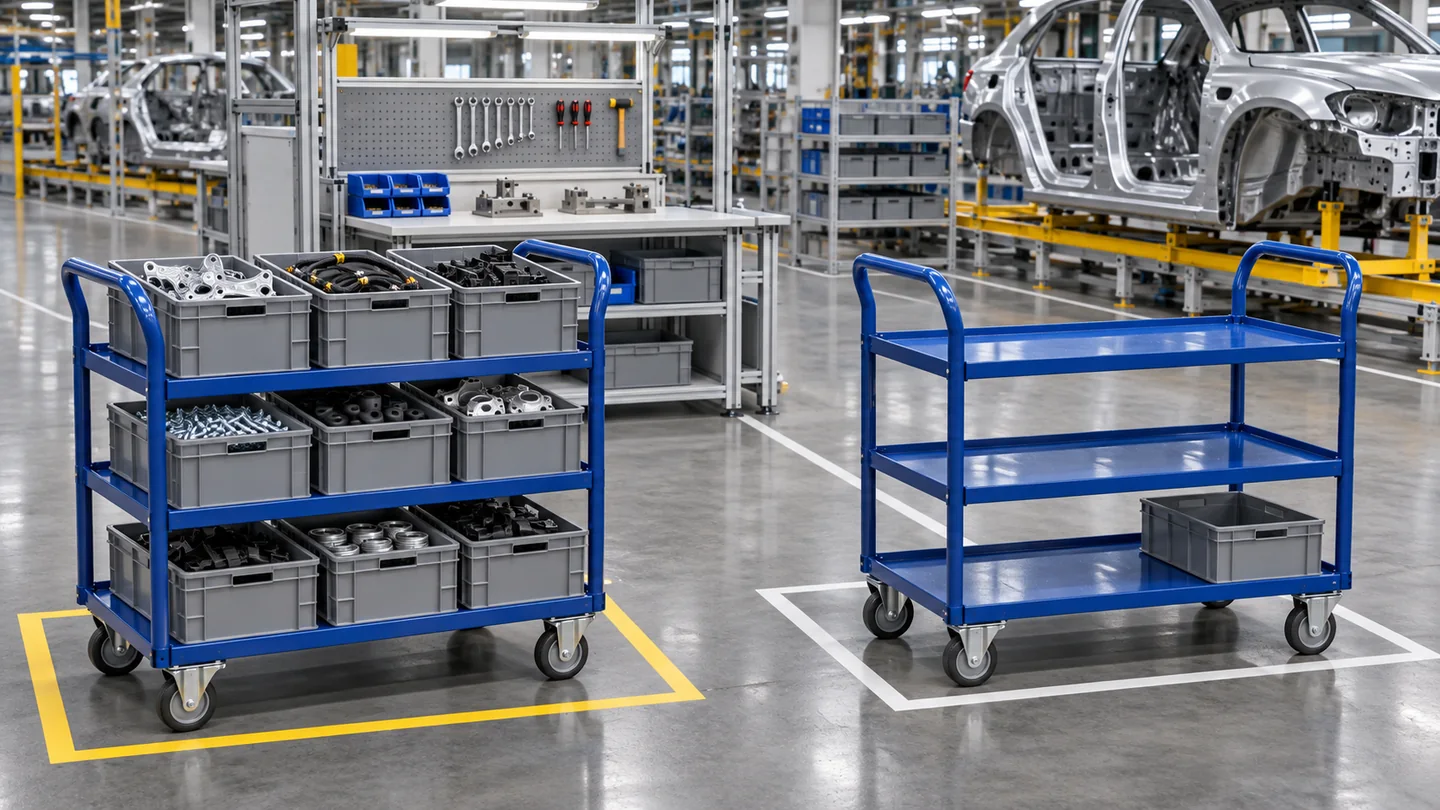
Line-side trolley replenishment starts with choosing what the replenisher exchanges. Swap the complete cart when the carried parts work as one supply set and the station can accept the incoming trolley while releasing the returning one. Replace individual totes when items deplete at different times and the resident cart provides the required picking positions. A split arrangement can keep dedicated part supports on a moving cart while replenishing consumables separately.
Make that decision before ordering custom material handling trolleys. It changes the load supports, tote access, handling sequence and temporary positions the design must accommodate. A wheel choice or a precise docking stop cannot decide which stock should leave the station at the next replenishment.
Watch what actually leaves the station
Consider an assembly cell that uses several brackets and a box of fasteners. The brackets may be prepared as a set, while fasteners last across several sets. Exchanging a cart whenever one item runs out sends the remaining items back to the preparation area. Leaving the cart in place avoids that movement but adds individual tote transfers beside the operator.
Follow one complete replenishment, including a busy changeover and a part-used return. Record which material arrives, what remains and where each empty is placed. Notice whether the operator must pause, move a tote or step around the delivery. These observations give procurement a useful basis for comparing configurations without assuming that either fewer carts or fewer tote lifts is automatically the better system.
Compare the three supply arrangements
| Arrangement | Best starting condition | Handling trade-off | What the trolley quote needs |
|---|---|---|---|
| Whole-cart exchange | Parts travel or deplete as one prepared set | Returning residual stock and exchanging two carts | Loaded/returning states and both temporary positions |
| Resident cart, tote replenishment | Items run out independently | Repeated full/empty tote transfers at the station | Tote envelopes, grips, access and empty position |
| Split supply | Dedicated parts and consumables use different cycles | Two clearly defined replenishment tasks | Which supports move and which supply remains |
One prepared part set. Send the supplier: Full and returning states.
Different depletion times. Send the supplier: Transfer and empty space.
Different material cycles. Send the supplier: Separate exchange tasks.
Choose whole-cart exchange for a coherent supply set
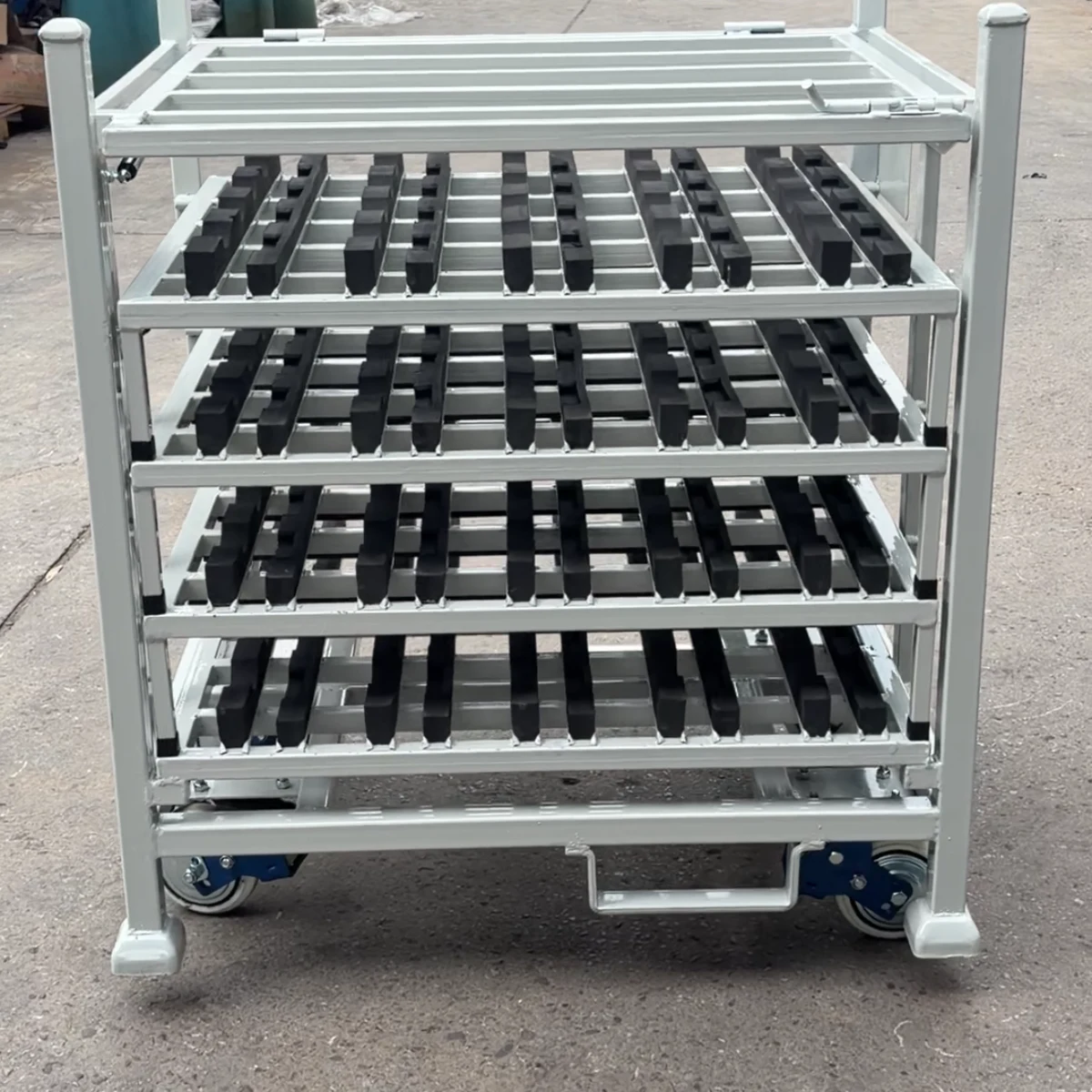
A complete cart is a useful unit when the part supports, orientation and prepared quantity belong together. The preparation area can load the trolley in the required arrangement, and the station receives that arrangement as one unit. It also suits parts whose positioning features should travel with them rather than being recreated at every transfer.
Check the end of the cycle. If the cart returns with unfinished quantities, decide whether those parts remain on it, are removed at the station or move to another location. Include the returning condition in the layout review, especially when it changes the visible identity or weight distribution. A cart called empty in the route plan may still contain totes, packaging or parts in practice.
Provide an incoming position and an outgoing action. If the new cart can only enter after the old cart leaves, show how supply continues during that movement and where the replenisher waits. This is a local exchange task, not an assumption that every station needs a large two-cart bay.
Keep a resident trolley when individual items need replenishing
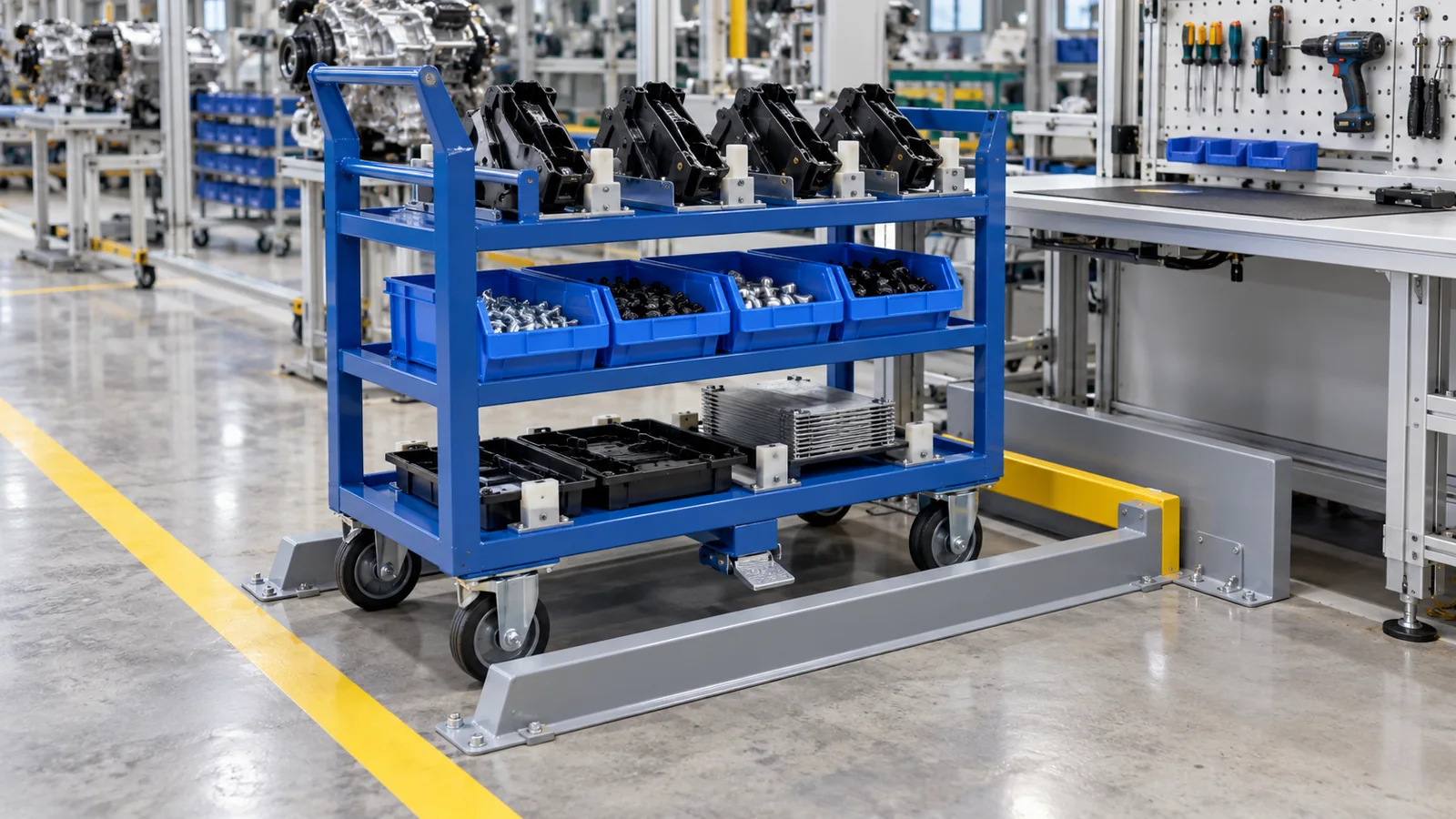
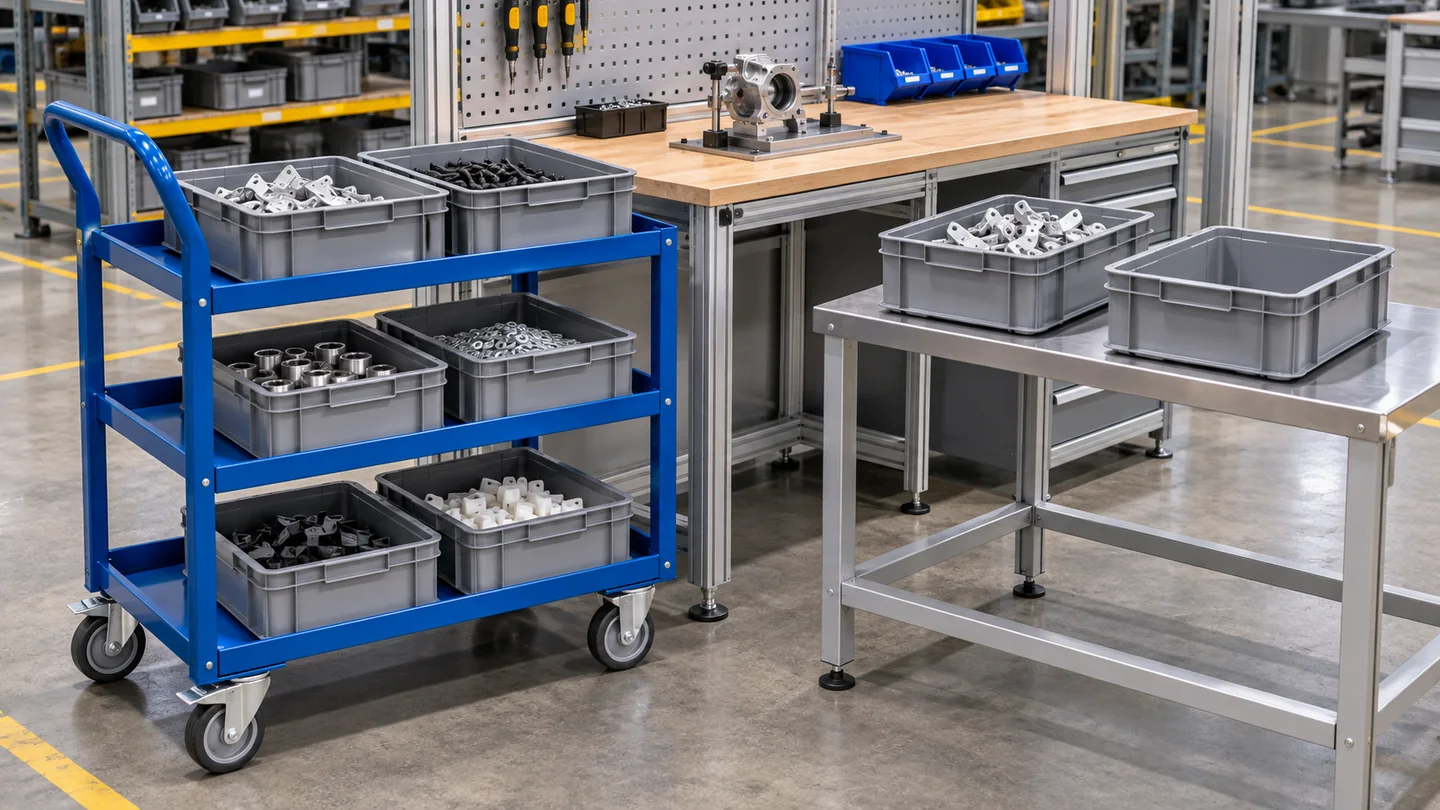
A resident cart holds the picking arrangement in place while a replenisher replaces depleted totes. This can suit a mixed group of items with different consumption patterns. The cost of that choice is the transfer itself: removing an empty, introducing the full tote and dealing with any remaining contents without disturbing adjacent supplies.
Draw the tote with its rim, handles, lid and the actual grip used. Check the full removal path, including the lowest and rear positions. A shelf opening that accommodates the tote at rest may still obstruct its removal. Keep an identified temporary position for the empty rather than expecting the replenisher to hold it while fitting the full tote.
CREFORM's cart examples show how shelves, trays and compartments serve different carried materials. Use the same task-led approach for a custom steel trolley: begin with the transferred unit and its handling motion, then select its supporting arrangement. The trolley shelf-spacing guide covers usable level clearances once the supply method is chosen.
Split the supply when parts and consumables behave differently
Some stations need both methods. A dedicated cart can carry shaped or positioned assemblies, while fasteners or small consumables are supplied in individual containers. The benefit to compare is a clearer physical task for each group. The extra work to check is coordination: operators must still know which supplies belong to the current job and where the next delivery goes.
State those groups in the request instead of asking for a general-purpose trolley that must solve every movement. item's racks and trolleys overview distinguishes supply trolleys, assembly carts and fixed FIFO arrangements. The relevant question for this quotation is which material must move with its carrier and which material is transferred into a resident supply position.
Make residual stock part of the comparison
A full-cart proposal should explain the next action for part-used totes. Sending them back may add checking and handling at preparation; leaving them at the station needs an available, identified position. For individual tote replenishment, confirm whether the old container is completely consumed before replacement or whether a remainder stays in a separate place.
Do not hide the choice by topping up every tote. If material must remain separate by job, batch or revision, show that separation in the transfer sequence. Trial the option with a realistic uneven fill pattern. That reveals whether the replenisher needs to reach around stock, move more containers than expected or return a cart simply to replace one item.
Check the exchange motion before specifying hardware
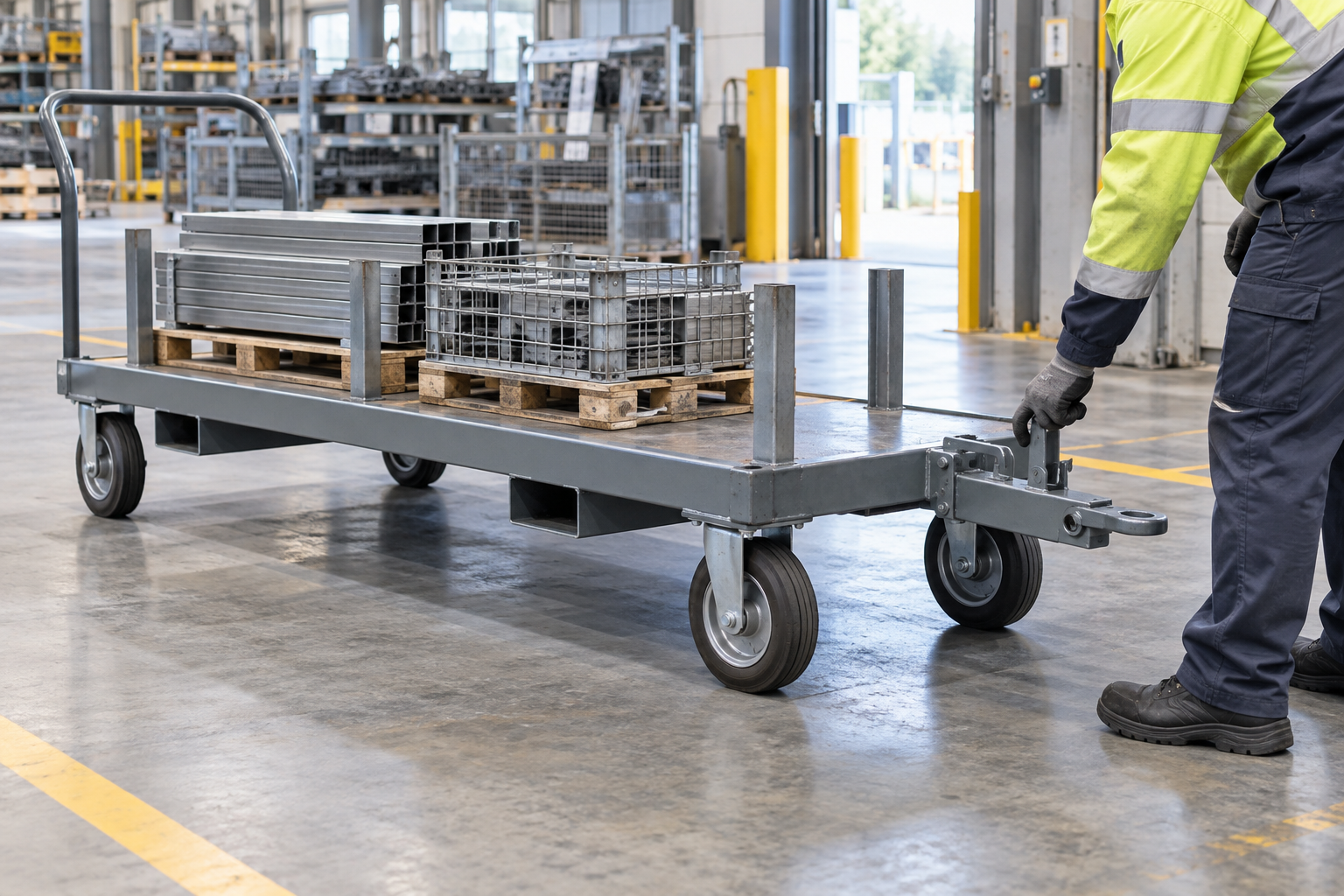
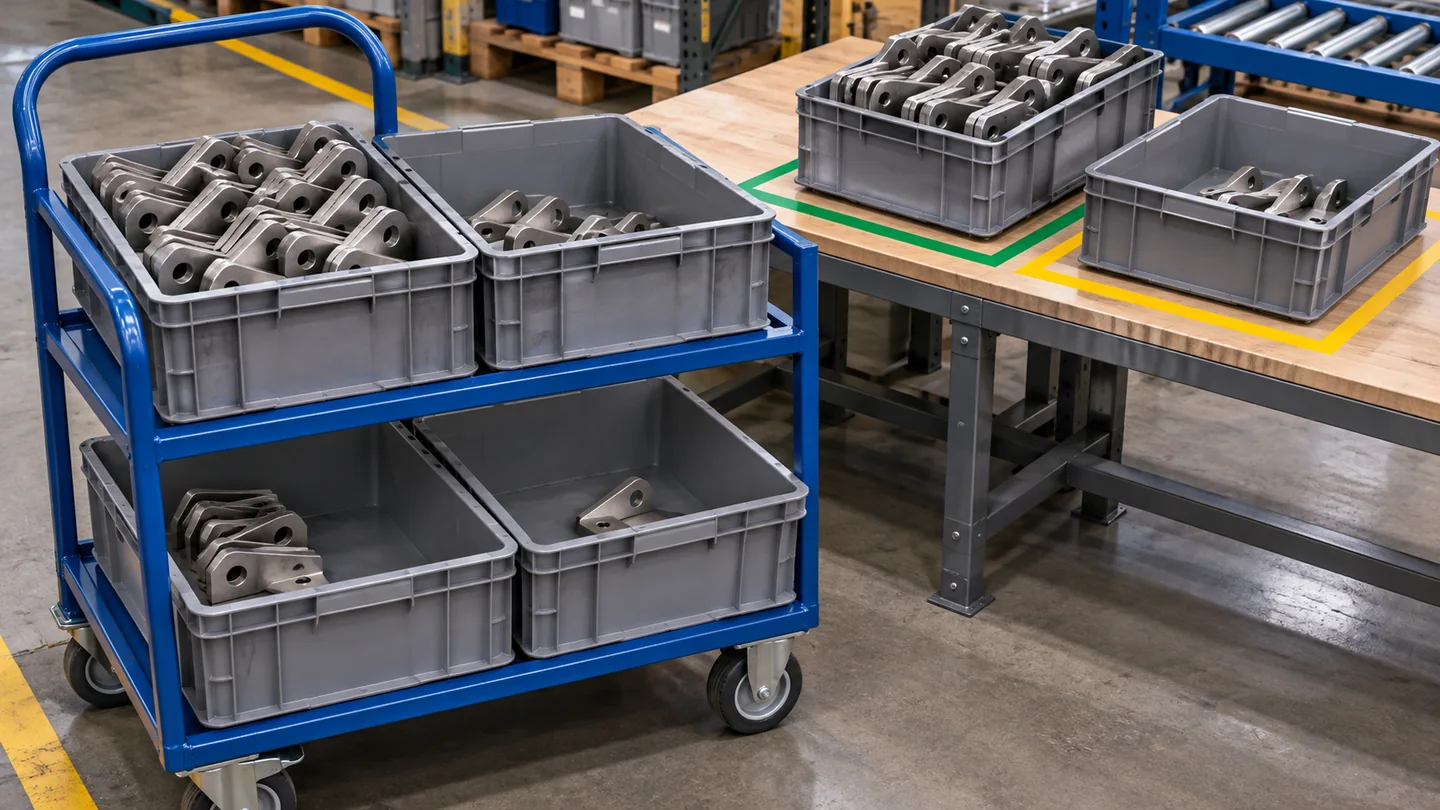
Sketch the operator side, delivery side, neighbouring equipment and temporary positions at the beginning and end of the exchange. For a moving trolley, include the handle and the space used to approach and withdraw. For a resident cart, include the complete full- and empty-tote movement. The HSE RAPP guidance provides a way to assess the actual pushing and pulling task where carts are moved manually.
Then define any repeatable holding or locating task using the line-side docking guide. If delivery changes between manual pushing and towing, use the separate push-to-tow handoff guide. Those hardware decisions follow the replenishment choice; they do not replace it.
- Do carried items need different replenishment cycles?Yes → Compare tote or split supply.No → Can full and returning carts exchange?
- Can full and returning carts exchange?Yes → Compare whole-cart swap.No → Review tote transfer.
Ask for the trolley that matches the chosen supply method
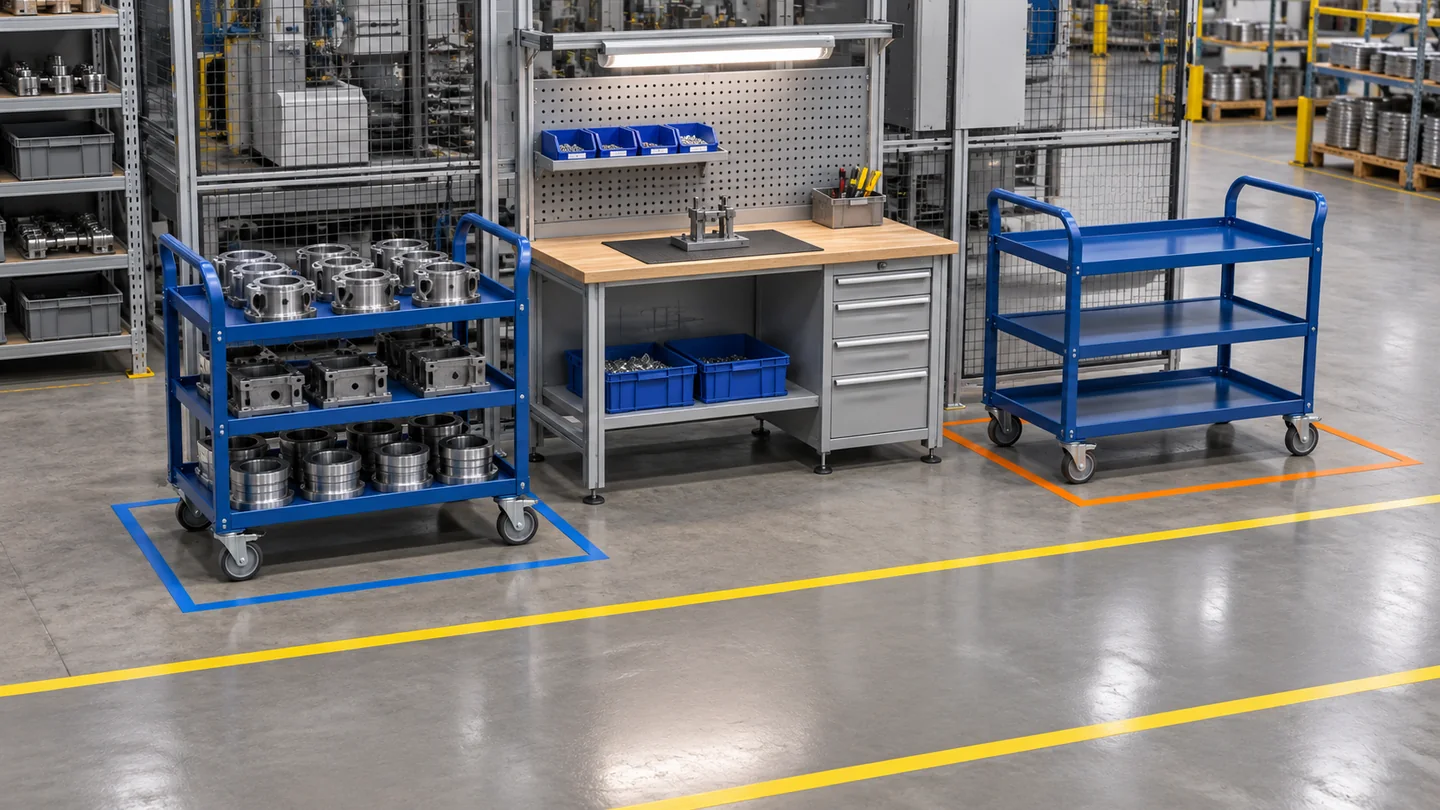
HAOFU manufactures welded steel trolleys with project-specific shelves, part supports, dividers and handling interfaces. For a whole-cart proposal, send the part arrangement and both loaded and returning conditions. For resident-cart replenishment, send the actual tote and transfer path. For split supply, identify which group moves with dedicated supports and which group arrives separately.
A station photo and a short requirement are enough to start. As the layout develops, add drawings, carried mass, the route, quantity and destination. Ask the quotation to identify the included frames, supports and accessories so procurement can compare the same operating task across proposals.
- Watch one complete replenishment. Record what arrives, what is removed, which stock remains and where the operator and replenisher stand throughout the exchange.
- Group items by depletion. Separate parts that are consumed as one set from totes or consumables that run out at different times.
- Select the exchanged unit. Compare a complete cart, individual totes or a split arrangement. Include the handling of part-used material in each option.
- Sketch the actual transfer. Show the incoming and outgoing positions, tote grips or part supports, pick side and replenishment side, with the neighbouring equipment in place.
- Send the layout for a trolley quote. Start with a station photo and short requirement. Add tote drawings, carried mass, the replenishment sequence, route, quantity and destination as available.
Frequently Asked Questions
- When should I exchange a complete line-side trolley?
- Compare whole-cart exchange when the carried parts are used as a set, or when part-specific supports should travel with them. The station also needs a workable way to introduce the loaded cart and remove the returning cart, including any residual stock.
- When is tote-by-tote replenishment more suitable?
- It is a useful option when different items run out at different times and a resident trolley provides the required picking positions. Check the actual tote removal, hand space, temporary empty position and loaded-tote handling before specifying shelves.
- Can a trolley use both replenishment methods?
- Yes. A project may exchange a dedicated part cart while replenishing consumables separately, or use defined sections with different supply tasks. Describe the separate actions clearly so the supplier can design the relevant supports and access.
- Does whole-cart exchange always mean buying twice as many trolleys?
- No fixed multiplier fits every route. Count the actual carts at the line, being loaded, travelling, returning and held as reserve during a representative cycle, then check the busiest operating condition before deciding the fleet quantity.
- What should happen to part-used totes on a returning trolley?
- Agree whether they stay with the returning cart, remain at the station or move to a separate return position. Show that action in the replenishment sequence so the next delivery does not bury older stock or mix material that must stay separate.
- Can I request a trolley quote before all engineering details are ready?
- Yes. Send a station photo, the carried items and a short description of how you want to replenish them. HAOFU can begin the configuration discussion while you gather tote or part drawings, loaded mass, the route, quantity and destination.