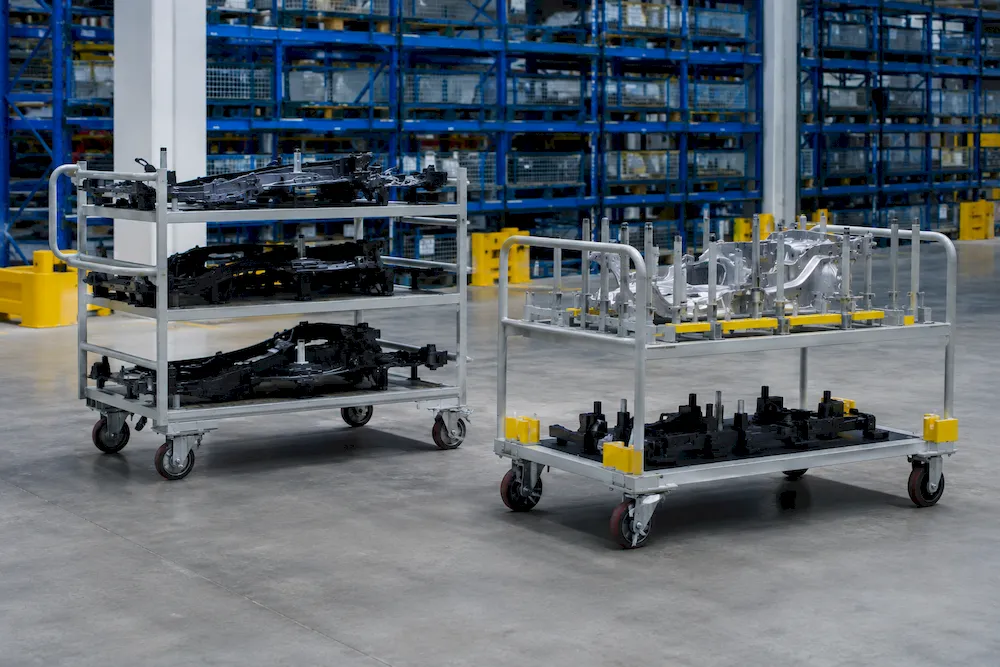
Trolley Shelf Spacing for Product Changeover: Fixed, Adjustable or Removable Levels?

Choose trolley shelf spacing from the loaded part or tote, its supports, and the lift-and-withdraw motion beneath the next level. Keep fixed openings when the product family fits one arrangement; compare defined adjustable positions when setups change; consider removable intermediate levels when occasional tall loads justify an unloaded removal and storage task. Count usable part positions in each setup, not just shelves. Start with a photo and the variants you need to carry, then develop the layout with the trolley supplier.
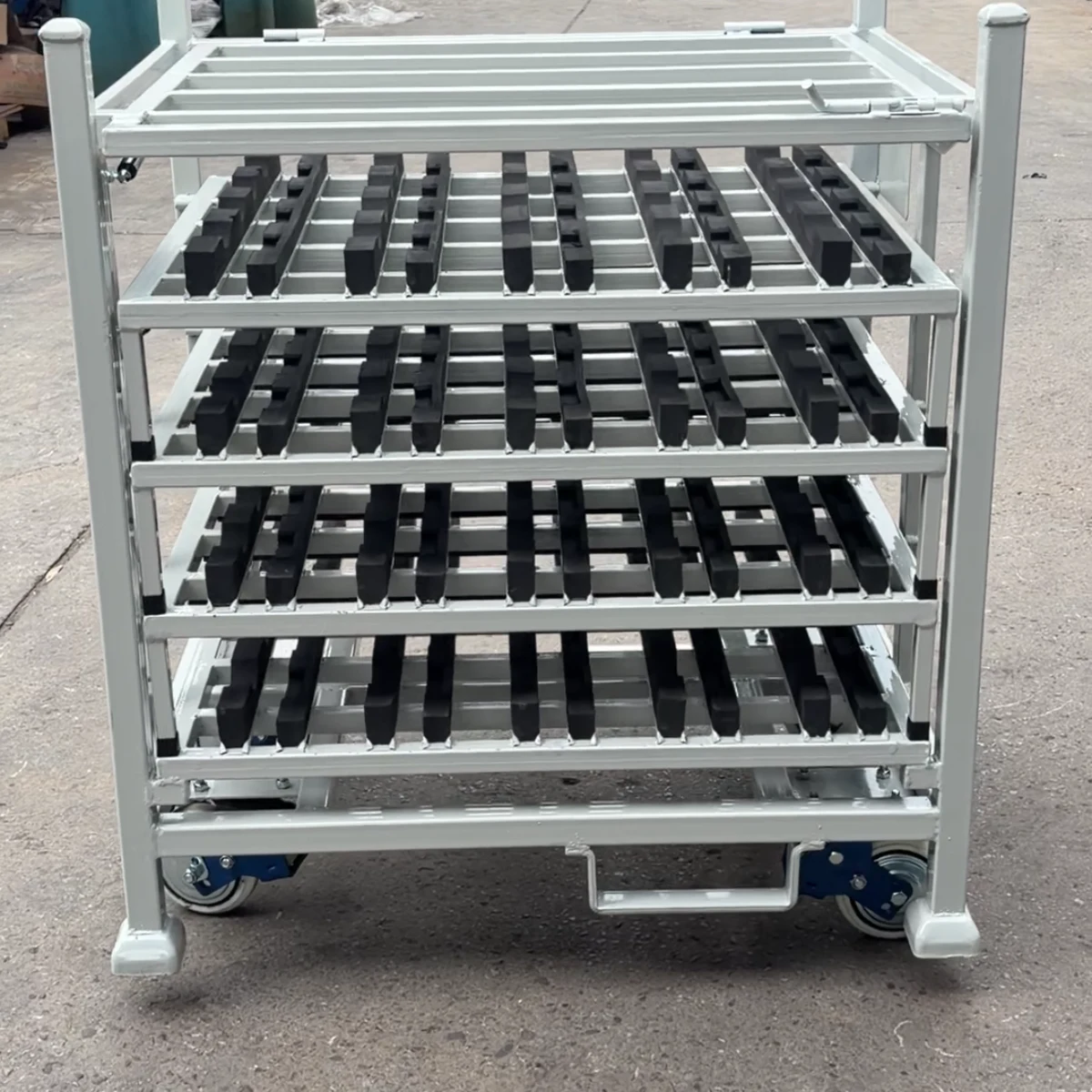
Trolley shelf spacing must accommodate the loaded part and the movement needed to take it out. Measure the usable opening to the underside of the next rail or shelf, including part supports, hand or tool space and any upward release from a nest. Choose fixed levels when one layout serves the product family; compare adjustable positions or removable intermediate levels when changing heights justify a setup task. Before choosing removability, decide who handles the empty shelf and where it goes. This guide helps production engineers and buyers select a parts-cart layout for real product changeovers.
Compare the whole product family before adding levels
Consider a line that uses one shallow component for most of the week and a taller variant for a shorter run. A trolley packed with close levels may carry the shallow part neatly but force the taller part into fewer positions. Simply enlarging every opening can waste capacity on the common product. Making levels adjustable may help, but it introduces an unloading, repositioning and confirmation task each time the configuration changes.
Start with a variant matrix rather than the desired number of shelves. For each part or tote, record its loaded outline, permitted support, mass per occupied level, pick side, upward release and withdrawal direction. Mark combinations that may travel together. Then sketch each proposed trolley arrangement and count the positions that are genuinely usable. An opening that admits a stationary part but blocks its grip is not a usable position.
Plymouth Industries' adjustable shelf carts show how shelf count, height and mounting hardware can be specified. That is a useful comparison approach, not a reason to assume adjustment is always the best answer. Compare it with a dedicated layout using the same part family and change frequency.
Trolley shelf spacing: compare three setup approaches
| Arrangement | Suitable starting condition | Practical trade-off | Input to give the supplier |
|---|---|---|---|
| Fixed openings | The product family fits the same clear heights and withdrawal paths. | Simple repeated setup, but tall variants may need a separate trolley or fewer occupied positions. | Variant matrix, part supports and quantity for each layout. |
| Defined adjustable positions | Products need different openings and there is a planned setup interval. | More configurations from one frame, with hardware access, retention and confirmation tasks. | Required positions, change frequency, operator side and available setup window. |
| Removable intermediate level | Occasional tall items justify removing a level completely. | Creates a larger opening, but adds an empty-shelf handling and storage task. | Removal route, shelf handling method, storage holder and refitting sequence. |
One layout fits the part family. Resolve tallest pick and position count.
Repeated planned setup changes. Resolve mounting and confirmation.
Occasional tall components. Resolve empty shelf handling and storage.
A fixed frame with dedicated trolleys can be worth comparing when changeovers are frequent or setup space is scarce. Its cost includes the extra carriers and their staging, while a shared adjustable trolley's cost includes the actual setup work and any spare components. Give procurement both complete scopes; comparing only the welded-frame price can hide the task that changes between options.
Specify clear height, not just shelf pitch
Shelf pitch is the distance between equivalent mounting datums. Clear height is the smaller usable opening above the support surface. A deep edge rail, mounting bracket or the underside of a contact block can reduce that opening. Put these intrusions in the section drawing, especially at the side where the operator first lifts the part.
Build the required opening from the loaded part height above its actual support, the upward movement needed to leave its nest, and the extra space required by the hands or loading device. For a tote, include its handles and lid position. For a component, include projecting connectors or studs. Do not allocate one generic allowance to every part when their release motions differ.
RDM's industrial shelving cart distinguishes adjustable intermediate shelves from fixed top and bottom levels. Use that distinction when discussing your own frame: changing an internal shelf position is different from moving a structural member. Request the mounting, retention and usable-opening detail together.
Separate height adjustment from opening a tray
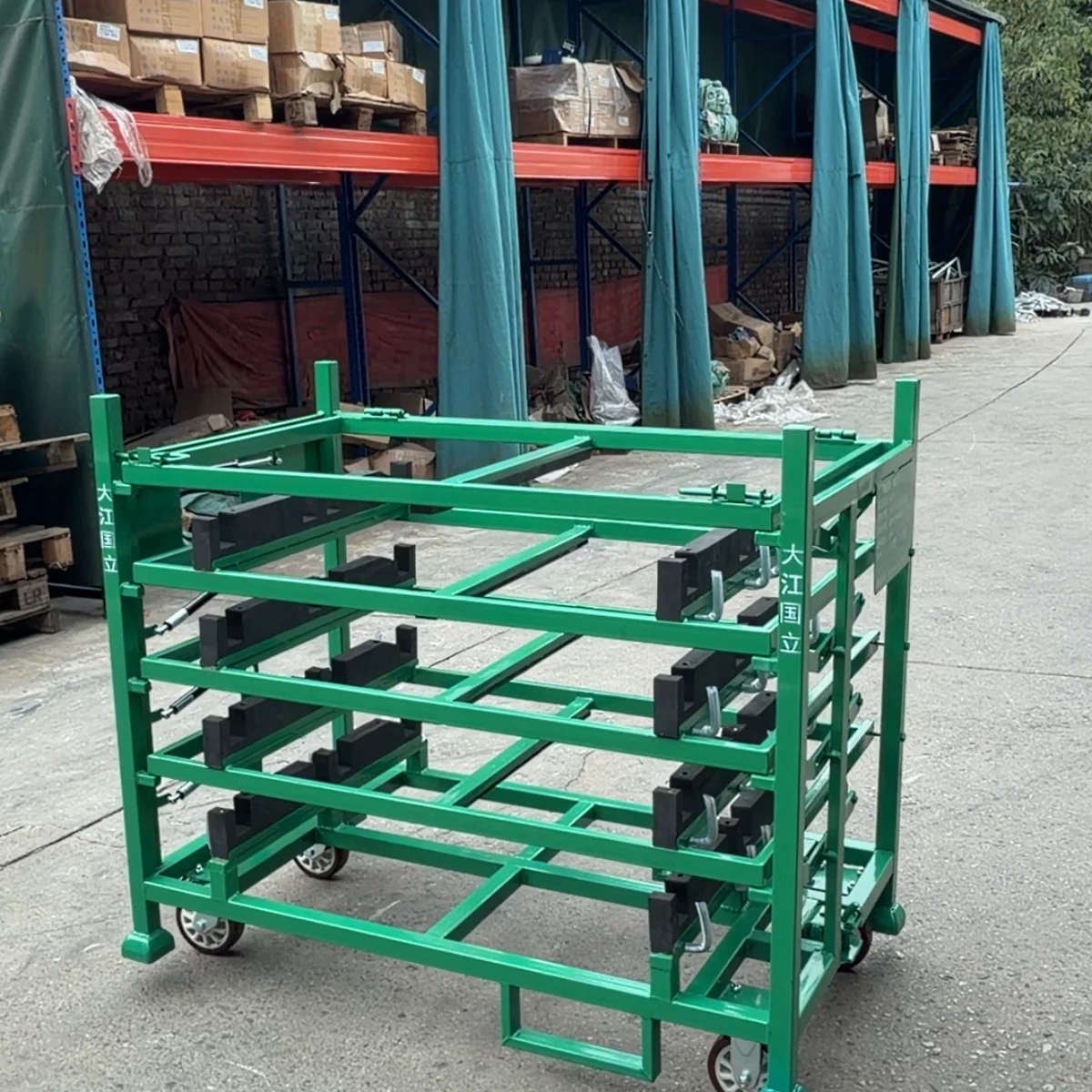
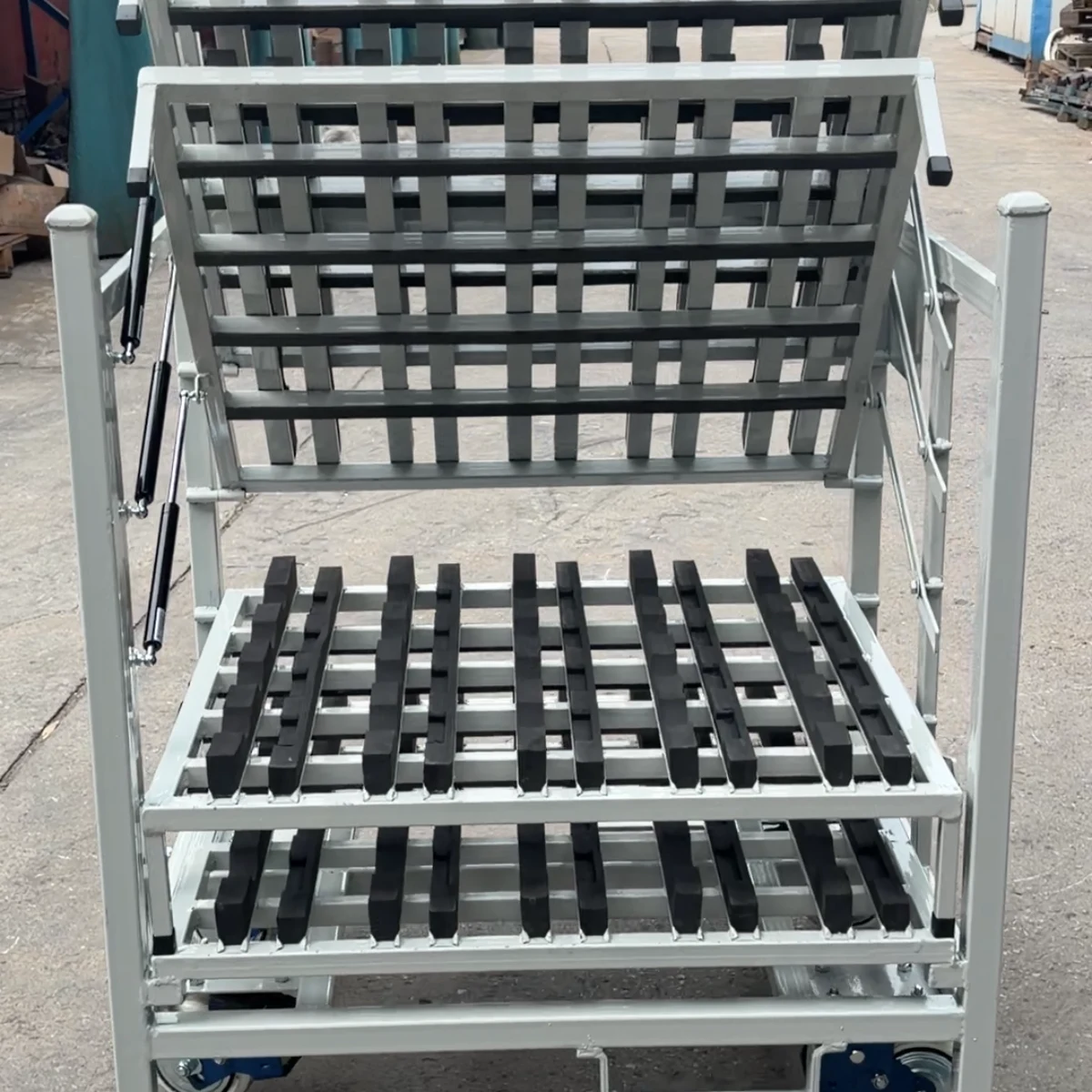
An opening or tilting level can expose the position below without changing the mounting pitch. A height-adjustable shelf changes the vertical arrangement. A removable level leaves the trolley entirely. These solve different problems, so show which movement the product changeover actually needs before selecting hardware.
HAOFU's photographed multi-level trolleys provide examples of part-contact layouts and opening frames. If the programme needs adjustable mounting positions or removable tiers, ask for that configuration to be developed in the quotation drawing. Avoid treating a hinge or gas strut in a photograph as evidence that the level also changes height. Use the loading-access envelope guide for the separate question of hand or tool motion through a restricted opening.
Give every removed shelf a usable destination
A removable shelf needs more than a release mechanism. Show the unloaded shelf's complete outside shape, grips, projections and removal direction. Check where an operator stands while releasing it and whether it must be lifted, rotated or carried around the trolley. Keep the expected parked trolley condition explicit during that task. Do not design the changeover around removing a loaded shelf unless a separate, engineered handling method is part of the agreed equipment.
Provide a dedicated holder or storage position for unused shelves, identified to the trolley and setup. Decide whether the storage sits at the changeover station or travels with the carrier. On-cart storage consumes space and changes the carrier outline; off-cart storage needs a reliable retrieval and refitting task. Neither is solved by leaning a spare shelf in the production aisle.
New Age Industrial's picking-cart page shows removable middle shelves as a way to create space for taller items. Add the removal and storage steps to that comparison. The HSE manual-handling guide, published in 2020, offers task-assessment guidance relevant to handling the empty shelf as well as the carried part. Assess the actual task rather than selecting a universal shelf-weight limit.
Make each permitted setup easy to recognise
For adjustable levels, define the permitted mounting positions and how both sides are set to the same height. Keep the retention points accessible from the setup side and identify the confirmation needed before reloading. Ask the supplier to show the hardware in place, released and parked if it remains attached. Include wear and replacement access in the proposal when the setup will change repeatedly.
Check the complete loaded arrangement after every proposed change. Moving a level can shift the load distribution, obstruct a handle or place a component above a frame opening. Removing a member can affect more than storage volume. Keep the intended loading and movement conditions on the drawing for each setup so the trolley engineer can assess them together. Do not carry a rating from one arrangement onto another without confirmation.
If the trolley supplies parts in a defined sequence, use the line-side sequencing guide to establish that order first. Then check that each permitted shelf arrangement still exposes the required next part. This article selects tier layout and changeover; it does not replace route, wheel or delivery-system design.
- Does one fixed layout fit all variants?Yes: Keep fixed openings; check every pick. No: Compare adjustment or level removal.
- Trial the full taskTrial the tallest pick, empty-shelf move and next setup.
- Does the trial reveal an obstruction?Yes: revise the route or arrangement and repeat. No: include the accepted detail in the quotation drawing.
Five steps to prepare the shelf-layout enquiry
- Build the variant envelope: List each part or tote with its support datum, loaded height, release motion and quantity per level.
- Draw usable openings: Subtract shelf rails, thickness, brackets and other intrusions from the proposed pitch, then overlay the full withdrawal path.
- Choose the setup method: Compare fixed openings, defined adjustable positions and removable intermediate levels against the actual change frequency and available setup time.
- Plan the empty-shelf task: Specify unloading, release, handling, a dedicated storage location and refitting before choosing any removable configuration.
- Trial both production and changeover: Load and pick the most constrained variants, empty the trolley, change the arrangement and repeat the task before approving the layout.
Ask for a trolley layout, starting with a photo
Send HAOFU a part or current-trolley photo and describe which variants cause the problem. The detailed comparison can follow with the variant matrix, loaded and release heights, quantities per level, load distribution, operator side, change frequency, available setup time, removed-shelf storage, movement route, trolley quantity and destination. A short motion video can be more useful than a long description of a pick that catches the level above.
Review the material handling trolley guide for the wider transport choice, then ask an industrial trolley manufacturer to compare the shelf arrangements against your production task. HAOFU develops custom material handling trolleys from the part and route. Send a photo to discuss your parts trolley layout; additional engineering files are optional at first contact.
Frequently Asked Questions
- How do I choose trolley shelf spacing for different parts?
- Use the tallest loaded part or tote together with its support height, upward release movement and hand or tool clearance. Compare this clear opening with the underside of the level above. Then check whether that spacing wastes positions for the shorter variants or requires a controlled changeover.
- What is the difference between shelf pitch and clear height?
- Pitch measures the repeated distance between equivalent shelf datums. Clear height is the usable opening above the support surface, reduced by the next shelf's thickness, rails, brackets or hanging features. Give the supplier both the datums and the smallest usable opening.
- When are fixed trolley levels the better choice?
- Use fixed levels when the product family fits the same openings and the picking sequence stays consistent. Dedicated trolleys can also suit frequent variant changes if changing shelf positions would interrupt production. Compare fleet quantity and staging space with the actual setup task.
- When should a buyer consider removable shelves?
- Consider a removable intermediate level when occasional tall loads need a larger opening and there is a practical unloaded removal and storage task. Specify how the shelf is supported, released, lifted, parked and refitted. Removing a level must not compromise the remaining trolley structure.
- Do opening or tilting trays also adjust in height?
- Not necessarily. Opening a tray changes access to another level; changing its mounting height changes shelf spacing. The photographed HAOFU examples show tiered contacts and opening frames. Request a separate mounting and retention proposal if height adjustment or removable levels are needed.
- What should I send for a custom parts trolley quotation?
- A part photo and a short requirement are enough to begin. To compare tier layouts, add variant outlines, support and release heights, quantities per level, loading side, change frequency, empty-shelf storage, handling route, trolley quantity and destination as those details become available.