Pallet Racking Safety, Inspection & Load-Notice Basics

Keep pallet racking safe with visible load-capacity notices, regular inspections using a red/amber/green damage rule — green OK, amber monitor and repair, red offload and isolate now — beam safety locks, and prompt repair of bent beams or damaged uprights, which can lose a large share of their capacity. Record each check, following standards such as RMI/ANSI MH16.1 and OSHA duties.
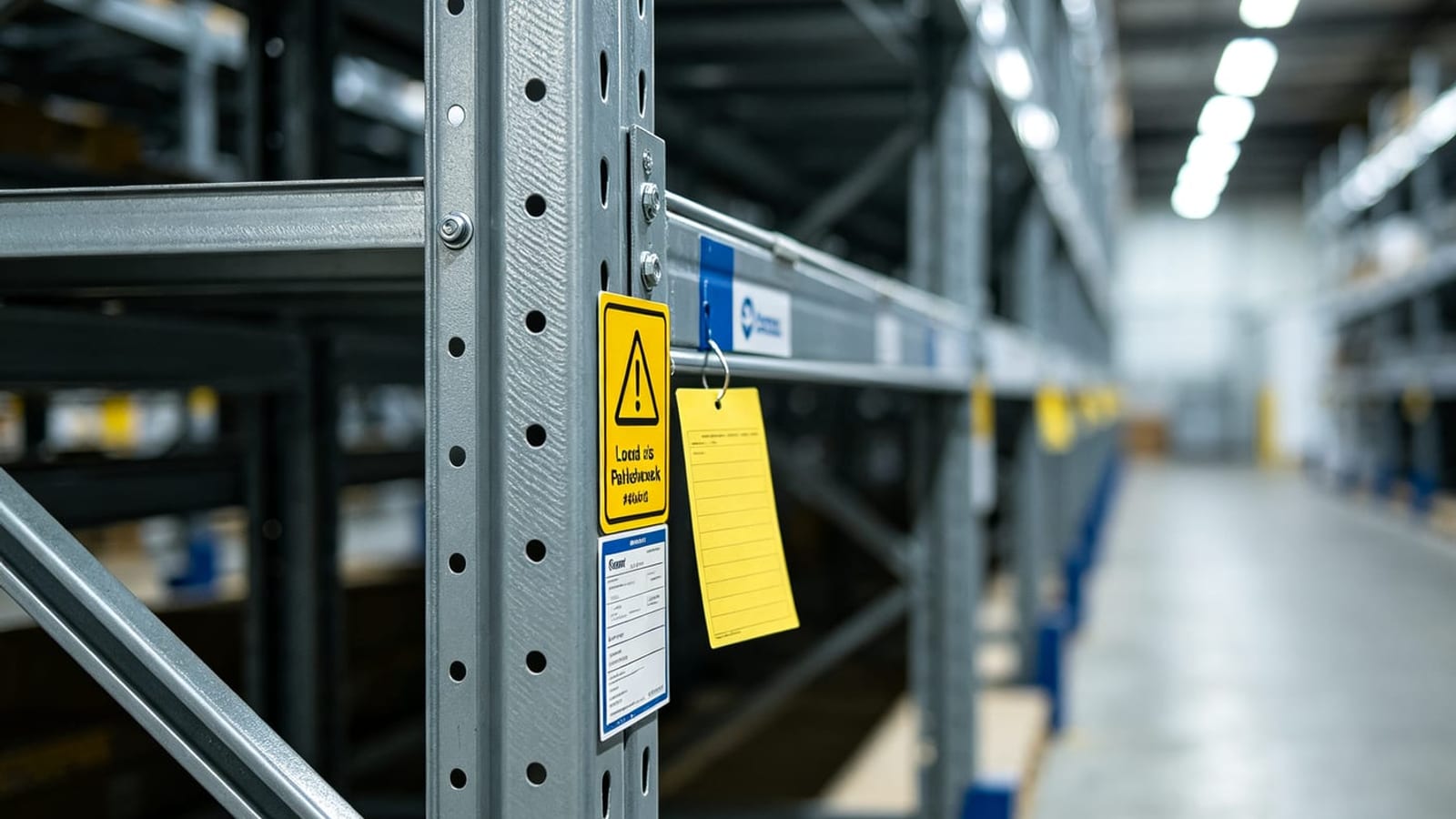
Pallet racking is safe until it's overloaded or damaged and nobody acts. Three basics prevent most incidents: a clear load notice, a regular inspection, and a simple red/amber/green damage rule everyone understands.
Quick answer: three racking-safety basics
Three basics keep pallet racking safe: visible load notices stating the safe bay or beam load, regular inspections, and a red/amber/green damage rule — green OK, amber monitor and repair, red offload and isolate now. Repair bent beams or damaged uprights promptly, since a damaged upright can lose a large share of its capacity. Record every check.
The three basics
| Basic | What it means |
|---|---|
| Load notices | A visible sign stating the safe bay/beam load so no one over-loads |
| Regular inspection | Routine checks (and a periodic expert inspection) for damage and overload |
| Damage classification | Green = OK, Amber = monitor/repair, Red = offload & isolate now |
Running an inspection
- Look for bent or split beams, damaged uprights, loose feet, missing beam locks and overloaded bays.
- Act by colour — red damage means offload and isolate immediately; amber means repair on a plan.
- Keep load notices visible and update them if the configuration changes.
- Record each inspection so trends and repairs are tracked.
Rack safety is governed by standards such as RMI / ANSI MH16.1, and workplace duties by OSHA. A damaged upright can lose a large share of its capacity, so never ignore red damage.
Safe, rated racking
HAOFU supplies heavy-duty pallet racking with clear load ratings. Contact us for racking specified and labelled for your loads.
Frequently Asked Questions
- Why are rack load notices important?
- A load notice states the safe bay and beam load so no one over-loads the racking. Overloading is a leading cause of rack failure, and a clear, visible notice is the simplest way to prevent it.
- How often should pallet racking be inspected?
- Run routine visual checks frequently (often weekly by trained staff) plus a periodic expert inspection (commonly annually). Record each inspection so damage trends and repairs are tracked.
- What is the red/amber/green rack damage classification?
- It is a risk rating: green means no significant damage, amber means damage to monitor and repair on a plan, and red means serious damage — offload and isolate the rack immediately until repaired.
- What should a rack inspection look for?
- Bent or split beams, damaged or bowed uprights, loose or cracked base feet, missing beam safety locks, and overloaded or incorrectly loaded bays — acting by the red/amber/green rule and per standards like RMI/ANSI MH16.1.
- What happens to a rack's capacity when an upright is damaged?
- A damaged upright can lose a large share of its load capacity, which is why damage must never be ignored. Under the red/amber/green rule, red damage means offload and isolate the rack immediately until it is repaired, while amber damage is repaired on a plan. Regular inspection catches bent or split beams, damaged uprights and loose feet before they cause a failure.