Steel Pallet Load Overhang: Choose the Right Loaded Footprint
Draw the bearing footprint, pallet perimeter and complete packed outline separately. Start with a contained load, compare any projection against cargo support and receiver requirements, and examine a larger custom deck when the current size cannot meet both. No universal overhang allowance replaces the actual load and route review.
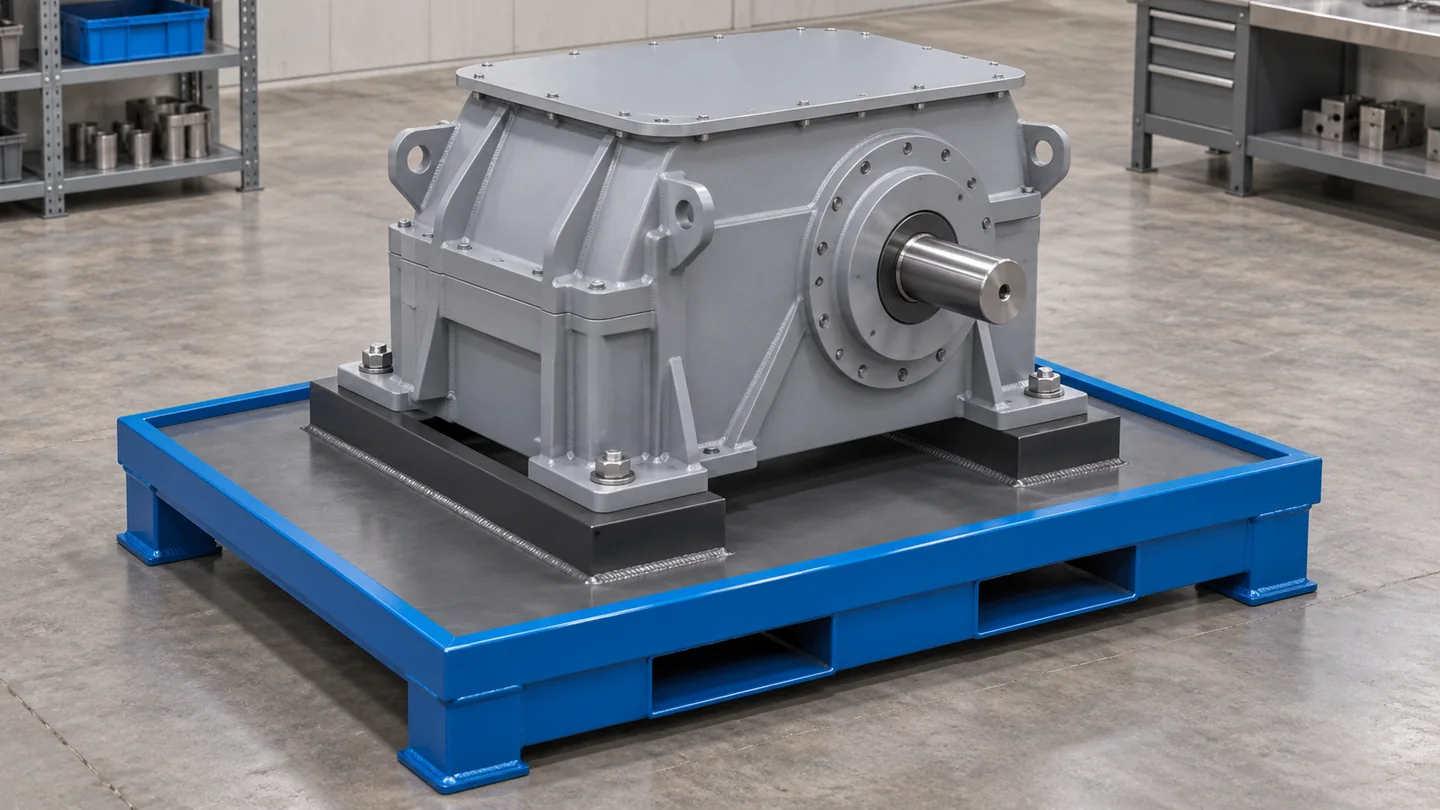
Size a steel pallet from both the cargo's bearing footprint and its complete packed outline. Keep the load inside the pallet perimeter when the cargo needs full support or the route requires it. Compare a projecting feature only after checking which surfaces carry weight, what the projection can strike and whether the receiver accepts the resulting unit. If those conditions cannot be met, compare a larger deck or another permitted load orientation. There is no useful universal overhang allowance for every steel component and route.
For packaging engineers and buyers sourcing custom industrial steel pallets, the practical task is to quote the same loaded footprint. A pallet's nominal length and width do not show where the cargo bears or how much space the packed unit occupies.
Draw three outlines before choosing the deck size
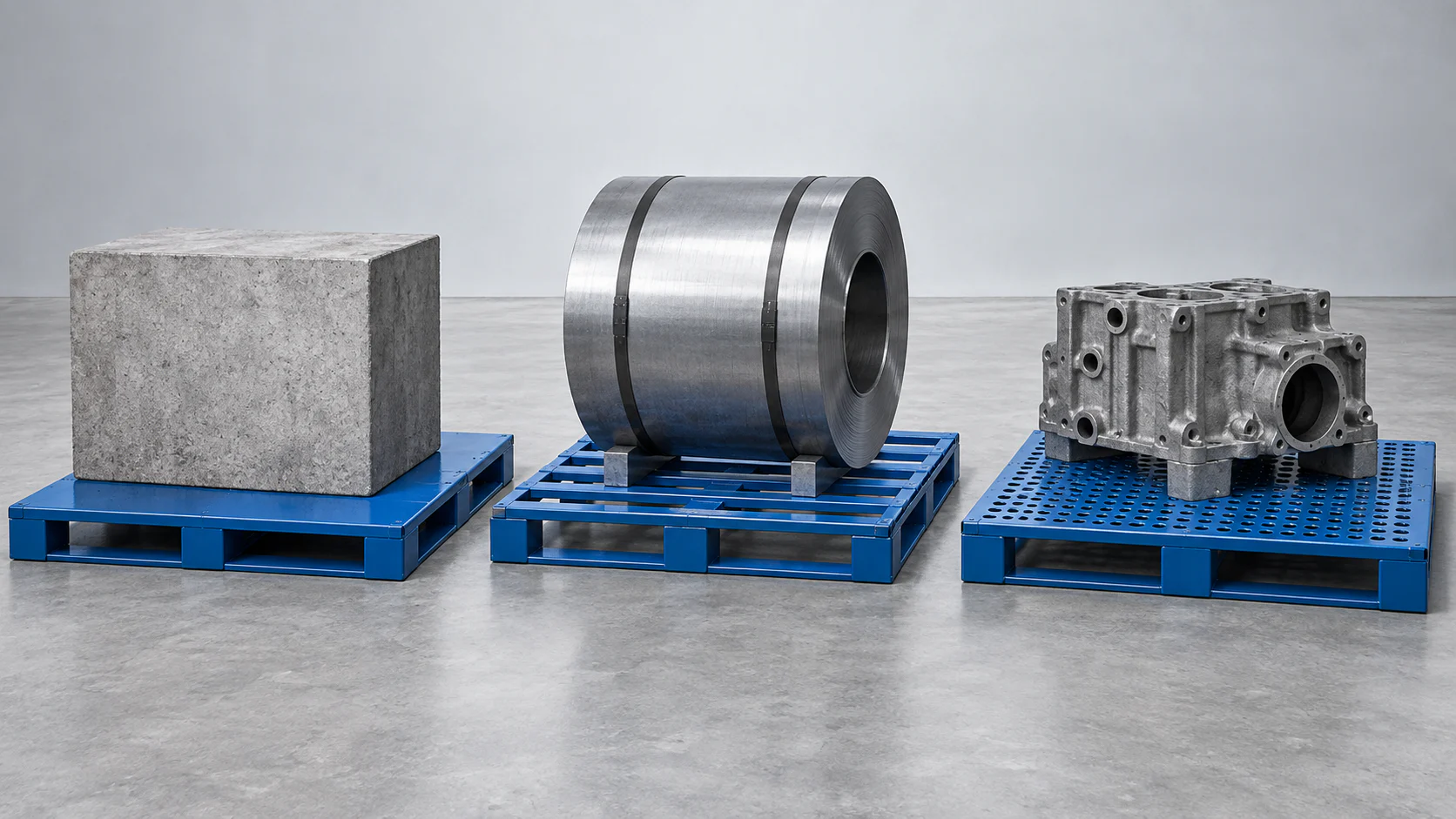
Consider a machine housing with two bottom rails and a wide upper flange. Its bearing footprint may fit the deck while the flange extends beyond it. A different housing may look smaller from above but place one supporting foot near an open edge. Those are different purchasing problems: one concerns a projecting feature and occupied space; the other concerns support under a bearing point.
Put three outlines on a common drawing: the cargo contacts, the pallet perimeter and the packed load perimeter. Add the travelling orientation and identify the reference side used for receiving or storage. With that drawing, procurement can compare proposed sizes without treating every projection as either harmless or automatically equivalent to an unsupported foot.
| Outline | Include | Decision it supports | Supplier input |
|---|---|---|---|
| Bearing footprint | Feet, skids, pads and other load-carrying contacts | Where support must exist under the cargo | Bottom view and permitted contact map |
| Pallet perimeter | Deck, frame and fitted external features | The fabricated carrier size to quote | Maximum outside limits and proposed base |
| Packed load envelope | Cargo, protection, projections and fitted restraint details | The space occupied throughout the route | Loaded plan, side view and packaging state |
Start with a fully contained arrangement
Keeping the packed outline within the pallet is the clearest starting point when handling and receiving depend on the pallet edges. It can also keep vulnerable packaging from becoming the first point of contact with neighbouring loads. Check the actual package and contacts rather than assuming that a box drawn flush with the edge is fully supported underneath.
CHEP's handling guidance explicitly says that product should not overhang its pallet perimeter. Use the relevant platform and receiver instructions for your route. A custom steel pallet enquiry should identify those instructions early, particularly when a familiar footprint is being reused for a different component.
Full outline fits inside. Send the supplier: Packed load and contacts.
A feature extends out. Send the supplier: Support and route review.
Current size cannot fit. Send the supplier: Maximum occupied space.
Separate a projecting feature from a bearing point
A non-contact flange can extend outside the bottom support area without carrying the component at that edge. It still changes the geometry seen by a doorway, neighbouring load, rack position or operator. Mark the projection on the loaded drawing, including its height, and explain whether it is cosmetic, fragile or requires a protective cover.
An unsupported bearing point needs a support-layout decision before the size is accepted. Show the complete foot or rail on the bottom view, not just its centreline. The steel pallet deck guide helps choose the contact surface after those positions are known. Selecting solid sheet or thicker steel does not by itself put support under a foot that sits outside the proposed carrier.
Size from the packed state, not the bare casting
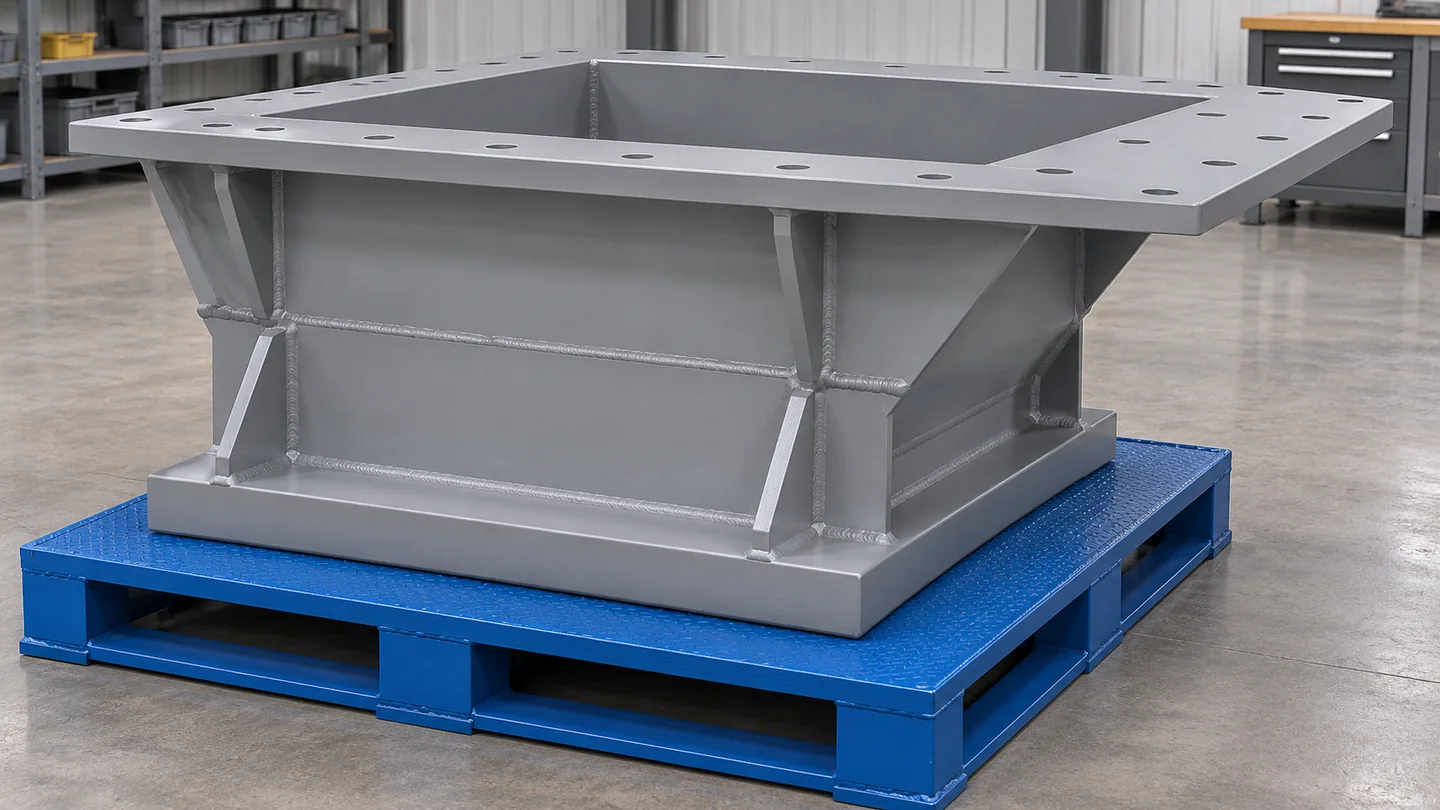
A cap, edge protector, cover or shipping fixture can be wider than the component underneath it. Include that finished packaging state before comparing pallet dimensions. Also show where temporary handles, clamps or other fittings remain during the trip. A drawing based on a bare component can fit the proposed footprint while the real dispatched unit does not.
Packaging Corporation of America's unitization guide explains why projecting packaged goods can be exposed during handling. Its carton examples are useful context for the package review; the buyer still needs the actual steel component and protective arrangement on the custom pallet drawing.
Ask the packaging supplier which surfaces need continuous support and which areas are simply part of the outer protective envelope. If the packaging is changed later, recheck the loaded outline. A revised cap can affect storage spacing even when the pallet and metal component remain unchanged.
Check the occupied space at each route stage
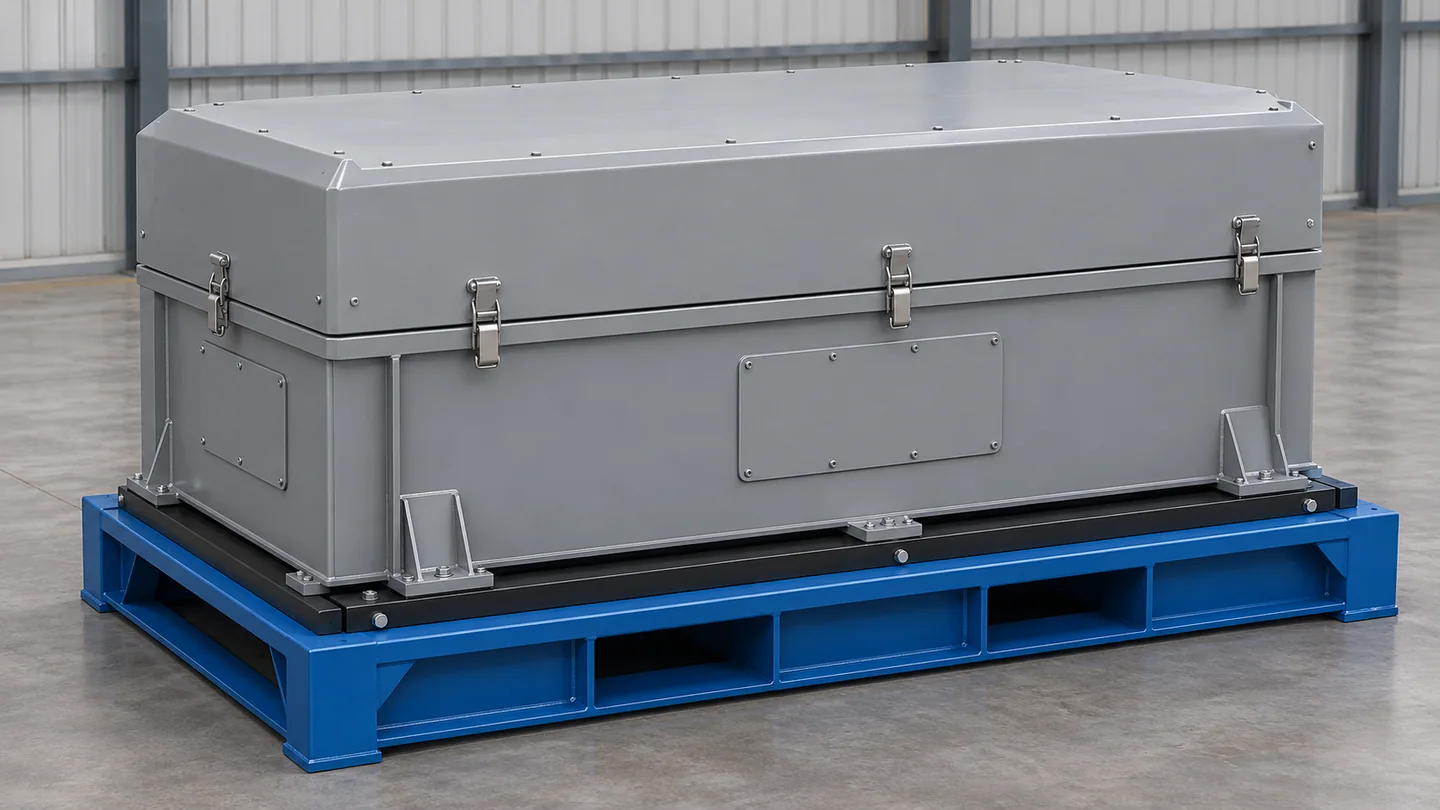
The largest projection may face a different direction after the pallet is turned at receiving. Sketch the completed load in the actual storage and vehicle orientations. Include adjacent units, aisle approach and any receiving template that limits the occupied rectangle. This review establishes the space to reserve; it is separate from choosing the pallet's fork-entry detail.
WITRON's delivery and packaging guidelines, dated November2026, distinguish load-handling requirements by receiving location and goods category. The practical lesson is to obtain the destination's current requirement, not to borrow a permission for projecting goods from another site's document.
If a receiver requires a fixed outline that the packed component cannot meet, resolve that conflict before requesting a repeat order. The supplier can compare a changed carrier or permitted orientation, while the buyer checks the receiving and transport arrangement. Ordering the familiar pallet again only moves the unresolved dimension problem downstream.
Compare a larger deck with the same load drawing
A larger custom deck is worth comparing when the required contacts or protective envelope cannot fit the present size. It may introduce a different storage footprint, empty-pallet arrangement or vehicle loading pattern. Include those consequences in the comparison rather than choosing only the lowest unit price or the largest available deck.
Give every supplier the same cargo drawing and route limits. Ask for separate dimensions for the carrier and the loaded unit, with the proposed supports shown. A smaller proposal and a larger proposal are only comparable when they carry the same packed configuration and preserve the required contacts.
Keep footprint, restraint and handling decisions connected
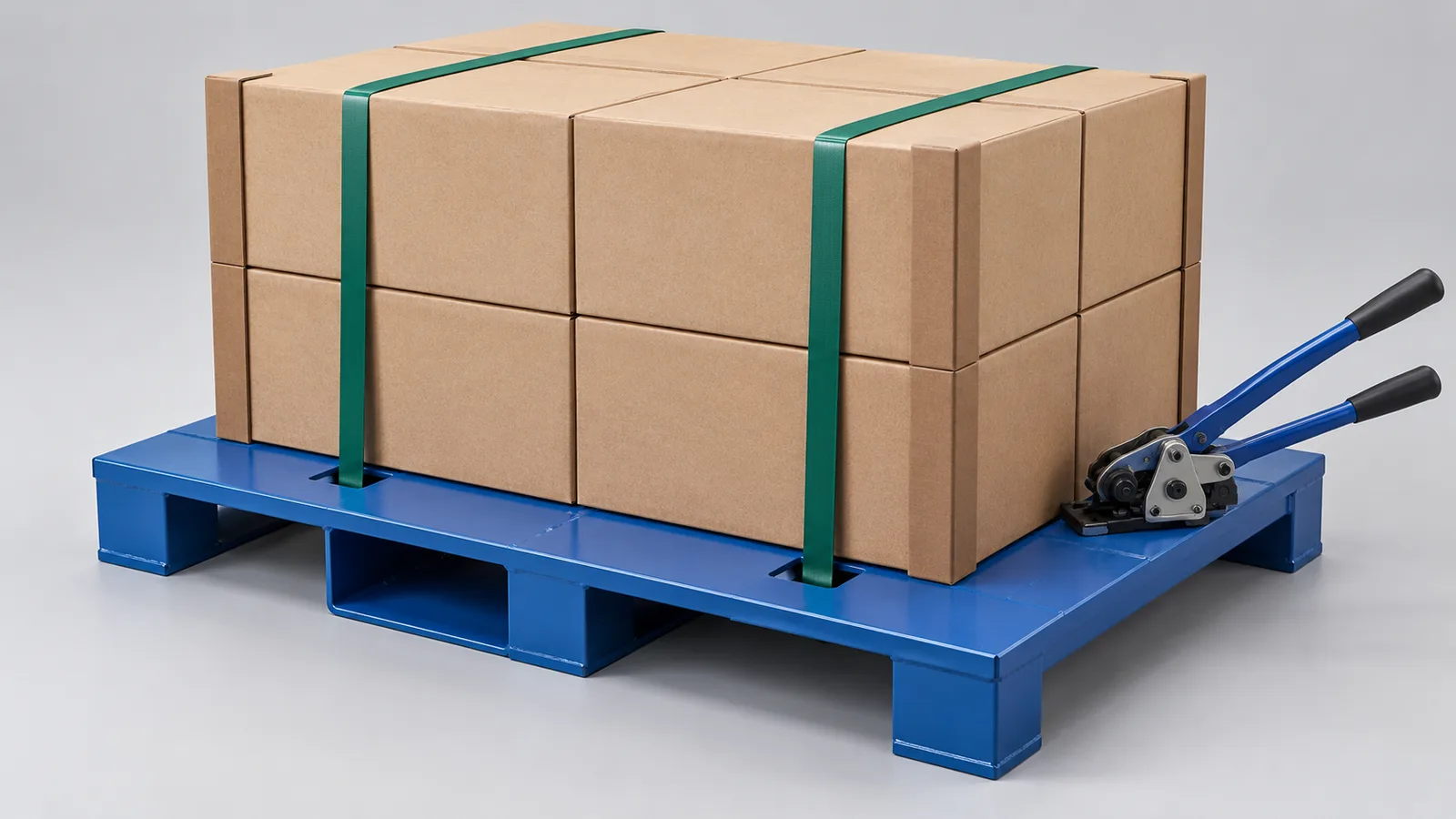
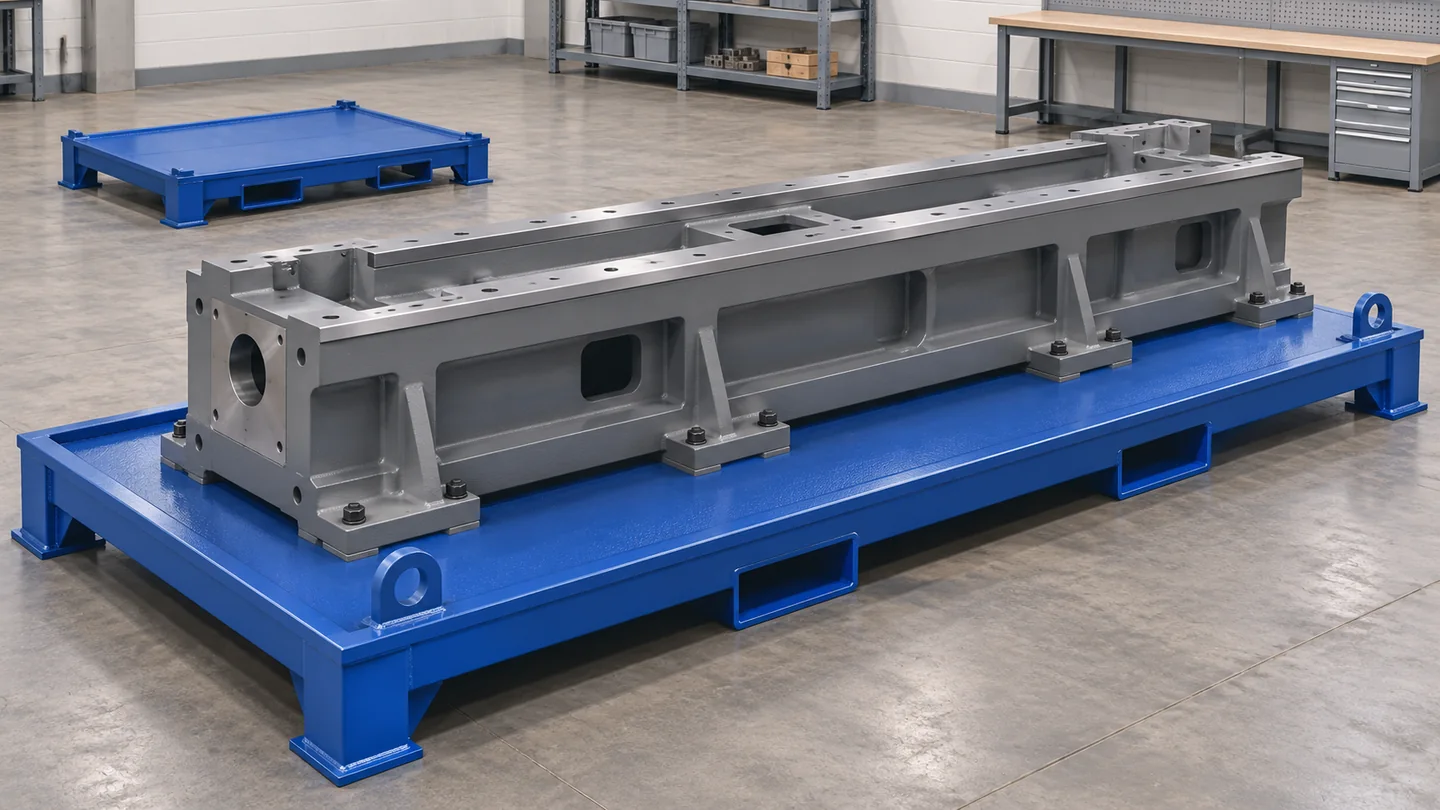
Restraint fittings and packaging can occupy the margin around the cargo. Preserve the space needed for the selected fastening task without treating a strap as a substitute for cargo support. The strapping-channel guide covers the band and tool path; the export-packing guide covers the complete unit-load restraint inputs.
Ask who supplies the protection and restraint components included in the proposal. For a projecting feature, show any protector in the travelling position. The quotation should then describe the actual carrier and load arrangement being compared, rather than leaving purchasing to reconcile separate assumptions after fabrication.
Five steps to a steel pallet footprint quotation
- Draw the bearing footprint. Mark every foot, rail or pad that carries the cargo and the surfaces that must stay supported.
- Add the packed outline. Include flanges, protection, restraint fittings and the highest or widest protrusions in the actual loaded orientation.
- Collect the route limits. Obtain receiving, vehicle, storage and handling restrictions for the complete loaded unit, including any no-overhang rule.
- Compare the footprint options. Compare a fully contained layout, an explicitly reviewed projection and a larger custom deck against the same contact and route drawings.
- Request one comparable proposal. Send the load drawing, packed envelope, route limits, quantity and destination; ask the supplier to show the pallet perimeter and load perimeter separately.
- Do all bearing areas fit the proposed support?Yes → Check the packed outline.No → Can the deck be enlarged?
- Can the deck be enlarged?Yes → Compare a larger deck.No → Review load orientation.
HAOFU develops steel pallet dimensions, deck and handling base from customer load and route information. Start with a photo and a short size requirement. For a developed proposal, add the bottom contact drawing, complete packed outline, destination limits, handling method, order quantity and delivery location. Ask the proposed drawing to make the load perimeter as visible as the pallet perimeter.
Send a load photo or pallet size requirement — detailed drawings can follow your first message.
Frequently Asked Questions
- Is there a standard amount of overhang allowed on every steel pallet?
- No single allowance covers all cargo and routes. The receiver may prohibit overhang, while the cargo support and packed envelope can impose different limits. Give the supplier the actual contact drawing and route requirements before accepting a projecting load.
- Is a projecting flange the same as an unsupported load-bearing foot?
- No. A flange can sit outside the base footprint while the feet remain supported, but it still enlarges the occupied envelope and may need protection. An unsupported bearing point changes how the cargo is carried and requires a different support-layout decision.
- Does a stronger steel deck make overhang acceptable?
- Deck strength alone does not answer cargo support, edge exposure, receiving rules or route clearance. Review those conditions together; increasing material thickness is not a substitute for the correct pallet footprint.
- Should the pallet be sized from bare product dimensions?
- Use the packed load in its travelling orientation. Include protective caps, wrapping, projecting fittings and restraint details, then identify the smaller bearing footprint separately.
- When should I request a larger custom steel pallet?
- Compare a larger deck when the required bearing areas or protected load outline cannot fit the current footprint and the route can accept a larger unit. Check the completed load against storage and receiving restrictions before selecting it.
- What is enough to start a steel pallet enquiry?
- A load photo and a short explanation of the size problem are enough to start. Add a bottom contact drawing, packed dimensions, route restrictions, quantity and destination as available for a developed quotation.