Solid, Open or Perforated Steel Pallet Deck? Start with the Load Surface

Choose a steel pallet deck from what the cargo actually touches. A solid sheet provides a continuous surface for broad footprints, loose small items or sliding placement, but water, chips and cleaning residue need a route off the deck. An open-profile deck suits defined feet or pads when the structural members can sit directly under them and access below the load matters. A perforated sheet is a middle option when the smallest contact can bridge the openings and drainage or visibility is useful. Send the supplier a bottom view of the load, contact dimensions, lift/removal path and route conditions.
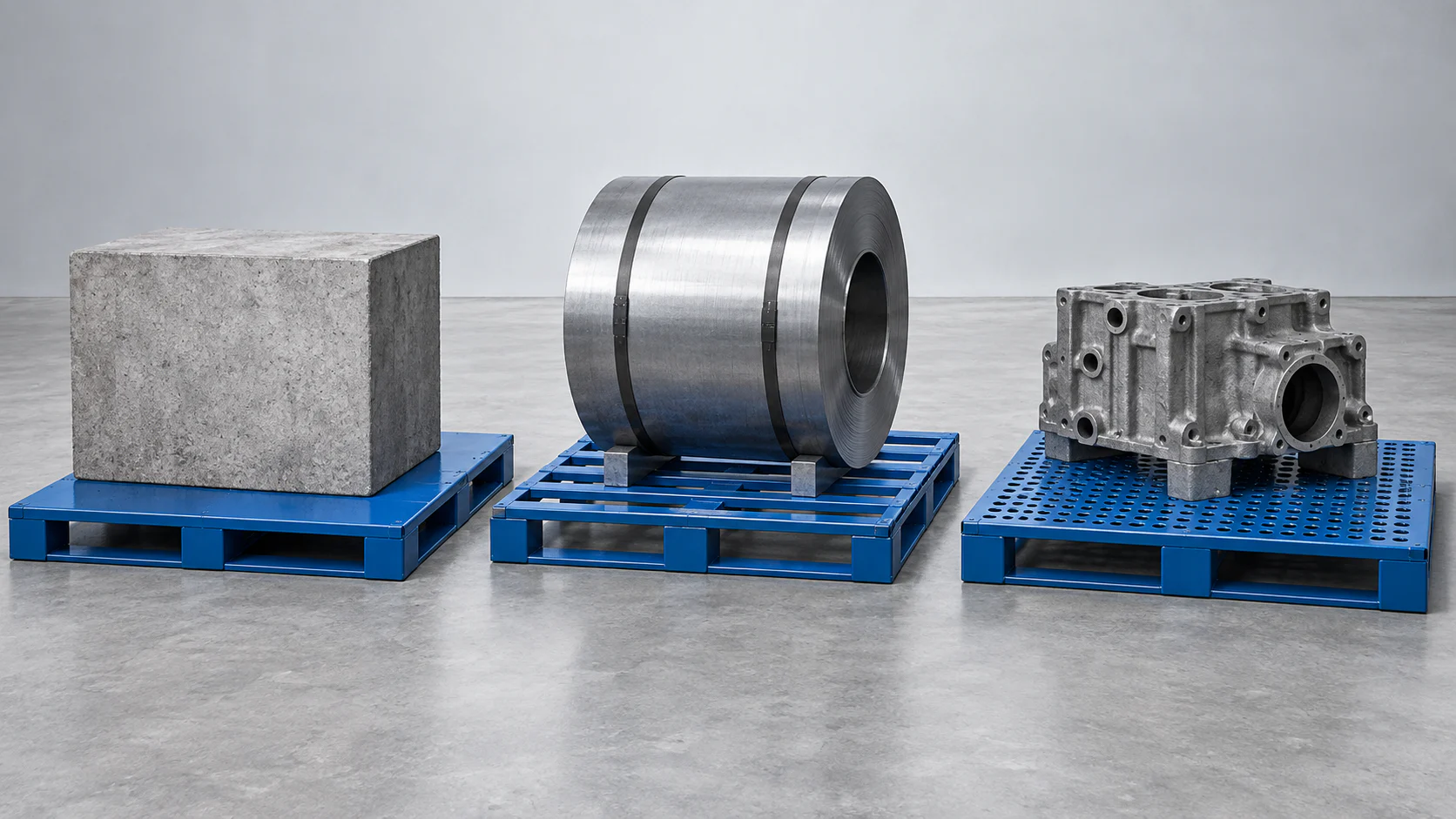
Choose a steel pallet deck from the load's bottom contact—not from a catalogue photo. Use solid sheet when the cargo needs broad continuous support, contains loose small items or slides across the surface during loading. Use an open welded-profile deck when defined feet, pads or rails can sit over structural members and the task needs access or drainage between them. Use perforated sheet when a more continuous surface is useful but designed openings still serve drainage or visibility. Draw the smallest contact, every lifting point and the loaded removal path before asking a supplier to size the deck.
Steel-pallet suppliers show all three formats, but most stop before the buyer's actual decision. Southern Perfection lists mesh, solid and slatted decks matched to the part. Brokelmann describes open profiles and solid sheet selected around the load and handling process. Vestil's solid-deck example shows the value of a continuous contact surface for parts, cartons and equipment. The useful next step is to translate those formats into a contact map, residue route and unloading task for a custom drawing.
Compare deck formats against the job
| Deck format | Good starting condition | Question that decides the detail |
|---|---|---|
| Solid sheet | Broad or irregular base, loose small items, sliding load/unload or a need to contain debris. | Where do liquid, chips and cleaning residue leave the deck? |
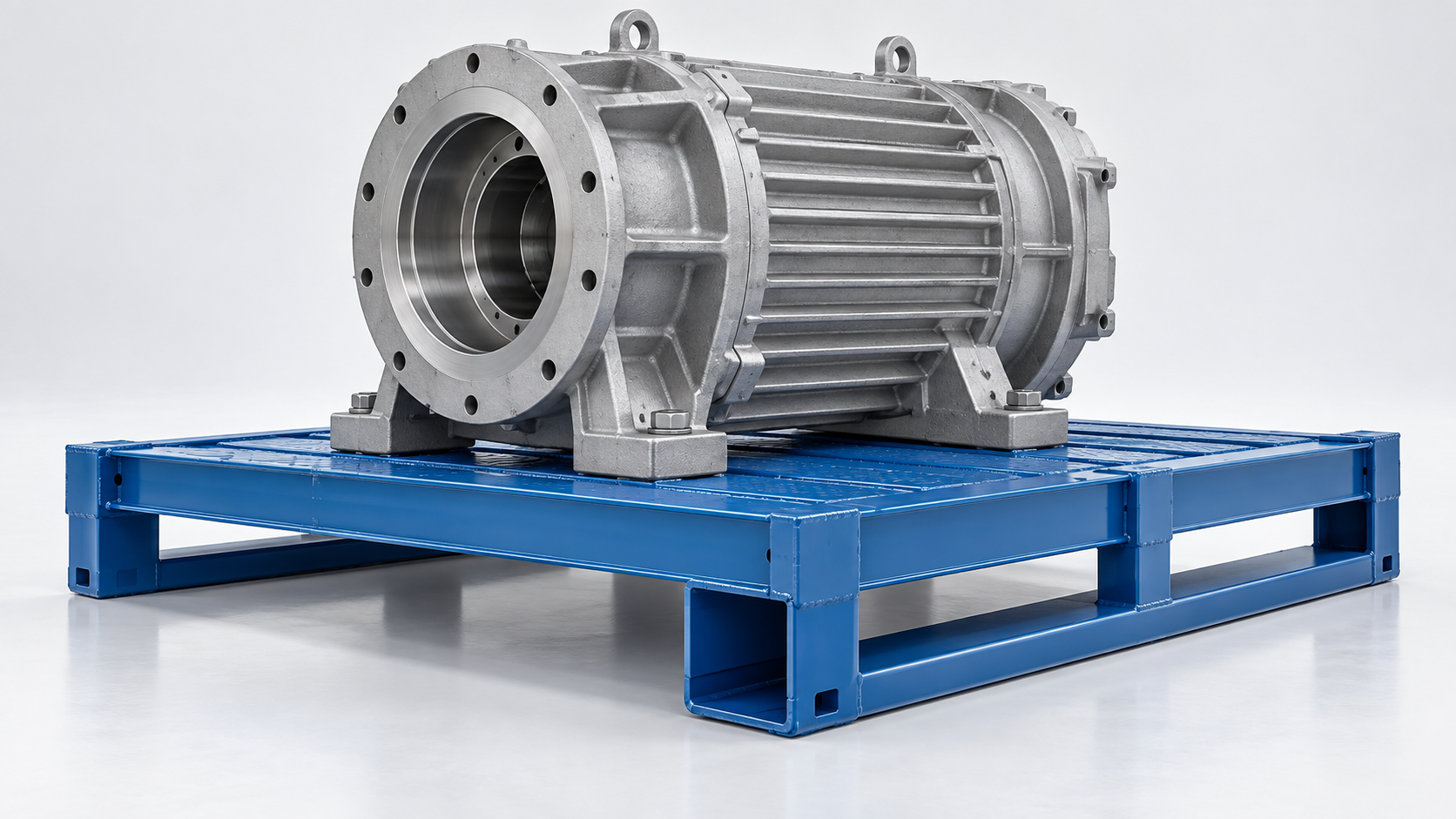
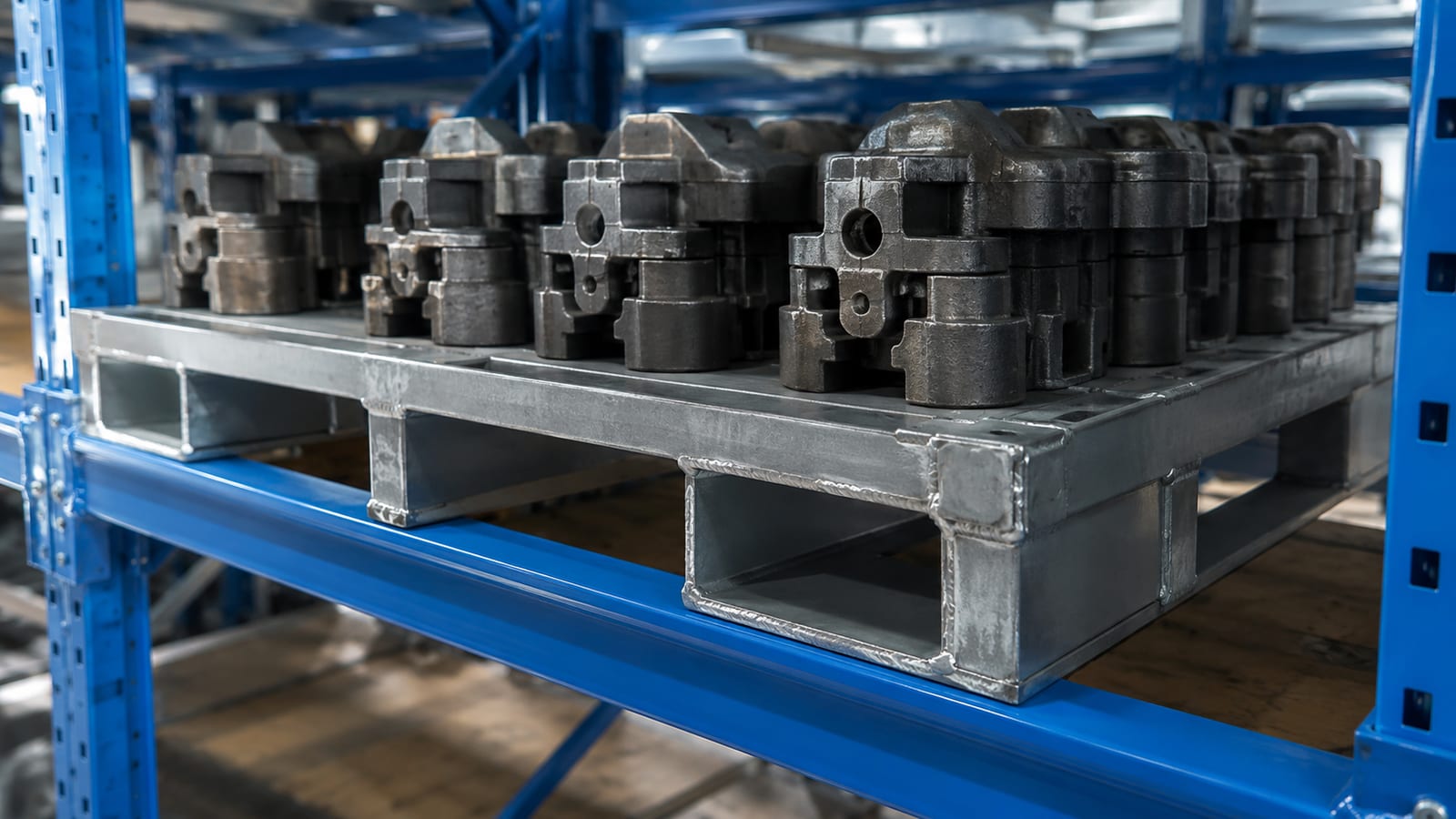
| Open welded profiles | Known feet, pads, skids or rails can sit directly over structural members. | Can every contact land fully on a profile through all allowed orientations? |
| Perforated sheet | A flatter support surface and designed openings are both useful. | Can the smallest foot, wheel, package or loose component bridge the hole pattern? |
| Hybrid zones | Some areas need continuous support while other areas need access or drainage. | Can the transition avoid a snag, unsupported edge or trapped residue? |
Use when the unit needs broad continuous contact or small items must be contained; review residue and drainage.
Use when defined feet or pads can sit over structural members and access below the load matters.
Use when a more continuous surface and designed openings are both useful; match the hole pattern to the smallest contact.
Start with the cargo bottom view
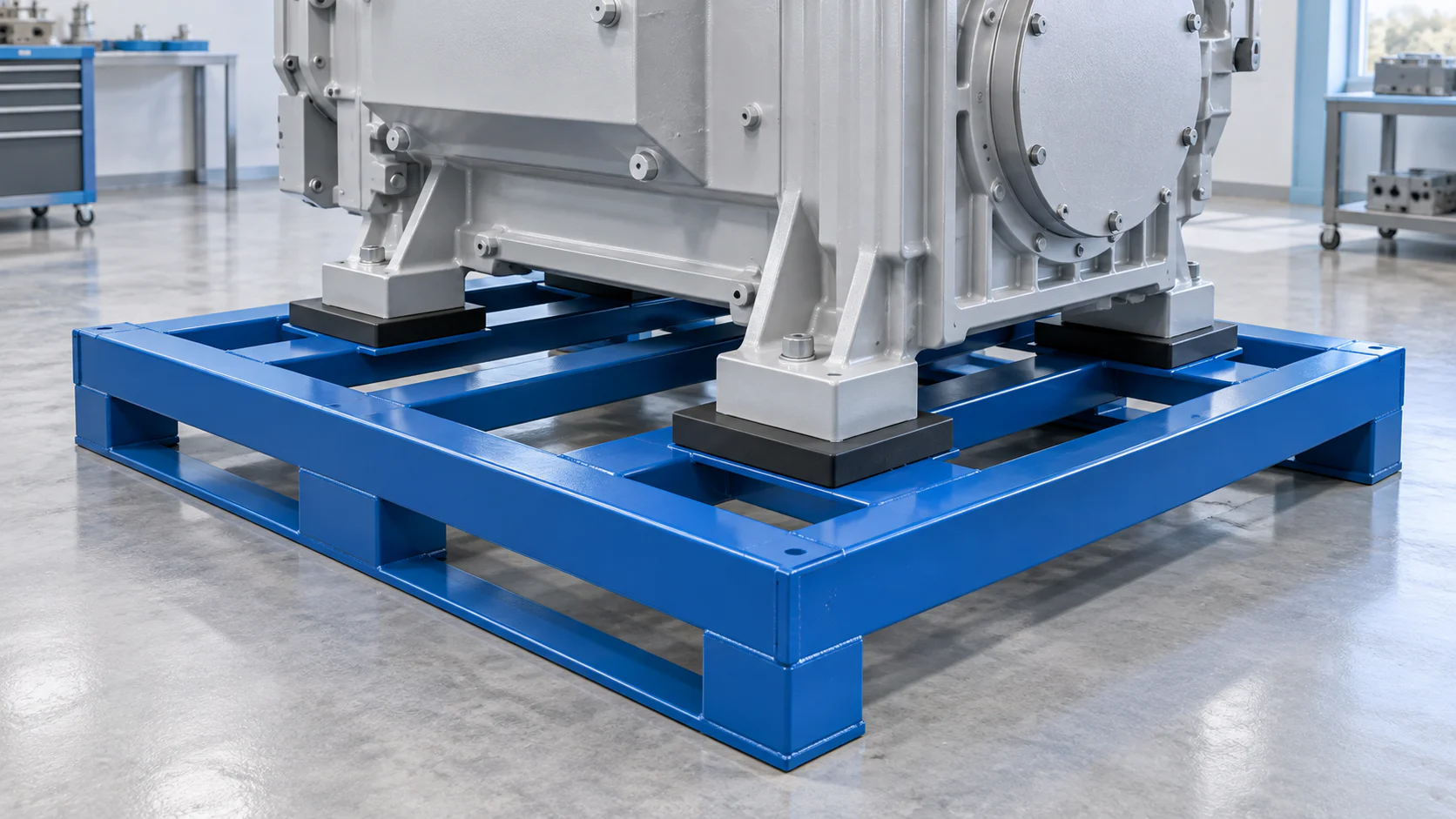
Send a bottom view or CAD section showing every foot, runner, skid, pad and sensitive underside feature. Add the real contact dimensions rather than only the outside load envelope. Mark permitted supports, areas that must remain open, any load overhang, restraint points and how the cargo enters or leaves the pallet. If several products use the same pallet, overlay the complete family and highlight the smallest contact.
A solid plate can bridge gaps in the cargo footprint, but it does not remove the need to show where the load is supported beneath the plate. An open deck exposes that relationship directly: every load foot should land over an intended member, not between two profiles. Perforated sheet adds another scale—the opening pattern must be small enough for the contact yet large and well placed enough to serve its intended drainage or access function.
Add liquid, debris and access to the same drawing
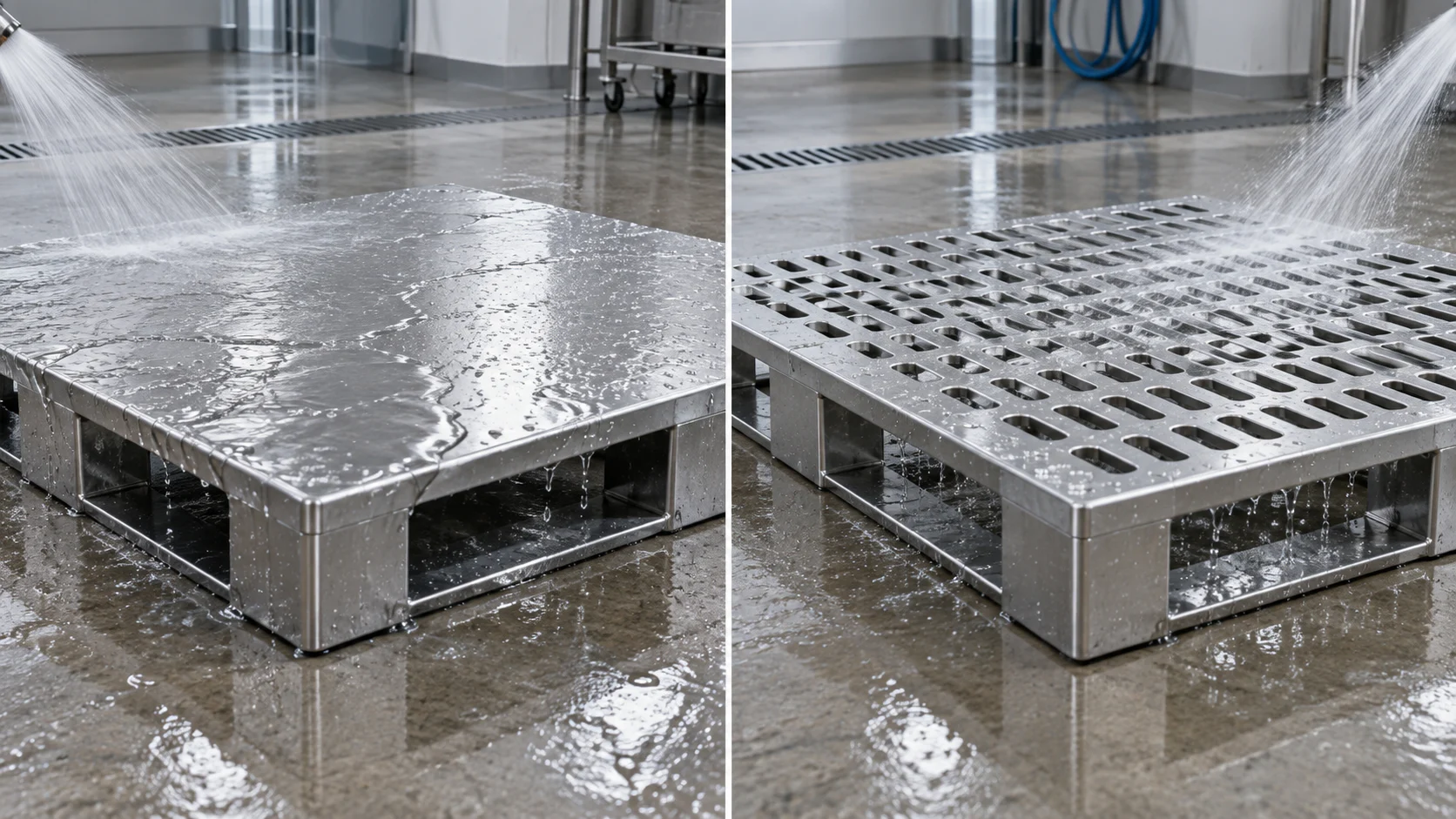
Ask what can reach the deck during the full route: rain, wash water, oil, machining chips, broken packaging or loose fasteners. Then show whether the deck is wiped, rinsed, tilted, vacuumed or removed from service for cleaning. Solid sheet contains small material but needs a deliberate edge, drain or cleaning route. Open profiles expose more edges and gaps but give direct access below defined contact points. Perforations can pass liquid and fine debris, yet their size and distribution must still suit the cargo and the cleaning method.
Keep deck choice separate from fork entry and base support
The top deck answers how the cargo meets the pallet. Fork pockets answer how the handling equipment enters. Feet or runners answer where the pallet itself is supported after set-down. Put all three views on the final drawing, but do not let one substitute for another. The existing forklift and transfer guide covers entry and downstream equipment; the feet-versus-runners guide covers the lower load path.
The 2025 edition of ISO 8611-1 provides test methods for new flat pallets and explicitly notes that specified tests do not replace field tests on a particular design. For a custom steel pallet, define the intended use and acceptance evidence with the responsible project engineer; do not import a supplier's published rating from a different pallet.
- Map the contactShow the full footprint, individual feet or pads, permitted support and overhang.
- Add the routeRecord lift, deposit, securing, unloading, debris and cleaning conditions.
- Compare deck formsUse solid sheet, open profiles or perforated sheet only where its trade-offs fit.
- Trial the complete unitCheck representative cargo through loading, handling, deposit and removal.
Five steps to specify the pallet deck
- Map the cargo contact. Provide a bottom view with every foot, pad, skid, runner, small loose item and permitted support zone.
- Draw loading and removal. Show whether the load is placed vertically, slid, rolled, craned or lifted from below, including tool and grip clearance.
- Add route conditions. Record debris, liquids, cleaning method, environment, restraint and every deposit point.
- Compare deck formats. Evaluate solid sheet, open profiles, perforated sheet or deliberate hybrid zones against the same inputs.
- Trial the complete unit. Check representative cargo through loading, handling, deposit, cleaning where required and unloading before production release.
What to send for a custom steel pallet quotation
Send the cargo drawing and bottom view; total mass and centre-of-gravity information; individual contact dimensions and locations; permitted support and no-contact areas; loose components or packaging; loading and unloading motion; lifting tool; fork and downstream support interfaces; liquid, debris and cleaning conditions; restraint points; loaded and empty route; pallet quantity; and the agreed sample-trial task. Compare steel pallet load cases and AS/RS interface inputs separately where those conditions apply.
For a project-specific custom steel pallet, send the cargo contact map, route and handling interfaces for an engineering quotation.
Frequently Asked Questions
- What is the difference between a solid and open steel pallet deck?
- A solid deck provides a continuous load surface. An open deck uses spaced welded profiles or slats, so defined feet or pads must align with the structural members while gaps remain between them.
- When should I choose a solid-deck steel pallet?
- Start with solid sheet when the cargo needs broad contact, loose small items must stay contained or the load slides across the surface. Also define how liquid, chips or cleaning residue leave the deck.
- When is an open-profile steel pallet useful?
- It can suit cargo with known feet, pads, skids or rails that land directly over the pallet profiles. It also leaves access between members for lifting, visual checks, drainage or debris removal.
- What is a perforated steel pallet deck used for?
- Perforated sheet offers a more continuous surface than open profiles while providing designed openings. Check the smallest cargo contact, loose items and cleaning method against the actual hole pattern.
- Does deck type determine steel pallet load capacity?
- No. Deck geometry is one part of the complete pallet load path. Capacity depends on the full design, load distribution, bottom supports, handling and use condition, and should be confirmed for the specific pallet.
- What should I send for a custom steel pallet deck quotation?
- Send the cargo bottom view, mass and centre-of-gravity information, contact dimensions, loading and removal motion, fork and deposit interfaces, liquid or debris conditions, restraint points, route, quantity and trial requirements.