How to Identify a Steel Pallet Configuration After an Overlay Change

Identify a steel pallet with a removable overlay by its approved base and overlay combination before loading. Mark the persistent base identity where it remains visible when empty and in use, and record the installed overlay separately. A shared base can simplify changeover when the contact surfaces vary and all allowed combinations have been reviewed. Keep dedicated builds where lookalike components or different underside interfaces make mistakes hard to spot. If runners, feet, fork openings or receiving supports change, confirm the applicable handling route before releasing the new configuration.
Identify a steel pallet with a removable overlay by its approved base and overlay combination before loading. Mark the persistent base identity where it remains visible when empty and in use, and record the installed overlay separately. A shared base can simplify changeover when the contact surfaces vary and all allowed combinations have been reviewed. Keep dedicated builds where lookalike components or different underside interfaces make mistakes hard to spot. If runners, feet, fork openings or receiving supports change, confirm the applicable handling route before releasing the new configuration.
Define which surface is removable
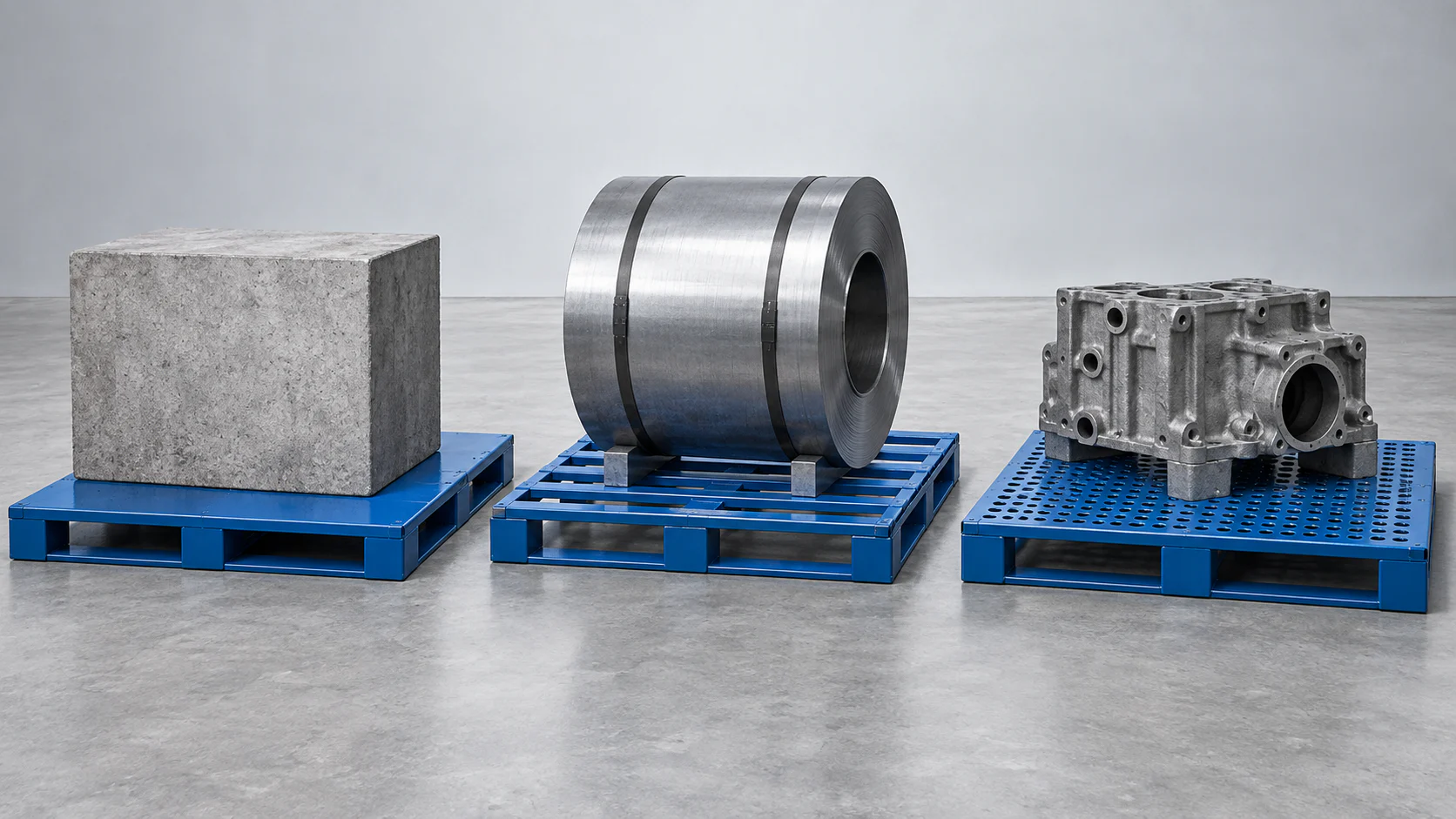
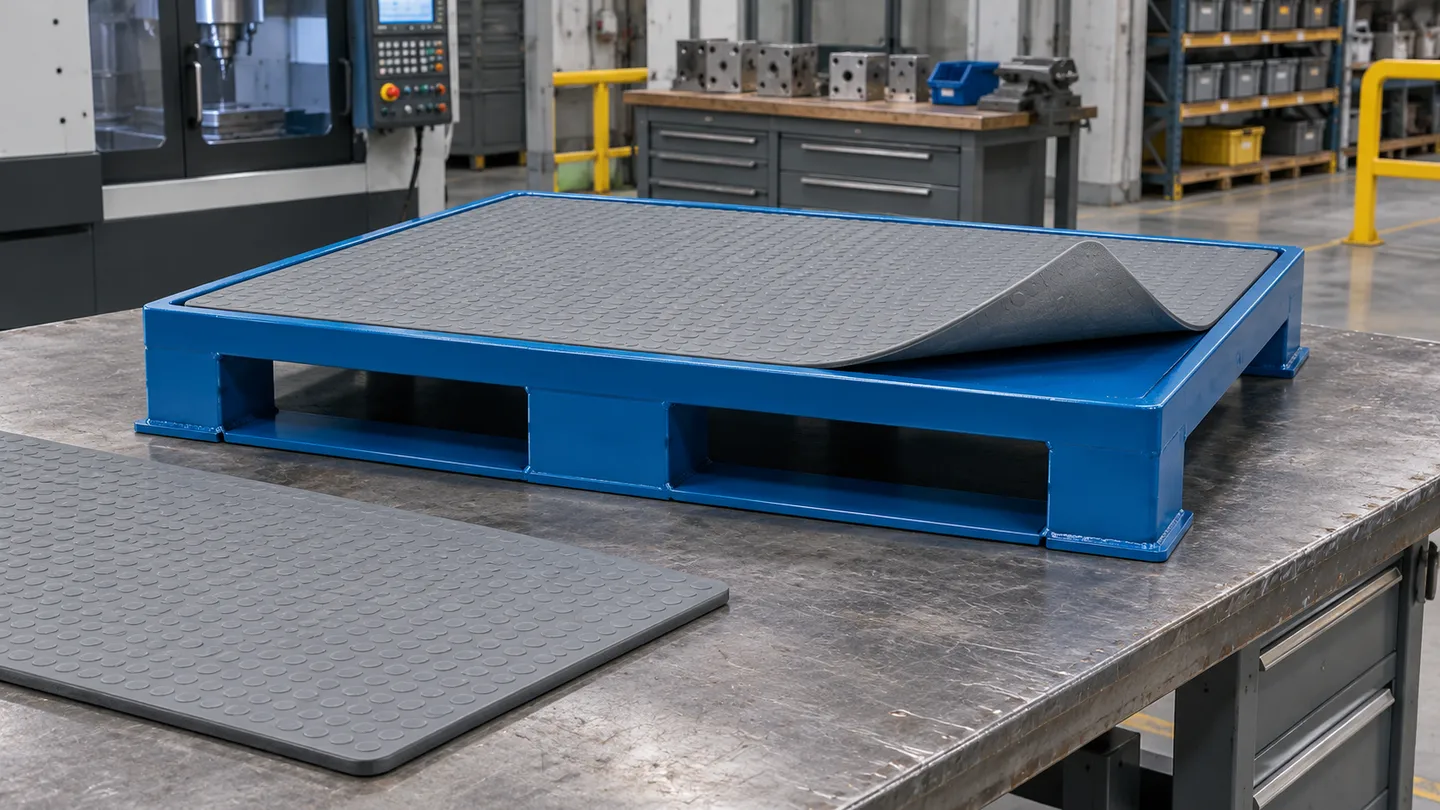
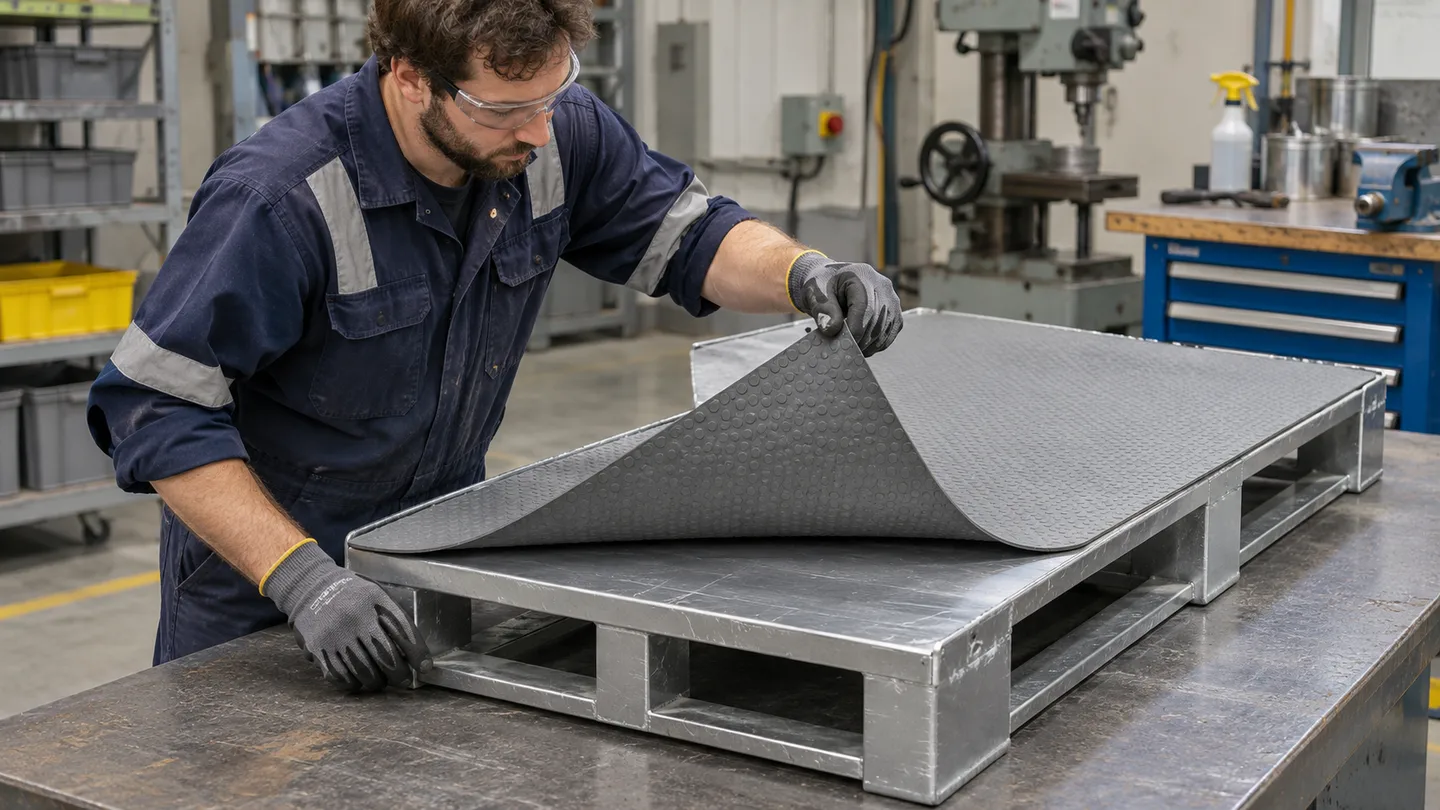
Consider a plant that ships two assemblies on pallets with the same outside dimensions. One uses a smooth removable protective overlay and the other has a shaped contact layer. The welded deck remains underneath both. An operator can fit a visually similar overlay that puts a contact in the wrong place. At receipt, the pallet can look familiar even though the underside belongs to a different production revision.
Start with the approved drawing. Separate the structural deck, cargo contact layer and base members. A loose protective surface and a removable structural panel are different design cases. Ask the supplier to define the role, support and retention of each piece. Where an element is structural, include it in the reviewed load case and assembly release rather than treating it as a consumable cover.
Decide whether a shared base is worthwhile
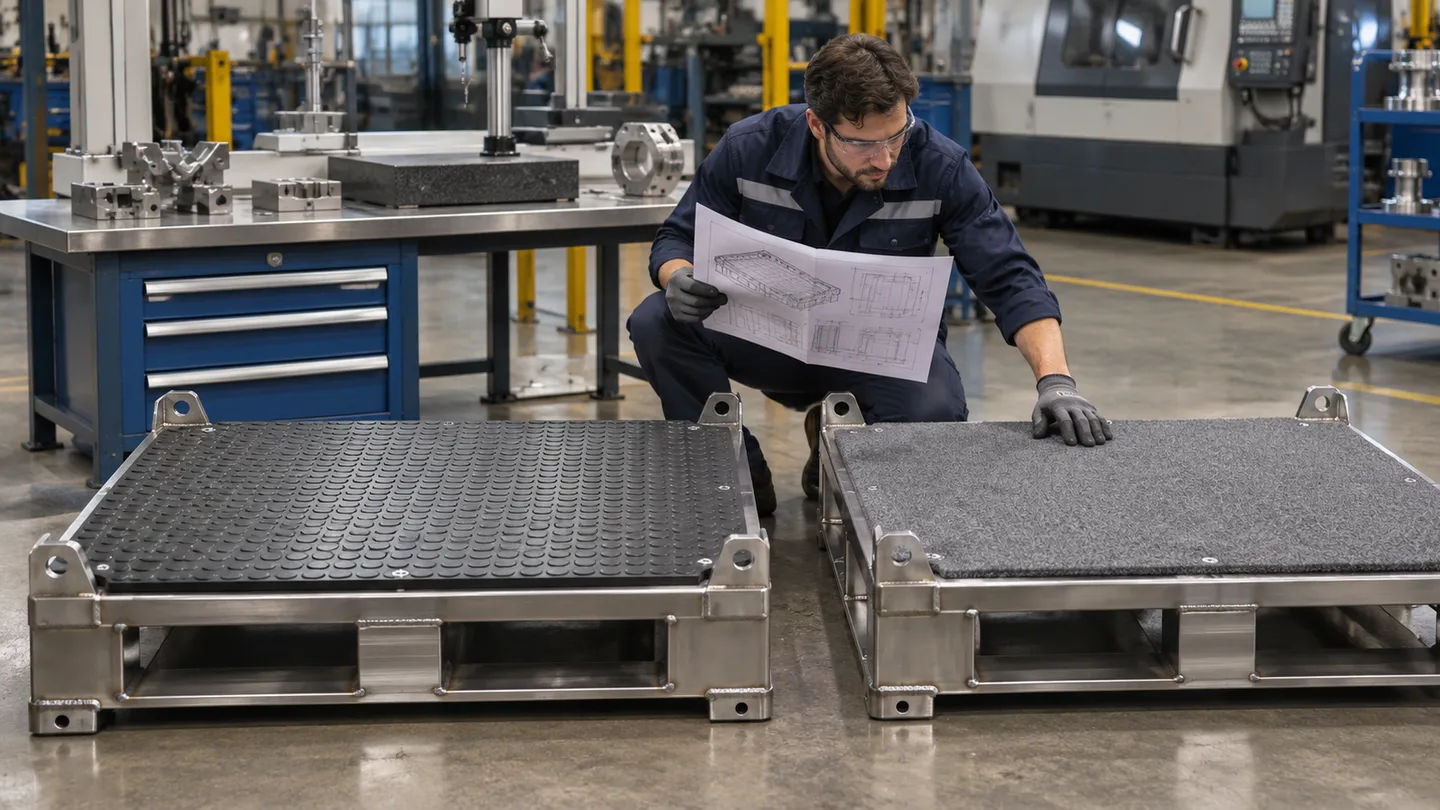
A dedicated pallet has one approved contact and base arrangement. This reduces the number of combinations a shift has to recognise, but each variant may require its own pallet inventory. A shared base can serve more than one product if the engineered combinations are compatible and the changeover fits the production routine. Compare the full task, including removed overlay storage, inspection and reinstallation.
A separate base revision may be needed where the contact change comes with different fork access, runner spacing or a new receiving surface. Draw the underside alongside the top view. LYD’s steel pallet overview illustrates the range of deck and handling configurations a buyer might compare. Record each required interface on the purchase drawing so the supplier can evaluate the actual load and route.
| Option | When it fits | What to specify |
|---|---|---|
| Dedicated pallet | Few variants or confusing lookalikes | Assign one visible build identifier |
| Shared base with approved overlays | Cargo contact changes and the base is suitable | List each allowed base and overlay pair |
| New base revision | Underside or equipment interface changes | Review route and release a separate state |
Keep the base identity visible
Put the enduring identifier on the frame at a position that remains readable with any approved overlay fitted. Give each overlay a separate identifier or a controlled reference where it can be checked during fitting. Decide what the operator can see with the pallet parked normally and which checks must happen before loading. If a label or mark is exposed to abrasion, agree the inspection method and replacement procedure with the site.
Use one configuration record that joins base revision, overlay revision, allowed cargo and orientation, approved attachment or retention state and the receiving route. An external patent application for a removable metal pallet kit illustrates separable elements. It is useful context for why separate identities matter. The approval for your combination still comes from your project records.
Make the empty changeover visible
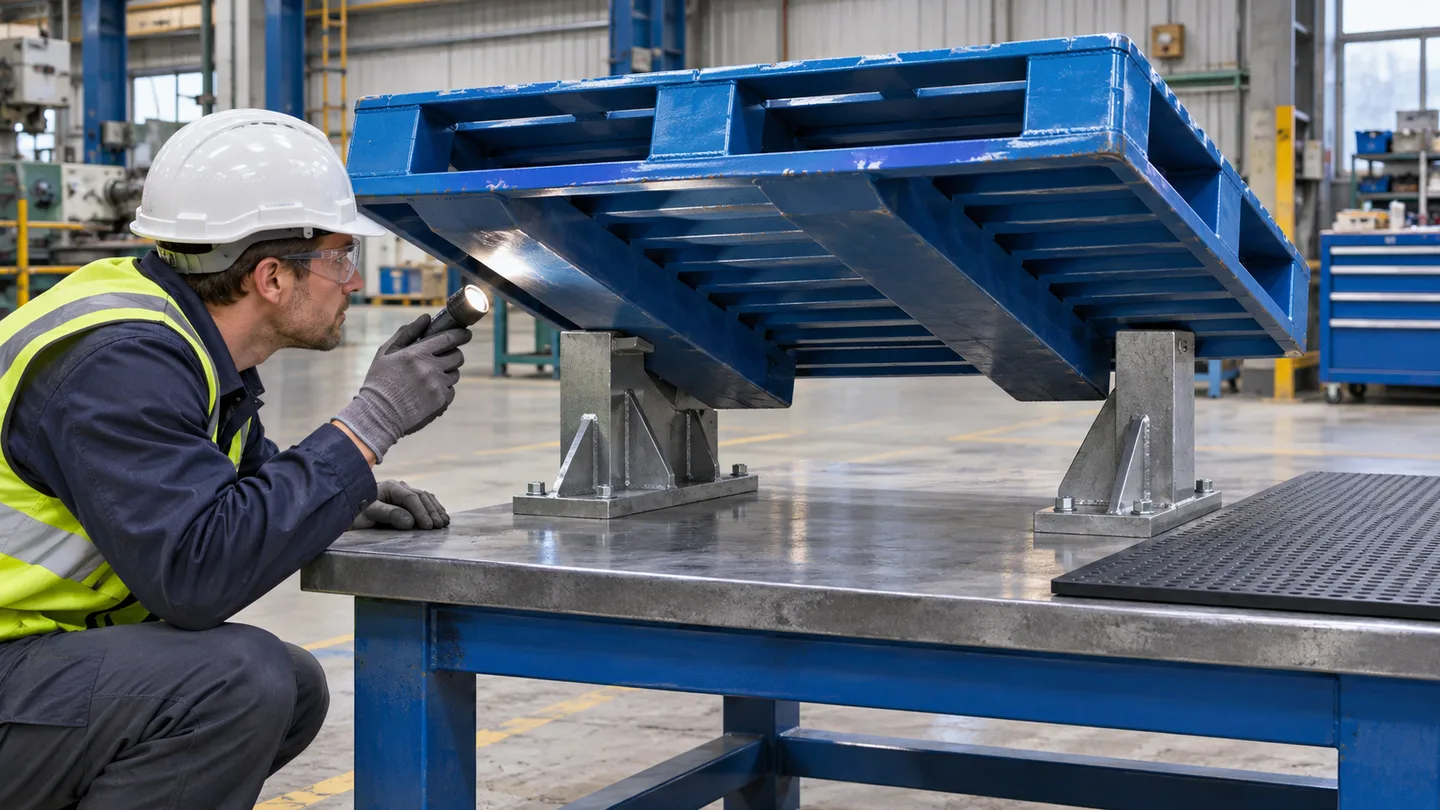
Agree a stable empty work position and identify the overlay locations, retainers and fastening features that require inspection. Remove and store the previous overlay in its designated place so two different variants cannot be mistaken for one kit. Verify the next overlay is the approved version and seated in the correct orientation. Keep any position indicators or labels visible after installation.
A good changeover record tells receiving which state was released and who checked it. For example, the team may record a top view and the base reference before adding the load. A photo of the fitted overlay does not show everything underneath. If the identifier or a mating feature cannot be verified, hold that unit in a review position rather than assuming the previous record still applies.
Check the loaded route when the base changes
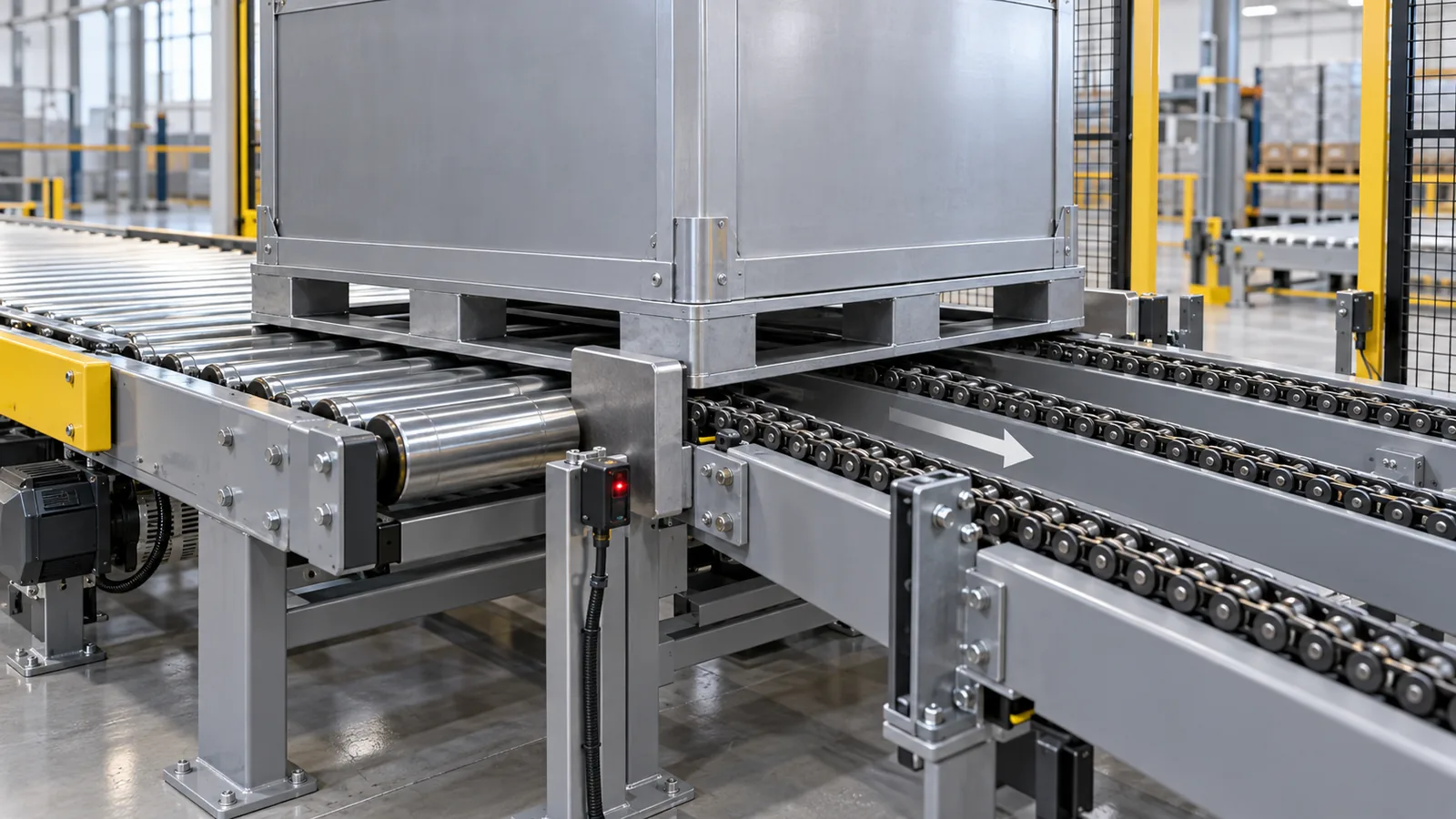
Compare the approved route with the new revision before releasing it. Ask the equipment owner to review the intended fork approach, actual support surfaces and load condition. Where the base rests on beams, rollers or another interface, show the contact geometry and intended movement. A top view can match while the feet or runners no longer land where the station expects.
The OSHA load handling guidance discusses stable loads and engagement from the truck operator’s perspective. In the engineering review, identify the planned load and equipment together. Have the responsible team determine the approval procedure for your sites. Keep the final configuration and route documents together for both the shipping and receiving teams.
Give your supplier an example of the change
Send a top and underside photograph, the cargo contact drawing, the overlay state and any revisions you expect to coexist. Mark the approved support areas, fork direction and receiving equipment. Ask a custom steel pallet manufacturer to compare dedicated builds against a shared base. Include how the team will identify each installed configuration and who approves a changed route.
HAOFU’s steel pallet page describes load-surface and handling configuration inputs. Start with the current pallet and one intended change. Request an engineering review of the overlay and base before specifying it as a repeat option. A useful quote states which surfaces and handling interfaces are included, how replacement parts are identified and which checks will be agreed before production.
Prepare your enquiry
- Decide whether a shared base is worthwhile A dedicated pallet has one approved contact and base arrangement.
- Keep the base identity visible Put the enduring identifier on the frame at a position that remains readable with any approved overlay fitted.
- Make the empty changeover visible Agree a stable empty work position and identify the overlay locations, retainers and fastening features that require inspection.
- Check the loaded route when the base changes Compare the approved route with the new revision before releasing it.
See the HAOFU design options or send a photo and short requirement to discuss your configuration.
Related guides and technical references
Frequently Asked Questions
- Is a protective overlay part of the load-bearing deck?
- Use the drawing to confirm its role. A nonstructural protective surface and a removable structural deck panel require different approval.
- Can I use the same base for multiple overlays?
- Compare only reviewed combinations and define how the operator verifies the selected pairing before loading.
- Should the identification move with the overlay?
- Keep the persistent base identity on the frame and identify the installed overlay separately.
- What if the base looks identical from above?
- Check the underside revision and intended fork and receiving interfaces before release.