Steel Pallet Sizes & Standards: Euro, US/GMA & Custom Dimensions

The main pallet sizes are the Euro pallet (1200×800 mm), Euro 2 (1200×1000 mm), the US/GMA pallet (48×40 in) and several ISO 6780 footprints, plus 1100×1100 mm in Asia. Steel pallets are built to these or to custom sizes.
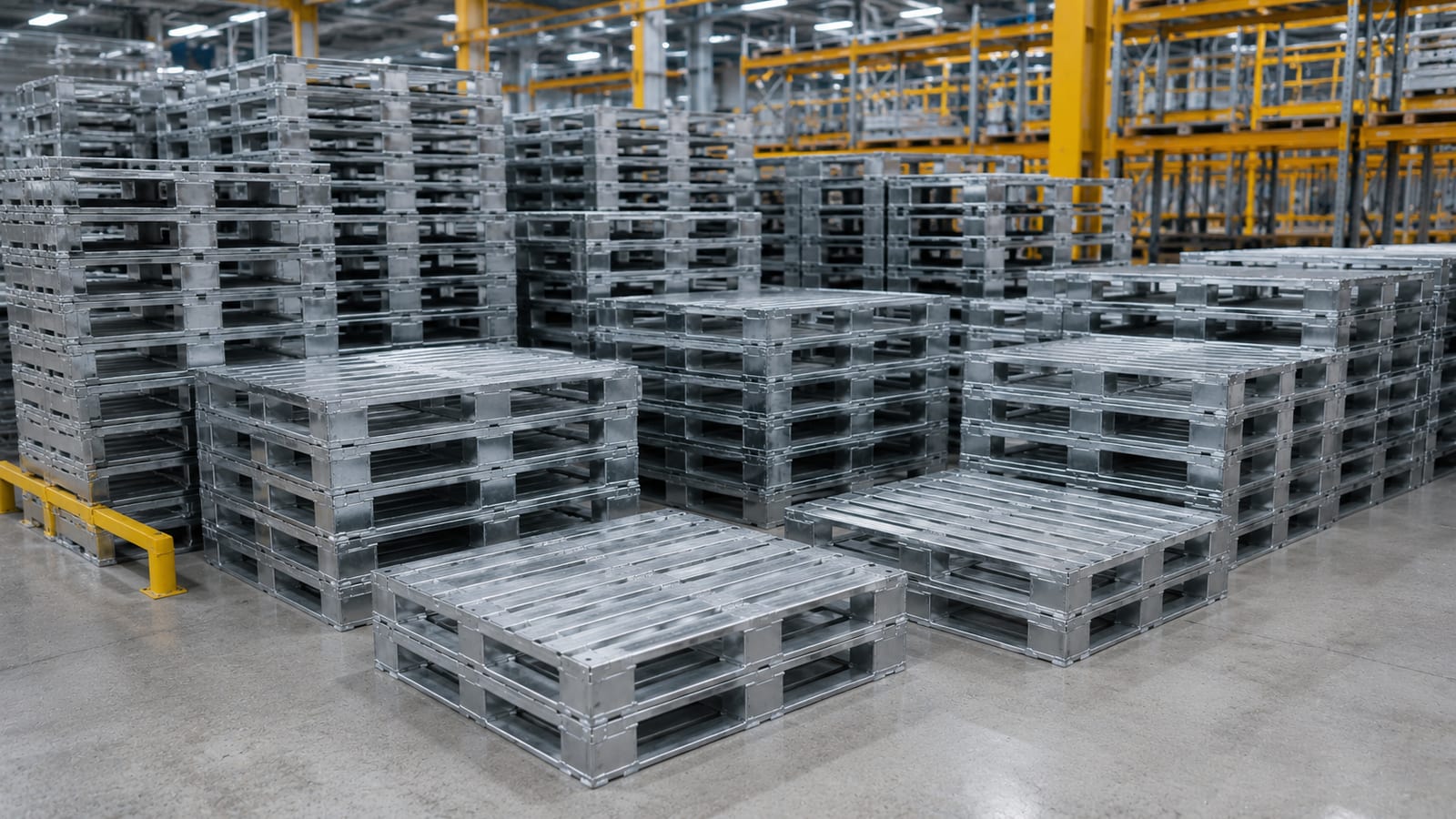
Steel pallets follow the same footprint sizes and standards as other pallets, so they drop straight into existing racking, conveyors and containers — and because they are custom-fabricated, they can also be built to any size your parts need. Here are the main standards and how to choose.
Common pallet sizes
| Standard | Size | Common region / use |
|---|---|---|
| Euro (EPAL/EUR) | 1200 × 800 mm | Europe — fits standard racking & trucks |
| Euro 2 | 1200 × 1000 mm | Europe — heavier / wider loads |
| US / GMA | 48 × 40 in (1219 × 1016 mm) | North America — grocery & general |
| ISO 6780 | 1200×1000, 1140×1140, 1100×1100, 1067×1067 mm | International shipping footprints |
| Asian | 1100 × 1100 mm | Asia-Pacific — containers & racking |
| Custom | Any | Built to the part, machine or container |
Standards behind the sizes
Pallet footprints are defined internationally by ISO 6780, while regional systems such as the North American GMA footprint are managed through supply-chain bodies like GS1. Matching a recognised footprint keeps your pallets compatible with standard beam racking, conveyors and shipping containers.
How to choose the right size
- Match your market — Euro for Europe, GMA for North America, 1100 mm for much of Asia.
- Check racking & container fit — the footprint should seat on your beams and cube out the container efficiently.
- Go custom when the part demands it — machine bases, long parts or unusual loads justify a bespoke size.
Get the right footprint
HAOFU builds steel pallets to Euro, GMA, ISO and fully custom sizes. Send your size, load and racking details and we will confirm the best footprint.
Frequently Asked Questions
- What are the standard pallet sizes?
- The most common are the Euro pallet (1200×800 mm), Euro 2 (1200×1000 mm), the US/GMA pallet (48×40 in / 1219×1016 mm), several ISO 6780 footprints, and the 1100×1100 mm size common in Asia. Steel pallets are built to these or to custom dimensions.
- What size is a Euro pallet vs a US/GMA pallet?
- A standard Euro (EPAL/EUR) pallet is 1200×800 mm, while the North American GMA pallet is 48×40 inches (about 1219×1016 mm). Choosing the footprint that matches your market keeps pallets compatible with local racking and trucks.
- Can steel pallets be made in custom sizes?
- Yes. Because steel pallets are custom-fabricated, they can be built to any footprint — sized to a machine base, a long part or a specific container — while still following standard construction and load principles.
- Which pallet size should I choose?
- Match your market region (Euro, GMA or Asian sizes), check that the footprint seats correctly on your beam racking and cubes out your shipping container efficiently, and go custom only when the part or load demands it.