Wire Mesh Container Dividers: When Should Batches Share a Cage?

Use separate wire mesh cages when batches need independent release, destinations or movement. Share a cage only when its lots can travel and wait together. Choose fixed partitions for a stable mix, or removable partitions for changing layouts with a defined removal and return position. Send the supplier a batch map as well as the part drawing.
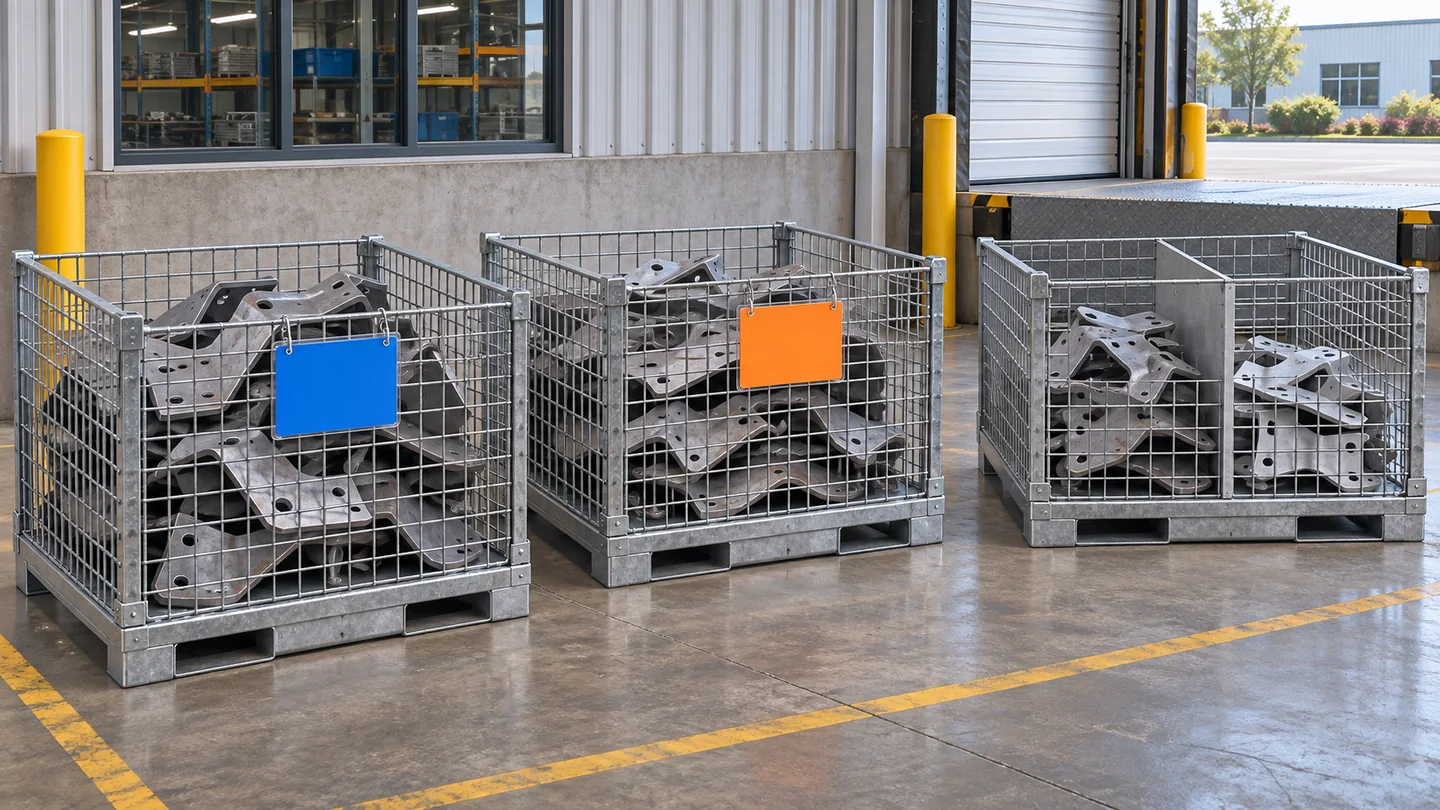
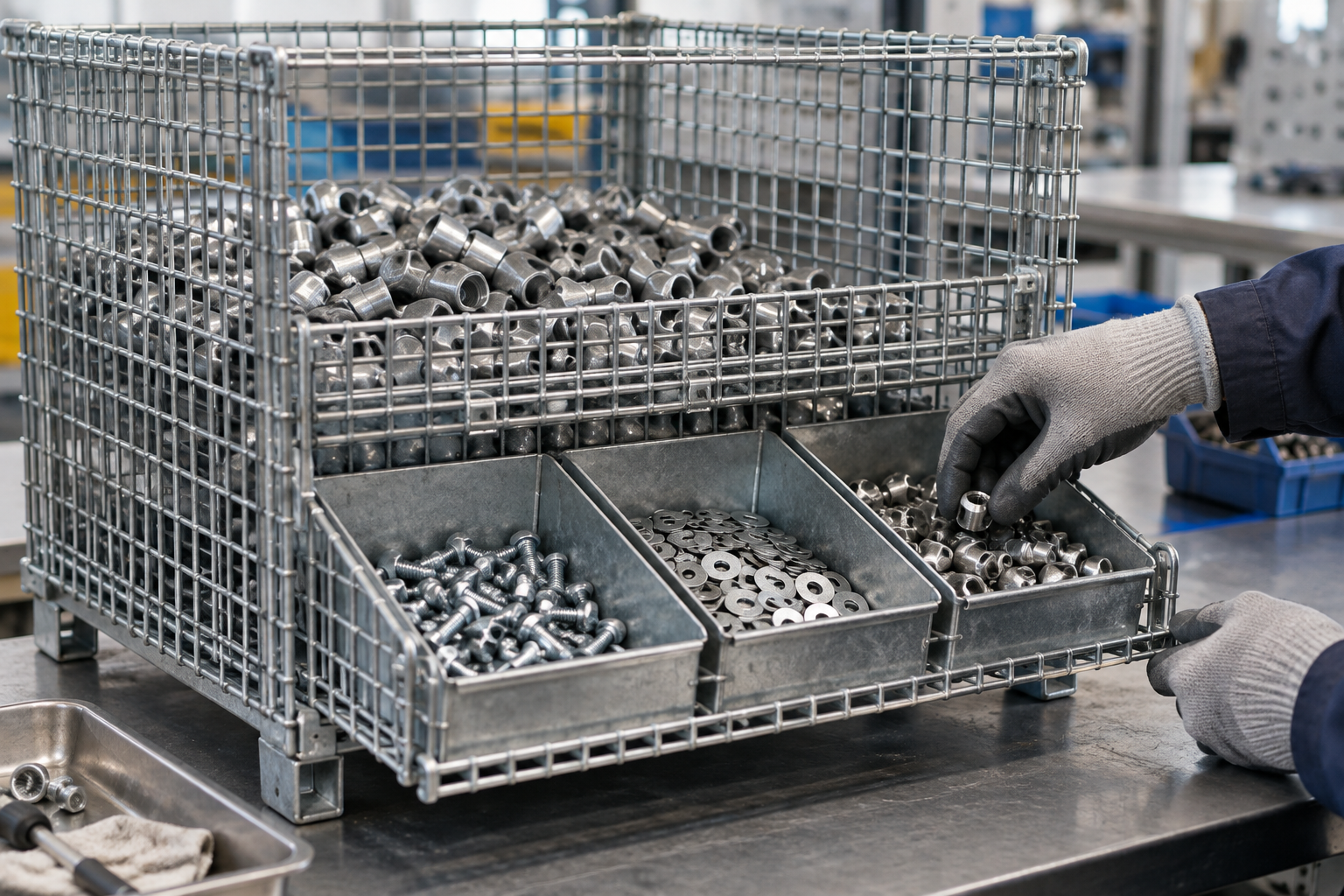
Wire mesh container dividers make sense when different batches can share the same trip and waiting time. If one lot must leave while another remains on hold, start with separate cages. For lots that move together, compare fixed partitions for a repeatable mix with removable partitions for changing quantities. The first buying decision is whether the batches should share an outer container at all; the divider layout comes next.
HAOFU's custom wire mesh containers can be configured with dividers, identification plates and handling features. To discuss a useful layout, show how each batch arrives, is released and reaches production. A sketch of those movements is more useful than a request for an unspecified number of compartments.
Start with the batch that cannot move
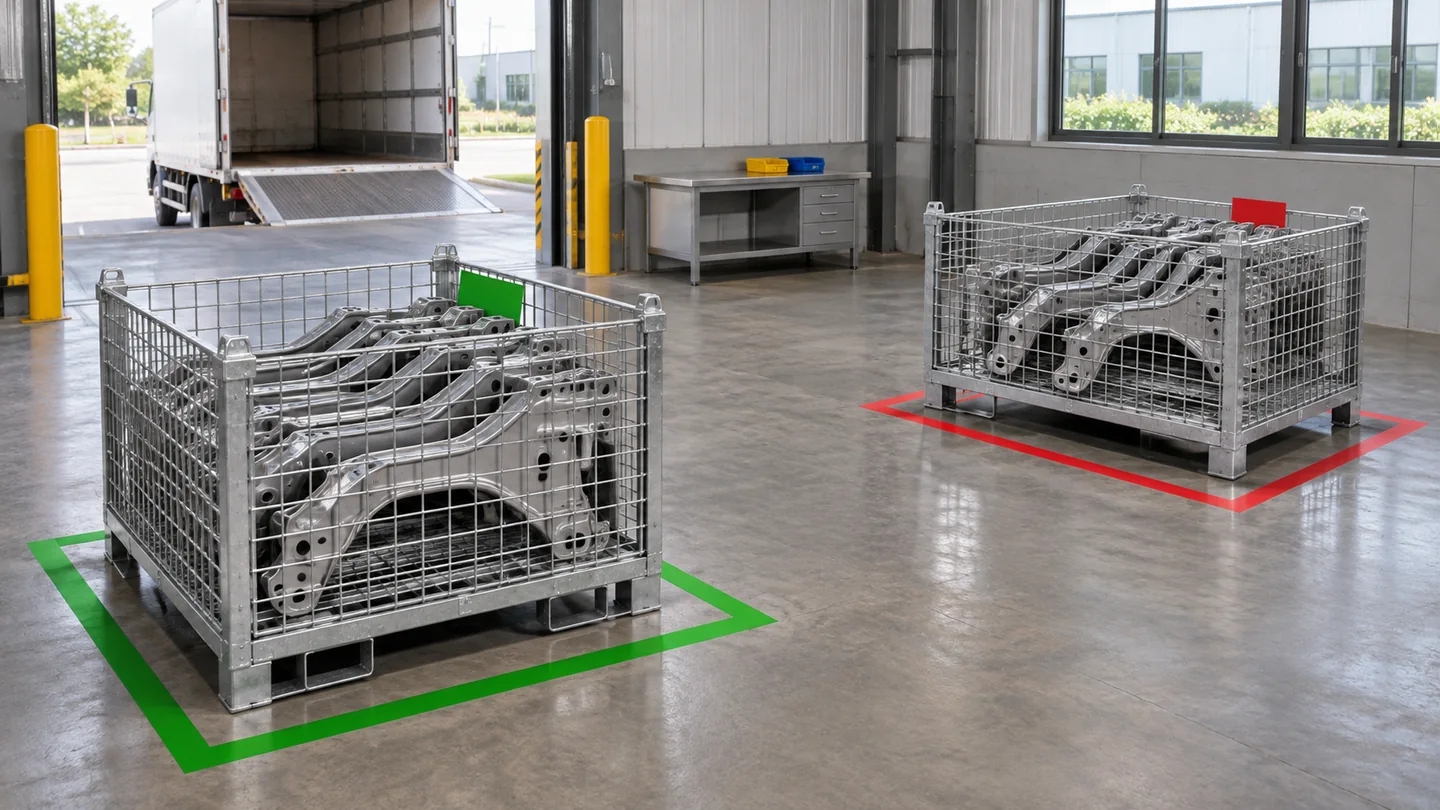
Imagine two lots of similar metal brackets arriving for different work orders. One is ready for assembly; the other is waiting for inspection. A partition can keep the brackets apart, but the cage is still one forklift handling unit. If the ready lot needs to travel to another area, someone must either move the waiting lot too or transfer the released parts into another carrier.
That extra transfer is a reason to compare dedicated cages before adding more partitions. The same question applies when lots have different destinations or when a small urgent order must leave before a larger order is complete. When both batches follow the same route and release together, sharing an outer cage becomes a more practical option.
Batch identity and the physical layout also need to agree. GS1's traceability guidance links identification and information with the flow of goods. For the container drawing, translate that into a clear association between each compartment and its contents. A card on the outside should not become ambiguous when a partition moves.
Compare three layouts against the receiving task
| Layout | Choose it when | Trade-off to check | Supplier input |
|---|---|---|---|
| One batch per cage | Release, destination or movement differs | More separate handling units and staging positions | Normal lot size and independent moves |
| Fixed compartments | The same part mix travels together repeatedly | Unused space when proportions change | Stable layout, access and clear dimensions |
| Removable partitions | Shared batches travel together but the mix changes | Changing, retaining and storing each divider | Approved layouts and the removed-panel position |
Independent release. Send the supplier: Lot size and destination.
Stable shared part mix. Send the supplier: Repeat compartment map.
Changing shared mix. Send the supplier: Installed and stored state.
Use fixed compartments for a repeatable mix
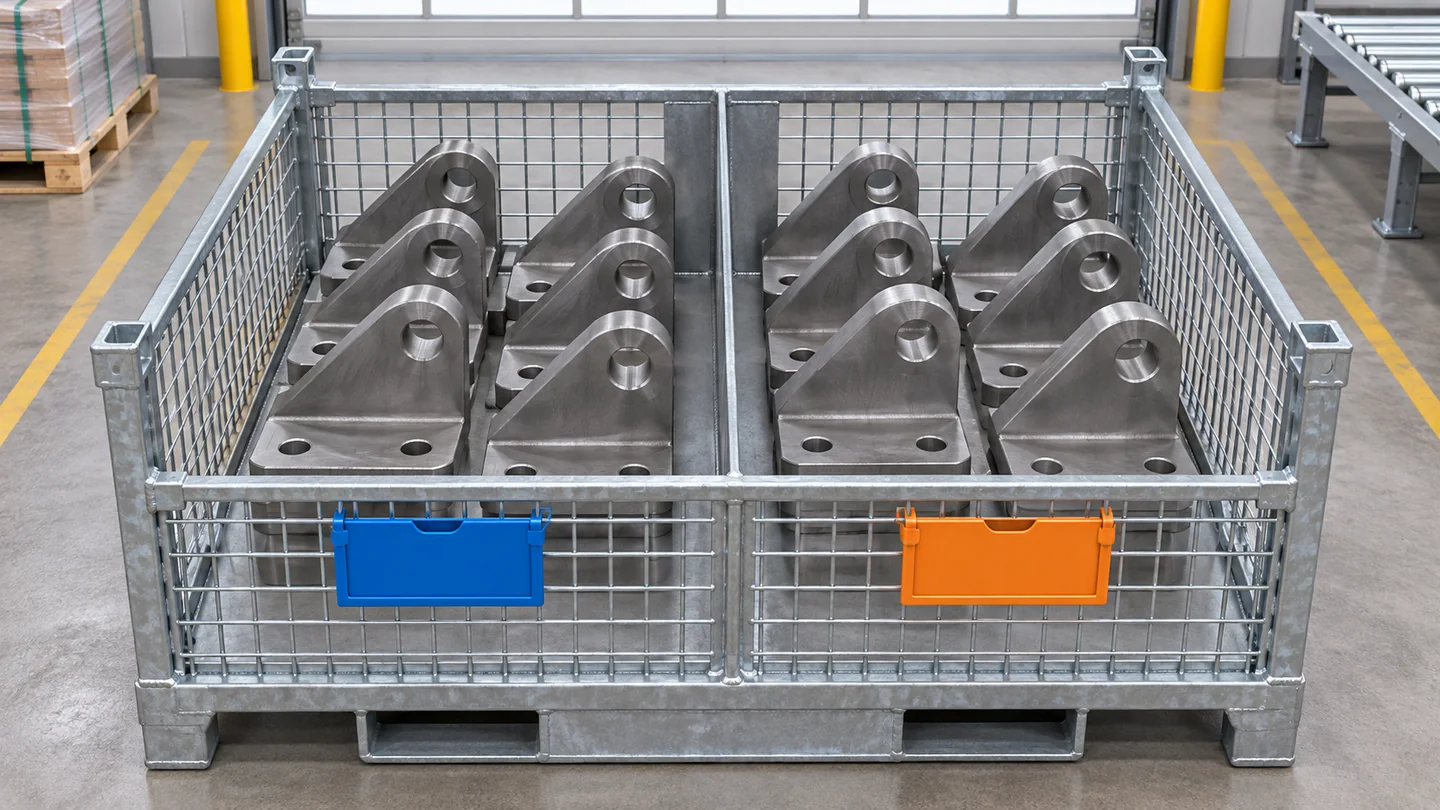
A fixed partition is worth comparing when the same groups arrive together, use the same route and occupy similar proportions on each trip. The receiving team gets a consistent layout, and there is no loose panel to position before loading. Ask for the compartment map to be shown from the side used for receiving and from the side used at production.
Check the least convenient condition, not just a full attractive arrangement. Can the smaller batch be removed while the neighbouring compartment is full? Is the part held away from a partition edge during loading? Does the remaining space still contain the last pieces? If the layout repeatedly leaves one large compartment empty, a different division or dedicated cage may fit the programme better.
Choose removable partitions for a changing mix
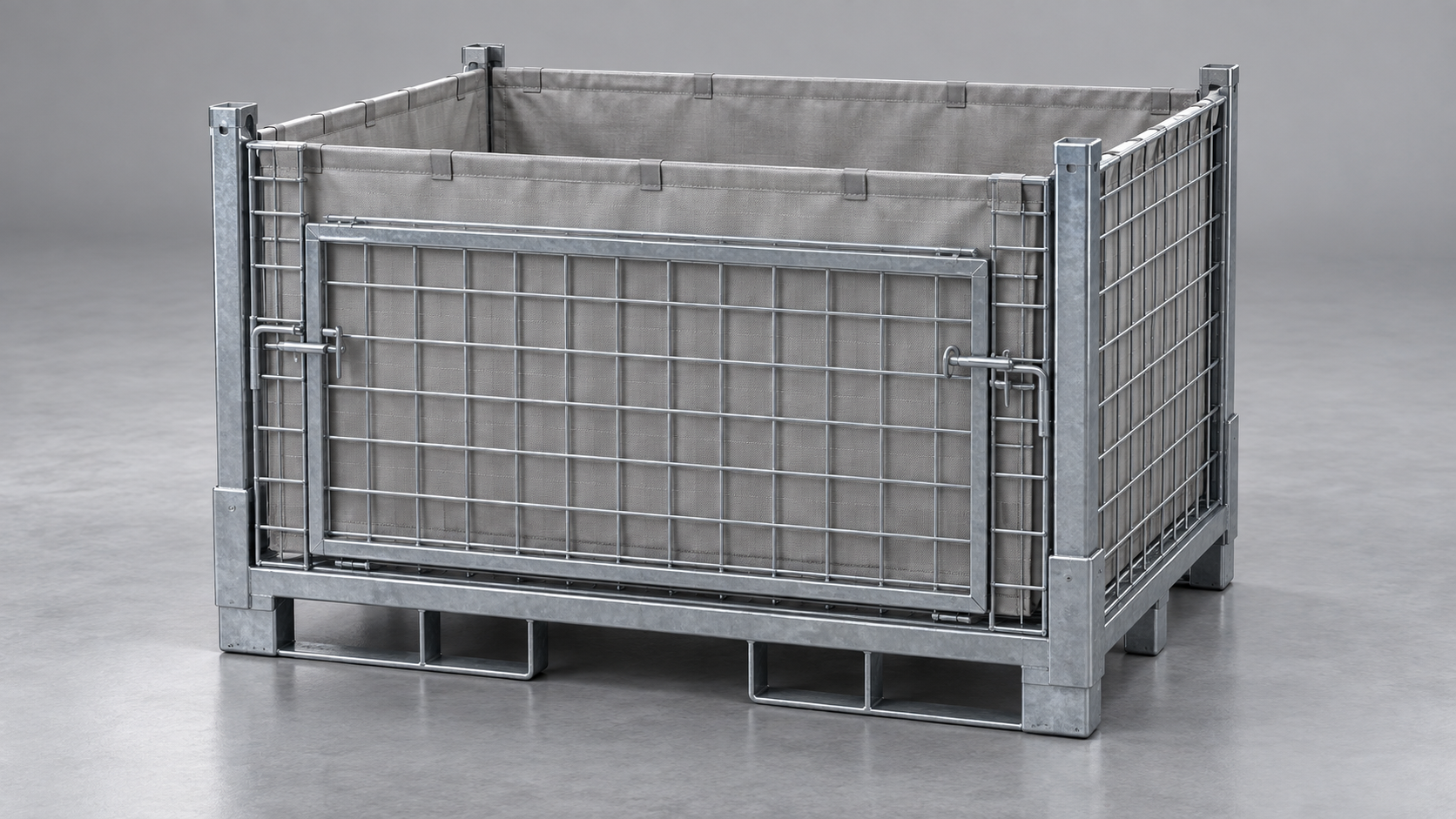
Removable dividers offer a way to change the interior while retaining one outer cage format. Dwixt's divider range is one example of panels matched to particular container sizes. The useful purchasing lesson is to specify the panel and cage together, including how the panel is located and removed.
For a custom proposal, show every layout you actually expect to use. A central split and an unequal split require different clear spaces. Ask which parts stay fitted, which are repositioned, and where unused panels go. Request the divider quantity in the quotation so that a cage order and a later batch change do not leave different teams assuming different accessory sets.
Size usable compartments, not outside dimensions
Give the supplier the part as it will sit in the container, including packaging or contact protection. Clear internal space is reduced by the frame, panel thickness, attachment details and the room needed for hands or a handling device. Two equal spaces on an outside-width sketch do not establish two usable loading positions.
Show the highest expected fill profile and the smallest contained item at the floor, wall and divider interfaces. Loose contents must not cross into the neighbouring group through a bottom gap or over the divider during the intended handling task. Check that with the actual part and quoted arrangement. The deep-container picking guide covers reach and shallow-tray alternatives when repeated individual picks are the problem.
Keep horizontal shelves and vertical partitions distinct on the drawing. Walcoom's container catalogue illustrates both forms. For batch separation, specify which surfaces divide contents and which, if any, are designed to support another layer. Have the supplier identify the proposed arrangement on its drawing.
Trial partial release and replenishment before ordering
Walk through a part-used cage: one compartment nearly empty, another full, and one lot temporarily unavailable. Decide whether the next delivery replaces the whole cage or only the depleted group. If a refill requires passing over another batch or setting loose parts on a neighbouring compartment, revise the layout or the handling unit.
Include the people who receive and use the parts in the trial. Have them identify a batch, remove its required quantity, replace its identification and prepare the next movement. Where access is restricted by a front opening, use the access-gate guide for the opening motion; do not solve a batch-release problem by simply choosing a larger gate.
- Must any lot move or be released independently?Yes → Start with separate cages.No → Does the shared part mix change?
- Does the shared part mix change?Yes → Compare removable panels.No → Compare fixed partitions.
Plan the last parts and the empty return
Agree what happens to a small remainder before the next batch is added. Keeping the same part number does not make two production lots interchangeable. A practical receiving instruction might require the remaining group to be used first, returned separately or kept in a distinct compartment. Put the chosen physical action into the layout request.
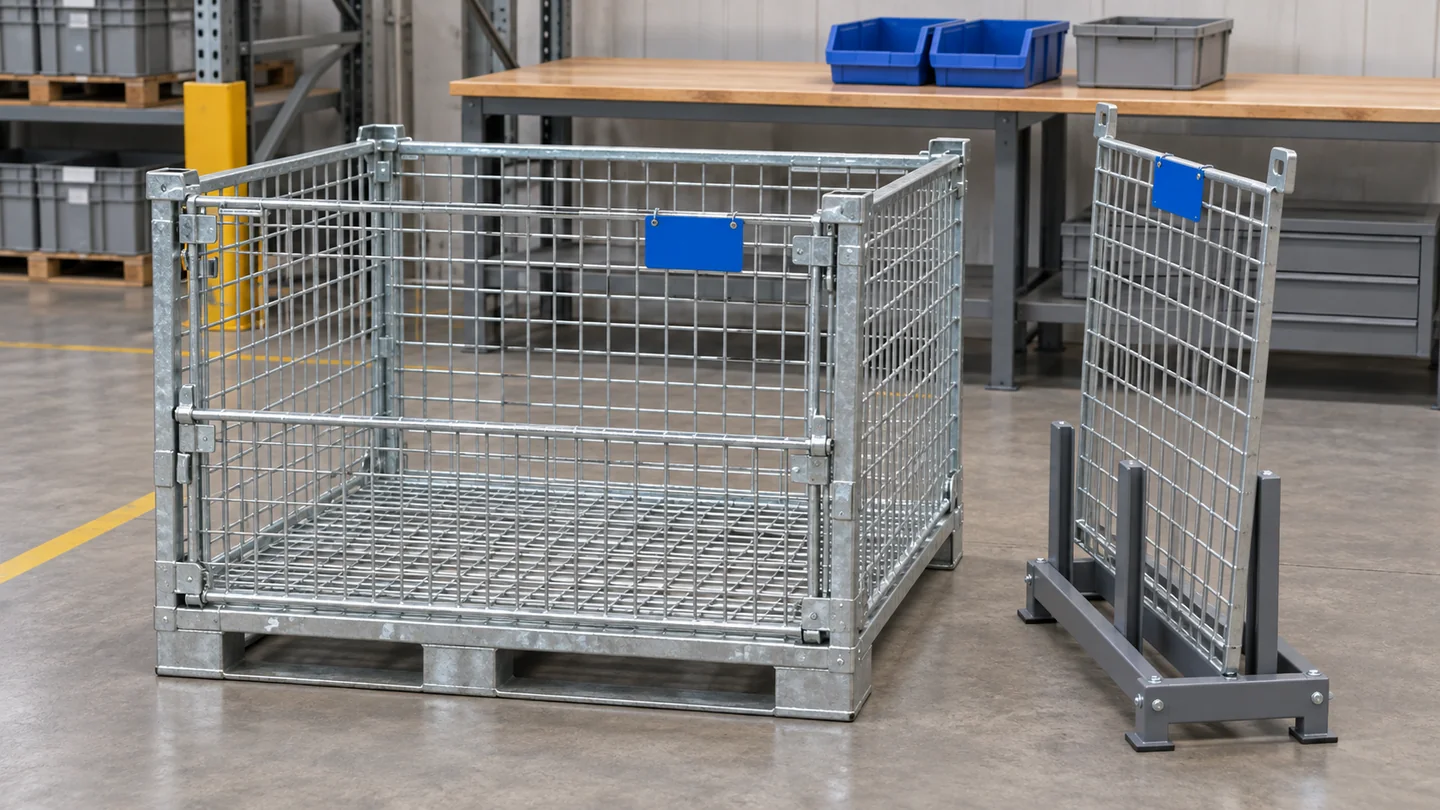
For removable panels, show the empty state as carefully as the loaded state. A panel needs an identified retained or stored position. It should not become an unplanned loose item inside the next load. If the cage also folds, check the sequence with the actual panel arrangement and use the empty-return configuration guide for the complete return state.
Prepare a comparable wire container quotation
Ask the supplier to compare the layouts against the same batch map, normal and maximum quantities, part orientation and handling route. The drawing should make the clear compartment sizes, divider interfaces, identification association and installed or removed states easy to recognise. Then compare the included cage and accessory quantities alongside the layout.
Start the conversation with a part photo and a short note about which batches must stay separate. Add CAD, fill profiles, loading access, equipment details and destination as they become available. Those inputs let a custom wire container supplier discuss a configuration that follows the way your stock actually moves.
- Map the batches. List each lot, its normal quantity, release status, destination and replenishment time. Mark which groups must move independently.
- Choose the handling unit. Start with separate cages for independent movements. Compare shared compartments only for lots that can travel and wait together.
- Draw the usable compartments. Show internal clear dimensions, divider interfaces, part fill profiles and access to each compartment with its neighbour loaded.
- Walk through partial use and return. Trial a part-used lot, one compartment waiting for inspection, a refill and an empty return. Identify where each removable partition is kept.
- Request comparable layouts. Send the same part and batch map for dedicated, fixed-divider or removable-divider proposals. Ask for the included partition quantity and drawing state.
Frequently Asked Questions
- Can different production batches share one wire mesh container?
- Yes, when the batches can travel, wait and be released together, and each compartment remains identifiable and accessible. Use separate cages if one batch must leave, change destination or wait for inspection independently.
- When is a fixed divider a better choice than a removable divider?
- A fixed divider suits a repeatable part mix and compartment layout that stays in use across trips. A removable divider suits changing proportions, provided its attachment, removal route and storage position are included in the container design.
- Does a divider make each compartment a separately transportable unit?
- No. A partition separates contents inside a shared outer cage. If one lot must move without its neighbour, specify separate containers or a separately designed and handled inner carrier.
- How should compartment dimensions be specified?
- Use the clear internal space available after the divider, frame and attachment details are installed. Include the actual part orientation, maximum fill profile and the space needed to load and remove parts with adjacent compartments occupied.
- What happens to removable dividers during empty return?
- Give each removed divider a defined retained or stored position and include that state on the return drawing. Check the sequence with the actual container rather than leaving panels loose or assuming that the existing folding arrangement still works.
- What do I need to start a custom wire container enquiry?
- A part photo and a short explanation of the batches are enough to start. For a layout quotation, add the lot quantities, independent release or destination needs, compartment arrangement, handling route, required cage quantity and delivery destination.