Collapsible Wire Mesh Containers: Plan the Empty Return

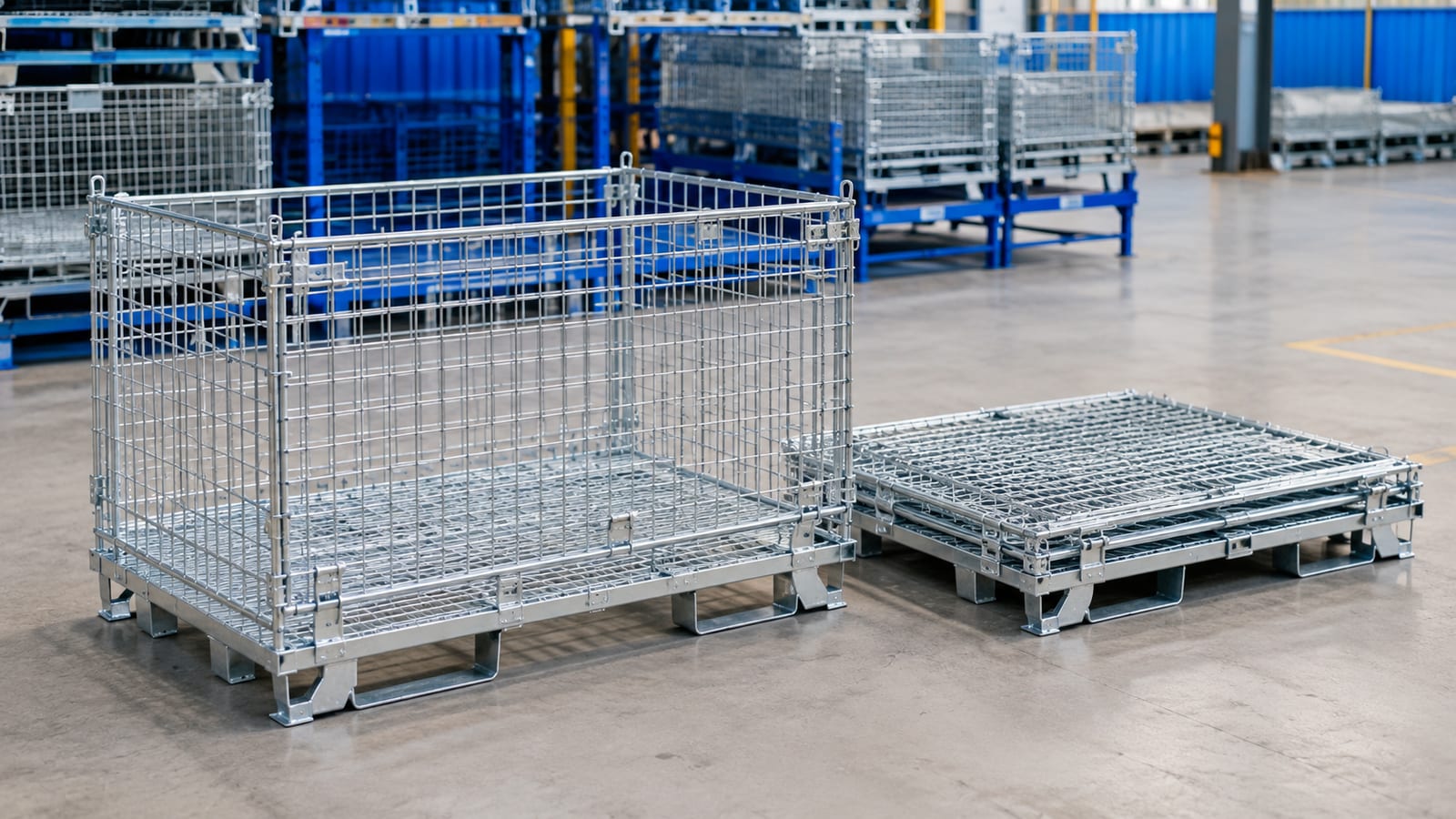
For an efficient wire mesh container empty return, specify the container's folded or nested dimensions, how gates and panels are secured, where liners or dividers are stored, how the empty units are handled, and how many must fit the return vehicle or storage area. Compare the complete return set—not just the folded cage—because loose components and loading clearances also use space.
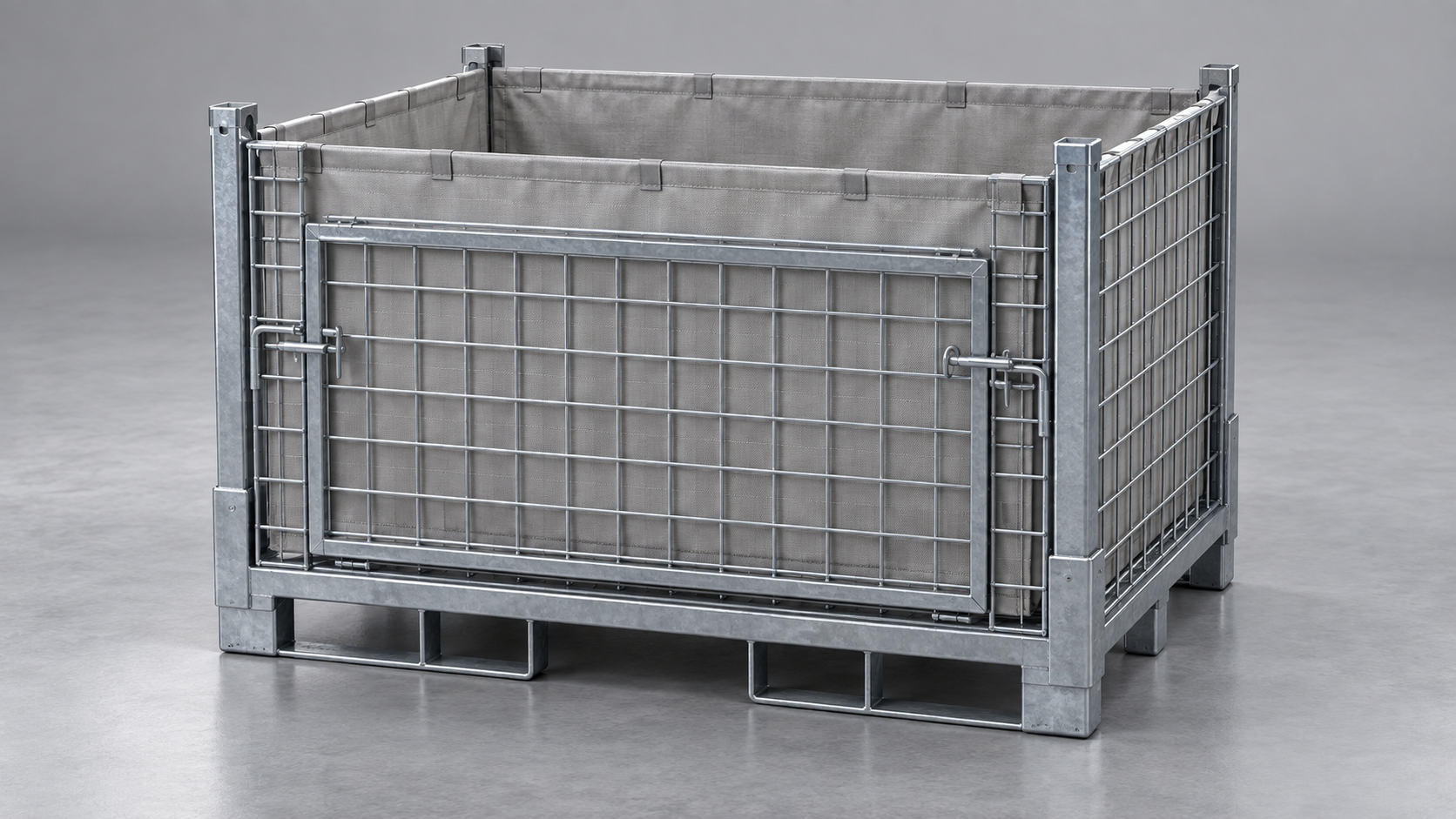
Wire mesh container empty return works best when the container, removable inserts and handling sequence are designed together. Start with the internal size needed for the loaded parts, then compare the folded height, empty stack arrangement, gate position, loose-component storage and vehicle clearance. A low folded cage does not automatically create an efficient return if liners, dividers or label holders travel separately.
For a collapsible wire mesh container RFQ, provide both loaded and empty requirements. The manufacturer needs to understand how operators unload, fold, secure, lift, stack and reload the containers, plus any return-vehicle or warehouse height limits.
What should you specify for an empty return?
| Input | Information to provide | Design impact |
|---|---|---|
| Loaded container | Part dimensions, quantity, weight, liners and dividers. | Sets the usable internal size and mesh/container structure. |
| Collapsed size | Maximum folded height and available return footprint. | Shapes the folding or nesting arrangement. |
| Loose components | Where liners, dividers, lids and labels travel when empty. | Prevents separate items from consuming unplanned space. |
| Empty handling | Forklift, pallet jack or manual steps and required access. | Defines base clearance and the folding sequence. |
| Return transport | Vehicle opening, usable length/width/height and target unit count. | Allows a realistic loading layout to be checked. |
Foldable, nestable or fixed wire mesh containers?
Foldable containers lower their height by collapsing side panels. Nestable designs reduce the footprint or stack pitch by fitting one empty unit partly into another. Fixed cages keep the same dimensions loaded and empty but avoid folding steps. Select the design by comparing return-space limits, operator steps, loose parts, part protection and expected cycle frequency.
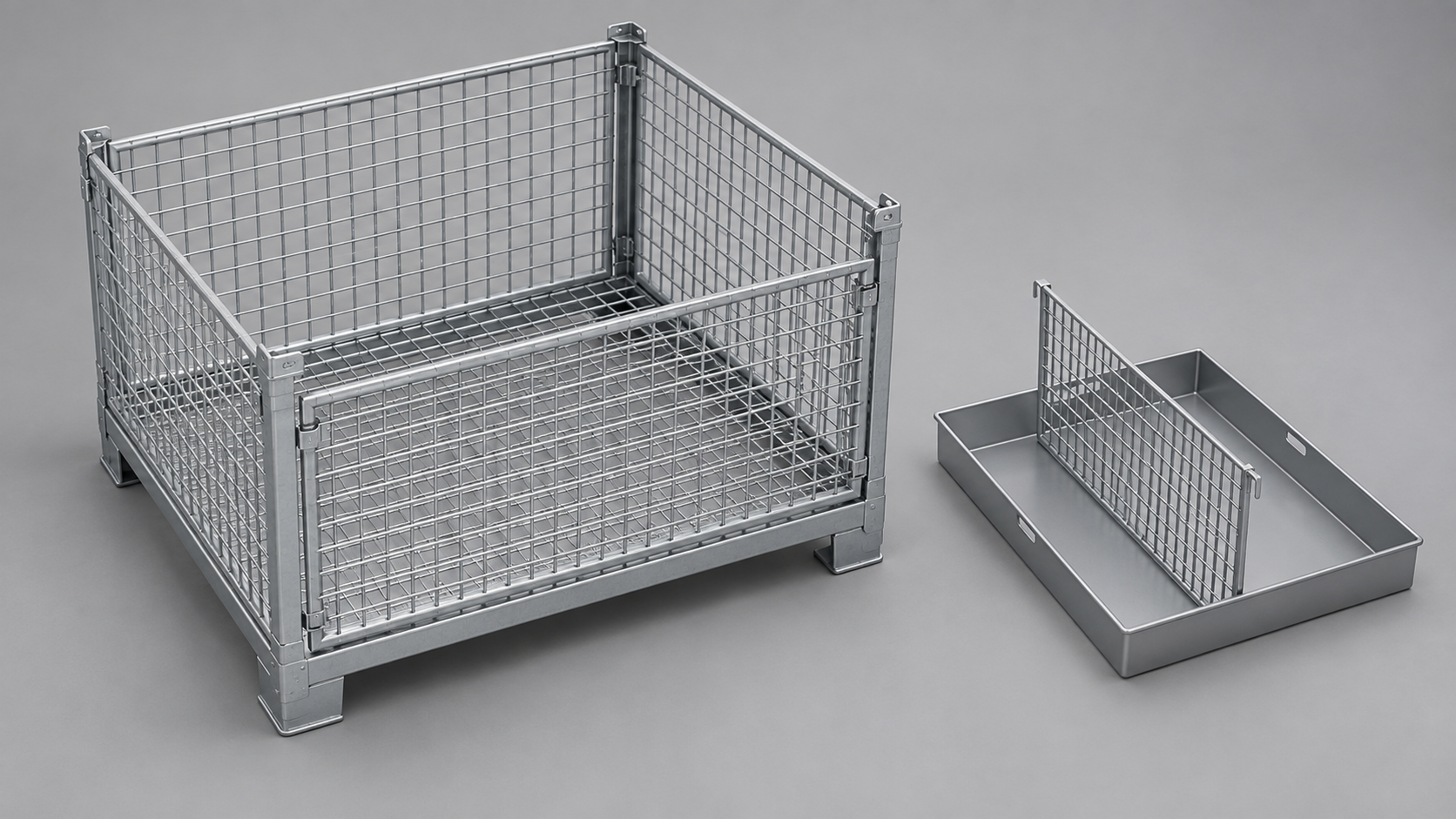
Five checks before approving the empty-return design
- Measure the complete folded set. Include protruding gates, latches, feet and stored components.
- Run the operator sequence. Check unloading, folding, securing and reopening at practical working heights.
- Confirm loose-component storage. Make sure liners and dividers cannot interfere with the stack or forklift entry.
- Lay out the return vehicle. Use the actual opening and internal clearances, not only nominal vehicle volume.
- Trial repeated cycles. Review hinges, latches, contact points and handling before production release.
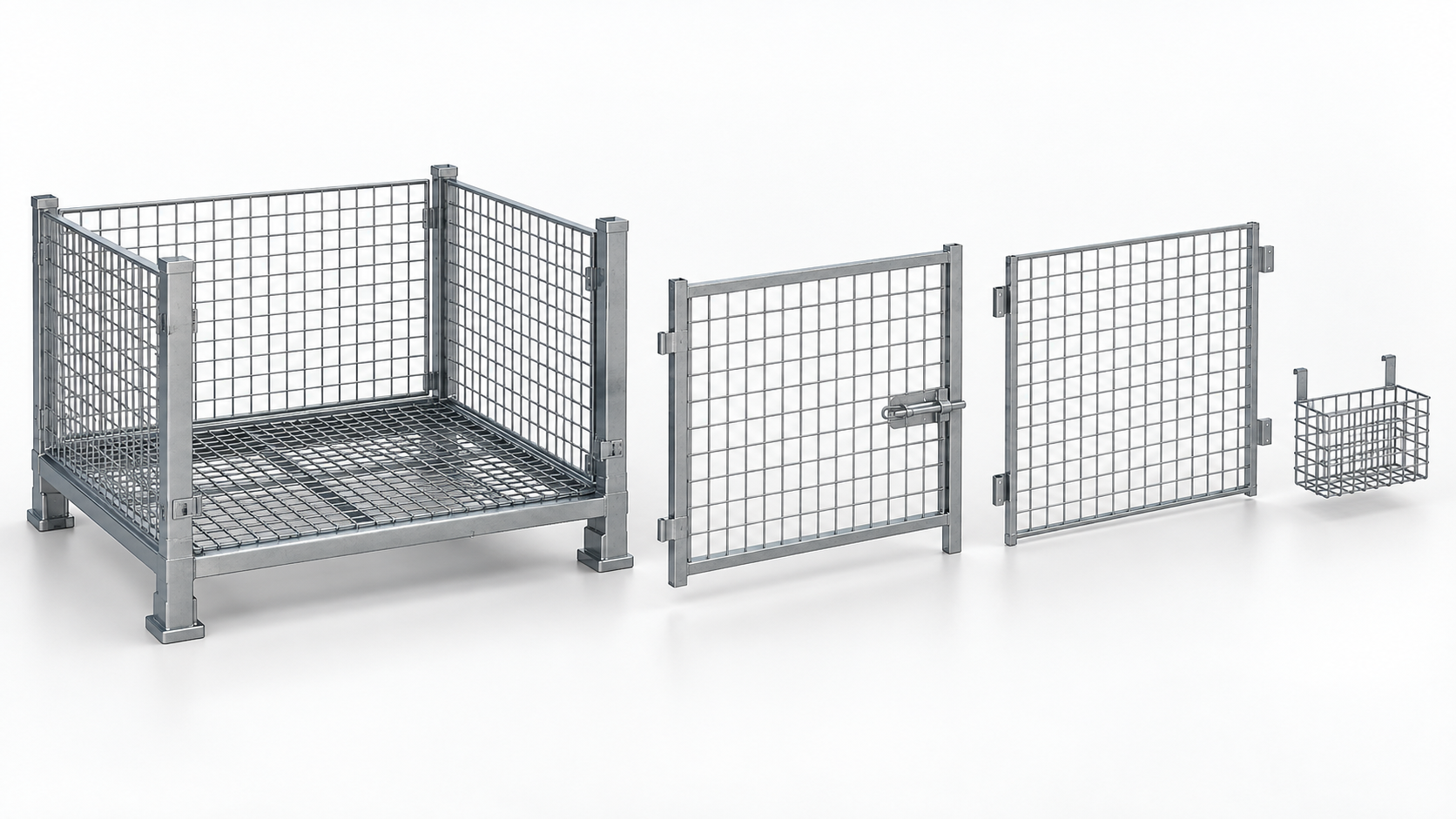
Related wire mesh container guides
Read the wire mesh container access-gate guide, the foldable wire mesh container specification guide and the return-loop data guide. Browse wire mesh containers for the product category.
Request a wire mesh container quote
Send the part and pack dimensions, loaded weight, internal size, folded-height target, removable components, handling equipment, return-vehicle dimensions and project quantity through the wire mesh container RFQ form.
Frequently Asked Questions
- How do collapsible wire mesh containers reduce empty-return space?
- Their side panels fold or their bodies nest so the empty stack uses less height or pitch than the loaded container. Compare the complete folded set, including gates, feet and loose components.
- What is the difference between foldable and nestable mesh containers?
- A foldable container lowers its height by collapsing panels. A nestable design lets empty units fit partly inside one another. The best option depends on handling steps, parts, return transport and storage.
- Where should liners and dividers go on empty return?
- Use a defined tray, holder or return position that stays clear of forklift entry and stacking interfaces. Include those components in the return-space calculation.
- How should an empty return ratio be calculated?
- Lay out the folded containers and components within the actual vehicle opening and usable internal dimensions. Allow for handling clearance and restraints instead of using nominal volume alone.
- What should I send for a wire mesh container quote?
- Send part and pack dimensions, loaded weight, required internal size, folded-height target, components, handling equipment, return-vehicle limits and quantity.